
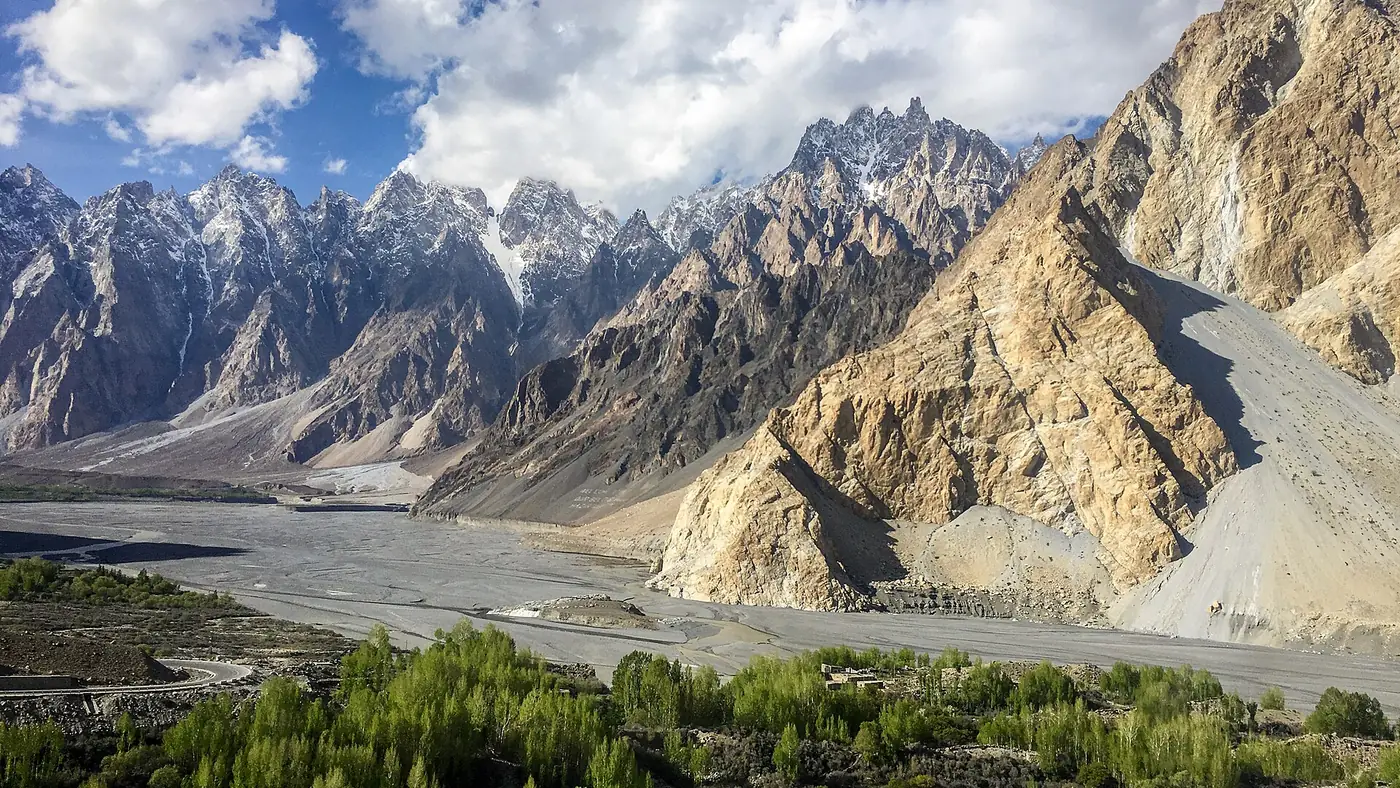

Monsoon season, roughly July to early September, affects Pakistan's northern areas unevenly. Gilgit-Baltistan sits mostly in the rain shadow of the Himalaya and Karakoram, so it gets far less monsoon rain than Khyber Pakhtunkhwa's valleys, which sit more directly in its path. The bigger risk in Gilgit-Baltistan in these months is not monsoon rain itself but flash floods from glacial melt and cloudbursts, which can cut the Karakoram Highway with little warning.
This guide separates what monsoon actually does in each region, so you can plan a July or August trip with a realistic idea of the risk, rather than either avoiding the season entirely or ignoring it.
| At a glance | |
|---|---|
| Monsoon months | Roughly July to early September |
| Rain-shadow region | Gilgit-Baltistan (Hunza, Gilgit, Skardu, Baltistan) |
| Directly affected by monsoon | Khyber Pakhtunkhwa (Swat, Kaghan, Murree/Galiyat), Azad Kashmir |
| Main GB risk | Flash floods and glacier melt cutting the KKH, not steady rain |
| Main KP/AJK risk | Landslides, road washouts, swollen rivers |
| Upside | Fewer tourists, lower hotel rates, green valleys |
Why Gilgit-Baltistan stays drier
The Karakoram and western Himalaya block most of the monsoon moisture moving up from the Bay of Bengal and Arabian Sea before it reaches Hunza, Gilgit, Skardu and the rest of Baltistan. These valleys get most of their annual precipitation from winter westerly systems, not the summer monsoon, which is why they are drier and sunnier through July and August than the KKH corridor further south.
That does not mean nothing happens. Occasional monsoon moisture does push into Gilgit-Baltistan, and in recent years the region has seen serious flash floods in July and August driven by a combination of cloudbursts and accelerated glacier melt in the summer heat, rather than sustained monsoon rainfall. These floods have repeatedly cut the Karakoram Highway, isolated districts like Ghizer and Gojal, and stranded tourists for days at a time. The pattern is different from monsoon flooding elsewhere in Pakistan, but the practical effect on a traveller, a blocked road, is the same.
Where the monsoon actually hits
Khyber Pakhtunkhwa's valleys, Swat, Kaghan, the Galiyat hills and Murree, sit in the monsoon's path and get significant rain from July into early September. This brings the risk that most people associate with "monsoon travel": landslides on hill roads, swollen rivers, and closures on routes like the road to Naran and the roads through the Galiyat. Azad Kashmir, including the Neelum valley, is affected in a similar way.
Is it safe? The UK government's Pakistan travel advice (updated September 2026) advises against all travel to the Karakoram Highway between Mansehra and Chilas, via Battagram, Besham, Dasu and Sazin, and against all but essential travel to Malakand, Mardan, Nowshera, Shangla and Swabi. It also advises against all travel within 10 miles of the Line of Control, which covers most of the Neelum valley. Pakistani travellers do use these roads and valleys, but check current advisories, local news and police guidance before travelling, especially in the wetter months when road conditions add a further layer of risk. If you are visiting from abroad, your government's advice against travel can also affect your travel insurance.
Planning a monsoon-season trip
If Gilgit-Baltistan is your destination, July and August are workable months, with the caveat that the KKH can close for a day or more after a flash flood, particularly in the Gojal and Ghizer stretches. Build a spare day or two into any Hunza, Gilgit or Skardu itinerary in these months, and avoid scheduling a flight out on the last possible day.
If you are heading to Swat, Kaghan or Azad Kashmir, monsoon months carry a real landslide risk on hill roads. Travel in daylight, avoid driving during or immediately after heavy rain, and keep an eye on official updates before setting out each day. A trip built with flexible dates, rather than a tight fixed schedule, handles a closure far better than one that has to hit a specific day.
What monsoon travel actually looks like
In Gilgit-Baltistan, expect warm days, clear mornings more often than not, and the valleys at their greenest, with fruit ripening in Hunza's orchards through July and August. Afternoon cloud building over the peaks is common, and a sudden downpour or flood warning can appear with little notice, which is the trade-off for otherwise pleasant travelling weather.
In the monsoon-affected KP and AJK valleys, expect grey, humid days with real rain, mist that can close in for hours, and rivers running high and fast, which makes riverside spots and low bridges genuinely dangerous rather than just inconvenient. Waterfalls and forests look their best in this weather; road travel does not.
The upside of travelling in monsoon season
Fewer tourists is the main one. Hotel rates in Naran, Kalam and similar towns often drop from peak summer levels once the main July-August rush passes, though the timing overlaps with monsoon itself in some years. Gilgit-Baltistan in particular is genuinely pleasant in these months if you accept the small risk of a road closure, since it largely avoids the rain that defines "monsoon" everywhere else in Pakistan. Our travel guide covers road conditions across the region in more depth if you are weighing up a summer trip.
Is it worth travelling in monsoon season?
For Gilgit-Baltistan, yes, with a buffer day built in for the possibility of a flash flood closure; July and August are otherwise good months there. For Swat, Kaghan and Azad Kashmir, it is a harder call: the scenery is at its greenest, but landslide and flooding risk on the roads is real and worth taking seriously, not treating as a minor inconvenience. If your dates are fixed and inflexible, or anyone in your group is anxious about mountain roads in rain, aim for the shoulder months either side of the monsoon instead.
Frequently asked questions
Does the monsoon reach Hunza and Skardu?
Only lightly. Gilgit-Baltistan sits mostly in the rain shadow of the Himalaya and Karakoram, so it gets far less monsoon rain than Khyber Pakhtunkhwa. The bigger July-August risk there is flash flooding from cloudbursts and glacier melt, which can still close roads.
Is it dangerous to drive to Naran or Kaghan in monsoon season?
There is a real landslide and flash-flood risk on these roads in July and August. Avoid driving during or right after heavy rain, travel in daylight, and check current road status before setting out.
Is the Karakoram Highway safe in monsoon season?
It is usable in most weeks, but it has been repeatedly cut by flash floods in recent summers, particularly around Gojal and Ghizer. Build a spare day into your schedule and avoid a tight connection to a flight on the last day of the trip.
Are hotel rates lower in the northern areas during monsoon?
Often, yes, especially in KP hill stations once the peak summer crowd thins out. Gilgit-Baltistan's rates can stay closer to summer levels since the region is less obviously "monsoon season" to most travellers.
Which northern areas are least affected by monsoon rain?
Hunza, Gilgit, Skardu and the rest of Baltistan, since they lie in the rain shadow. Swat, Kaghan, Murree, the Galiyat hills and Azad Kashmir are directly exposed to the monsoon and see far more rain-related disruption.