Noor Mahal is the white Italianate palace in the middle of Bahawalpur city, built in the 1870s for the Nawab's household and now looked after by the Pakistan Army as a protected monument open to visitors. Entry costs only a small fee, and the palace is open through the day into the evening, when it is lit up and, on some nights, hosts a sound and light show. This guide covers the ticket, the timings, what you actually see inside, and why the evening visit beats the afternoon one.
| At a glance | |
|---|---|
| Where | Central Bahawalpur, on Noor Mahal Road |
| Built | 1872 to 1875, for Nawab Sadiq Muhammad Khan IV |
| Style | Italianate and Corinthian details with local craftsmanship |
| Current use | Protected monument, managed by the Pakistan Army |
| Entry fee | A small ticket price, roughly PKR 75–100 per person (2026); confirm at the gate |
| Opening hours | Morning to evening; sources differ on the exact closing time, so check locally |
| Light and sound show | Held on selected evenings each week |
| Time needed | 45 minutes to an hour |
What is Noor Mahal and who built it?
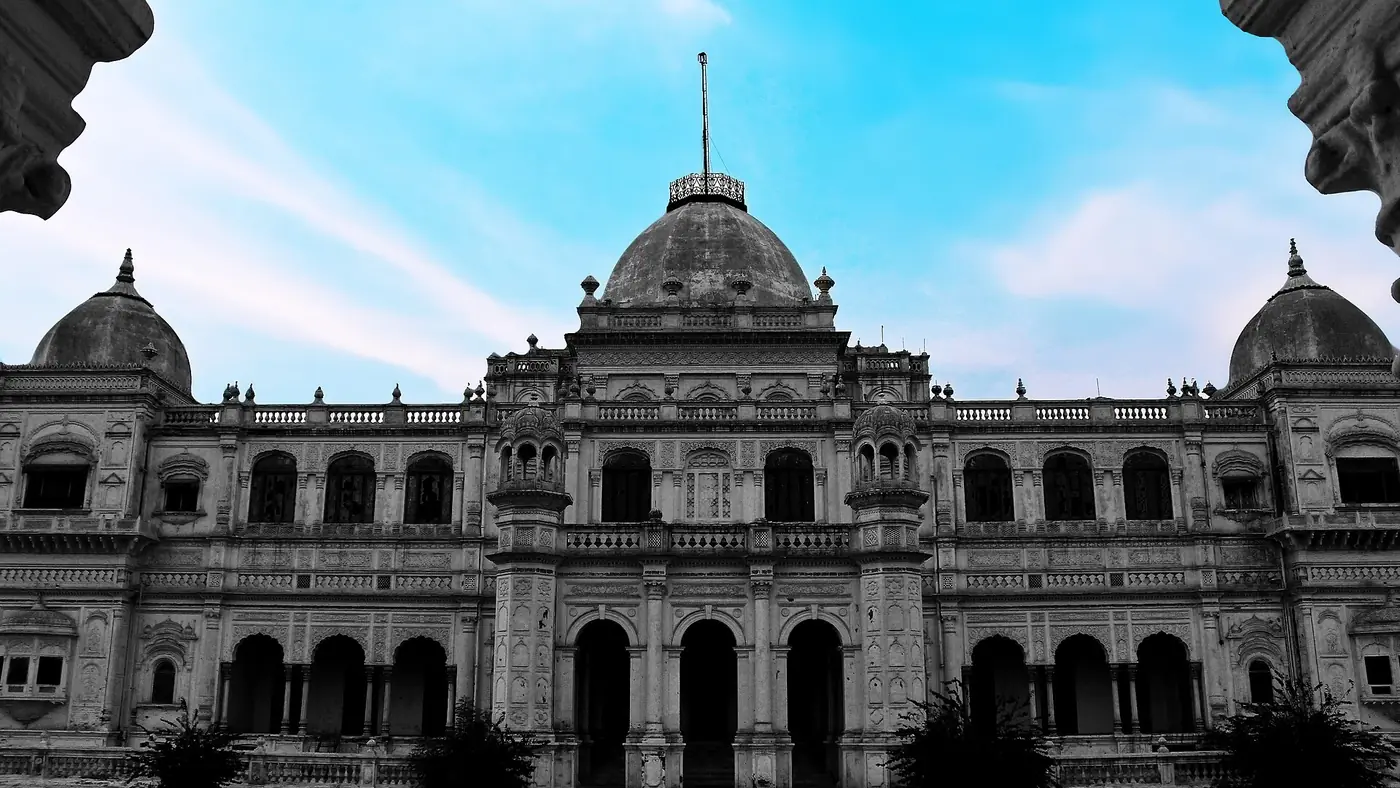
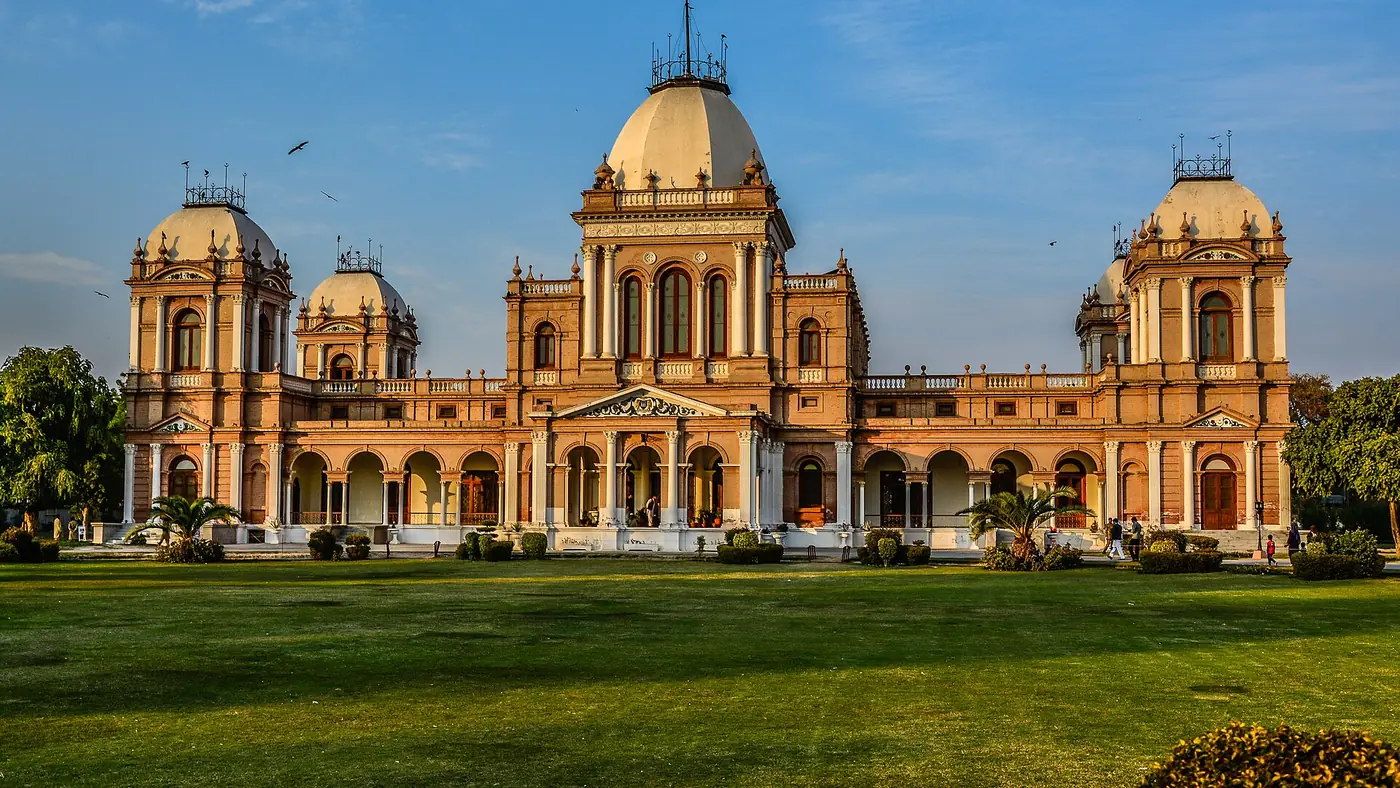
Noor Mahal was commissioned by Nawab Sadiq Muhammad Khan IV, the ruler of the princely state of Bahawalpur, with construction running from 1872 to 1875. The design is credited to an English state engineer, and it mixes an Italian chateau layout with Corinthian columns and Islamic decorative touches, built for a cost of around Rs 1.2 million at the time, a large sum for Bahawalpur in that era.
The palace covers about 44,600 square feet and has 32 rooms across three levels, including basement rooms, with five domes and six verandas. It was built as a residence, though the Nawabs are said to have used it only occasionally, preferring their other palaces in the city.
Who owns Noor Mahal now?
The palace passed out of family use and was leased to the Pakistan Army in 1971, which bought it outright in 1997. It is managed today under the Army's Bahawalpur Cantonment Board and used for official functions, including hosting visiting dignitaries.
In September 2001 it was declared a protected monument by Pakistan's Department of Archaeology, which is what opened it to general visitors, school trips and researchers rather than keeping it purely as army property. That status is also why the building has stayed in good repair compared with some of Bahawalpur's other palaces.
Tickets and timings
Entry is inexpensive: expect a ticket in the region of PKR 75 to 100 per person as of 2026, though this is the kind of fee that changes, so treat it as a guide and bring a bit more cash than you expect to need.
Reported opening hours vary between sources, from a simple "morning until evening" to specific windows stretching into the night. Rather than rely on a single time you read online, plan to arrive well before sunset and ask at the gate about how late the grounds stay open that day. Bahawalpur's heat in the warmer months also makes a morning or evening visit more comfortable than the middle of the day.
The sound and light show
On selected evenings each week, the palace grounds host a sound and light show, a short programme of coloured lighting on the façade with narration about the palace's history, lasting around twenty minutes. Show nights and start times have been reported inconsistently across sources, so ask locally, at your hotel or at the gate, which evenings it runs during your visit and what time to arrive.
Even without the show, Noor Mahal lit up at night is worth timing your visit around. The white stonework and domes stand out sharply against the dark, and the palace is noticeably less crowded after the day-trip visitors have left.
What you can see inside
Visitors can walk through a set of rooms on the ground floor, including a durbar hall with period furniture and photographs of the Nawabs of Bahawalpur, along with displays on the palace's construction and the ruling family's history. The upper floors and the areas still used for army functions are generally not open to the public.
A few practical points:
- Photography is normally allowed in the public rooms and grounds, but follow any signs or staff instructions, since this is a working military-managed site.
- Dress modestly. There is no strict dress code posted, but Bahawalpur is a conservative city and the palace draws families and school groups.
- Don't expect a long museum visit. The rooms open to the public are limited, so most people are done in under an hour, longer if you stay for the evening lighting or the show.
Why it looks the way it does
Nawab Sadiq Muhammad Khan IV's decision to build in an Italianate style, rather than the Indo-Islamic idiom of the older Bahawalpur palaces, reflected a wider taste among the subcontinent's princely rulers in the late 19th century for European architectural fashions, often filtered through British colonial influence. Noor Mahal's Corinthian columns and symmetrical chateau layout sit alongside domes and other details rooted in local building tradition, which is part of what makes it stand out from both purely European buildings and purely local ones. It is often compared with the grander but less accessible Sadiq Garh Palace in Dera Nawab Sahib, built by the same Nawab a few years later on a much larger scale but never opened to the public in the same way.
Getting there and combining the visit
Noor Mahal sits inside Bahawalpur city, a short drive from most hotels and from the other palaces and civic buildings clustered nearby. It pairs naturally with a half-day round of the city's other sights, and with a longer trip out to Derawar Fort in the desert beyond.
If you are building a longer trip to Bahawalpur and the Cholistan desert, tell us your dates and we can help you plan the order of stops. Our travel guide has more general advice on visiting sites like this one.
Is Noor Mahal worth visiting?
Yes, for the architecture and the low cost of entry. It is one of the most photographed buildings in south Punjab, and the combination of a European façade with Islamic detailing is unlike the other Nawab-era palaces in the city. It suits a short visit rather than a long one: come for an hour, ideally timed for the evening light, rather than building a full day around it.
Frequently asked questions
How much is the entry ticket for Noor Mahal?
A small fee, reported at roughly PKR 75 to 100 per person as of 2026. Fees at Pakistani heritage sites change from time to time, so carry a little extra cash.
What are Noor Mahal's opening hours?
Reports differ on the exact hours, generally covering the morning through the evening. Arrive with daylight to spare and check at the gate for that day's closing time.
Who built Noor Mahal and why?
Nawab Sadiq Muhammad Khan IV of Bahawalpur, built between 1872 and 1875 as a residence, in an Italianate style with Corinthian and Islamic detailing.
Is Noor Mahal still used by the army?
Yes. The Pakistan Army has managed the property since 1971 and owns it outright since 1997, using parts of it for official functions, while the public rooms are open to visitors as a protected monument.
Is there a sound and light show at Noor Mahal?
Yes, on selected evenings, with coloured lighting and narration on the palace's history. Ask locally for the current schedule, since reported days and times vary.
How much time should I plan for a visit to Noor Mahal?
Around 45 minutes to an hour for the public rooms and grounds, more if you stay for the evening lighting or a show.