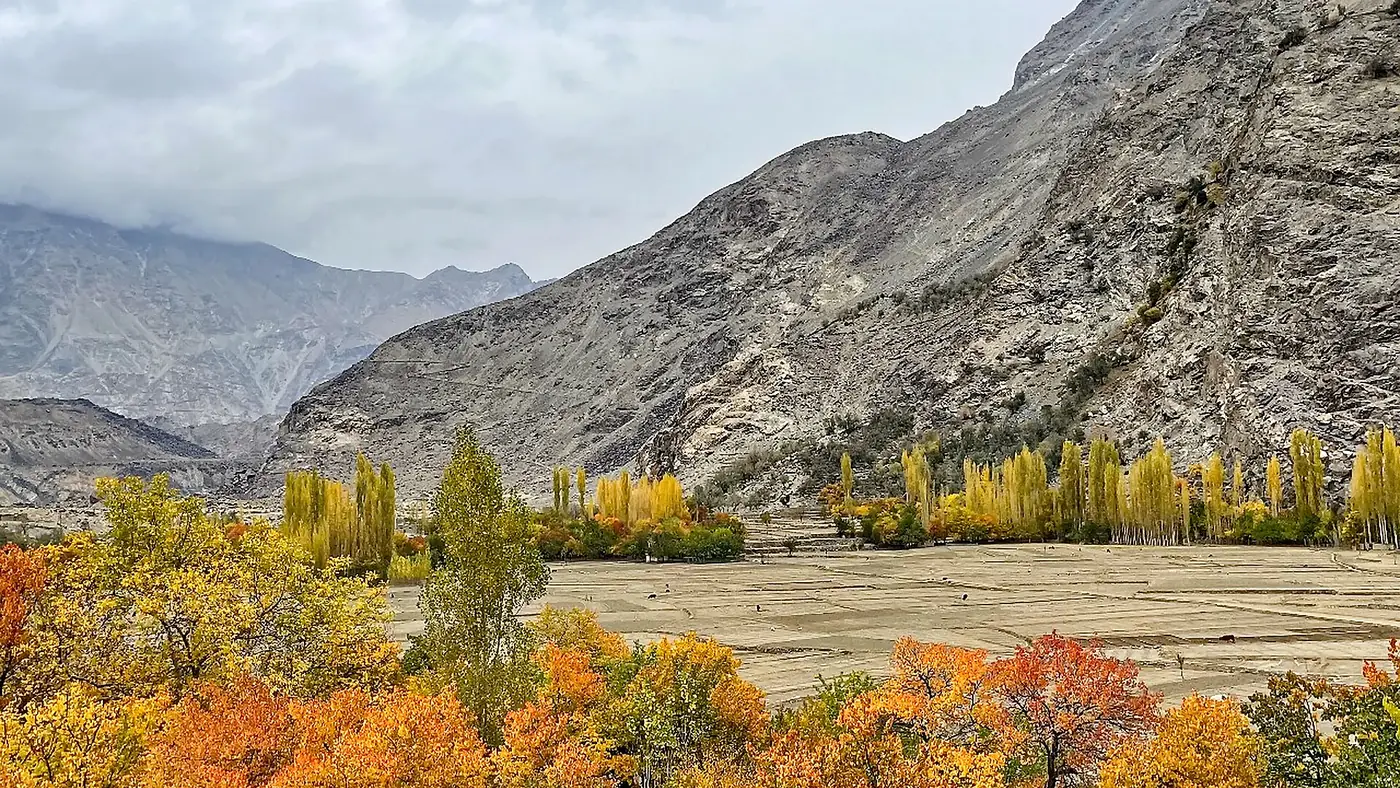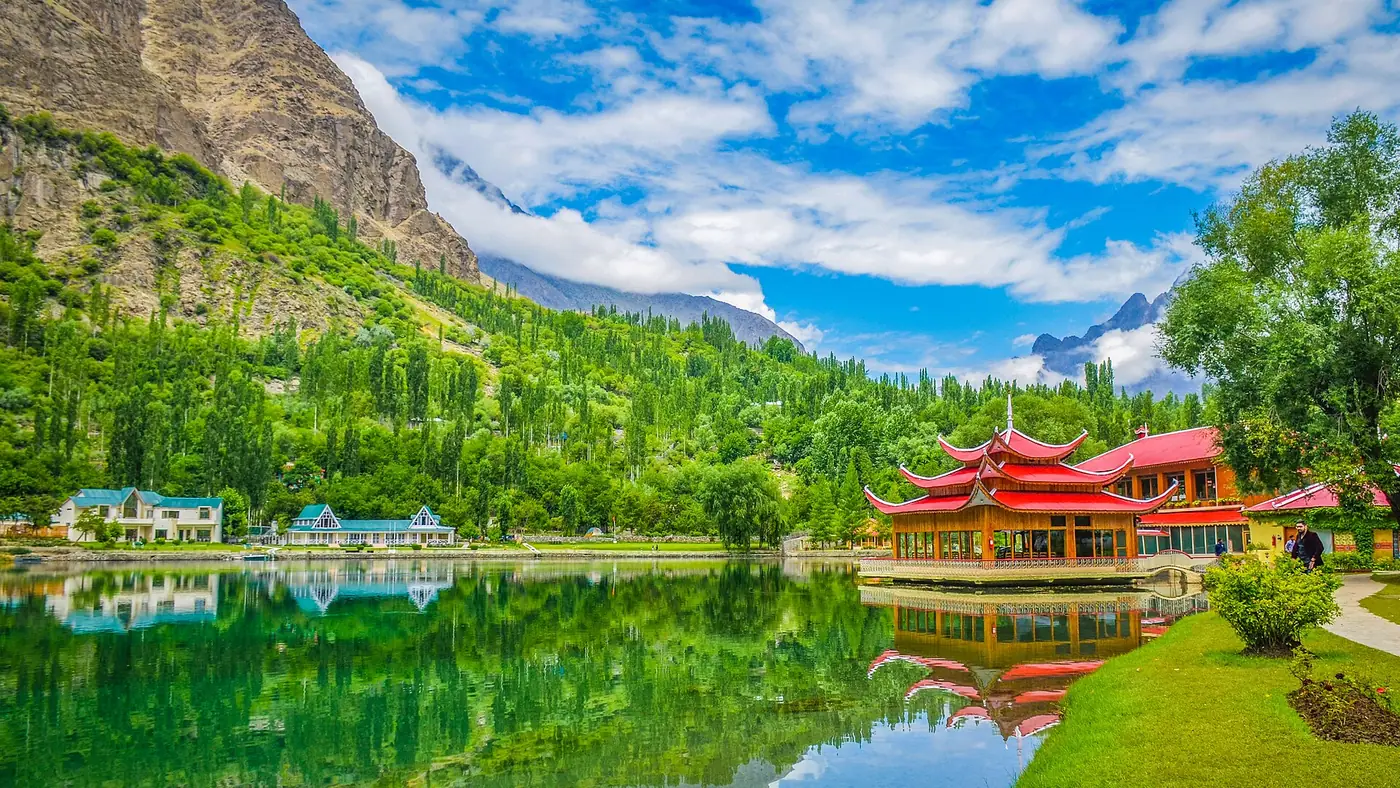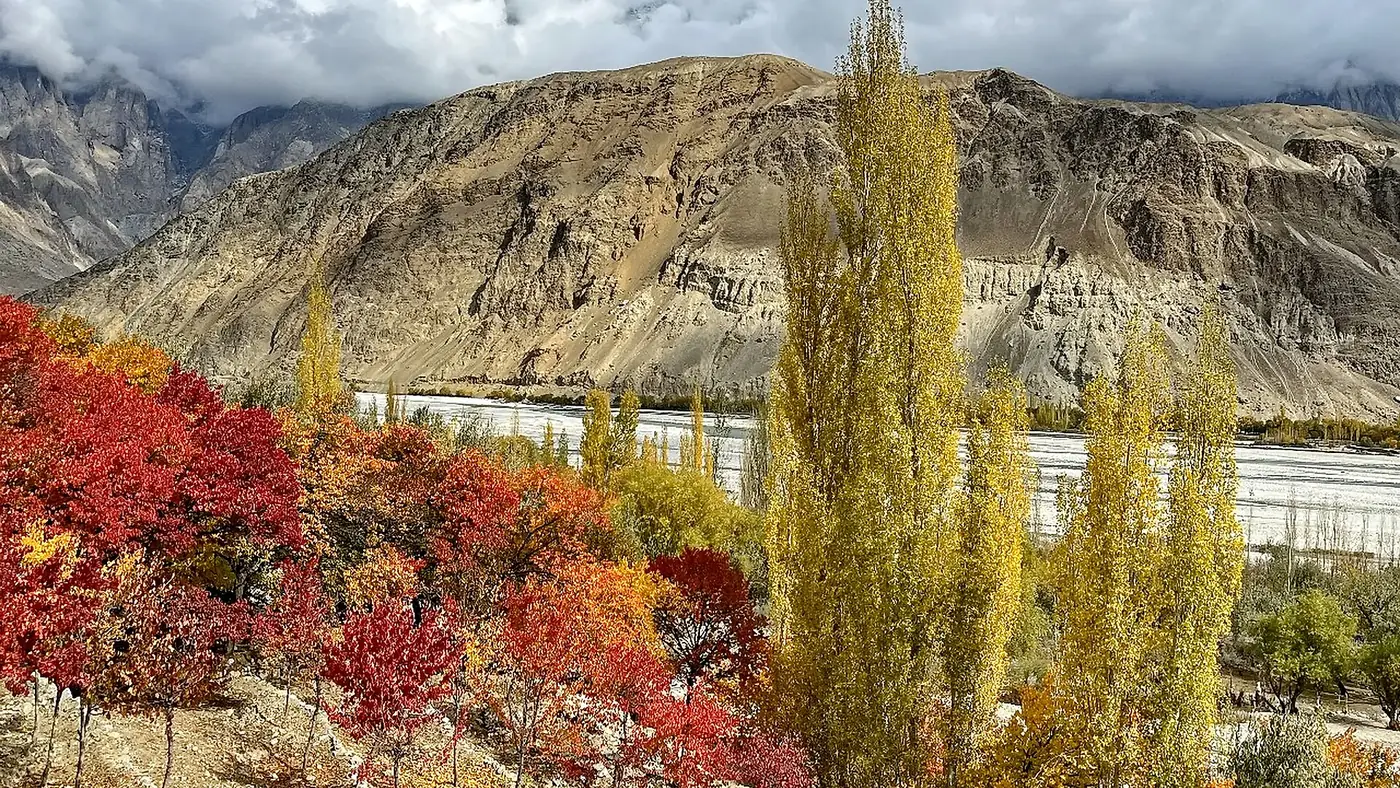
Nangsoq is a small farming village on the far bank of the Indus from Skardu, recognised as the region's first organic village and reachable only on foot or by boat, since no road crosses the river to it. That makes it one of the few places near Skardu where the approach is as much a part of the visit as the village itself.
This guide covers how to get there, what a visit looks like, and how long to set aside.
| At a glance | |
|---|---|
| Location | Across the Indus from Skardu city, near Kharpocho Fort |
| From Skardu | About 3 km, on foot or by boat |
| Access | Trek from Hussaini Chowk, or boat from Chumik |
| Time needed | Half a day |
| Best for | A quiet farming village, organic food, river views |
How to get to Nangsoq
There is no road bridge to Nangsoq, so a visit means either walking in or crossing the Indus by boat.
On foot: the trek starts near Hussaini Chowk and Kharpocho Fort, following a sandy path along the riverbank for about 3 km, with several small footbridges along the way. It's an easy walk rather than a serious trek, manageable for most reasonably fit visitors, but it does mean covering the same ground again on the way back unless you arrange a boat for one leg.
By boat: a shorter, more leisurely option is to cross the Indus by boat from Chumik, on the near side of the river, which cuts out most of the walking and gives good views of the water and the fort above. Boats aren't running on a fixed public schedule, so this is best arranged locally through a hotel or guide in Skardu rather than assumed.
Either way, this is a trip to do with a local guide or through your hotel unless you already know the route, since the paths aren't signposted for casual visitors.
What a visit involves
Nangsoq was recognised in 2006 as Baltistan's first organic village, and farming here still follows that principle: no chemical fertiliser or pesticide, with produce grown, eaten and sold within the community. Walking through, you'll see fields, orchards and the everyday work of a small Balti farming settlement rather than anything set up for tourists.
There's a simple restaurant in the village serving traditional Balti food made from what's grown locally, and it's worth timing a visit around a meal here rather than eating beforehand. Some visitors also swim in a natural spring near the village or fish in the Indus, and there's camping gear available to hire if you want to stay longer than a half-day trip allows.
What to carry
There's nowhere to buy supplies once you leave Skardu, so bring water and sun protection, especially if you're walking the full trail in the middle of the day. Good walking shoes make the sandy, uneven path easier going, and a hat is worth having since there's little shade along the riverbank. If you plan to swim in the spring or fish in the Indus, bring what you need, since nothing is for hire on site beyond the camping gear.
Best time to visit
Nangsoq is a summer destination. The growing season runs through the warmer months, roughly May to September, when the fields are green and the produce that makes the village's reputation is actually in the ground. Outside this window there's little reason to make the crossing, since the appeal is almost entirely about seeing the farming in season.
Is it worth visiting?
If you like a slow, low-key outing and don't mind an hour or so of walking each way, yes. It's a genuinely different experience from the lakes and forts that make up most of Skardu's usual sightseeing, and the approach on foot or by boat is part of what makes it memorable. If you're short on time or not up for the walk, Skardu's better-known sights will fill a day more easily, and Kharpocho Fort itself, on the near bank, is worth a stop even if you don't cross to Nangsoq.
Our plan a trip page can help fit a half-day like this into a wider Skardu itinerary.
Frequently asked questions
How do I get to Nangsoq village?
On foot, via a roughly 3 km trail from near Hussaini Chowk and Kharpocho Fort, or by boat across the Indus from Chumik. There is no road access.
Why is Nangsoq called an organic village?
It was recognised in 2006 as Baltistan's first organic village, where all food is grown and consumed without chemical fertiliser or pesticide.
How long does a visit to Nangsoq take?
Plan on half a day, including the walk or boat crossing each way and time in the village itself.
Is Nangsoq suitable for children or older visitors?
The walking route is an easy trail rather than a technical trek, but it does involve about 3 km each way with some uneven ground. The boat crossing from Chumik is a gentler option for anyone who would struggle with the walk.