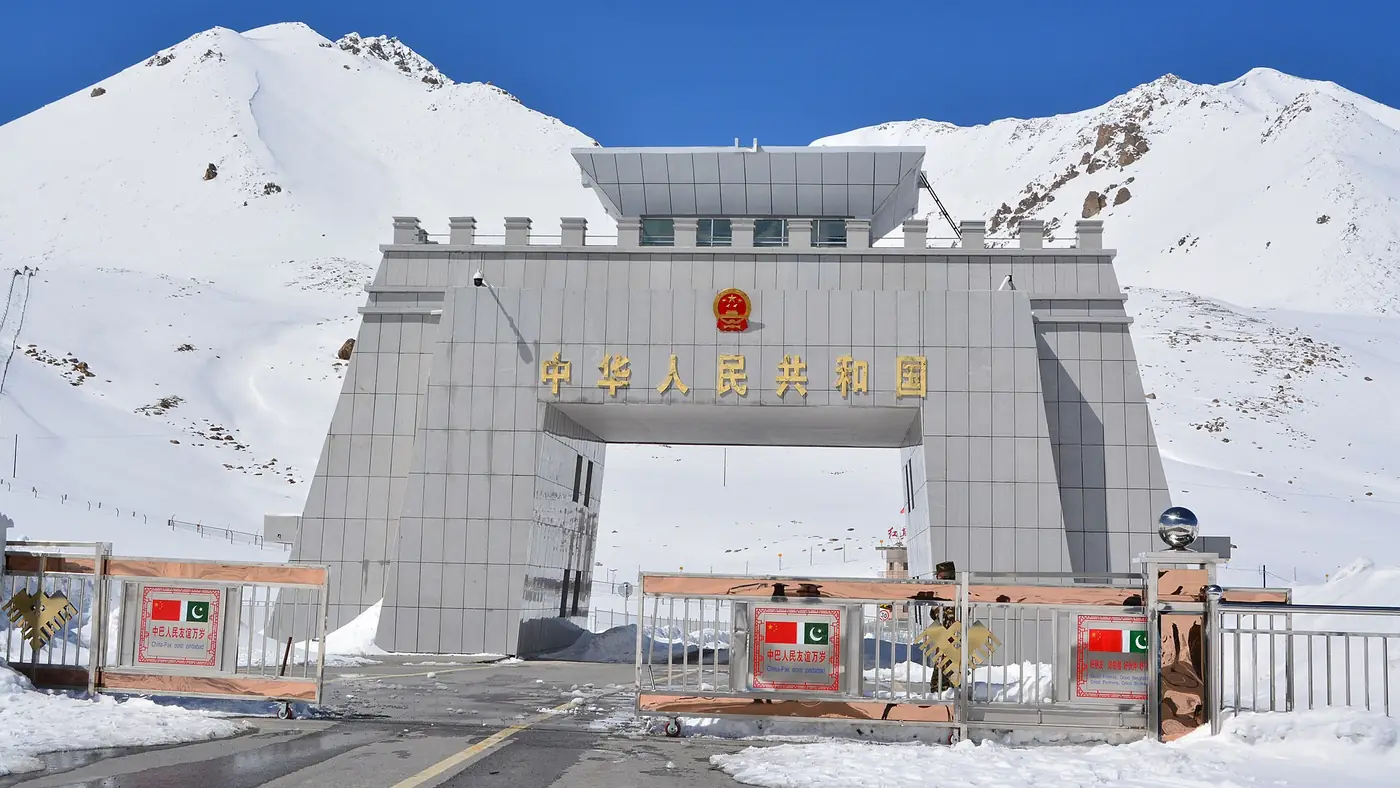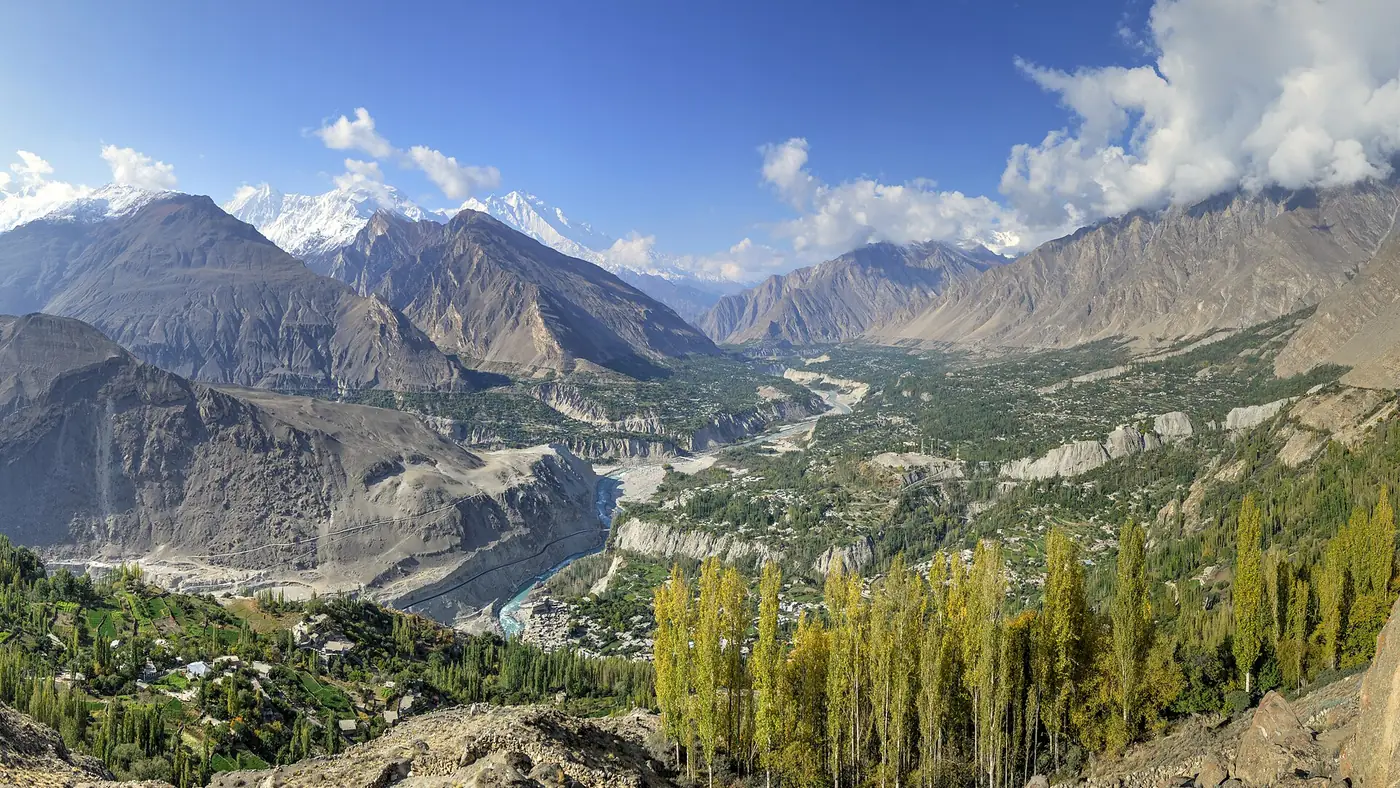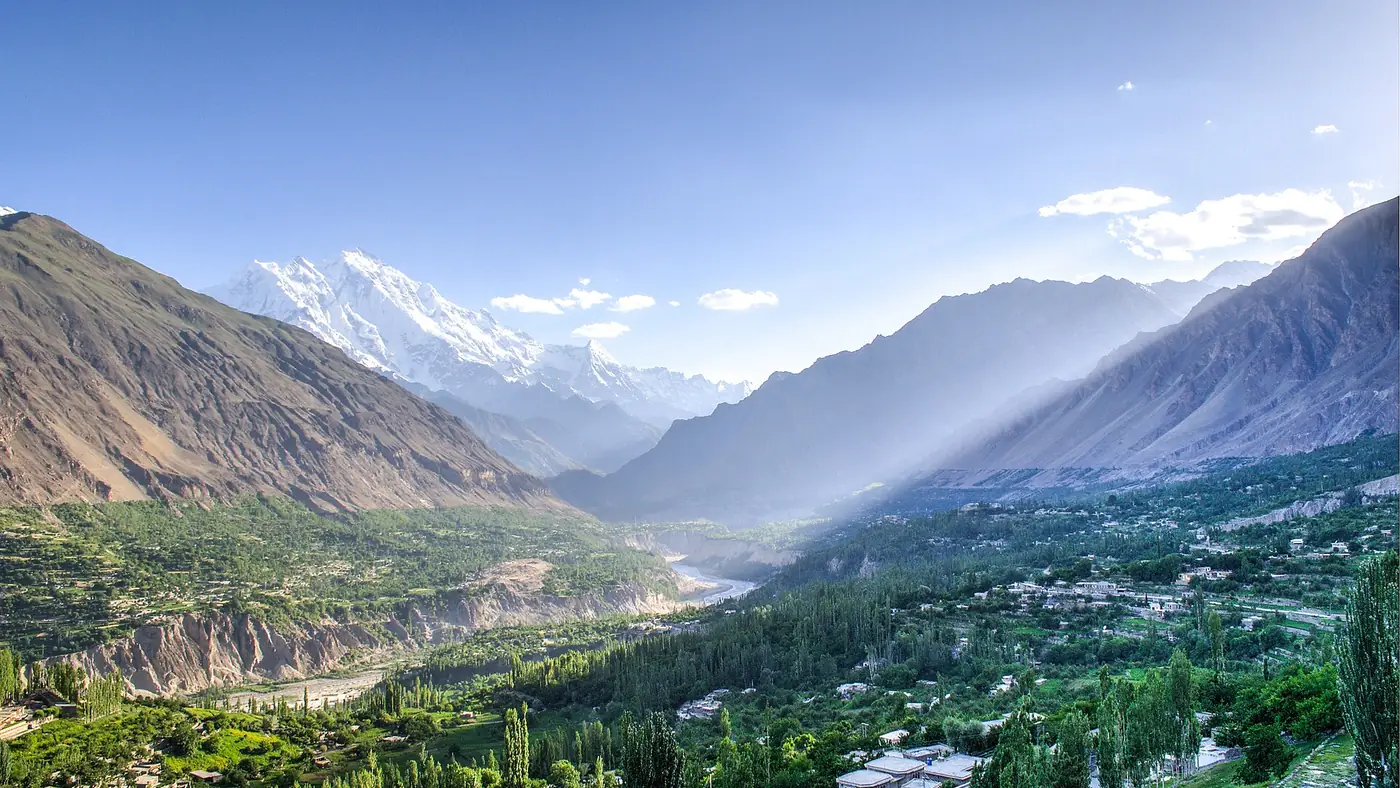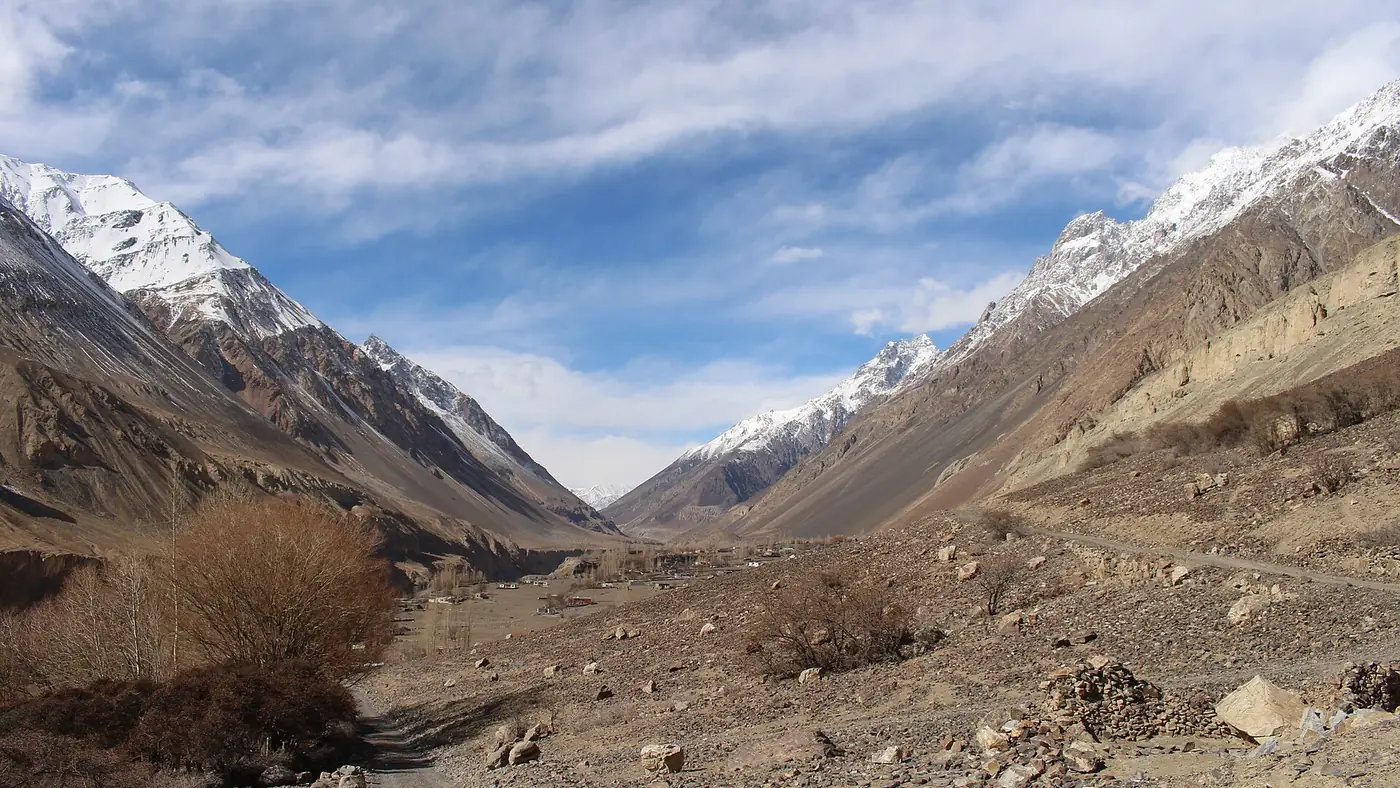
Misgar valley is a small village and its surrounding farmland in Gojal, upper Hunza, reached by a rough jeep track off the Karakoram Highway near Sost, roughly an hour and a half each way by private jeep. It was once a stopping point on a branch of the Silk Road heading to the Kilik and Mintaka passes into China, busier in its day than Khunjerab, and it still sees very few tourists.
This guide covers what Misgar is like, its history, the passes above it, and how to get there.
| At a glance | |
|---|---|
| Where | Gojal, upper Hunza, off the Karakoram Highway near Sost |
| From Sost | About 1.5 hours by private jeep, on a rough road |
| Population | Around 180 households |
| Language | Burushaski |
| History | Settled from 1844; British-era Qalandarchi fort |
| Passes above | Kilik and Mintaka, historic Silk Road routes to China |
| Best months | June to September |
| Tourism | Very light; almost no organised visitor infrastructure |
Where is Misgar, and how do you get there?
Misgar sits off the Karakoram Highway in Gojal, the Wakhi- and Burushaski-speaking upper end of Hunza, reached by a rough track that branches away not far from Sost, the last town before the Khunjerab border. There is no public transport running a fixed schedule; the practical way in is a private jeep hired in Sost, which covers the trip in around an hour and a half each way over what is a genuinely rough road beyond the Sost checkpoint.
Because the road is unpaved and exposed to landslides and snow, it can be affected by weather and is essentially unusable in winter. Ask in Sost about current conditions before setting out, and budget the return trip as a half-day outing rather than a quick stop.
A short history
Misgar's present-day village dates to at least 1844, when it was settled by people from four tribes who came up from Hunza to hold the territory. The area came under British influence from 1892 as part of the wider contest for control of the high passes into Central Asia, sometimes called the Great Game, and it remained part of the Hunza state until Pakistan's independence.
The British built the Qalandarchi fort at Misgar in the 1930s to help control access to the Wakhan corridor and the passes above the village, and it still stands today as the clearest physical trace of that period. In 1963, the area's position near the border made it relevant to the boundary treaty settling the line between Pakistan and China.
The Kilik and Mintaka passes
For more than a thousand years, the Kilik and Mintaka passes above Misgar were among the main Silk Road routes between Hunza and Chinese Central Asia, in regular use by caravans long before the Karakoram Highway existed further east through Khunjerab. In their day, these passes carried more traffic than the Khunjerab route that eventually became the modern border crossing and now gets far more attention.
Both passes are closed as international border crossings today, so this is not a route into China for a modern traveller. What remains is the historical interest and the trekking terrain: broad, high-altitude valleys and meadows that once closed to foreign visitors are described as being among the easier high-altitude trekking country in the north, for those equipped and permitted to go.
What Misgar is like today
Misgar is a settled farming village rather than a tourist destination, home to around 180 households who speak Burushaski, unlike much of the surrounding Wakhi-speaking Gojal. Almost no tourists reach the village, which is precisely its appeal for travellers looking for something well off the routes to Hunza's better-known sights.
There is little in the way of organised visitor infrastructure: expect basic facilities at best, and treat a visit as you would any remote village, arranging food, accommodation and onward transport locally and in advance rather than assuming it will be available on arrival.
Permits and practical notes
Pakistani visitors travelling to Misgar itself do not face special permit requirements beyond the general documentation expected across Gilgit-Baltistan, though you should carry your CNIC and expect checkpoints on the way. Because the area sits close to both the Chinese and Afghan borders, foreign nationals should confirm current requirements with the police or district administration in Sost or Gilgit before travelling, and treks beyond the village towards the Kilik and Mintaka passes need permission arranged well in advance, since this is sensitive border terrain rather than an open trekking area.
- Fill up with fuel and cash in Sost. There is nothing reliable beyond it.
- Don't expect mobile signal once you leave the highway.
- Confirm the state of the road in Sost before committing to the trip, especially outside the summer months.
Is Misgar worth visiting?
For travellers who want genuine remoteness and an interest in the region's Silk Road history, yes. Misgar offers a village and a landscape that very few visitors ever see, with a history that predates the Karakoram Highway by more than a century. It suits independent, patient travellers comfortable with a rough road and minimal facilities, arranged with a private jeep from Sost.
It is not the place for a family day trip or anyone short on time, since the road alone takes up a half day return, and there is little built for casual sightseeing once you arrive. For nearby options with more established visitor facilities, see our guide to Chipursan valley, and for the wider region, our trip planning page can help fit a remote extension like Misgar into a longer Hunza itinerary.
Frequently asked questions
Where is Misgar valley?
In Gojal, upper Hunza, reached by a rough jeep track off the Karakoram Highway near Sost, close to Pakistan's borders with China and Afghanistan.
How do you get to Misgar from Sost?
By private jeep, hired in Sost, taking about an hour and a half each way on an unpaved road. There is no scheduled public transport.
What are the Kilik and Mintaka passes?
Historic Silk Road passes above Misgar that once carried more trade traffic than the Khunjerab route. They are closed as international border crossings today.
Can you stay overnight in Misgar?
Facilities are minimal, and there is little organised visitor infrastructure. Arrange accommodation locally in advance rather than assuming a room will be available.
Do foreign nationals need a permit for Misgar?
Confirm current requirements with the police or district administration in Sost or Gilgit before travelling, since the area sits close to both the Chinese and Afghan borders. Treks beyond the village towards the passes need permission arranged in advance.