
,_Khyber_Pakhtunkhwa,_Pakistan_cropped.jpg)
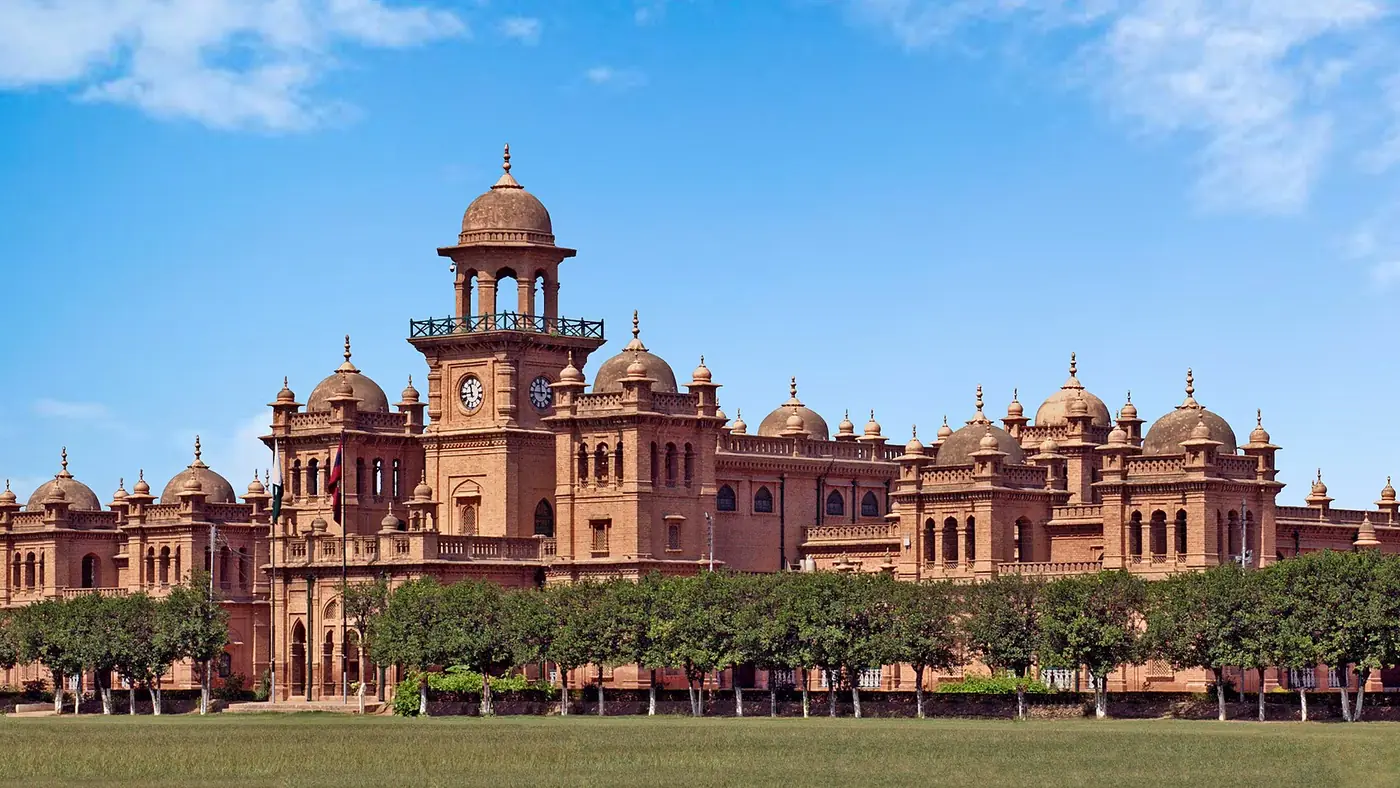
Islamia College Peshawar is a working university whose 1913 main building, a mix of Mughal and colonial-era architecture centred on a domed clock tower, is famous enough in Pakistan to appear on the Rs. 1,000 note. It sits on a green campus at the western edge of the city and its grounds are open to visitors during the day, making it one of the more unusual sights in Peshawar: a heritage building you visit as a working institution rather than a museum.
This guide covers the college's history, what to look for in the building, and how to plan a visit around it.
| At a glance | |
|---|---|
| Founded | 1913 |
| Location | Western edge of Peshawar, towards the Khyber Hills |
| Status | Now Islamia College University, granted university status in 2008 |
| Architectural style | Indo-Saracenic (Mughal and colonial styles combined) |
| Visiting | Grounds generally accessible by day; it is a working campus |
| Notable | Featured on the Pakistani Rs. 1,000 banknote |
A short history
Islamia College was founded in October 1913 by Nawab Sir Sahibzada Abdul Qayyum, an educationist sometimes called the "Sir Syed of the Frontier" for his role in founding modern education in the region, working with the British colonial administrator Sir George Roose-Keppel. The aim was to build a centre of higher education for the North-West Frontier comparable to what Sir Syed Ahmad Khan had built at Aligarh, and the college was placed deliberately at the edge of the city, in the foothills towards the Khyber Pass, rather than in the crowded old city.
It educated a significant share of the region's political and professional class over the following decades, including figures who went on to shape Pakistan's early politics. Quaid-e-Azam Muhammad Ali Jinnah left part of his estate to the college, a mark of how seriously it was regarded even before independence. It was granted university status in 2008 and now operates as Islamia College University, still teaching alongside the original heritage buildings.
The architecture
The main building is what draws visitors, and it is worth a slow look rather than a quick photo. Architecturally it belongs to the Indo-Saracenic, or Neo-Mughal, style that the British promoted across colonial India, blending Mughal, Sultanate and Rajput forms with Victorian and Edwardian detailing.
Things to look for:
- The clock tower, at the centre of the symmetrical south-facing facade, topped with a dome and the building's most recognisable feature.
- Pointed arches and domes throughout the structure, alongside columns and cupolas typical of the Mughal revival style.
- Cut and dressed brickwork, giving the facade its texture and colour.
- Four distinct window styles: arched, decorative screen (jali-type) windows, rectangular windows and elliptical windows, used across different parts of the building.
The overall effect is a building designed to project permanence and learning at once, in a style meant to feel both locally rooted and imperially grand, a combination typical of major colonial-era educational buildings across South Asia.
Visiting the campus
Islamia College University is a working institution with students and staff, not a museum, so a visit means walking the grounds and viewing the exterior of the main building rather than touring interior rooms. The campus is set in substantial grounds with trees and open lawns, which makes it a pleasant place to walk as well as look at architecture.
There is no formal ticketed entry for casual visitors in the way there is at Sethi House or Gor Khuttree. Be respectful of the fact that it is a functioning university: keep to the grounds and the exterior of buildings, avoid disrupting classes or offices, and ask before photographing students or staff.
Getting there
The campus sits towards the western edge of Peshawar, on the way out towards the Khyber Pass, further from the old city than most of Peshawar's other sights. It is best reached by car or rickshaw rather than on foot from the old city, and it combines naturally with a wider look at Peshawar's western suburbs, including University Town and Hayatabad.
Our guide to places to visit in Peshawar sets it alongside the old city's sights and the Peshawar Museum for planning a longer visit.
Is it worth visiting?
Yes, for anyone with an interest in colonial-era architecture or Pakistan's educational history, and it costs nothing to walk the grounds. It is a different kind of sight from the old city's bazaars and havelis: grander, quieter and set apart from the crowds.
It suits visitors who already have architecture or history in mind rather than casual sightseers, since it takes some effort to reach and there is no interior tour to fill the visit out. Combine it with a wider look at the western side of the city, including Karkhano Market further along the same road, rather than making it a special trip on its own.
Frequently asked questions
Can the public visit Islamia College Peshawar?
The grounds and the exterior of the main heritage building can generally be seen during the day, as it is a functioning university rather than a museum. There is no formal interior tour for casual visitors.
Why is Islamia College Peshawar famous?
For its 1913 main building, an Indo-Saracenic mix of Mughal and colonial architecture centred on a domed clock tower, which appears on the Pakistani Rs. 1,000 banknote.
Who founded Islamia College Peshawar?
Nawab Sir Sahibzada Abdul Qayyum, working with the British administrator Sir George Roose-Keppel, founded the college in October 1913.
Is Islamia College Peshawar still a college?
It was granted university status in 2008 and now operates as Islamia College University, though the historic name and buildings remain.
Is it safe to visit Islamia College Peshawar?
Many Pakistanis visit the campus grounds without trouble, but the UK government currently advises against all travel to Peshawar. Visit by day and check the current situation before you go; see our guide on whether Peshawar is safe for more.