Gwadar is safe to visit in the sense that Pakistani families and groups go there every winter, walk its beaches and old town, and come home without incident. It is also a heavily guarded town, for reasons that are easy to see once you know the recent history, and a visit there means working around checkpoints and no-go zones rather than moving about as freely as you would in, say, Karachi. This post covers how the town's security is organised on the ground: the zones, the checkpoints, where visitors move freely, and where to check the current picture before you travel.
For the drive there, see our post on whether the Makran Coastal Highway is safe; for what there is to see once you arrive, see places to visit in Gwadar.
| At a glance | |
|---|---|
| Where | Makran coast, Balochistan, about 650 km west of Karachi |
| Open to visitors | The town centre, Marine Drive, old town, Koh-e-Batil (with ID checks) |
| Closed to visitors | The port and East Bay, naval and military sites, project housing compounds |
| Documents | Original CNIC at all times; foreign nationals need a No Objection Certificate |
| Foreign government advice | The UK advises against all travel to Balochistan |
| What to do before you go | Check current news and, for foreign nationals, confirm NOC and escort rules |
The security picture
Gwadar's security is shaped by its role as a deep-water port and the centrepiece of the China–Pakistan Economic Corridor, which has made it a repeated target. On 20 March 2024, militants attacked the Gwadar Port Authority Complex; security forces killed all eight attackers, and two soldiers died in the fighting. In a wave of coordinated attacks across Balochistan on 31 January 2026, gunmen killed 11 people, including women and children, at a labourers' camp in Gwadar district, part of a broader series of attacks that hit several towns that week. Balochistan has continued to see attacks on security forces through 2026, including on installations in and around Gwadar.
None of this is a reason to assume the town is closed to visitors; it isn't, and Pakistanis travel there regularly, especially between October and March. It is a reason to treat the security presence you will see, checkpoints, patrols and ID checks, as normal rather than alarming, and to check the news before you go rather than relying on an old report.
The zones: what's open, what isn't
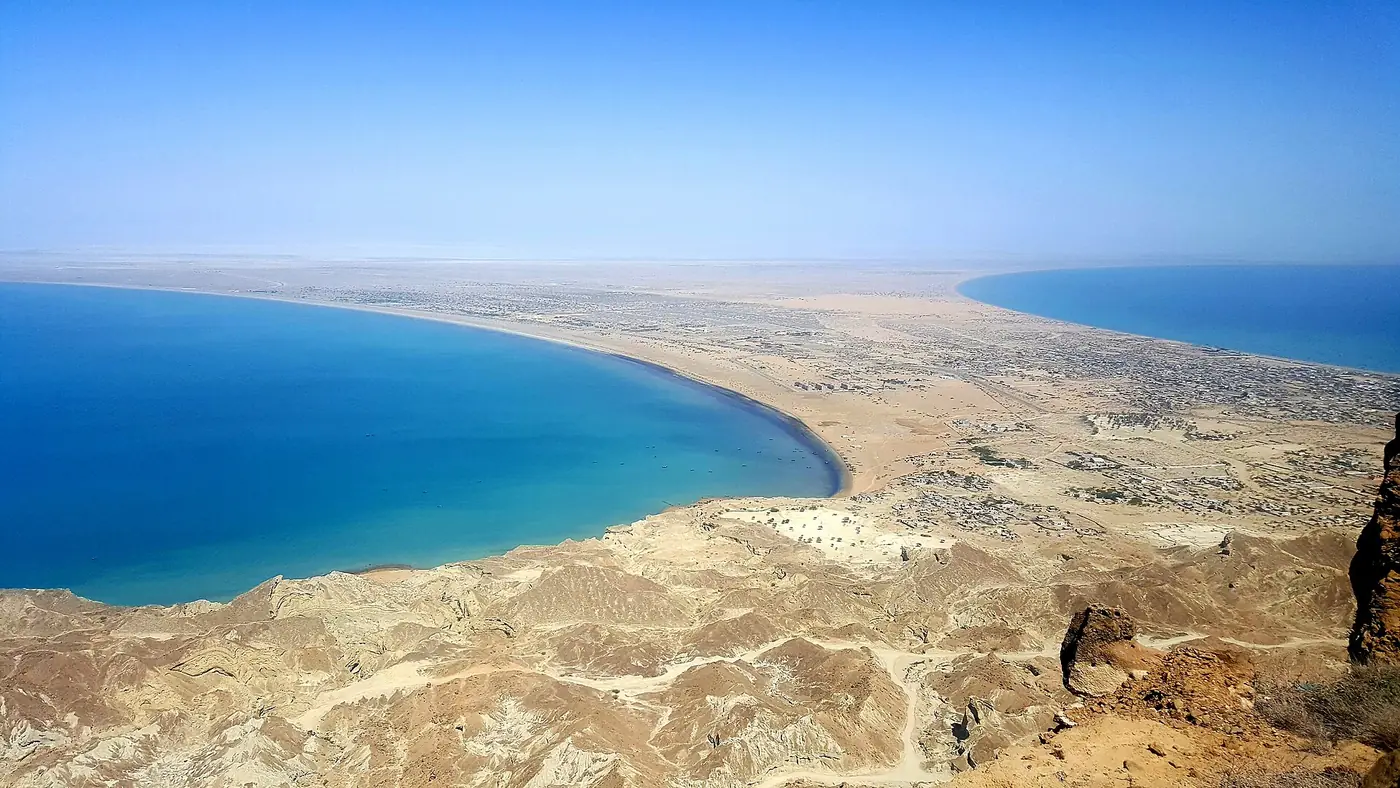
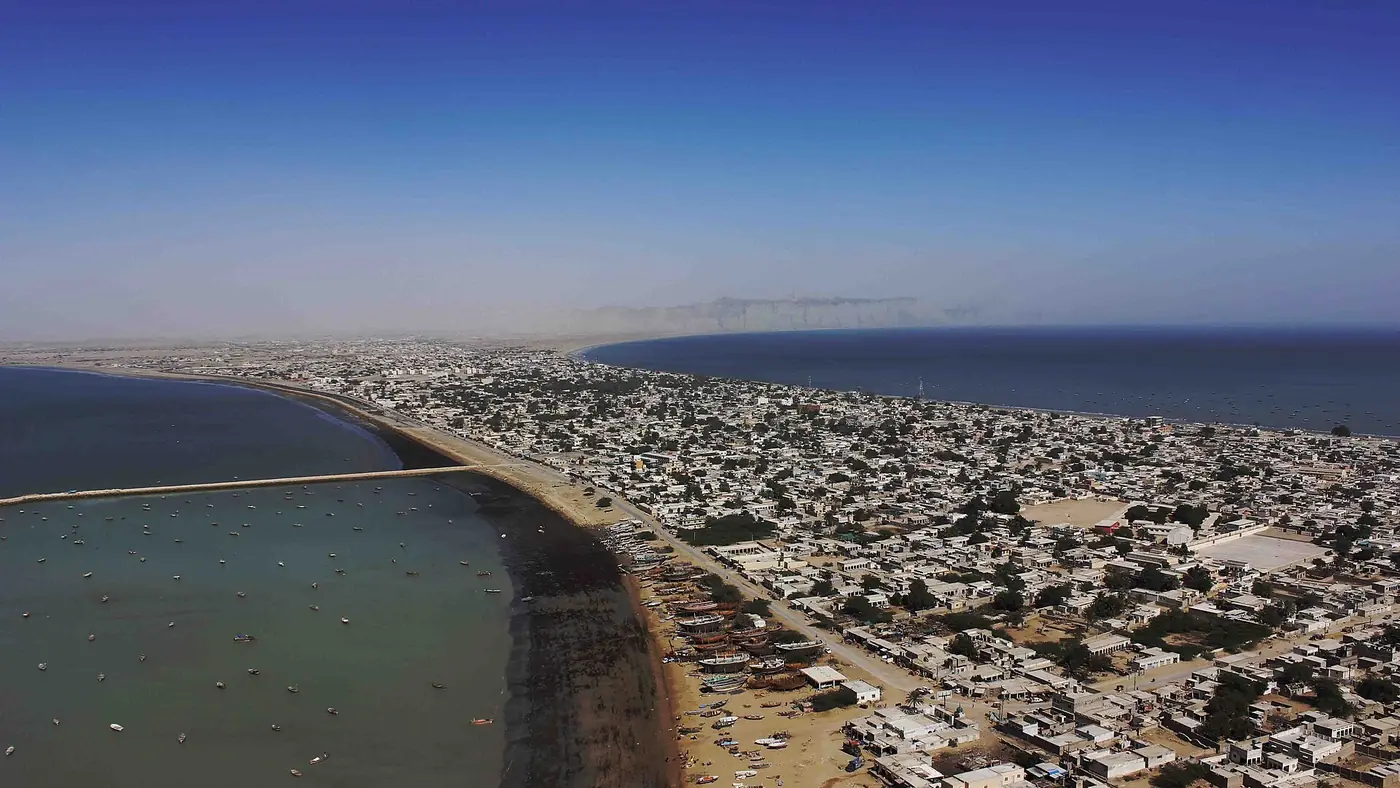
Gwadar sits on a narrow isthmus with a rocky promontory, Koh-e-Batil, at its southern end. The town divides fairly cleanly into places visitors can go and places they can't.
Open, generally without special permission:
- The old town and Shahi Bazaar
- Marine Drive and the West Bay beach
- The fish harbour, from a respectful distance
- Gwadar Cricket Stadium, when it isn't hosting a closed match
- Hotels, restaurants and the main market areas
Open, but with an ID check or registration:
- Koh-e-Batil, the hammerhead promontory. The road up has a checkpoint where visitors are asked to show ID; our Koh-e-Batil guide covers what to expect there.
Closed to visitors:
- The deep-water port and the East Bay area around it
- Project compounds and housing for CPEC and port workers
- Military, naval and police installations, and the approaches to them
- Anywhere a checkpoint or a soldier tells you not to go, even if it looked open on a map
Photographing the port, checkpoints, naval assets or anything that looks military is not worth the trouble it can cause; leave the camera down until you are clearly somewhere ordinary, like the beach or the bazaar.
Checkpoints and daily life
Expect to pass through checkpoints on the roads into Gwadar and at intervals within the town, particularly around the port and Koh-e-Batil. This is routine, not a sign that something specific is wrong that day.
- Carry your CNIC (or passport and NOC for foreign nationals) at all times, not just for travel days.
- Answer questions plainly about where you are staying and what you are doing.
- Follow instructions from police and hotel staff about which areas are open that day; this can change with little notice.
- Keep to daylight for any road travel in or out of town, in line with the rules covering the wider Makran coast.
Hotel staff in Gwadar are used to visitors and are usually a good source of same-day advice on what to see and what to skip.
Who Gwadar suits
Gwadar suits travellers who are comfortable with a visible security presence, don't mind checkpoints and ID checks as part of the day, and are happy to change plans if an area is closed. It suits people less well if a heavily guarded environment would make them anxious for the whole trip, or if anyone in the group needs easy access to a hospital away from the town centre.
Overseas visitors should know that the UK's Foreign Office advises against all travel to Balochistan, and that other governments say much the same; travelling against that advice can void travel insurance. Foreign nationals also need a No Objection Certificate from the Balochistan government before travelling to Gwadar, arranged well in advance. If you are weighing Gwadar against elsewhere in Pakistan, our trip planning page is a good place to start.
Frequently asked questions
Is it currently safe to travel to Gwadar?
Pakistani visitors travel there regularly, but Balochistan has seen serious attacks through 2024 and 2026, including one on the Gwadar Port Authority Complex in March 2024 and further attacks across the province in 2026. Check the news the evening before and the morning of your trip, and be ready to change plans.
Can tourists visit Gwadar Port?
No. The port and the East Bay area around it are restricted to visitors. You can see it from a distance, including from Koh-e-Batil, but don't try to enter or photograph it closely.
Do I need permission to visit Gwadar?
Pakistani citizens need only their CNIC. Foreign nationals need a No Objection Certificate from the Balochistan government, arranged before travel, and may be asked to travel with an escort on some routes.
Are there areas of Gwadar tourists can't enter?
Yes: the port and its surrounding East Bay area, project and worker housing compounds, and military, naval and police installations. Checkpoints mark most of these, and staff will turn you back if you approach.
Is it safe to walk around Gwadar at night?
Stick to well-used areas like Marine Drive, where families walk in the evening, and avoid quiet or unfamiliar streets after dark. As with road travel on this coast, daylight is when most visitors move around.