The main places to visit in Gwadar are close together: Koh-e-Batil, the hammer-shaped headland above the town, with its viewpoints, steps and sunset park; the West Bay beach along Marine Drive; the old town around Shahi Bazaar, with its Omani-era forts and Hindu temple; the fish harbour; and the cricket stadium in the hills. The deep-water port and the areas around it are closed to visitors. One full day covers the town and a second allows a trip along the coast, but check the security situation before you go, because Gwadar has seen repeated attacks since 2024.
This guide goes through each place, notes which are open to visitors, and suggests how to fit them into a day or two.
| At a glance | |
|---|---|
| Where | Makran coast, Balochistan, about 650 km west of Karachi |
| Time needed | 1 full day for the town; 2 days with a coastal trip |
| Best months | October to March |
| Best time of day | Early morning for the harbour; late afternoon for Koh-e-Batil |
| Main sights | Koh-e-Batil, West Bay and Marine Drive, old town, fish harbour, cricket stadium |
| Closed to visitors | The port and its surroundings, military and security installations |
| Documents | Original CNIC at all times; foreign nationals need a No Objection Certificate |
| Foreign government advice | The UK advises against all travel to Balochistan |
How Gwadar is laid out
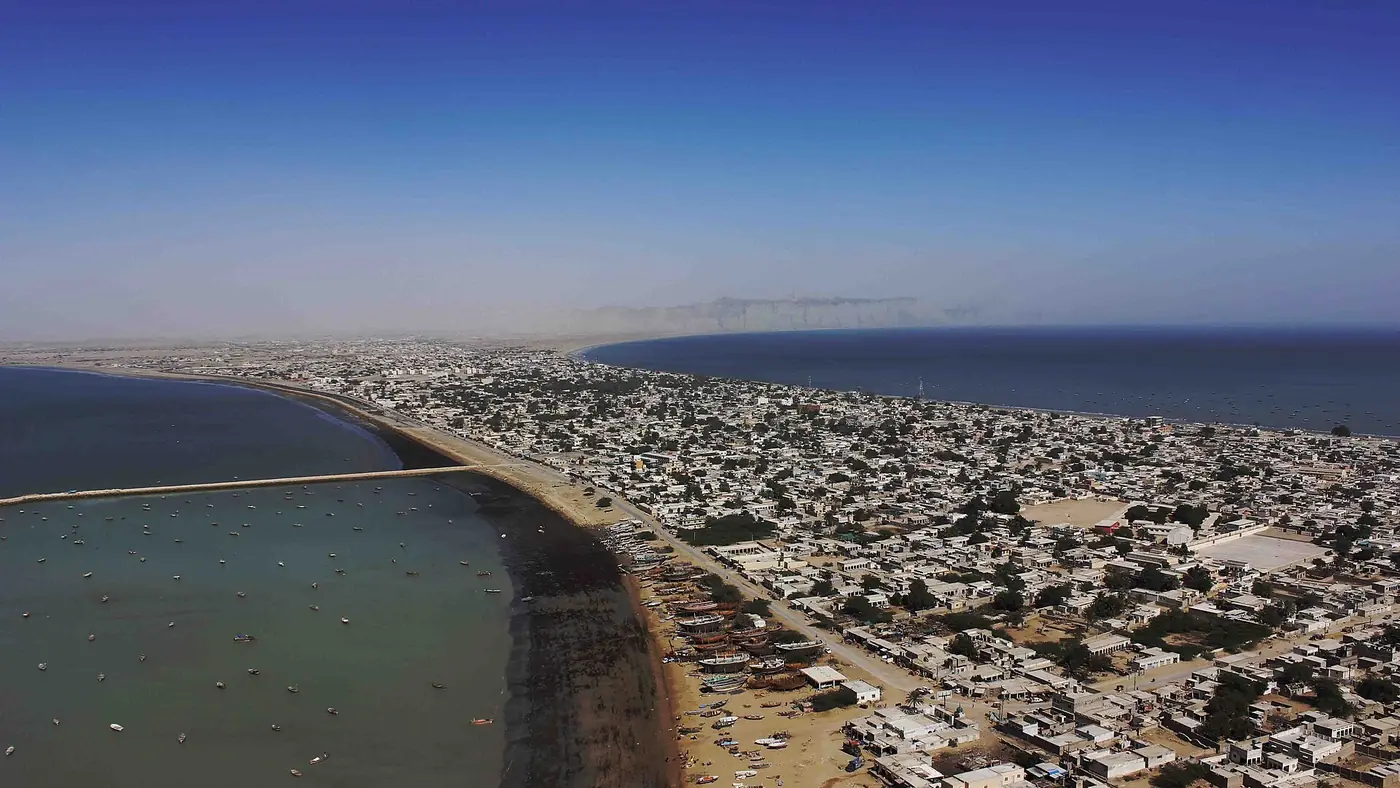
Gwadar sits on a narrow sandy isthmus, about 12 km long, that joins the coast to a rocky promontory rising to around 150 metres. From the air the promontory and the neck of land look like a hammerhead, which is where the nickname comes from. There is a bay on each side:
- West Bay, or Padi Zirr, is shallow and sandy. Marine Drive and the town's public beaches run along it.
- East Bay, or Demi Zirr, is the deep-water side, where the port has been built. It is largely a restricted area.
The old town lies towards the southern end of the isthmus, near the foot of the promontory. Everything worth seeing in Gwadar is within a short drive of it.
Koh-e-Batil: the Hammerhead
Koh-e-Batil is the promontory itself, a flat-topped ridge of sandstone and clay with cliffs dropping to the sea on three sides. It is the reason to come to Gwadar. From the top you see the town spread along its isthmus, a bay on either hand, and open sea to the south.
What is up there:
- Sunset Park. The Gwadar Development Authority's viewing park in the Sangar housing scheme on top of the promontory, built for exactly what its name says.
- Sad-e-Kandag. A stone stairway of more than 500 steps climbing the face of the hill to the summit. It is steep and hard work in the heat, so go early or late, and think twice with small children.
- Kapasi beach. A small beach behind Koh-e-Batil reached by a flight of stairs, known for sunsets.
- The Zaver Pearl Continental. Gwadar's best-known hotel sits on top of the promontory, with views over both bays.
Access to the promontory is controlled. Visitors have been asked to show identity documents and register with security at the checkpoint on the road up, so keep every adult's CNIC with you and expect questions. Go in the last two hours of daylight for the light and the cooler air, and come down before dark.
The West Bay beach and Marine Drive
Marine Drive is the seafront road along West Bay, and in the evening it is where Gwadar comes out to walk. The GDA has built parks along it, including Padizer Park near its office complex and a beach park near the Deputy Commissioner's office, and the "I Love Gwadar" sign in front of the Gwadar Tourist Motel is the town's standard photograph.
The beach itself is wide, flat and sandy, with fishing boats pulled up along parts of it. It is a place to walk rather than swim. There are no lifeguards, and from May to September the monsoon swell makes the sea dangerous along the whole Makran coast. Even in winter, go in no deeper than your waist and never alone.
The old town and Shahi Bazaar
Gwadar was ruled by the Sultanate of Oman from 1783 until September 1958, when Pakistan bought it from Oman. The old town is where that history survives, in narrow lanes of low houses around Shahi Bazaar, the old royal market.
Look for:
- The Omani-era forts. Three forts were built during Omani rule. One was restored with support from Oman and opened as a museum in 2007. Ask locally whether it is open when you visit, because opening hours are not published.
- The old cannons displayed outside the old municipal office, once fired to announce Eid.
- Shri Krishna Mandir, a Hindu temple in Shahi Bazaar that is thought to date from the Omani period. It stands beside a Sunni mosque and an Ismaili jamatkhana, and was refurbished in 2002 with help from the town's Muslim community. It is an active temple; ask before going in or taking photographs.
Much of the old town is faded and some buildings are close to collapse, so this is a place for a slow, respectful walk rather than a monument visit. Dress modestly, and ask before photographing people, particularly women.
The fish harbour and the cricket stadium
The fish harbour
Gwadar was a fishing town long before it was a port, and it still is. The fish harbour, built by the Belgian firm BESIX between 1988 and 1992, is busiest in the early morning, when the boats come in and the catch is landed and sold. It is a noisy, working place, with no facilities for visitors; stay out of the way of the workers, and ask before photographing anyone.
The fishing villages of Surbandar, to the east, and Pishukan, to the west, have small harbours of their own and a slower pace. Some visitors arrange a short trip along the coast in a fishing boat. If you do, agree the price and length of the trip first, insist on life jackets, and don't go out in rough weather.
Gwadar Cricket Stadium
The Gwadar Cricket Stadium, officially the Senator Muhammad Ishaq Baloch Cricket Stadium, sits in a bowl of pale, eroded hills at the edge of the town. Photographs of its green outfield against the bare mountains made it famous, and it hosts local and national matches. It is a working ground rather than a tourist site, so whether you can walk in depends on what is happening that day; ask at the gate.
Beyond the town: Jiwani, Ganz and Pasni
With a second day, the coast either side of Gwadar has quieter places:
- Jiwani, towards the Iranian border at the far end of Gwadar Bay, is known for its mangroves, a colonial-era hut on the shore, and what locals call Pakistan's last sunset.
- Ganz, a fishing village towards the border, has oddly shaped hills behind the beach.
- Pasni, about two hours east on the road back to Karachi, is a working fishing town and the starting point for boat trips to Astola Island.
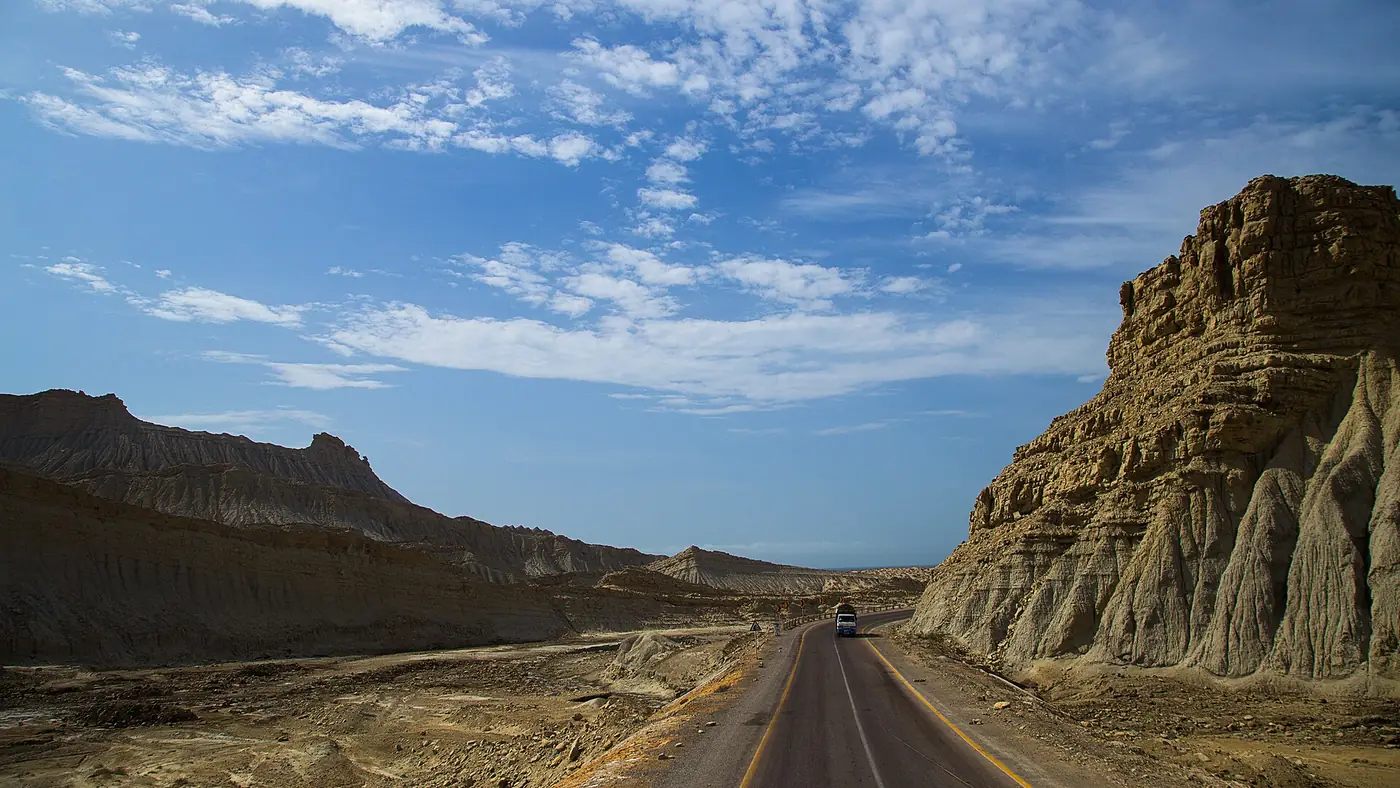
Roads out of Gwadar are part of the same security picture as the Makran Coastal Highway. Check locally before leaving town, and be back before dark.
Is Gwadar safe to visit?
Pakistani visitors do go to Gwadar, especially in winter, but it is a heavily guarded town for good reason. In March 2024 militants attacked the Gwadar Port Authority complex; all eight attackers and two soldiers were killed. In the coordinated attacks across Balochistan in January and February 2026, 11 people, including women and children, were killed at a labourers' camp in Gwadar, and militants tried to take passengers off buses on the highways nearby.
Read the news before you travel and again each morning while you are there, follow the advice of police and hotel staff, and keep all road travel to daylight. For overseas visitors, the UK's Foreign Office travel advice for Pakistan advises against all travel to Balochistan, which can void travel insurance, and foreign nationals need a No Objection Certificate from the provincial government.
What is off limits
Much of Gwadar is security-sensitive, and it is easy to wander somewhere you shouldn't.
- The port and the East Bay area around it are closed to visitors.
- Project compounds and housing for foreign workers are guarded and not open.
- Military, naval and police installations, and the checkpoints around the town, must not be photographed.
- Drones should not be flown without written permission.
Checkpoints within and around the town are routine. Carry your CNIC at all times, answer questions plainly, and if you are told a road or area is closed, turn round.
How to spend a day in Gwadar
- Early morning at the fish harbour, while the boats are coming in.
- The old town and Shahi Bazaar before the heat builds, with breakfast or tea nearby.
- Rest through the middle of the day. Even in winter the midday sun is strong.
- The cricket stadium in the afternoon, if a match is not closing it.
- Koh-e-Batil for the last two hours of light, with Sunset Park or Kapasi beach for the sunset itself.
- Marine Drive after dark, when families come out to walk.
The Gwadar Development Authority keeps its own list of places to visit in Gwadar, which is useful for checking names and locations.
Is Gwadar worth the trip?
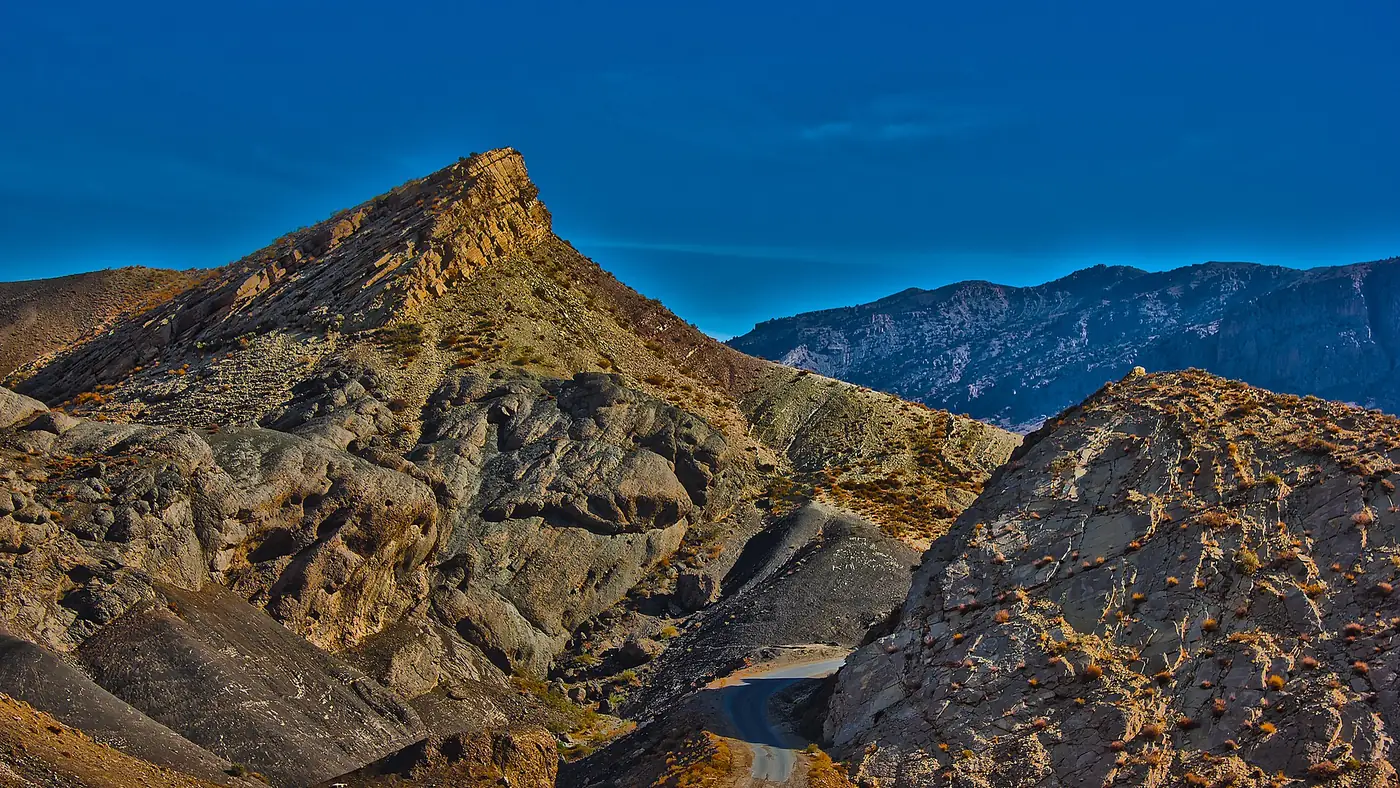
Gwadar itself is a small town with a handful of sights, and nobody should drive 650 km just for Marine Drive. What makes it worth it is the whole journey: the Makran Coastal Highway through Hingol, Buzi Pass and Ormara, and then the view from Koh-e-Batil at the end. Our Makran Coastal Highway guide covers the drive, and our guide to Karachi to Gwadar by road covers the timings and coaches.
It suits people who like empty coast, fishing towns and a long road trip, and who are comfortable with heavy security and simple facilities. It suits people less well if they want a beach holiday with resorts and activities, or if the security situation would spoil the trip for them. If you would rather talk through where in Pakistan fits your dates, start with our trip planning page.
Frequently asked questions
What is Gwadar famous for?
Its deep-water port, its position on a hammer-shaped peninsula between two bays, and the views from Koh-e-Batil. For visitors, the headland, the West Bay beach, the old town and the fish harbour are the main attractions.
Can tourists visit Gwadar Port?
No. The port and the East Bay area around it are restricted. You can see the port from Koh-e-Batil, but don't photograph it closely or try to enter.
What is the Hammerhead in Gwadar?
Koh-e-Batil, the rocky promontory joined to the mainland by a narrow isthmus, which together look like a hammerhead from above. Its top has a sunset park, viewpoints and the Pearl Continental hotel.
How many days are enough for Gwadar?
One full day covers the town. Add a second for Jiwani, Ganz or Pasni, and allow two days each way by road from Karachi if you want to see the coast properly.
What is the best time to visit Gwadar?
October to March, when the days are warm and the sea is calm. Summer is hot and humid, and the sea is rough from May to September.
Is Gwadar safe for tourists?
Pakistani visitors do travel there, but Gwadar has seen attacks in 2024 and 2026 and security is heavy. Check the news before and during your trip, travel only in daylight, and follow local advice.