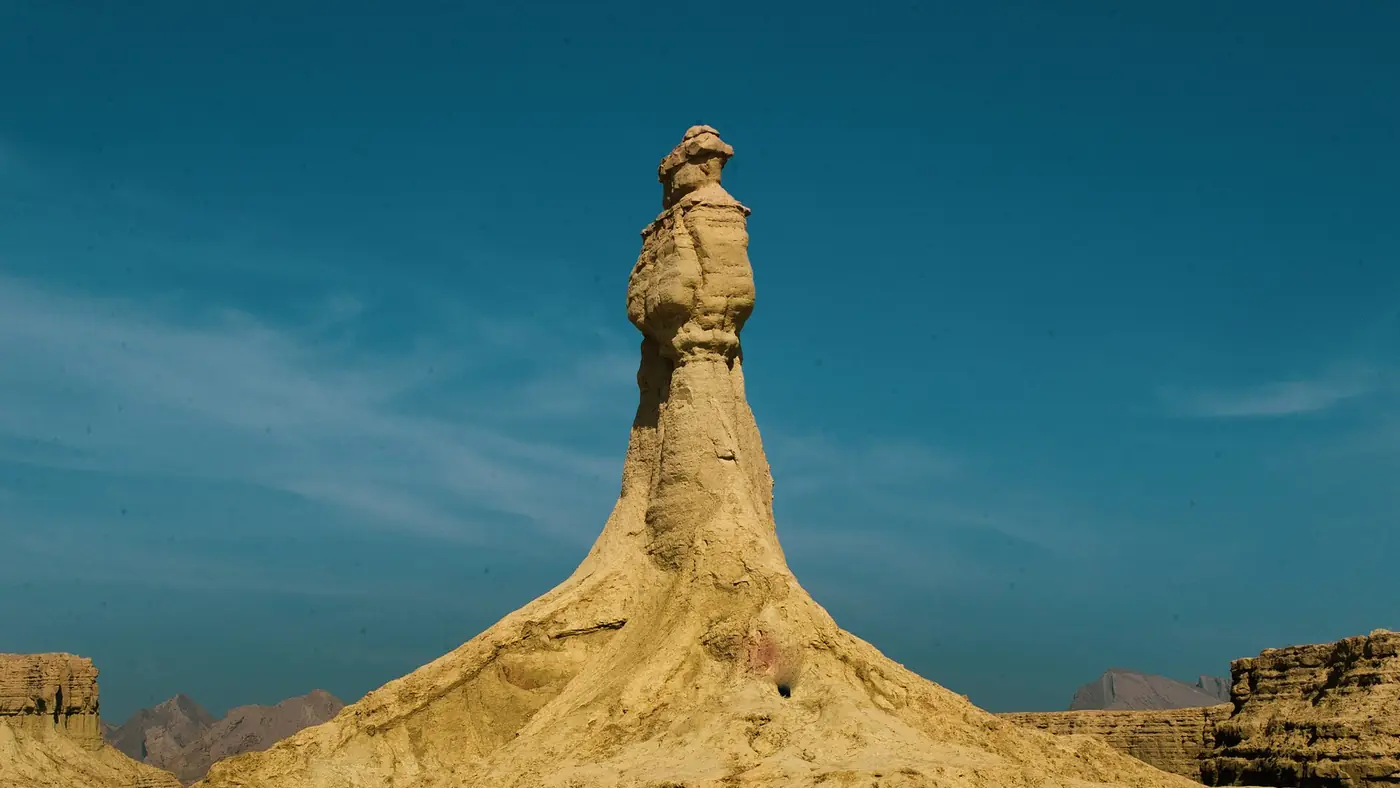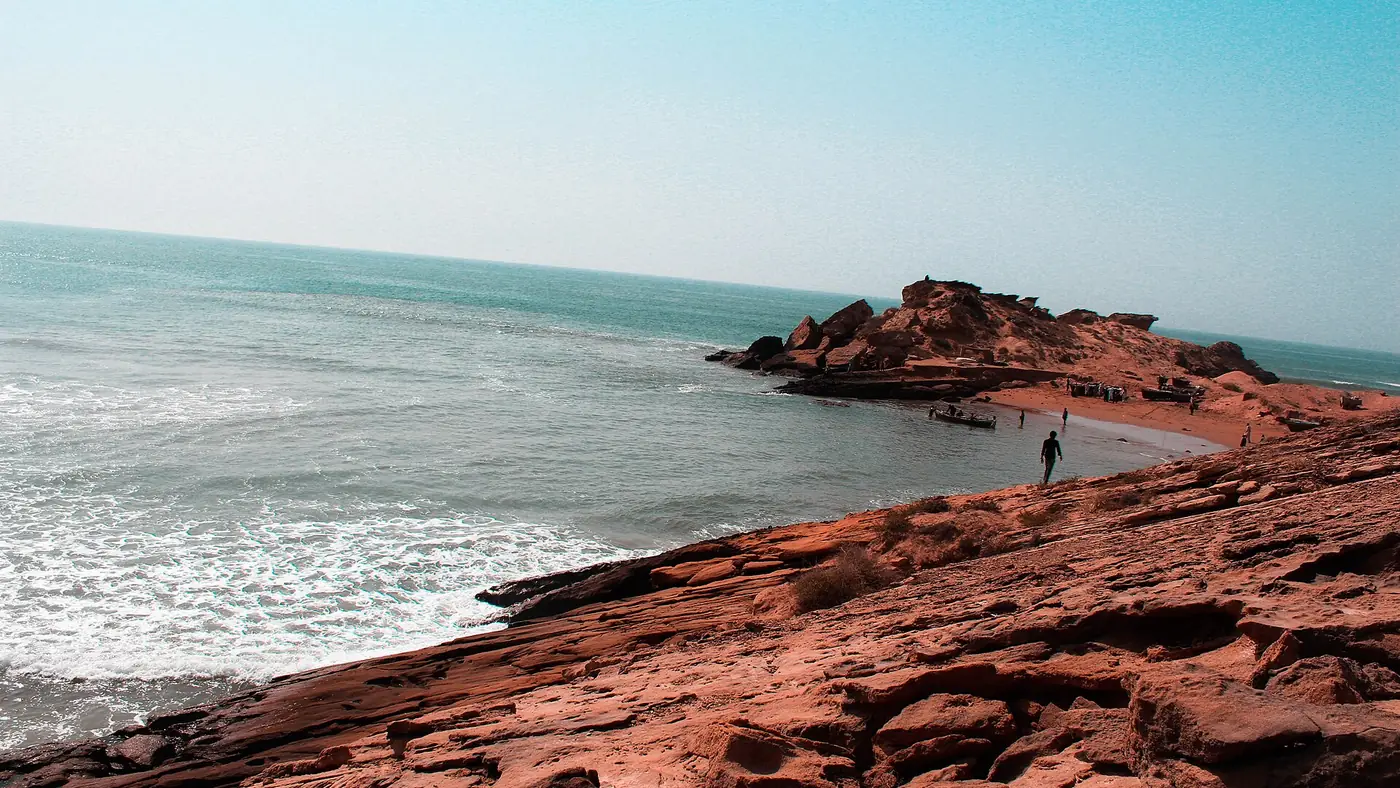
Hinglaj Mata temple is a natural cave shrine set in a narrow gorge off the Hingol River, reached by a side road that turns off the Makran Coastal Highway at Aghor and runs about 15 km up the valley. It is one of the most important Hindu pilgrimage sites in the region, but it is not only open during the April yatra: caretakers tend the shrine year-round, and visitors of more than one faith come to it quietly throughout the year.
This guide covers the route from the highway, what the shrine itself is like, the etiquette expected of any visitor, what facilities exist, and how a visit outside the main pilgrimage differs from the crowded days of the yatra itself.
| At a glance | |
|---|---|
| What | A natural cave shrine holding a stone image of the goddess Hinglaj |
| Where | A gorge off the Hingol River, Lasbela district, Balochistan, inside Hingol National Park |
| Turn-off | From the Makran Coastal Highway at Aghor, where it crosses the Hingol River |
| From Aghor | About 15 km up the valley |
| From Karachi | About 240 km, roughly 4 hours by road |
| Main pilgrimage | The Hinglaj Yatra, four days each April, drawing several hundred thousand pilgrims |
| Outside the yatra | Open year-round; caretakers perform daily rituals; very few other visitors |
| Facilities | Minimal outside the yatra; generators, kitchens and camps are set up specifically for the pilgrimage |
The route to the temple
Driving the Makran Coastal Highway from Karachi, the turn for Hinglaj comes at Aghor, the small settlement where the highway crosses the Hingol River on a long bridge. A side road follows the river valley from there, running roughly 15 km through the gorge to the shrine. The road is narrower and rougher than the highway itself, running through the same soft clay country as the rest of the park, and it is worth checking locally on the condition of the track before committing a low car to it, especially after rain.
- Turn off at Aghor, not before; this is the only practical vehicle route in.
- Save the route offline before leaving Karachi. Signal along the valley road is unreliable.
- Ask locally about the state of the track, particularly outside the yatra when fewer vehicles have driven it recently.
- Allow extra time beyond the distance suggests, since this is a slower road than the highway.
Chandragup mud volcano sits on the highway itself, before the Aghor turning, and is traditionally visited on the way to Hinglaj; our Chandragup mud volcano guide covers that stop in detail. Our guide to driving from Karachi to Kund Malir covers the highway itself, which you also use to reach Aghor.
What the shrine is like
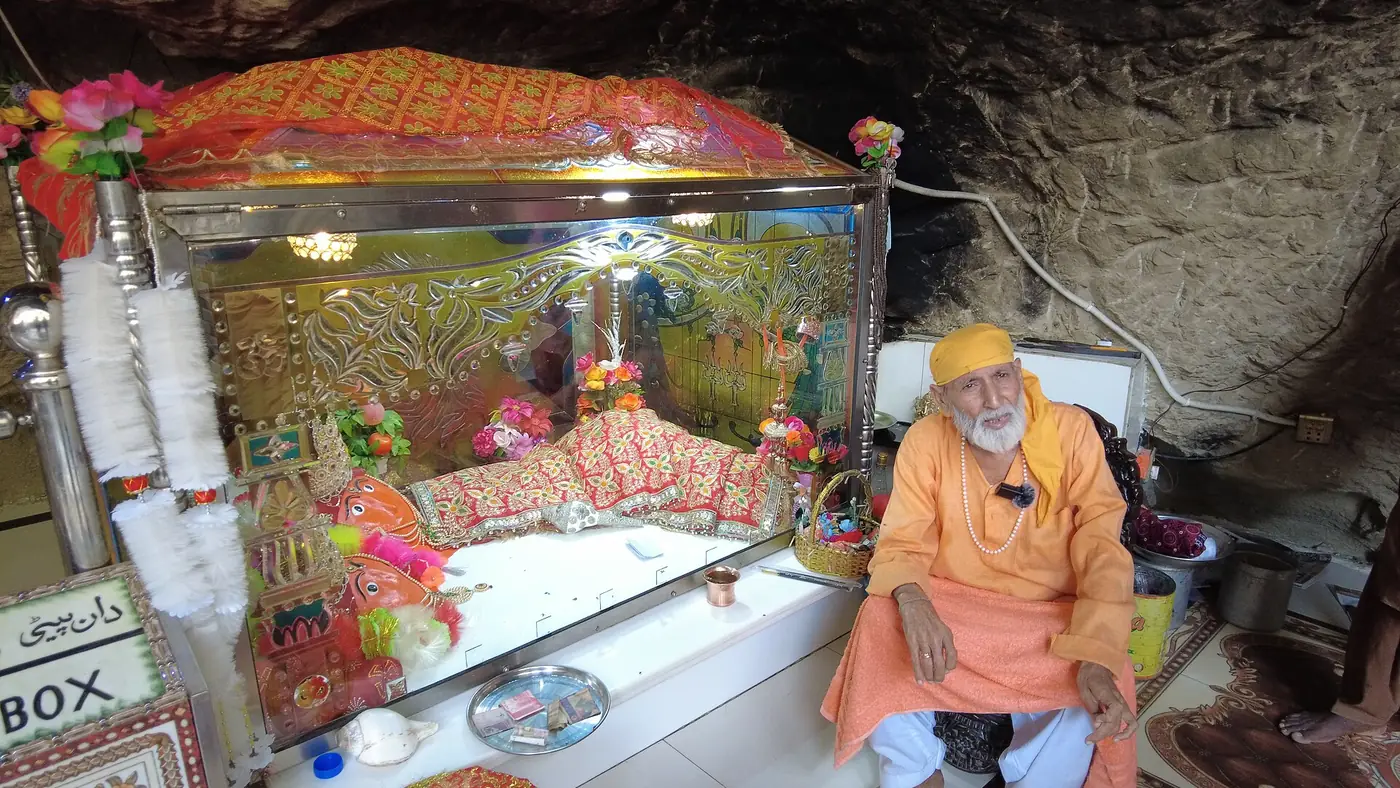
Hinglaj is unusual among major Hindu shrines in that it is not a built temple in the conventional sense. The image of the goddess sits in a small natural cave at the base of the gorge wall, a simple stone daubed with vermilion rather than an elaborately carved idol, set directly against the rock. The setting, a narrow defile of bare hills with the Hingol River running below, is as much a part of the experience as the shrine itself.
Both Hindus and many Muslims in the surrounding region hold the site in reverence, commonly referring to the goddess as "Nani." That shared regard is part of what makes Hinglaj distinctive among Pakistan's religious sites.
Etiquette for any visitor
Pilgrims, visitors of another faith paying respects and people simply interested in seeing the shrine are all expected to follow the same basic etiquette:
- Dress modestly, covering shoulders and knees at minimum.
- Follow the lead of the caretakers and other visitors on where to stand, when to remove your shoes, and how close to approach the shrine itself.
- Ask before photographing people, especially anyone at prayer, and be more restrained with a camera than you would be at a purely scenic stop.
- A small offering, such as a coconut, is customary if you wish to make one, though it is not expected of every visitor.
- Bathing in the Hingol River is part of the traditional ritual for pilgrims, and is done a short distance from the shrine itself; if you join in, do so respectfully and be aware that the river's current and depth vary.
- Keep the visit calm and unhurried. This is a place of quiet devotion far more than a sightseeing stop, and it is treated that way by almost everyone who comes.
Facilities: yatra versus the rest of the year
During the Hinglaj Yatra each April, the valley is transformed for four days: diesel generators run, community kitchens serve meals to pilgrims, temporary bathrooms and camps are set up, and buses and private cars bring people from across Pakistan and beyond. It is a major logistical undertaking around a single narrow gorge.
Outside those days, expect very little. Caretakers live at or near the shrine and perform daily rituals, including aarti and offerings, but the elaborate temporary infrastructure of the yatra is gone. There is no shop, no reliable food stall and no fuel beyond what you carried in from Aghor or further back at Zero Point. Bring water, snacks and anything else you might need for the day, exactly as you would for any remote stop in Hingol National Park.
Visiting outside the yatra season
For most of the year, a visit to Hinglaj is a quiet, uncrowded experience: a handful of other visitors at most, the caretakers going about their daily routine, and the gorge itself largely as it has looked for a very long time. This suits anyone who would rather experience the shrine calmly than as part of a crowd of several hundred thousand, and it removes the heavy traffic on the coastal highway that builds up around the yatra dates each April.
The trade-off is that you miss the atmosphere of the pilgrimage itself: the singing, the shared meals, and the sense of occasion that draws people back year after year. If witnessing the yatra is specifically what interests you, plan around its April dates and expect a very different kind of day, with far more people, far more vehicles on the road, and far less certainty about timing.
Is it worth the detour?
If your reason for being on this coast is spiritual, the answer is straightforward. For a general visitor to Hingol National Park, Hinglaj adds meaningfully to a trip that would otherwise be about landscape and wildlife alone, but it does add an hour or more once you account for the side road and the visit itself, which is why it suits an overnight trip better than a tightly timed day trip to Kund Malir. Visit with the same respect you would bring to any active place of worship, and it is one of the most memorable stops on this whole stretch of coast. For help fitting it into a longer trip, our trip planning page is the place to start.
Frequently asked questions
Where is Hinglaj Mata temple?
In a gorge off the Hingol River, reached by a side road that turns off the Makran Coastal Highway at Aghor and runs about 15 km up the valley, inside Hingol National Park, Balochistan.
Can you visit Hinglaj Mata temple outside the April yatra?
Yes. Caretakers tend the shrine year-round and perform daily rituals. Outside the yatra, expect very few other visitors and minimal facilities, so bring your own water and supplies.
How far is Hinglaj Mata temple from Karachi?
About 240 km, roughly four hours by road, following the Makran Coastal Highway to Aghor and then the valley road up to the shrine.
Can non-Hindus visit Hinglaj Mata temple?
Yes. Many Muslims in the surrounding region also hold the shrine in reverence, and visitors of other faiths are received respectfully if they follow the same basic etiquette as any pilgrim.
What should you wear to visit Hinglaj Mata temple?
Modest dress covering shoulders and knees, in keeping with visiting any active place of worship. Follow the lead of the caretakers on shoes and where to stand near the shrine.
Do you need a 4x4 to reach Hinglaj Mata temple?
Not always, but the valley road from Aghor is narrower and rougher than the highway, and conditions vary with recent weather. Check locally before taking a low car down it, especially outside the busy yatra period.
Is Balochistan safe for overseas visitors?
Pakistani travellers do visit, but as of September 2026 the UK government advises against all travel to Balochistan. If you hold a foreign passport, check your own government's advice before you go, because travelling against it can void your insurance. Everyone should check local news and current police advice before setting out.