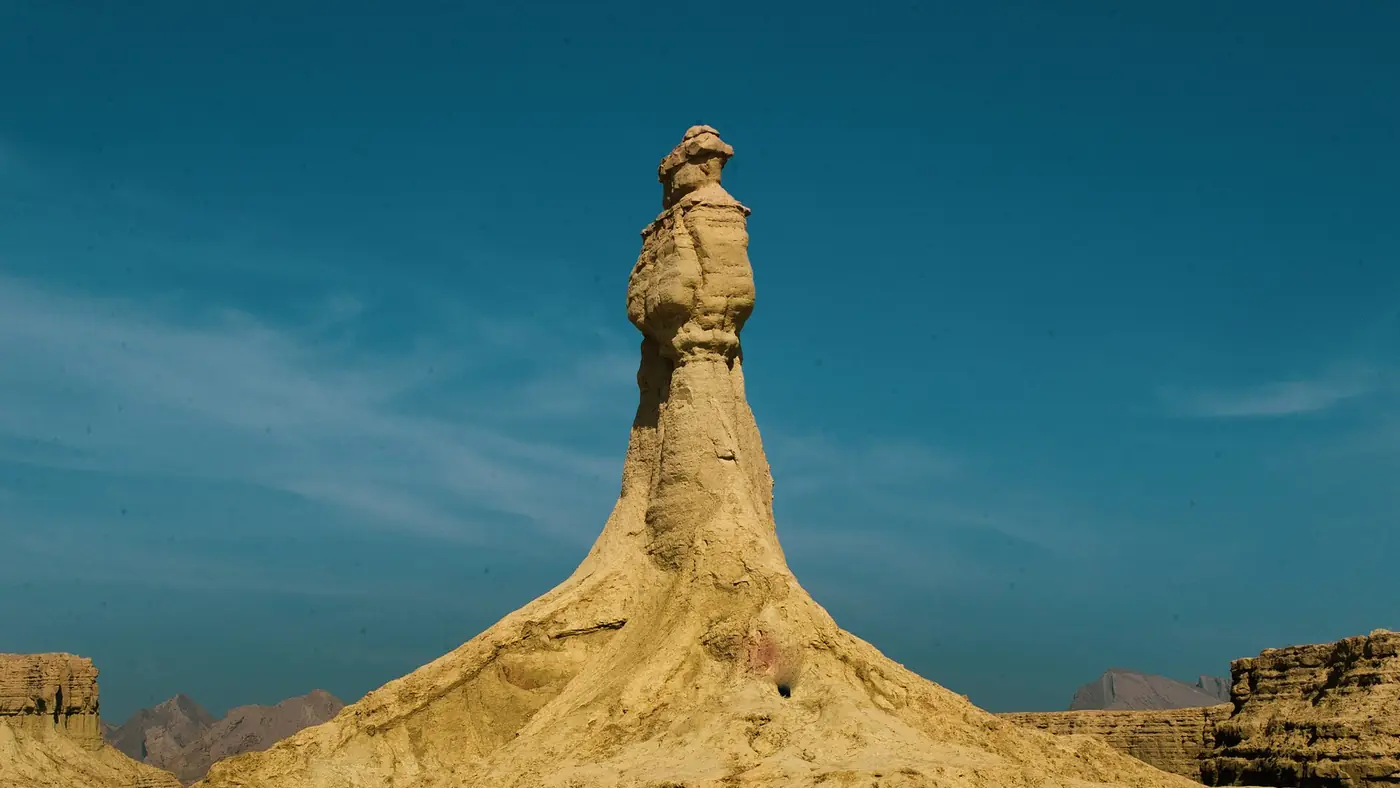
Chandragup is an active mud volcano in Hingol National Park, reached by a short dirt track off the Makran Coastal Highway about 200 km from Karachi and roughly 100 km past Zero Point. Its cone rises abruptly out of the flat plain to around 100 metres, with a crater of grey mud at the top that bubbles and, occasionally, overflows. It is sacred to Hindu pilgrims as an embodiment of Shiva and a required stop on the way to the Hinglaj Mata temple, and it is open to any visitor to climb and look into.
This guide covers where the turn-off is, what kind of vehicle you need for the track, what the climb involves, the safety points worth knowing at the crater, and what the place is like outside the pilgrim season.
| At a glance | |
|---|---|
| Location | Hingol National Park, off the Makran Coastal Highway, Lasbela district |
| From Karachi | About 200 km, roughly 3 to 3.5 hours by road |
| Turn-off | A dirt track about 100 km past Zero Point, near an SSGC gas installation |
| Height | Chandragup I, the tallest in the group, around 100 metres |
| Track | Unpaved, uneven; high-clearance vehicle recommended |
| Time needed | 30 to 45 minutes for the visit |
| Facilities | None beyond what pilgrims set up during the April yatra |
| Significance | Worshipped by Hindus as Baba Chandrakup, an embodiment of Shiva; a stop before Hinglaj Mata temple |
Finding the turn-off
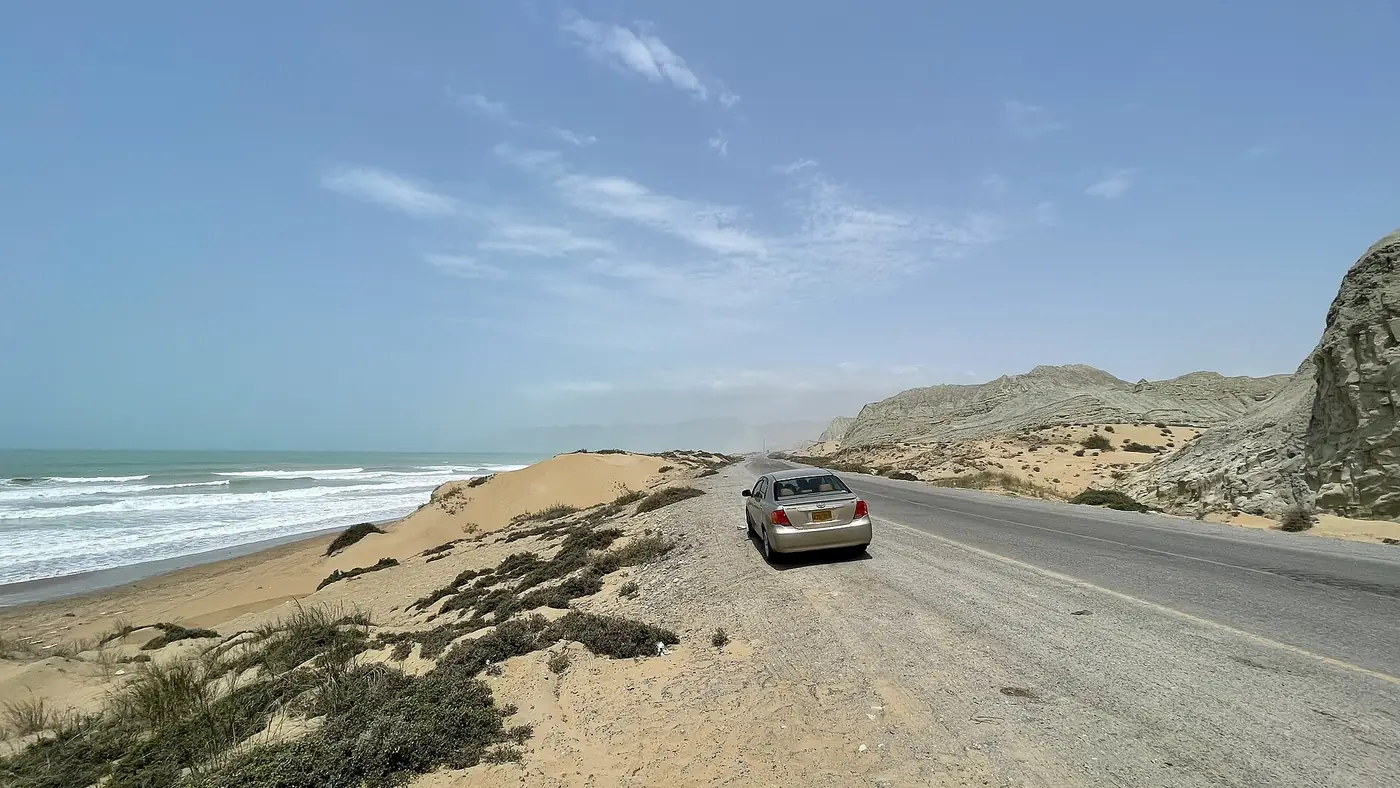
Coming from Karachi on the Makran Coastal Highway, Chandragup's turn-off is on the south side of the road, roughly 100 km past Zero Point and well before the highway reaches the Hingol River bridge at Aghor. The clearest landmark is an SSGC gas installation near the junction; there is little else out here to navigate by. From the highway, a dirt track runs about a kilometre to the base of the cone.
- Save the location offline before you leave Karachi. Mobile signal on this stretch is patchy, and there is no reliable signage.
- Ask locally if you are unsure. Drivers and anyone at the roadside dhabas near Zero Point will know the turning; it is a well-known stop for anyone travelling this road.
- Don't expect a car park or entrance. You pull off the highway onto the track and drive or walk in from there.
Our guide to driving from Karachi to Kund Malir covers the wider route, fuel stops and timings for this road, including where Chandragup fits into a longer day.
Do you need a 4x4?
The track off the highway is unpaved and uneven, and conditions on it change with recent weather. In good, dry conditions an ordinary car with reasonable ground clearance can often manage it slowly; after rain, or if the surface has rutted, it becomes a job for a higher-clearance vehicle or a proper 4x4. Because the state of the track is not something you can check in advance from home, the sensible approach is:
- Slow down and assess the track before committing a low car to it. Walking the first stretch tells you more than guessing from the wheel.
- If in doubt, park on firmer ground near the highway and walk the last stretch in, which is a short and easy walk rather than a serious hike.
- Ask a local driver or a group already there whether the track is passable that day, especially after rain.
- Travelling as part of a tour or with a local driver removes the guesswork, since they will have seen the current state of the track recently.
Climbing the cone
There is no built path up Chandragup, only the worn track pilgrims and visitors have left over the cone's loose grey surface. The climb itself is short but steep in places, on a surface with no real grip; treat it the way you would any climb on loose scree or soft ground.
- Wear shoes with grip, not sandals.
- Go slowly and place your feet deliberately, especially near the top where the ground is less compacted.
- Keep a sensible distance from the crater's rim. The edge of a mud volcano is not solid rock, and it is not somewhere to stand right at the lip for a photograph.
- Keep children close, and don't let anyone climb above others on the loose surface.
- Carry water, even for a climb of only a few minutes; there is no shade anywhere on the cone.
At the top, the crater holds a lake of grey mud, roughly 15 metres across, that bubbles gently and periodically overflows down the slope. It is an odd, quiet sight, more like watching something breathe than watching a volcano.
Safety at the crater
Chandragup releases methane gas along with the mud, and while eruptions of flame are rare, they have happened, usually linked to seismic activity in the region rather than anything a visitor triggers. Ordinary caution covers the real risk, which is footing and the ground itself rather than the gas:
- Don't smoke or bring an open flame near the crater.
- Stay off the wet mud itself. It is deeper and softer than it looks, and pulling a boot free of it is unpleasant at best.
- Keep back from the immediate rim, where the ground can be undercut and less stable than it appears.
- Treat any sudden bubbling or a smell of gas as a reason to move back, rather than a reason to get a closer look.
None of this should put you off visiting; thousands of pilgrims climb Chandragup every year without incident. It simply deserves the same respect you would give any active geological feature.
Why it matters to pilgrims
Hindu pilgrims venerate Chandragup as Baba Chandrakup, an embodiment of Shiva, and climbing it is a required part of the route to the Hinglaj Mata temple, further along the valley. Pilgrims traditionally offer coconuts, betel nut and dal at the crater, and the ritual is understood as a kind of confession made before continuing the journey. The main pilgrimage, the Hinglaj Yatra, takes place over four days each April and now draws several hundred thousand pilgrims, making Chandragup one of the busiest and most atmospheric stops on the whole coast for that short period. Our guide to visiting the Hinglaj Mata temple covers the rest of that route and how to visit respectfully.
If you visit during the yatra, expect a genuinely different experience: crowds, devotional singing, food being distributed and a strong sense of occasion. Follow the lead of the pilgrims around you, dress modestly, and ask before photographing anyone at prayer.
Visiting outside the yatra season
For most of the year, Chandragup is quiet: a handful of day visitors on their way to or from Kund Malir, rather than a destination in itself. There are no facilities here outside the yatra period, so bring everything you need, including water, and don't expect anyone at the site to help if you get into difficulty. The upside of the quiet months is that you have the cone, the crater and the strange, flat landscape around it largely to yourself.
Is it worth the detour?
If you are already driving past on the way to Kund Malir or the Hinglaj temple, yes. The turn-off costs relatively little extra time, and the sight of a genuinely active mud volcano rising out of flat desert is unlike anything else on this route. It is not, on its own, worth a special trip from Karachi. As part of a longer day through Hingol National Park, it earns its place easily. For help fitting it into a wider trip along the coast, our trip planning page is the place to start.
Frequently asked questions
Where is Chandragup mud volcano?
In Hingol National Park, reached by a short dirt track off the Makran Coastal Highway about 200 km from Karachi, roughly 100 km past Zero Point, near an SSGC gas installation.
Do you need a 4x4 to reach Chandragup?
Not always, but conditions on the unpaved track vary. A high-clearance vehicle is the safer choice, and after rain a proper 4x4 may be needed. If unsure, park near the highway and walk the last stretch in.
Is it safe to climb Chandragup mud volcano?
Generally yes, with ordinary care: wear shoes with grip, keep back from the crater rim, stay off the wet mud, and don't smoke near the vents. Flame eruptions are rare and usually linked to seismic activity.
Why do Hindus climb Chandragup?
Pilgrims venerate it as Baba Chandrakup, an embodiment of Shiva, and climbing it with an offering of coconut, betel nut or dal is a traditional step on the route to the Hinglaj Mata temple.
Can you visit Chandragup outside the Hinglaj Yatra?
Yes. It is quiet for most of the year, with no facilities, but open to any visitor. The main pilgrimage takes place over four days each April.
How long does a visit to Chandragup take?
About 30 to 45 minutes, including the short walk or drive in from the highway and the climb to the crater.
Is Balochistan safe for overseas visitors?
Pakistani travellers do visit, but as of September 2026 the UK government advises against all travel to Balochistan. If you hold a foreign passport, check your own government's advice before you go, because travelling against it can void your insurance. Everyone should check local news and current police advice before setting out.