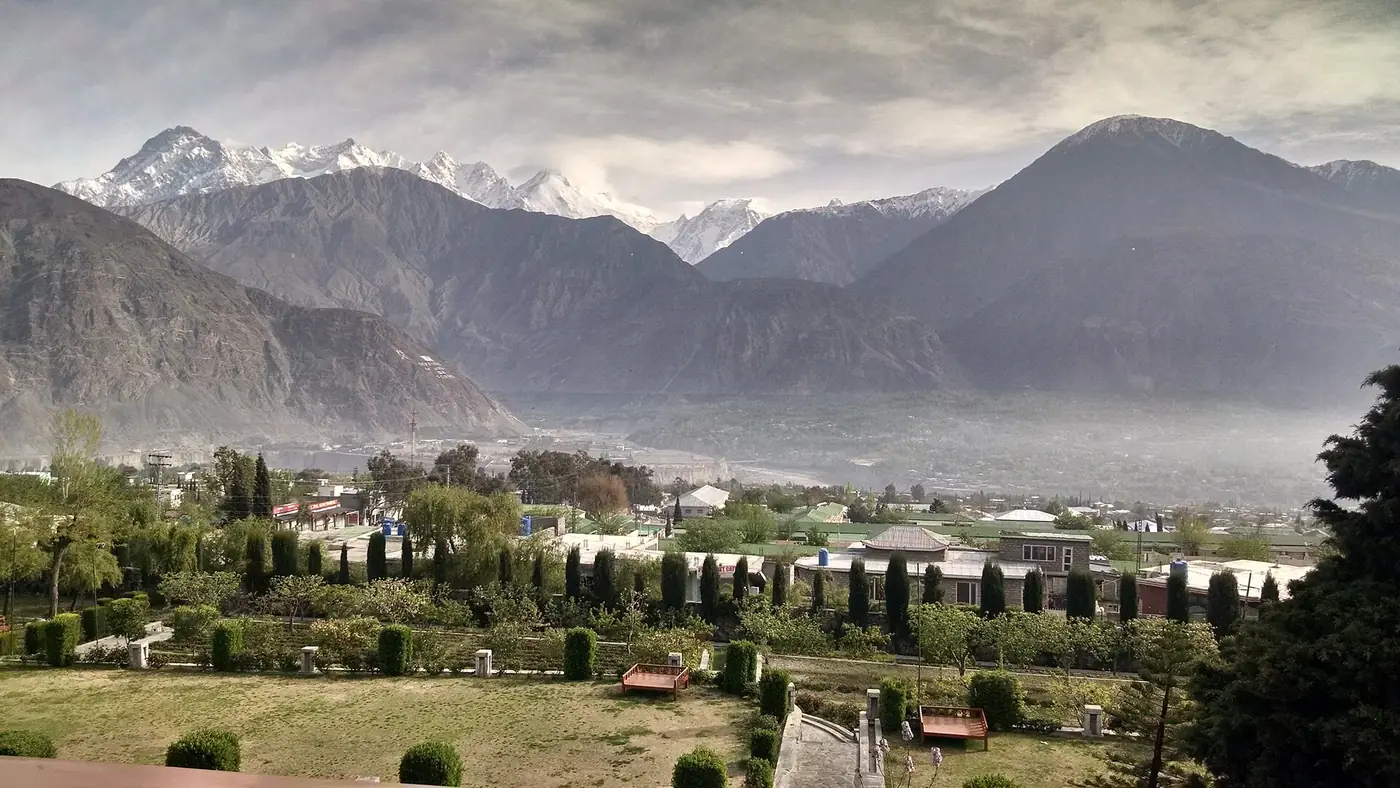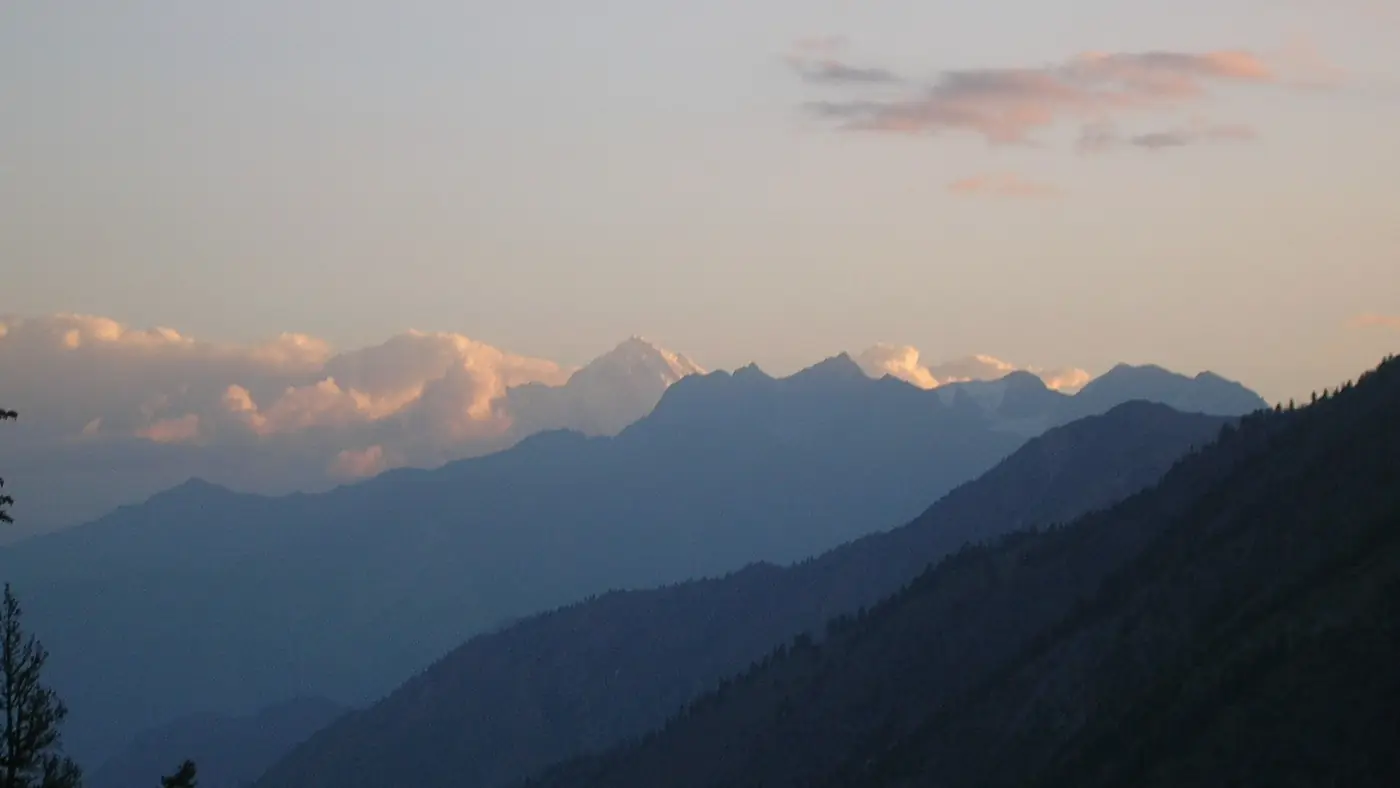
Haramosh Valley opens off the Gilgit–Skardu road at Sassi, climbing north towards the glaciers under Haramosh peak. It sees far fewer visitors than Hunza or Skardu, and it is not really a drive-through destination: a rough jeep track, a scattering of small villages and simple homestays are what you get, in exchange for one of the quieter corners of Gilgit-Baltistan.
| At a glance | |
|---|---|
| Turn-off | Sassi, on the Gilgit–Skardu road |
| Access | Jeep track from Sassi to Dassu village |
| Villages | Dassu, Iskere |
| Best months | June to September |
| Vehicle needed | 4x4 with an experienced local driver |
| Accommodation | Basic homestays and camping in the villages |
Where Haramosh Valley is and how to get in
Sassi sits on the Karakoram Highway between Gilgit and Skardu, roughly on the stretch most visitors otherwise drive straight through. From there, a jeep track leaves the main road and climbs into the valley towards Dassu, the last village most vehicles can reach. The track is narrow, unsurfaced and cut into steep ground in places, and it is not a road to attempt in an ordinary car or with a driver unfamiliar with it. Arranging a local jeep and driver at Sassi, rather than bringing your own vehicle up the track, is the sensible approach for most visitors.
The villages: Dassu and Iskere
Dassu is the practical base for anyone heading into the valley. It is the last point with any real local support: somewhere to arrange a guide, buy basic supplies, or simply turn around if the weather or the track looks unworkable further up.
Iskere, reached on foot beyond Dassu, is smaller and greener, known locally for its fruit trees and its position closer to the glaciers. It is as far as most day visitors go, and a natural overnight stop for anyone continuing further into the valley toward Kutwal Lake.
Both villages are working farming settlements rather than tourist stops, and visitors should expect very limited facilities: no shops beyond the basics, and accommodation that means staying with a local family or camping rather than booking a hotel room.
Staying in the villages
There is no hotel infrastructure in Haramosh Valley. What exists is homestays arranged informally through the villages, and camping, which most visitors carrying their own gear rely on for anything beyond a single night. If a homestay is important to your plan, it is worth asking a local guide or driver in Sassi or Gilgit to help arrange it in advance rather than expecting to find something on arrival. Bring your own food for anything beyond the most basic local supplies, and expect no mobile signal once you are past Dassu.
Where Haramosh peak comes into view
Haramosh peak, at 7,409 metres, sits at the head of the valley and is not visible from the Karakoram Highway at Sassi itself; the mountain reveals itself gradually as the valley opens up beyond Dassu and Iskere. The clearest views come from higher ground near Iskere and from the approach to Kutwal Lake further up the valley, where the peak rises directly above the Mani glacier. For the facts on the mountain itself, its height and its climbing history, see our separate guide to Haramosh peak. For the trek onward to the lake, our Kutwal Lake trek guide covers the route, distances and how many days to allow.
When to visit
June to September is the workable window. Outside these months the jeep track is more likely to be affected by snow or unstable ground, and the higher parts of the valley are colder and less accessible. Even in summer, check locally in Sassi or Gilgit before setting out, since the track's condition changes from year to year with landslides and weather.
Is Haramosh Valley worth the effort?
For travellers who want to walk to a specific lake or peak, yes, and the Kutwal Lake trek is the usual reason people come. For anyone wanting a comfortable overnight stop with hotel-standard accommodation, no: Haramosh has none of that, and Hunza or Skardu will suit better. If you are comfortable with a rough jeep track, basic homestays, and a genuinely quiet valley with almost no other visitors, Haramosh delivers exactly that. It works best as one stop on a wider Gilgit-Baltistan itinerary rather than a trip on its own; our guide to planning a trip covers how to fit a detour like this into a longer route between Gilgit and Skardu.
Frequently asked questions
How do you get to Haramosh Valley?
Turn off the Gilgit–Skardu road at Sassi and take the jeep track north into the valley, as far as Dassu village. A 4x4 with a driver experienced on the track is essential; ordinary cars cannot make it.
Is there accommodation in Haramosh Valley?
Only informal homestays in the villages and camping. There are no hotels, so arrange a homestay through a local guide or driver in advance if you don't want to camp.
Can you see Haramosh peak from the main road?
No. The peak is not visible from Sassi on the Karakoram Highway. It comes into view gradually as you go further up the valley past Dassu and Iskere.
When is the best time to visit Haramosh Valley?
June to September, when the jeep track is most likely to be clear and passable. Check locally before you go, since conditions change year to year.
Do I need a guide for Haramosh Valley?
A local driver is essential for the jeep track, and a guide is strongly recommended if you plan to walk beyond Iskere towards Kutwal Lake, since the route is not signposted.