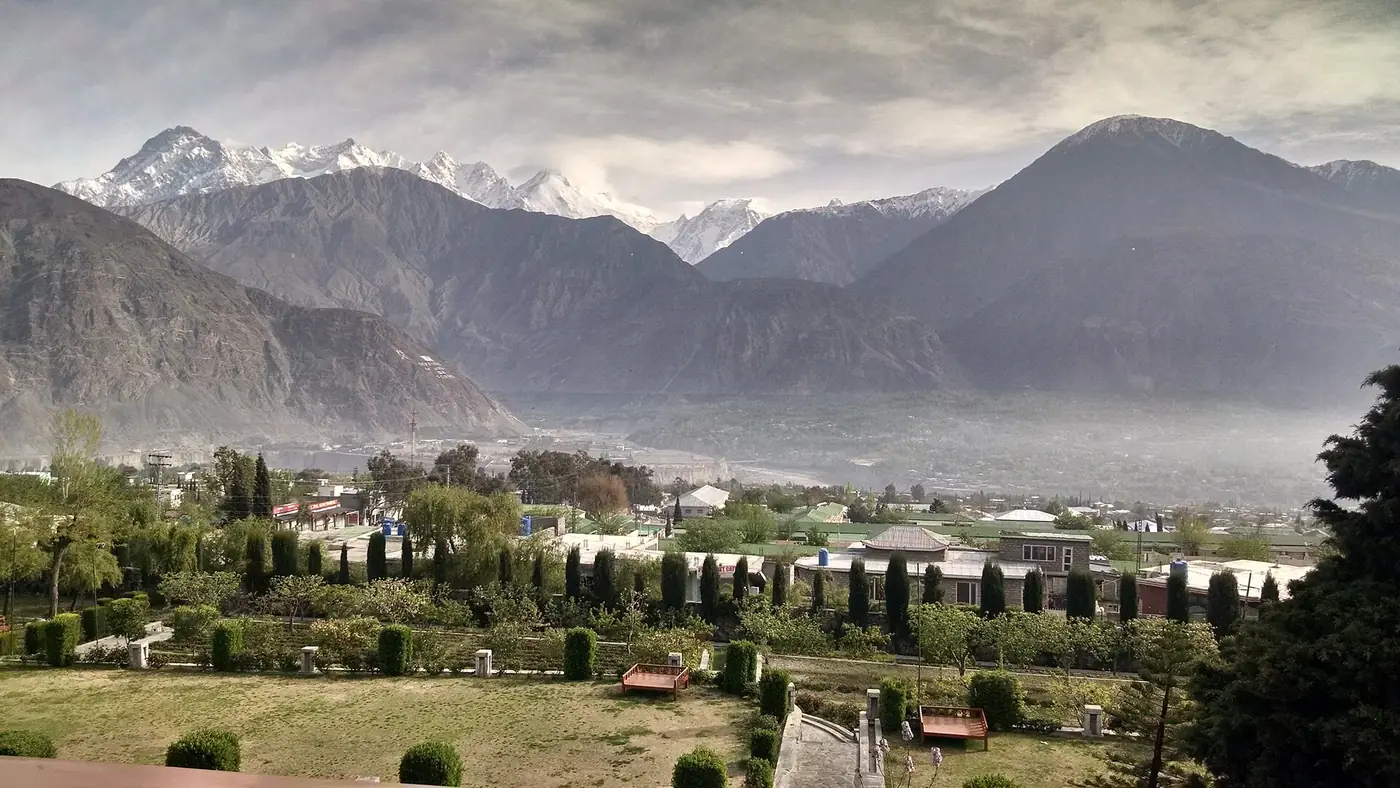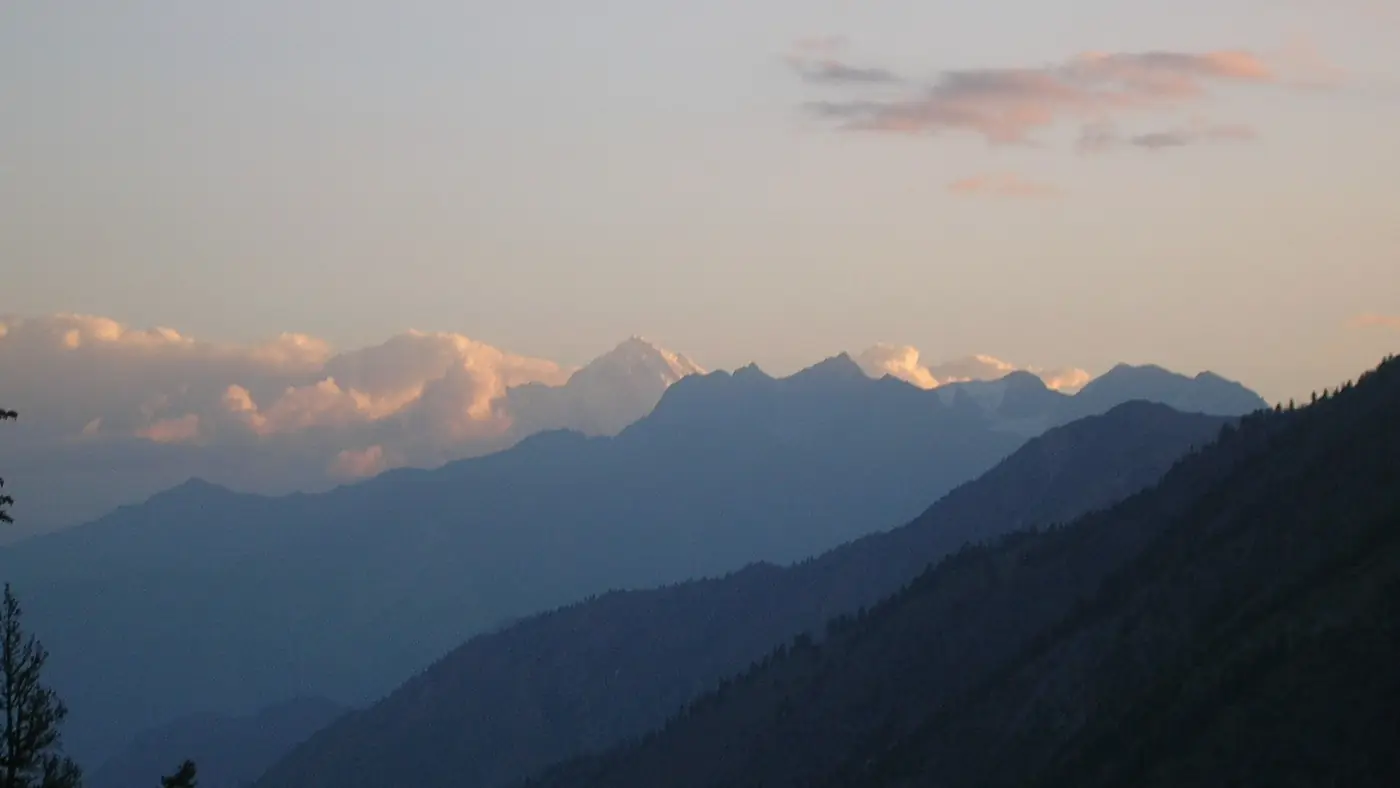
Haramosh peak, at 7,409 metres, is one of the highest mountains in the Karakoram that most visitors to Gilgit-Baltistan never see up close, since it sits at the head of a valley off the main tourist routes rather than beside a road. It is a serious mountaineering objective with a difficult history, and for most travellers the realistic way to see it is from a distance, on the drive between Gilgit and Skardu or from within Haramosh Valley itself.
| At a glance | |
|---|---|
| Height | 7,409 m |
| Range | Rakaposhi-Haramosh Mountains, Karakoram |
| Location | About 65 km east of Gilgit |
| First ascent | 4 August 1958, Austrian team |
| Nearest viewpoint on foot | Kutwal Lake, about 3,300 m |
| Access | Via Sassi and Haramosh Valley |
Where Haramosh peak is
Haramosh sits roughly 65 km east of Gilgit, at the southern end of the Rakaposhi-Haramosh Mountains, a subrange of the Karakoram. It rises above Haramosh Valley, which branches off the Gilgit–Skardu road at Sassi, and above the smaller peaks and glaciers around it, including Mani Peak. Unlike Rakaposhi or Nanga Parbat, it is not visible from a major road at close range; you have to go into the valley, or catch it from further away, to see it properly.
Climbing history
Haramosh first drew serious mountaineering attention in 1947, when a Swiss team carried out an early reconnaissance of the area, followed by German climbers in 1955 who examined a north-eastern approach. A 1957 attempt by an Oxford University team, including Tony Streather, John Emery, Bernard Jillot and Rae Culbert, ended in tragedy, with deaths on the mountain that made the expedition one of the more sobering episodes in Karakoram climbing history at the time.
The first successful ascent came on 4 August 1958, when an Austrian team of Heini Roiss, Stephan Pauer and Franz Mandl reached the summit via the Haramosh La, a saddle to the north-east, and the East Ridge. Since then, the mountain has seen very few further ascents: a Japanese team via the West Ridge in 1978, another ascent in 1979, and a Polish team via the South-West Face in 1988. That short list, against decades of attempts on more accessible Karakoram peaks, reflects how difficult and rarely visited Haramosh remains.
Best viewpoints
Kutwal Lake, at around 3,300 metres in Haramosh Valley, is the closest viewpoint most travellers can reach on foot, sitting almost directly below the peak beside the Mani glacier. Reaching it is a proper multi-day trek from Sassi, not a casual walk; our Kutwal Lake trek guide covers the route, distances and how many days to allow.
The villages of Haramosh Valley, particularly Iskere, offer more distant but still striking views as the valley opens up beyond Dassu, without requiring the full trek to the lake. Our Haramosh Valley guide covers getting into the valley and where to stay.
The Gilgit–Skardu road itself gives only occasional, partial glimpses of the wider Rakaposhi-Haramosh range rather than a clear, sustained view of the peak, since the road runs along the valley floor with intervening ridgelines. Travellers hoping for a definitive photograph of Haramosh from a moving vehicle are usually disappointed; the mountain rewards a detour into the valley, not a drive-by.
Is Haramosh peak worth planning a trip around?
For serious trekkers heading to Kutwal Lake, yes, and the peak is the main reason to make that trek in the first place. For anyone hoping to see Haramosh easily from the road on a Gilgit-to-Skardu drive, no: it is not that kind of mountain, and Rakaposhi or Nanga Parbat, both visible from major roads, will satisfy that expectation far more reliably. Haramosh suits travellers willing to go into the valley for it, not those looking for a quick photo stop.
Frequently asked questions
How tall is Haramosh peak?
Haramosh peak is 7,409 metres high, making it one of the higher peaks in the Karakoram range, though it draws far less attention than nearby giants like Nanga Parbat or Rakaposhi.
When was Haramosh peak first climbed?
It was first climbed on 4 August 1958 by an Austrian team of Heini Roiss, Stephan Pauer and Franz Mandl, via the Haramosh La and the East Ridge.
Can you see Haramosh peak from the Gilgit–Skardu road?
Only partially and occasionally, since intervening ridgelines block a clear view from the road itself. A proper view requires going into Haramosh Valley from Sassi.
Where is the best place to view Haramosh peak up close?
Kutwal Lake, at around 3,300 metres in Haramosh Valley, sits almost directly below the peak and is the closest viewpoint reachable on foot, via a multi-day trek from Sassi.
Is Haramosh peak a popular climbing destination?
No. It has had very few successful ascents since 1958, and its difficult history, including fatalities on an early attempt, has kept it far less climbed than many other Karakoram peaks of similar height.