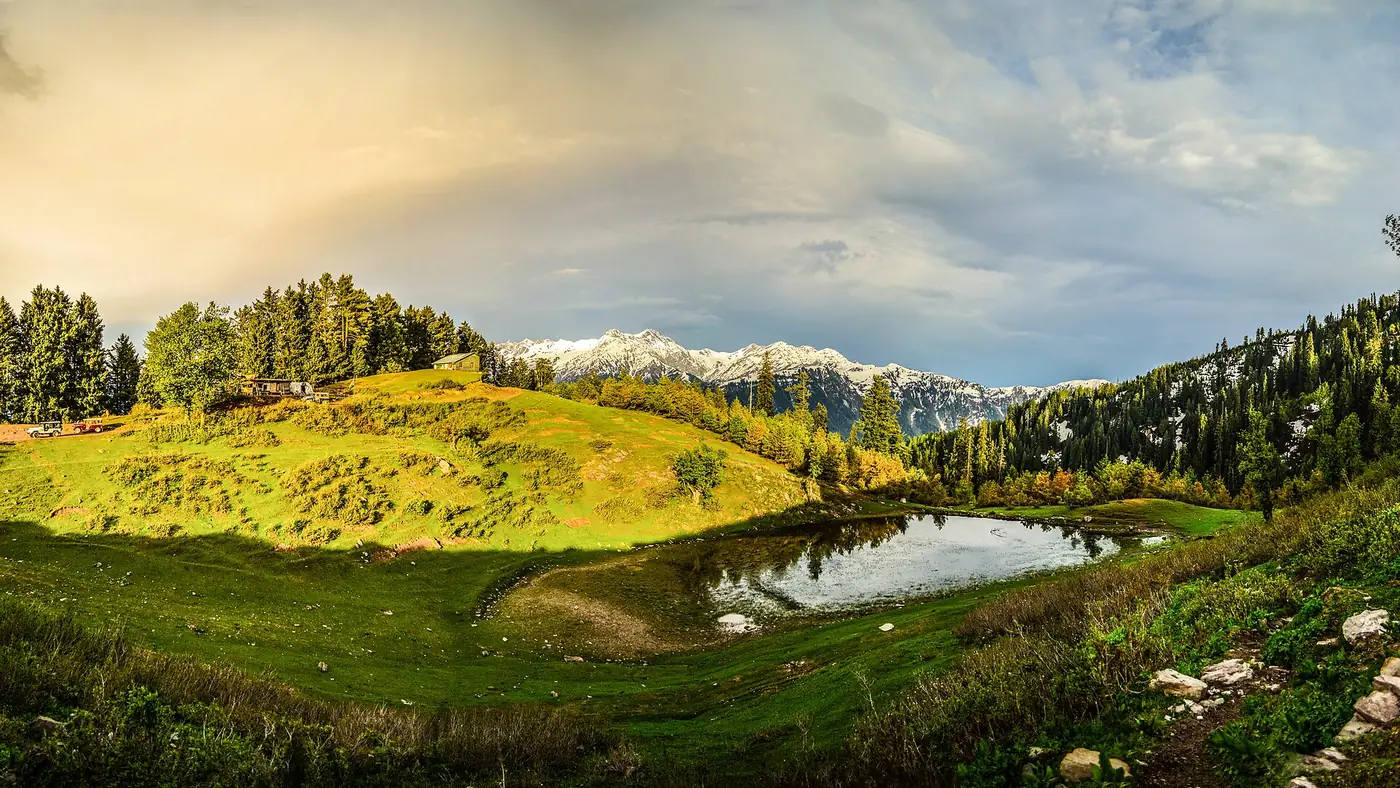
The Dudipatsar Lake trek starts at Besal, on the Babusar road about 45 km above Naran, and follows the Purbi Nar stream up to a glacial lake at about 3,800 metres. It is roughly 15 to 19 km each way, depending on whose measurement you trust, and most people take two days: six to eight hours up to the seasonal camp at Mulla ki Basti, then about two hours on to the lake in the morning and the long walk back to Besal. The season is short. Go from July to August, when the snow has cleared and the camps are running.
It is the best-known overnight trek in the Kaghan Valley, and it asks more of you than any jeep trip from Naran. This guide covers the stages, the camping, the difficulty and the timing.
| At a glance | |
|---|---|
| Start | Besal, about 3,250 m, on the Naran to Babusar road |
| Lake | Dudipatsar, about 3,800 m |
| Distance | Roughly 15 to 19 km each way |
| Time | 6 to 8 hours up for a fit walker; most people take 2 days |
| Main camp | Mulla ki Basti, about 2 hours short of the lake |
| Difficulty | Moderate, made harder by the altitude and the length |
| Best months | July and August; June still snowy, September cold |
| Signal | None at Besal or on the trail |
Getting to Besal
Besal is a small summer settlement on the N-15, the paved road from Naran to Babusar, just below Lulusar Lake. From Naran it is about an hour and a half by car. Any car in good order manages the road in season; fill the tank in Naran, since there is no fuel on the upper road.
Besal has a police post and simple roadside places to eat. It is also where guides, porters and horses for the trek are found. If you drive yourself, arrange where the car will be parked before you set off, and agree the charge.
Leave Naran early: starting to walk by 8 or 9 am lets you reach the camp without hurrying. Spend at least one night in Naran or Batakundi first, rather than driving up from Islamabad overnight and starting straight away.
The trek in stages
Crossing at Besal
The trail starts on the far side of the stream from the road. In recent seasons trekkers have crossed in a doli, a small seat pulled across on a cable by local men. Ask at Besal how the crossing is working that year.
Besal to Mulla ki Basti: 6 to 8 hours
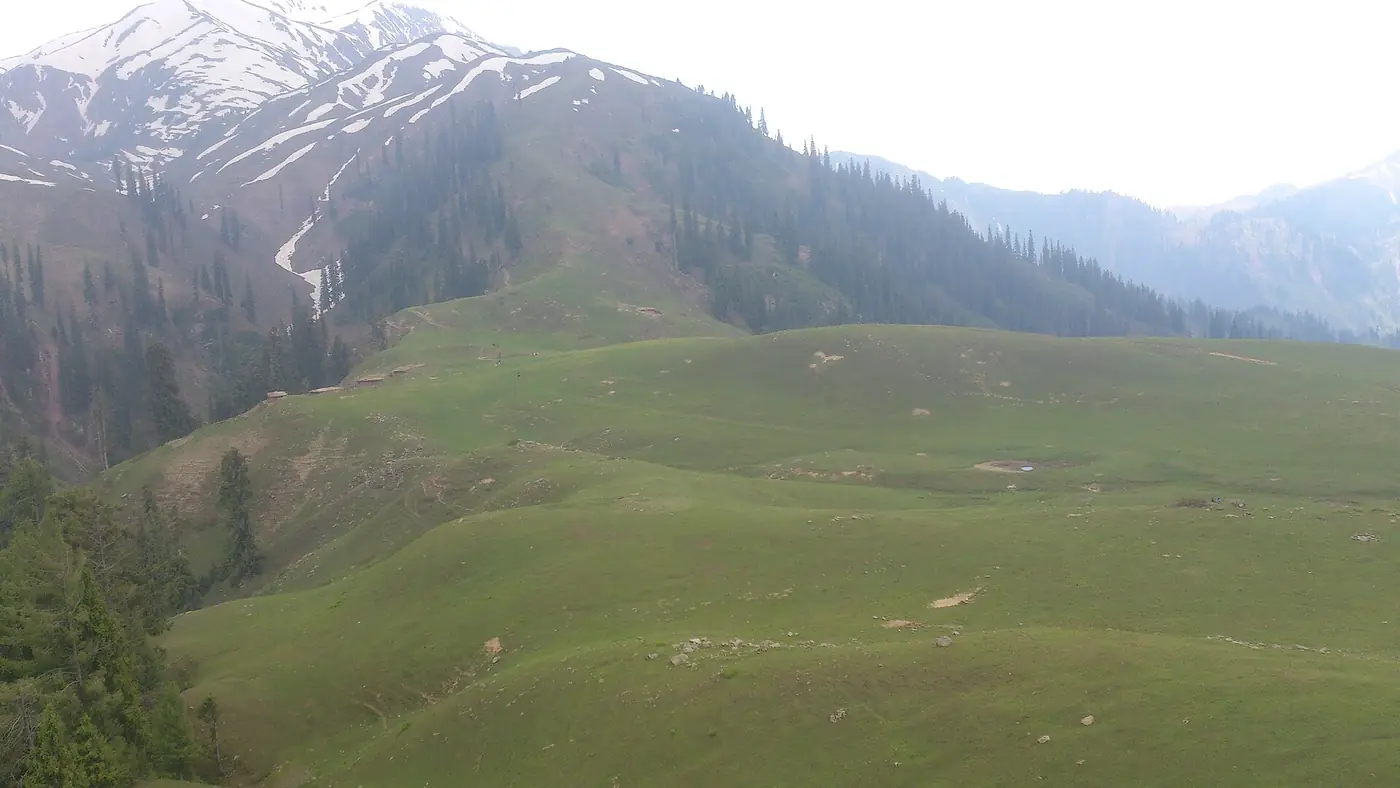
The long day. The trail follows the Purbi Nar, a tributary of the Kunhar, up a wide valley of boulders, meadow and stream. There are several side streams to cross, one on a wooden plank bridge, and early in the season there are patches of old snow and avalanche debris on the path.
The gradient is gentle for long stretches, but it never quite stops, and at over 3,000 metres even gentle climbing is slow. Walk at a pace you can keep for hours rather than one you can keep for twenty minutes.
Mulla ki Basti is a summer settlement and campsite about two hours short of the lake, where the valley opens out.
Mulla ki Basti to the lake: about 2 hours
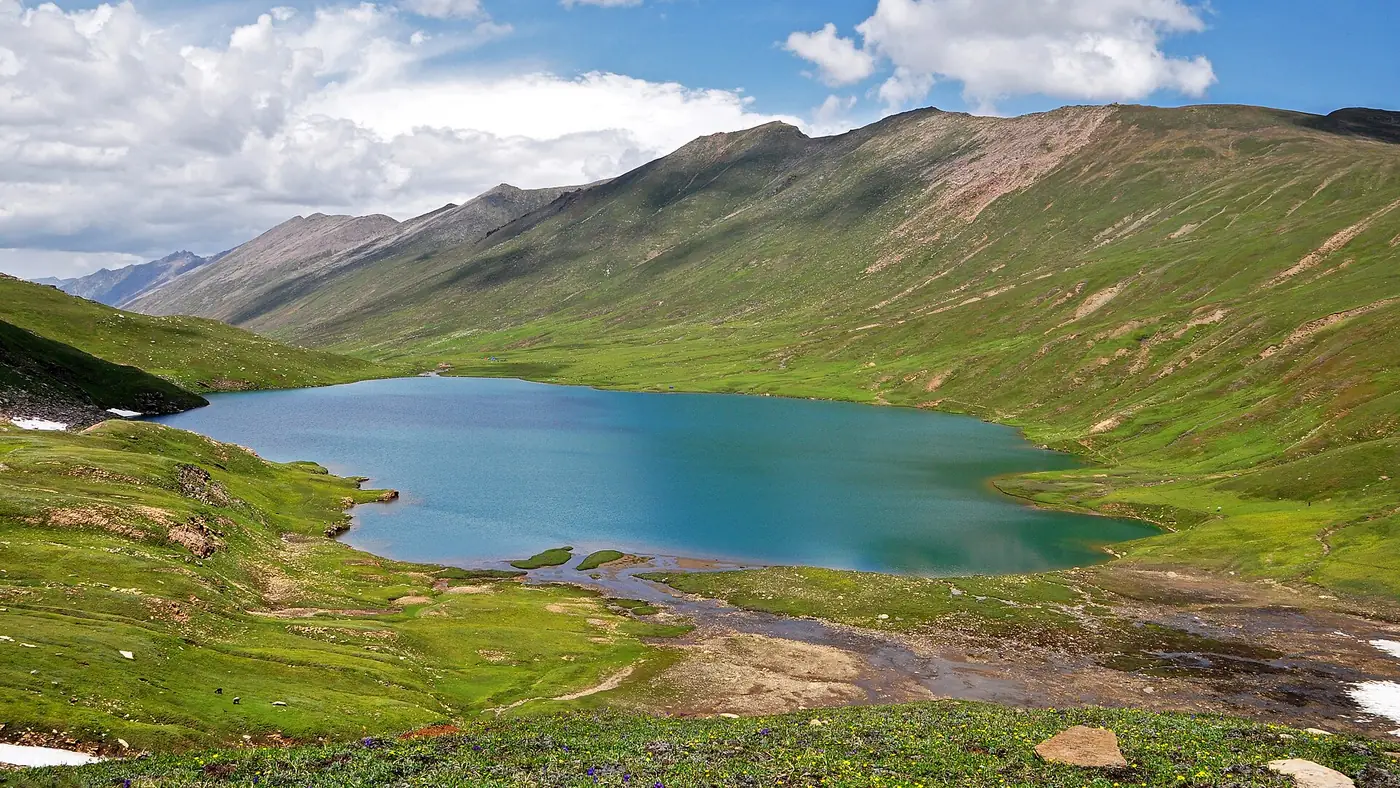
Go early, while the air is still and the sky is clear. The last stretch climbs gradually to the rim of the basin, and the lake appears below you, greenish-blue and cold, ringed by peaks of around 4,800 metres with snow in the shaded gullies all summer.
The lake is about 835 metres long and 600 wide, and its name is usually explained as the lake of the white mountains, from dudi for white, pat for mountain and sar for lake.
Back to Besal
Most people spend an hour or two at the lake and then walk all the way back to Besal the same day, about six hours, which is a long day on tired legs.
One day, two or three?
- One day is possible for fit, acclimatised trekkers who start at first light: roughly three to five hours up and three to four down. It leaves little time at the lake and no margin for weather.
- Two days is the usual plan: to Mulla ki Basti on day one, the lake and the walk out on day two.
- Three days is the comfortable plan, with a second night at the camp or by the lake, and time to walk round the shore.
Whichever you choose, drive back to Naran or Batakundi after the trek rather than sleeping at Besal. A night lower down helps tired legs and anyone with a headache from the altitude.
How hard is the Dudipatsar trek?
It is rated moderate, and there is nothing technical about it. What makes it demanding is the combination of length and height: 15 to 19 km each way, all of it between about 3,250 and 3,900 metres, with a long day of six hours or more whichever way you plan it.
It suits people who walk regularly and have done a long hill day before. Older children who walk well can manage it over three days with horses for the bags; very young children and anyone with a heart or lung condition should not go.
At this altitude, a mild headache and breathlessness are common. Drink plenty, eat even if you don't feel like it, and if anyone develops a severe headache, vomiting or confusion, go down.
Camping on the Dudipatsar trek
In July and August, local people set up a seasonal camp at Mulla ki Basti with tents, simple meals and basic toilets. It is the easiest way to do the trek without carrying a tent. Outside those months, or if the camp is full at a busy weekend, you need your own.
If you bring your own tent:
- Choose a double-skin tent and a sleeping bag rated well below freezing. Naran's own average July low is around 10°C, and the lake is some 1,400 metres higher.
- Pitch away from streams and gullies, which can rise quickly after rain.
- Cook on a stove. There is little wood this high, and the lake and camp lie inside the Lulusar-Dudipatsar National Park, where cutting or burning plants is prohibited.
- Carry out every piece of rubbish. There is no collection above Besal.
Our guide to camping in Naran covers gear and cold nights in more detail.
When to go
- June: the trail is often still under snow, particularly in the upper valley, and the area is prone to avalanches while the snow lasts. Only with an experienced local guide.
- July and August: the season. Snow mostly gone, meadows green, camps running. This is also the monsoon, so expect some rain and be ready to wait out a bad day.
- September: clearer and quieter, but cold at night, and the seasonal camps begin to close. Carry your own tent and warm gear.
- October onwards: no. The upper road closes with the first heavy snow.
The trek also depends on the Babusar road being open as far as Besal. Our guide to whether the Naran road is open or closed explains how the upper valley opens and closes.
Guides, horses and what to carry
A local guide from Besal is worth the cost, even though the path is clear in good weather. Guides know the stream crossings, where the snow is safe, and where to shelter. Horses or mules can carry bags to the camp, and porters are available. Agree the price, the number of days and what happens if bad weather keeps you an extra day, before you start.
Carry, at the least:
- Waterproof jacket and trousers, and a warm fleece or down layer
- A hat, gloves and a spare pair of socks
- Proper walking shoes with grip; the boulders are slippery when wet
- Water bottles and purification tablets or a filter
- Snacks for the whole day, plus a torch and a power bank
- Sunglasses and sunscreen
- Cash for the guide, horses and camp; there is nowhere to draw money
Tell someone in Naran, and the police post at Besal, where you are going and when you expect to be back.
Is the Dudipatsar trek right for you?
Yes, if you want one real trek in the Kaghan Valley, can give it two or three days, and are fit enough for a long day at altitude. It is the Kaghan lake that repays effort: you reach it on foot, it is far quieter than Saif-ul-Malook, and the camp at Mulla ki Basti under the peaks is part of the pleasure.
No, if your party includes small children or older parents, or if your trip is short. Lulusar Lake, just up the road from Besal, gives you a high lake from the car. For help fitting a trek into a longer plan, use our trip planner.
Frequently asked questions
How long is the Dudipatsar Lake trek?
Roughly 15 to 19 km each way from Besal, depending on the source. A fit walker takes six to eight hours to reach the lake; most people split it over two days with a night at Mulla ki Basti.
Where does the Dudipatsar trek start?
At Besal, on the Naran to Babusar road about an hour and a half above Naran, just below Lulusar Lake.
Can beginners do the Dudipatsar trek?
Fit beginners can, over two or three days, with a guide and horses for the bags. It is long and high rather than technical, so stamina matters more than experience.
What is the best month for Dudipatsar Lake?
July and August, when the snow has cleared and the seasonal camps are open. June is still snowy, and September is cold at night.
Is there accommodation at Dudipatsar?
In July and August there is a seasonal tented camp at Mulla ki Basti, about two hours below the lake, with simple meals. There are no hotels on the trail.
Is there mobile signal on the trek?
No. Besal and the trail have no mobile coverage, so make your plans and tell someone your return time before you leave Naran.