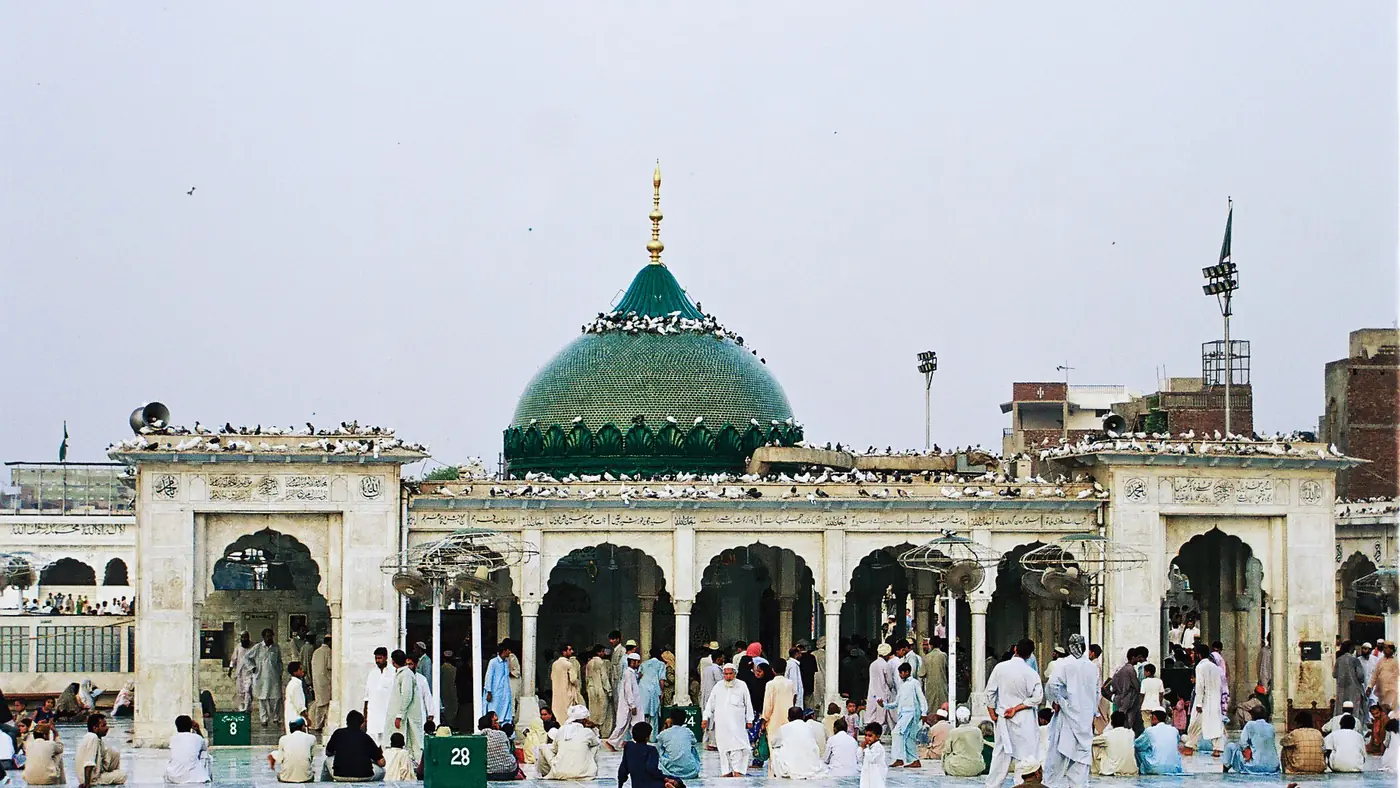
Data Darbar is the shrine of the Sufi saint Ali Hujwiri, known as Data Ganj Bakhsh, on the edge of Lahore's old city, and it is open to everyone, day and night, free of charge. It is one of the largest shrines in South Asia and one of the most visited sites in Lahore, so knowing what to expect at the gate makes the visit easier.
This guide covers entry and security, what to wear, the langar, and when the annual urs falls.
| At a glance | |
|---|---|
| Who is buried there | Ali Hujwiri (Data Ganj Bakhsh), 11th-century Sufi saint |
| Entry fee | None |
| Hours | Open around the clock; the langar runs continuously |
| Dress | Modest, covered arms and legs; women should cover their heads |
| Shoes | Removed before the main shrine; racks provided |
| Busiest times | Thursday evenings and religious holidays |
Getting in: security and entry
Data Darbar has been the target of attacks in the past, including a bombing in 2010, so security around the complex is tight and visible. Expect walk-through gates and bag checks at every entrance, and be ready to have bags searched. Arrive with a little extra time, especially on Thursday evenings, Fridays and during the urs, when queues at the checkpoints build up.
Keep large bags and anything unnecessary at your hotel or in the car if possible, since it speeds up the search. Photography rules are enforced by the staff on duty; ask before photographing people at prayer or inside the shrine itself.
Dress code and etiquette
Modest dress is expected of everyone, regardless of faith. For men, that means trousers and a shirt rather than shorts or vests. For women, it means arms and legs covered and the head covered with a dupatta or scarf; carry one with you even if you don't usually wear it, as it will be needed.
Shoes come off before you step onto the marble around the main shrine, and there are shoe racks near the entrances; a small tip for whoever watches your shoes is customary but not required. Keep voices low near the grave itself, and follow the direction of the flow of people rather than pushing against it, since the inner shrine area gets crowded.
Data Darbar welcomes visitors of all backgrounds, not only Muslims, but everyone is expected to observe the same modesty and quiet inside the shrine.
The langar
The free kitchen, or langar, at Data Darbar runs continuously and feeds thousands of people a day, more on Thursdays and during the urs. Anyone can eat, regardless of background or ability to pay; it is run on donations and volunteer labour. If you want to see it working, go around a main mealtime, but don't treat it as a spectacle: queue and eat as everyone else does, or move on if you are only there to look.
Donations to the shrine's welfare and langar funds are accepted at counters inside the complex if you want to contribute.
Thursday nights and the weekly rhythm
Thursday evening, into the early hours of Friday, is the busiest and most atmospheric time to visit, with qawwali and a much larger crowd than on an ordinary day. If you want the shrine calmer, come on a weekday morning instead; if you want to see it at its most alive, come on a Thursday night, but expect real crowds and plan your security-check time accordingly.
The annual urs
The urs, the anniversary of Ali Hujwiri's death, is Data Darbar's biggest event, drawing enormous crowds over three days, with qawwali, a chadar-laying ceremony and, in recent years, a local public holiday declared in Lahore for the final day. In 2026 the urs fell in the first week of August. Because it follows the Islamic lunar calendar, the date moves earlier by around ten to eleven days each year, so check the current Islamic calendar or local news close to your travel dates rather than relying on last year's dates.
If you plan to attend the urs itself, expect much heavier security, road closures around the shrine, and crowds that make a quiet, contemplative visit difficult; go instead in the days just before or after if you want to see the decorations and atmosphere with less crush.
Getting there
Data Darbar sits close to the edge of the Walled City, near the Lahore Railway Station and not far from other central Lahore sites. Ride-hailing and taxis are the easiest way in for most visitors; road access right up to the gates can be restricted during busy periods, so be ready to walk the last stretch. It pairs naturally with a walk through the Walled City of Lahore or a visit to Badshahi Mosque, both a short ride away. For planning the rest of a Lahore trip, see our Lahore itinerary.
Who should visit
Data Darbar is worth a visit for anyone interested in Lahore's religious and social life, not only for pilgrims. It gives a very different picture of the city from the Mughal monuments: a working shrine, still central to daily life for a huge number of Lahoris. Families are welcome, but the crowding, standing and queuing at security suit older children better than toddlers or anyone who tires quickly on their feet. If your main interest is architecture and photography rather than the religious life of the place, a shorter visit outside peak hours will serve you better than trying to see it on a Thursday night.
Frequently asked questions
Is there an entry fee for Data Darbar?
No. Entry is free for everyone, and the shrine is open at all hours, every day.
What should I wear to visit Data Darbar?
Modest clothing that covers arms and legs. Women should bring a scarf or dupatta to cover their heads, as this is expected inside the shrine.
Can non-Muslims visit Data Darbar?
Yes. The shrine is open to visitors of any background, and many non-Muslim visitors come to see the site and the langar. Everyone is expected to follow the same dress code and quiet conduct.
When is the urs of Data Ganj Bakhsh?
It follows the Islamic lunar calendar and moves earlier by about ten to eleven days each year. In 2026 it was held in the first week of August, over three days. Check the current year's Islamic calendar or local news for the exact dates before you travel.
Is Data Darbar safe to visit?
The shrine has been the target of attacks in the past, and security is correspondingly strict, with walk-through gates and bag checks at every entrance. Millions of people visit safely every year; follow the security staff's instructions and avoid the busiest crowd surges if you are uneasy in large crowds.
What is the langar and can anyone eat there?
The langar is the shrine's free kitchen, open continuously and funded by donations. Anyone can eat there regardless of religion or background; queue and take a seat as everyone else does.