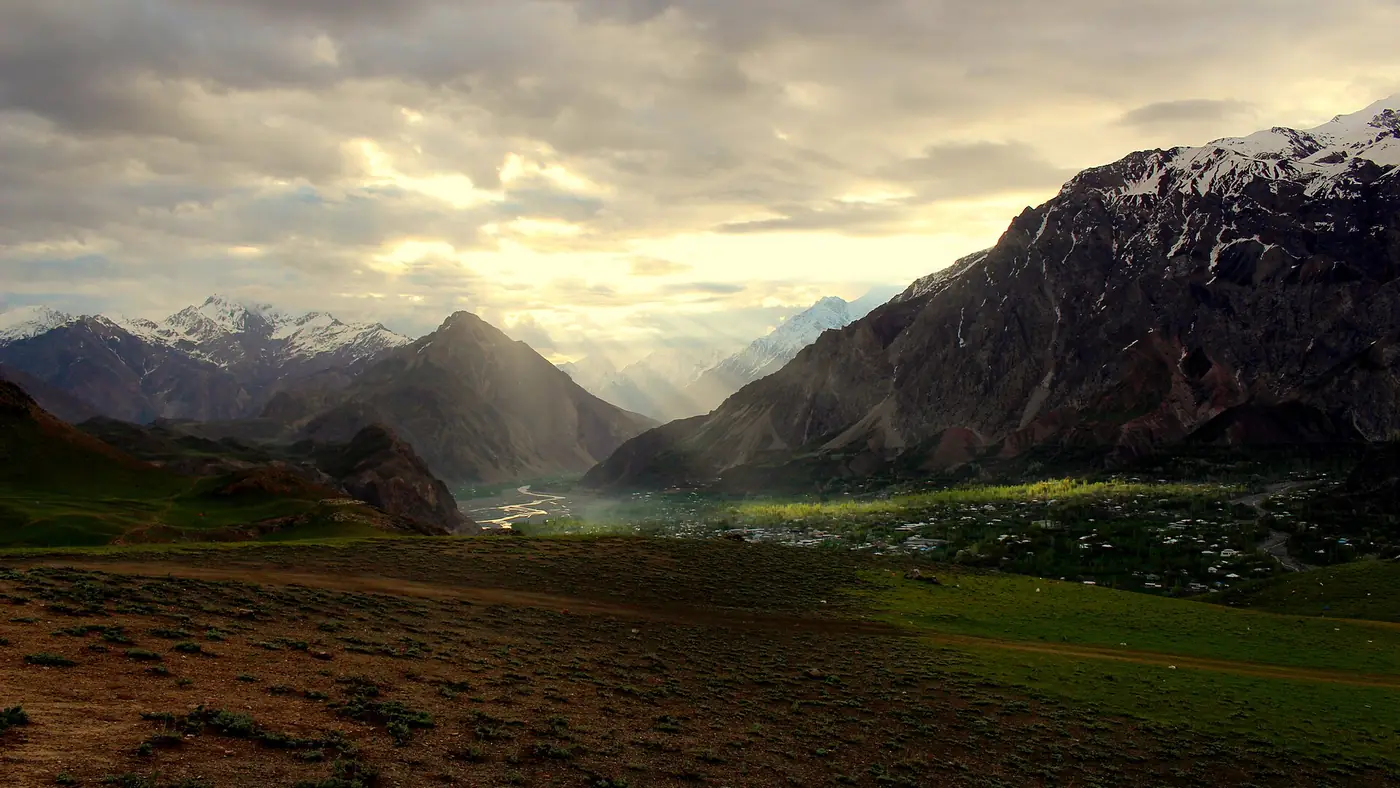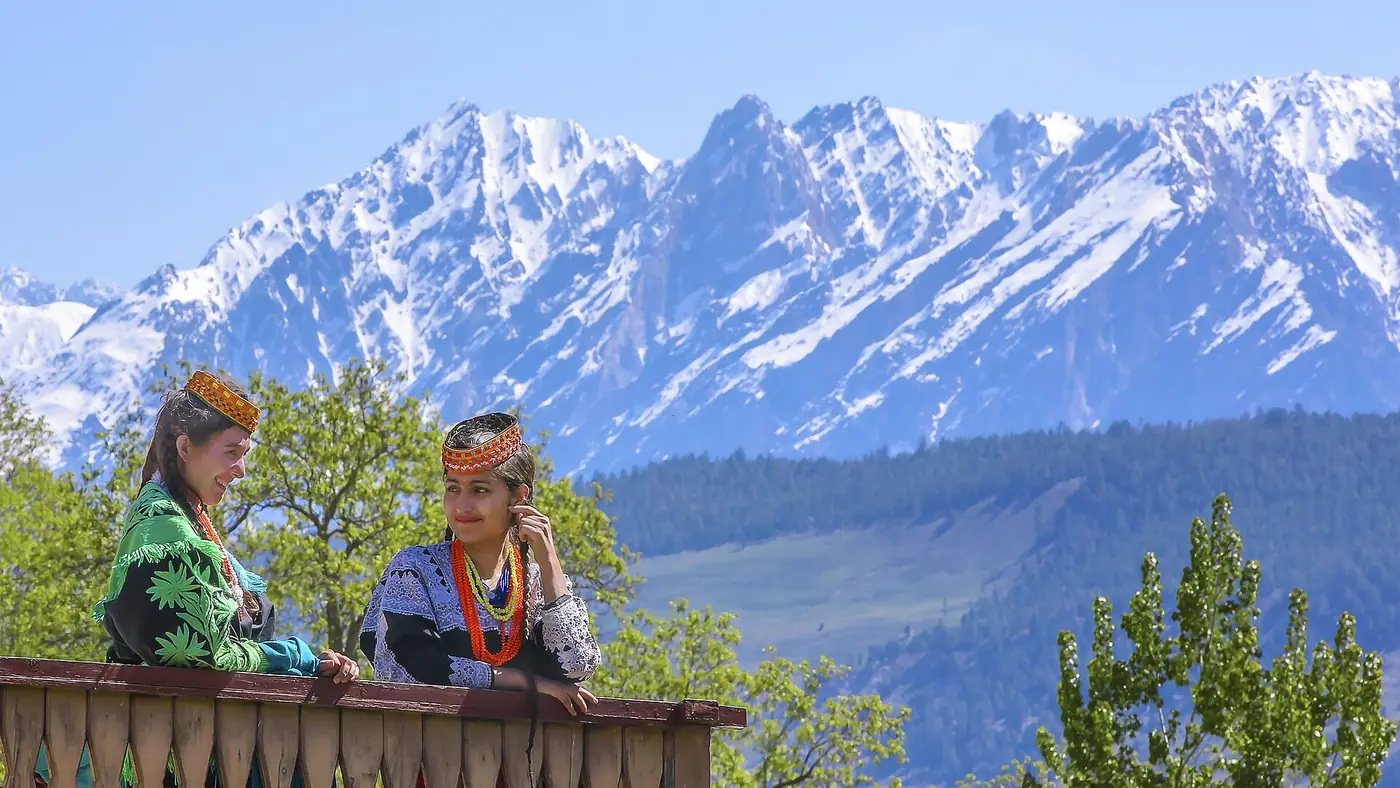
Chitral in autumn, roughly late September through October, is the district at its most colourful and least crowded. The poplar, apricot and walnut trees along the river turn gold, the Kalash valleys hold their harvest festival, and the summer's visitors have mostly gone home. It is a quieter, cheaper season than May or June, with clear skies and cool, comfortable days.
This guide covers what autumn actually looks like in Chitral town, Booni and the Kalash valleys, the harvest festival, and how the weather and roads compare with the rest of the year.
| At a glance | |
|---|---|
| Season | Roughly late September to late October |
| Best colour | Mid to late October |
| Weather | Cool, dry, clear skies; cold nights from mid-October |
| Crowds | Much quieter than May, June or the Eid holidays |
| Kalash harvest festival | Held over several days, usually in October |
| Roads | Generally at their best; watch for early snow late in the month |
Why autumn is a good time to go
Summer in Chitral town is hot, and the tourist season around Eid and the Kalash spring festival is busy. By late September the heat has broken, the crowds have thinned, and the light is softer. Guesthouses that were full in June often have rooms to spare, and prices tend to ease with demand.
It is also the driest part of the year. Most of Chitral's rain falls between December and May, so autumn days are usually clear, which matters if you are driving the mountain roads or want good views of the peaks around the town.
The colours: poplars, apricots and walnuts
Chitral's valleys are planted thickly with poplar, apricot, mulberry and walnut trees, grown as much for timber, fruit and shade as for looks. In autumn they turn, and the effect is at its strongest through October: poplars in particular go a bright yellow-gold, set against the bare brown hillsides and the season's first snow on the high peaks.
Booni, the main town of Upper Chitral, is known for its rows of tall poplars, and they colour up well into the town itself, not just on its outskirts. It also sits close to the open ground at Qaqlasht, worth a stop if you are heading further into Upper Chitral; our guide to Booni covers the town and the meadows above it.
The Kalash valleys of Bumburet, Rumbur and Birir show the same golden trees against terraced fields, with the walnut harvest under way through the villages. Our guide to Kalash culture is a starting point if this is your first visit.
The autumn harvest festival
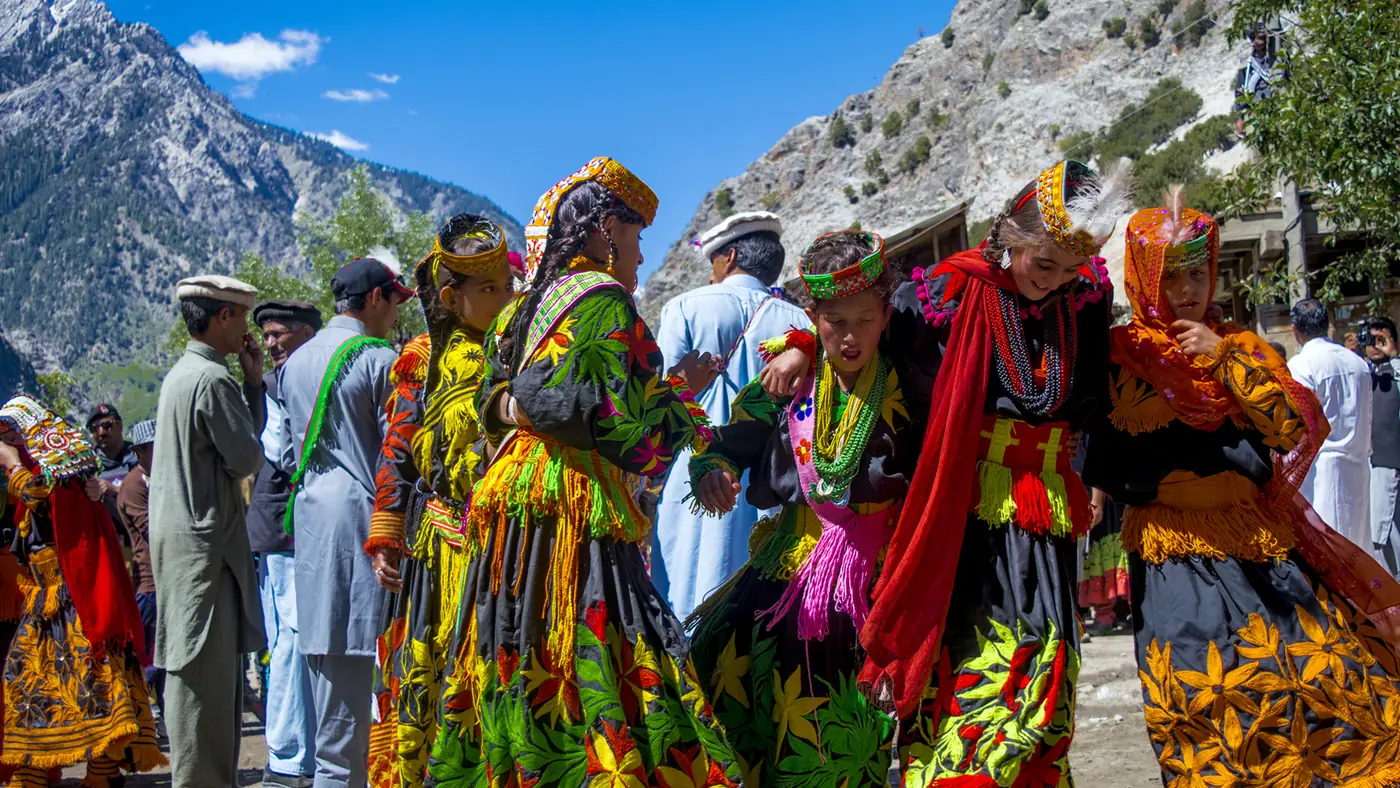
The Kalasha mark the grape and walnut harvest with a festival in the three valleys, generally held in October, though the Kalasha elders set the exact days each year and they are not fixed on the calendar. It is a smaller, quieter occasion than the spring festival in May, with rituals, music and dancing connected to the harvest rather than the crowds and closing procession of Chilam Joshi.
If you want to see it, check nearer the time through a Chitral-based guesthouse or tour operator, since the dates are not announced far in advance. Outside festival days, autumn is still a good season to see village life in the valleys without the pressure of a big event.
Weather and what to pack
Days in October are mild and often sunny, but mornings and evenings turn cold quickly, especially in the second half of the month. Bring layers: something light for the day, a warm jacket for the evening, and a hat for early starts. In the Kalash valleys and Upper Chitral, which sit higher than Chitral town, the cold arrives sooner.
By late October, snow can start to appear on the higher passes and side valleys. It rarely affects the main roads to Chitral town or the Kalash valleys at this stage of the season, but if your plans include Upper Chitral towards Mastuj or Shandur, check the road status before you go; our guide to Chitral road conditions has the current picture.
Is it worth going in autumn rather than summer?
For most travellers, yes. You trade the very greenest fields and the busiest festivals for quieter roads, easier bookings and arguably better light for photographs. Families who want to combine sightseeing with the Kalash spring festival should still aim for May, and anyone set on Shandur or the high passes of Upper Chitral needs the June to September window when those roads are most reliably open.
If your priority is simply seeing Chitral and the Kalash valleys comfortably, without crowds, autumn is one of the better times of year to go. Our trip planning guide can help you work out how many days to allow.
Frequently asked questions
When is the best time to see autumn colours in Chitral?
Mid to late October, when the poplar, apricot and walnut trees are at their most golden. Early September is still summer-like, and by early November the leaves have mostly gone.
Is the Kalash autumn festival open to visitors?
Yes, visitors are generally welcome, but the dates are set by the Kalasha elders close to the time rather than published well in advance. Ask locally or through a guesthouse in the valleys before you travel.
Is Chitral cold in October?
Days are usually mild and sunny, but nights and early mornings turn cold, more so in the Kalash valleys and Upper Chitral than in Chitral town itself. Pack warm layers.
Are the roads to Chitral open in autumn?
Yes, this is generally one of the more reliable times of year to drive the roads to and within Chitral, though it is worth checking current conditions before a trip into Upper Chitral late in the season.
Is Chitral safe to visit in autumn?
The district has its own security picture, including advice from some foreign governments against travel on parts of the route in. See our guide on is Chitral safe and check current advice before you go.
Is Chitral safe for overseas visitors?
Pakistani tourists visit Chitral throughout the season, but as of September 2026 the UK government advises against all travel on the N45 from Mardan to Chitral city, which is the main road in through Dir and the Lowari Tunnel, and within 10 miles of the Afghan border. If you hold a foreign passport, check your own government's advice before you go, because travelling against it can void your insurance. Everyone should check local news and current police advice before setting out.