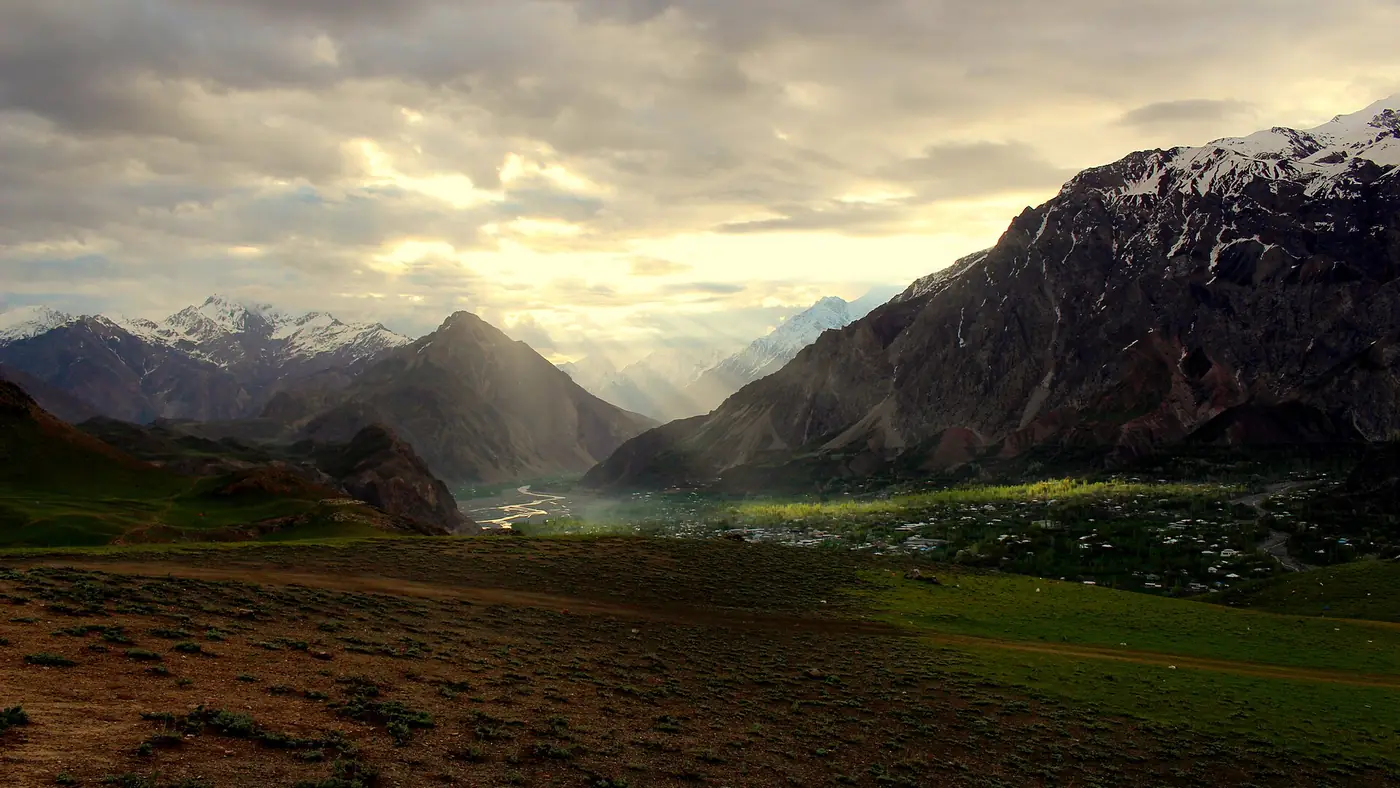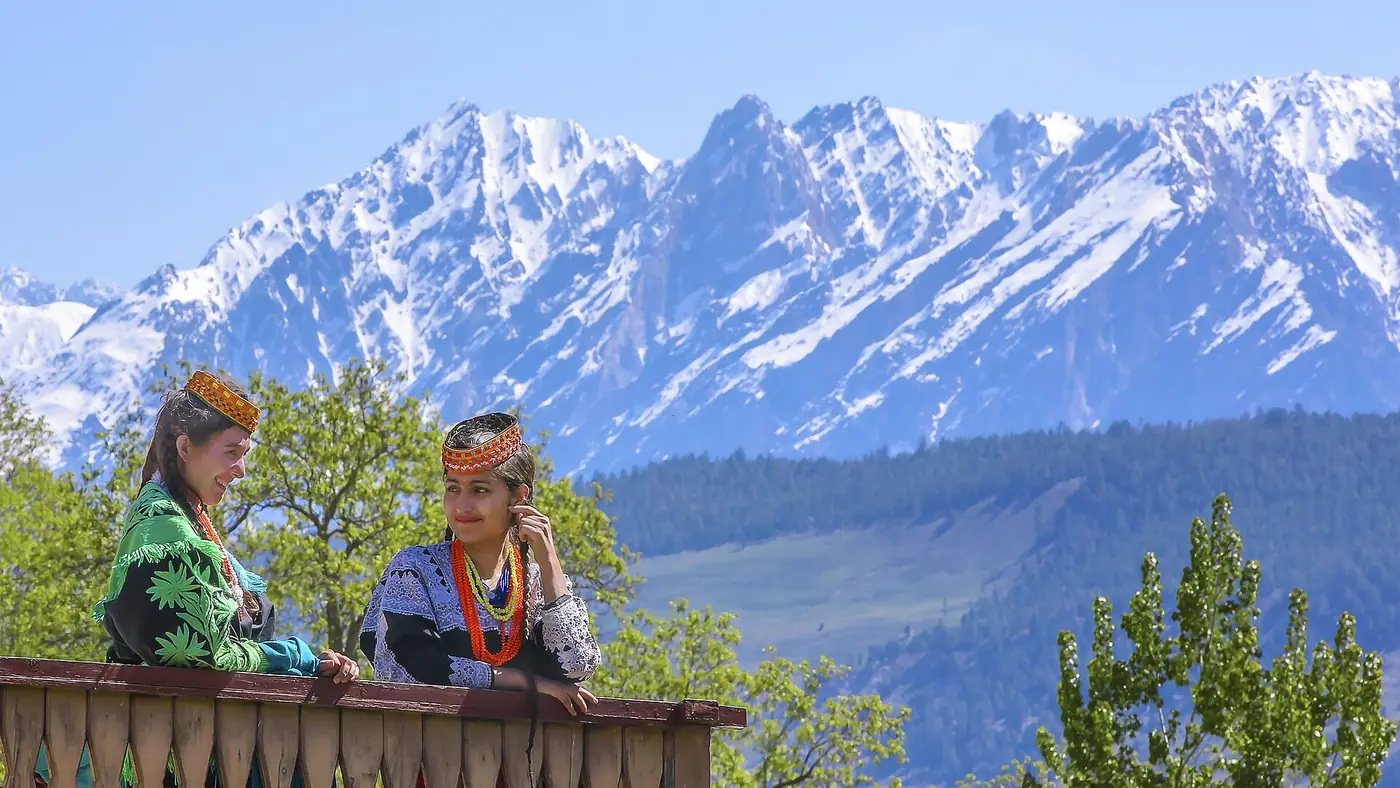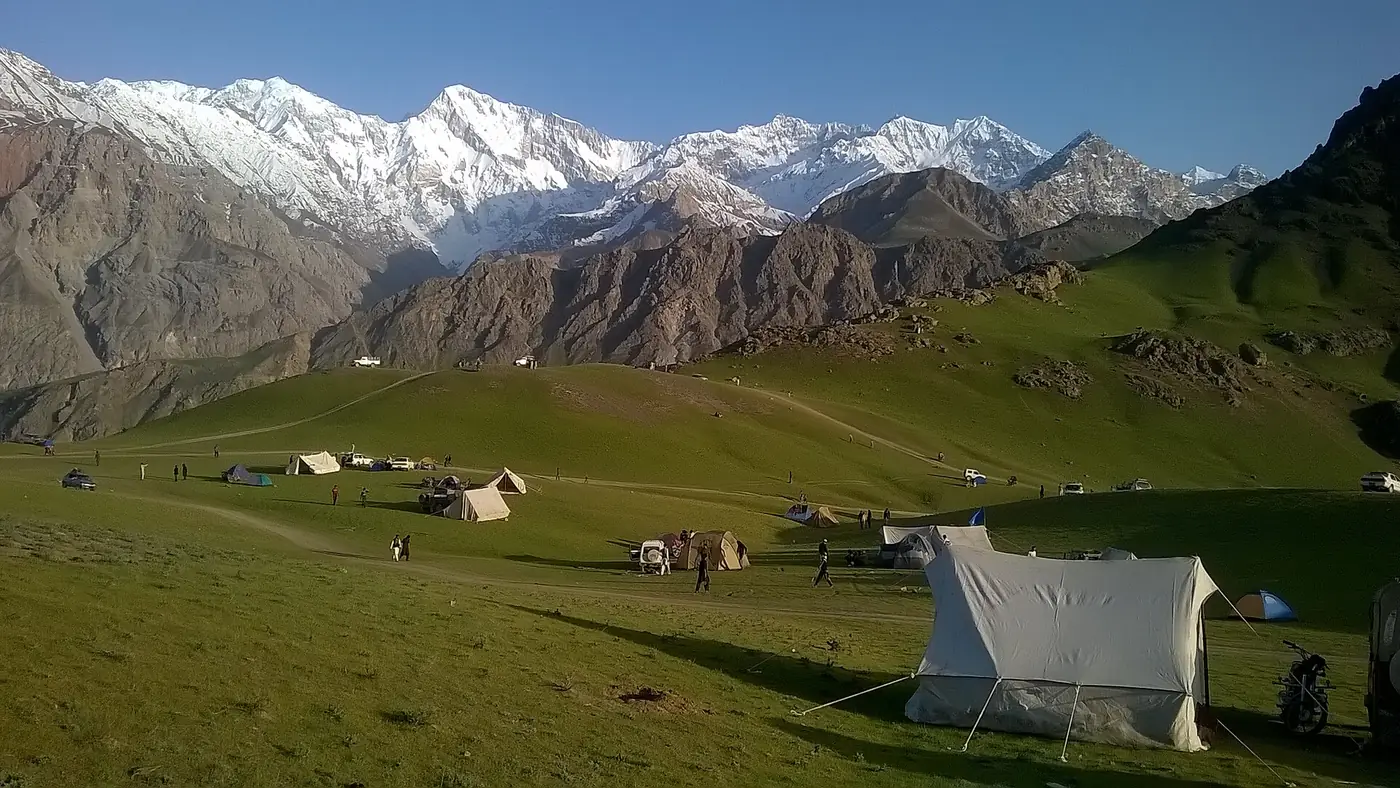
Booni is the main town of Upper Chitral, on the river about 85 km north-east of Chitral town, and the usual overnight stop for anyone driving on towards Mastuj, Shandur or the Yarkhun valley. It sits at around 2,085 metres, noticeably cooler than Chitral town, and is best known locally for its rows of tall poplars and the open meadows of Qaqlasht just above it.
This guide covers what Booni is, why travellers stop there, the meadows above the town, and where to stay.
| At a glance | |
|---|---|
| What it is | Headquarters town of Upper Chitral District |
| Altitude | About 2,085 m |
| From Chitral town | About 85 km |
| Known for | Poplar-lined streets, and Qaqlasht meadows above the town |
| Typical visit | A stop or overnight on the way to Mastuj, Shandur or Yarkhun |
| Stays | A handful of guesthouses and small hotels |
Where Booni fits on the map
Booni sits on the road that runs north from Chitral town up the Mastuj river valley, and it became the headquarters of the newly created Upper Chitral District. For most visitors it is not a destination in its own right so much as a natural stopping point: the last sizeable town before the road climbs on towards Mastuj, the Shandur Pass and Gilgit-Baltistan, or turns off towards the Yarkhun and Broghil valleys.
If you are driving north from Chitral town in a day, Booni is a sensible lunch stop or overnight before tackling the rougher road beyond. Our guide to Chitral road conditions covers what the route is like stretch by stretch.
The town itself
Booni is a working district headquarters rather than a tourist town: a bazaar, government offices, schools and a scattering of guesthouses, set among fields and the poplar trees the town is known for. The poplars are planted for timber as much as for shade, and they line the streets and field edges through the town.
Autumn brings out the best of them, when the leaves turn gold; our guide to Chitral in autumn covers the colour season in more detail. In summer the town is a green, pleasant place to break a long drive, noticeably cooler than the heat of Chitral town lower down the valley.
Qaqlasht meadows
Above Booni, a side road climbs to Qaqlasht, an open, treeless plateau at around 2,500 metres, used since the town's early history for pasture, polo and public gatherings. The name comes from Khowar and means roughly "dry plain," a fair description of the flat, grassy ground.
Qaqlasht is a short drive from Booni and worth the detour even outside festival season, for the views over Upper Chitral and the walk across open ground that is rare in a district of steep valleys. Around April it hosts the Jashan-e-Qaqlasht festival, with polo and other games on the plateau; our guide to the Qaqlasht festival covers dates and what to expect.
Where to stay in Booni
Booni has a small number of guesthouses and simple hotels, generally family-run and modest rather than large or upmarket, some of them close to the road towards Qaqlasht. Booking ahead matters more here than in Chitral town, since there are far fewer beds; ask about heating if you are travelling outside summer, since nights are cold for much of the year at this altitude.
For most travellers heading north, Booni is one night, not a base for a longer stay. If you would rather base yourself in Chitral town and see Upper Chitral on day trips, our guide to hotels in Chitral covers the options there.
Is Booni worth stopping at?
If your route takes you north of Chitral town at all, yes. Breaking the drive at Booni, rather than pushing straight through, gives you time to see Qaqlasht and avoids a long, tiring single-day drive on a road that gets rougher the further north you go. On its own, without onward plans towards Mastuj, Shandur or Yarkhun, it is not really a destination to build a trip around.
Our trip planning guide can help with working out how to split a longer Chitral itinerary between the town, the Kalash valleys and Upper Chitral.
Frequently asked questions
How far is Booni from Chitral town?
About 85 km, on the road north up the Mastuj river valley. Depending on road conditions, allow a few hours for the drive.
What is there to do in Booni?
The town itself is mainly a stopping point, with its poplar-lined streets and bazaar. The main attraction is the Qaqlasht meadows on the plateau above the town.
Is Booni a good overnight stop for Shandur or Mastuj?
Yes. It is the last sizeable town before the road climbs further into Upper Chitral, and breaking the journey there avoids a very long single-day drive.
Are there hotels in Booni?
There are a small number of guesthouses and simple hotels. Book ahead, since there are far fewer rooms than in Chitral town.
What is Qaqlasht?
An open plateau above Booni at around 2,500 metres, used for pasture and, in spring, for the Qaqlasht polo and games festival.
Is Chitral safe for overseas visitors?
Pakistani tourists visit Chitral throughout the season, but as of September 2026 the UK government advises against all travel on the N45 from Mardan to Chitral city, which is the main road in through Dir and the Lowari Tunnel, and within 10 miles of the Afghan border. If you hold a foreign passport, check your own government's advice before you go, because travelling against it can void your insurance. Everyone should check local news and current police advice before setting out.