The Chilas rock carvings are tens of thousands of images and inscriptions cut into boulders along the Indus around Chilas, left by travellers on the routes between South Asia and Central Asia over roughly 8,000 years. They range from Stone Age hunting scenes to Buddhist stupas and Bodhisattvas from the centuries when this stretch of the Karakoram Highway was a branch of the Silk Road. The main panels sit beside the highway, a short stop for anyone driving north to Gilgit, Hunza or Fairy Meadows.
This guide covers what the carvings show, how they have been dated, who left them, and where to see them on a drive through Chilas.
| At a glance | |
|---|---|
| Where | Boulders beside the Karakoram Highway in and around Chilas, Diamer |
| Scale | More than 50,000 carvings and around 5,000 inscriptions in the Chilas-Thalpan area |
| Date range | Roughly 7000 BC to the 16th century AD |
| Main sites | Chilas I (opposite Thalpan bridge), Thalpan, Chilas II |
| Time needed | An hour or two |
| Cost | Free to view from the road |
| Best light | Early morning or the last hour before sunset |
| Threat | Diamer-Bhasha dam reservoir will submerge many sites |
What is actually carved there?
The oldest images are single animals, hunters and battle scenes pecked into the rock, some reaching back to between 7000 and 1000 BC. Later layers, from roughly the first centuries AD, add Buddhist stupas, Bodhisattvas, and scenes from the Jataka stories of the Buddha's earlier lives. Inscriptions in several scripts sit alongside them, including Kharoshthi, Brahmi and Sogdian, left by traders, pilgrims and soldiers who paused here on their way over the passes. A few panels show Hindu figures, including Krishna and Balarama, evidence of just how many different travellers passed this point on the river.
Why Chilas has so many carvings
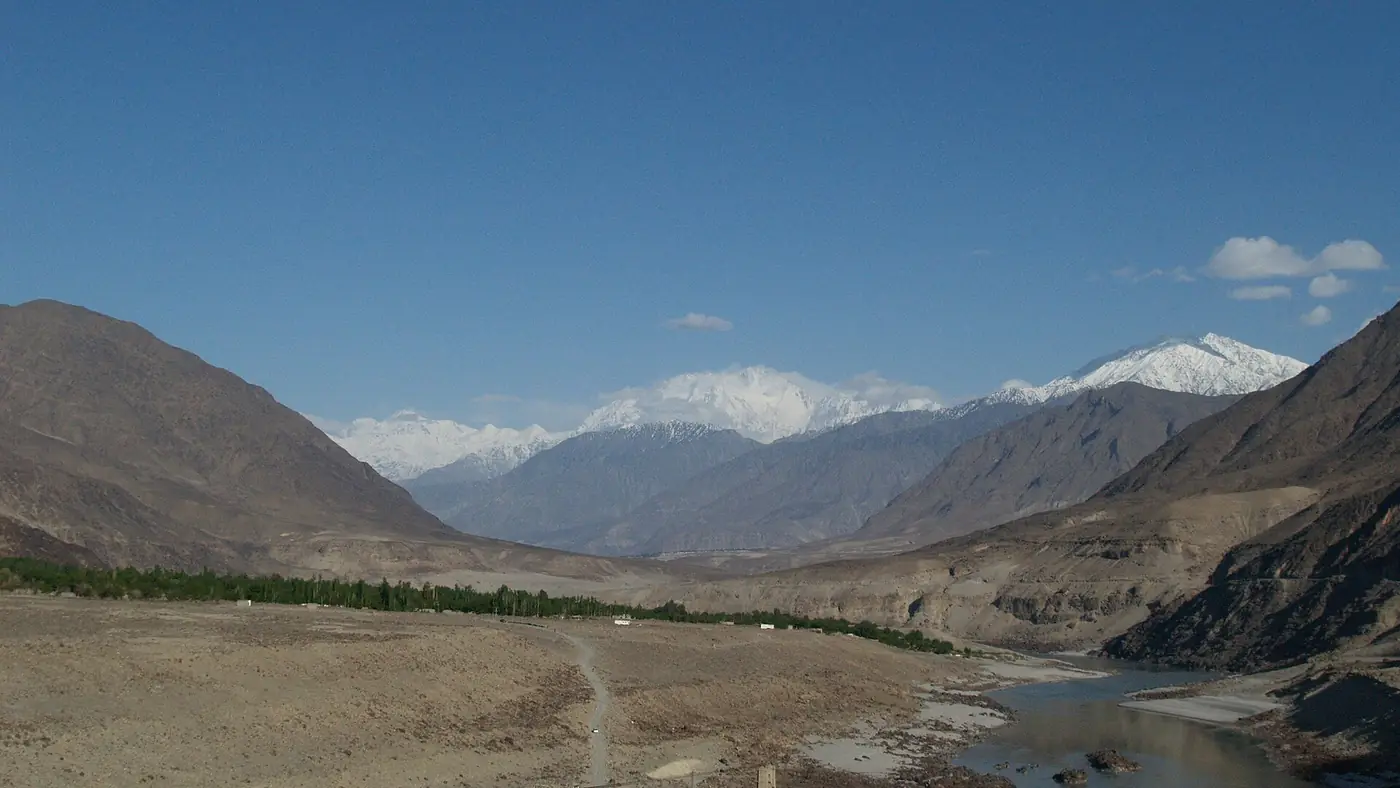
Chilas sits where the Indus valley narrows and the old route north meets a river crossing, which made it a natural stopping point for centuries of caravans moving between the Indian plains, the Karakoram passes and Central Asia. Travellers who paused here, often for days while waiting out weather or arranging porters, marked the rock with images of the animals they hunted, the deities they worshipped and their own names. The result is one of the densest concentrations of rock art anywhere in the world, stretching along more than 100 km of the Indus from Shatial through Chilas towards Khunjerab.
Who has studied them
Systematic recording began in the 1970s and 1980s, when the German scholars Karl Jettmar and Volker Thewalt led survey teams along the newly built Karakoram Highway, publishing their findings as Between Gandhara and the Silk Roads: Rock Carvings Along the Karakoram Highway. Their work, carried out with Pakistani institutions, remains the basis for most later research and for how the carvings are dated and classified today.
A race against the reservoir
The Diamer-Bhasha dam, under construction on the Indus downstream of Chilas, will eventually flood a stretch of the valley that holds thousands of these carvings. Archaeological teams have been using laser scanning and photogrammetry since 2021 to create three-dimensional records of the boulders before the water rises, working through the Chilas and Thalpan sites in particular. Once the reservoir fills, many of the original panels will be underwater for good, which is one more reason to see them now rather than wait for a future trip.
Where to see them
The best-known panel, Chilas I, sits above the highway on the town side of the river, opposite the bridge that crosses to Thalpan, about 4 km east of Chilas. Cross the bridge for more carvings at Thalpan, and look for Chilas II, signed off the highway near the police checkpoint on a short jeep track. None of the sites has fencing, signage or an entry fee; you park, walk up over loose rock, and look.
Carvings are also vulnerable to damage from careless visitors: don't chalk, wet or trace any image to make it show up better in a photograph, since that has damaged panels in the past. Our guide to places to visit in Chilas sets out a full evening-and-morning plan that fits the carvings around an overnight stop, and our Chilas hotels guide covers where to sleep.
Is it worth the stop?
For anyone with an interest in history, yes. Few places let you stand where a Buddhist pilgrim and a hunter separated by thousands of years left their mark on the same rock. For a family mainly headed for Fairy Meadows or Hunza with young children, an hour at Chilas I on the way through is enough; you don't need to chase every panel.
The carvings suit a stop, not a detour. They sit directly on the road almost everyone driving to Gilgit-Baltistan already takes, so there is little reason to skip them and no reason to build a special trip around them alone. If you would like help fitting Chilas into a wider route north, send us your dates through our trip planner.
Frequently asked questions
How old are the Chilas rock carvings?
The oldest go back to roughly 7000 to 1000 BC, mostly hunting scenes and animals. Buddhist carvings and inscriptions were added from around the first centuries AD through to about the 16th century.
Where exactly are the Chilas rock carvings?
The main panels are beside the Karakoram Highway: Chilas I opposite the Thalpan bridge about 4 km east of town, more carvings across the bridge at Thalpan, and Chilas II near the police checkpoint on the highway.
Is there an entry fee to see the rock carvings?
No. The sites are open boulders beside the road with no ticket or gate.
Are the Chilas carvings connected to the Silk Road?
Yes. Chilas lay on a branch of the routes linking South Asia with Central Asia and China, and the carvings were left largely by traders, pilgrims and travellers who passed through over many centuries.
Will the rock carvings be destroyed by the Diamer-Bhasha dam?
Some will be submerged once the dam's reservoir fills. Teams have been digitally scanning the boulders since 2021 to preserve a record of them before that happens.
How long does it take to see the Chilas rock carvings?
An hour or two is enough for the main panels at Chilas I and Thalpan. Go early or late in the day, when the low sun makes the carved lines easier to see.