The Pakistan Army Museum sits inside the General Headquarters area in Rawalpindi Cantonment, and it is open to the public from Wednesday to Sunday, 9 am to 4 pm, closed on Monday and Tuesday. Everyone entering needs a CNIC, or a passport for foreign visitors, and the visit itself takes about ninety minutes to two hours if you go through all twelve galleries.
This guide covers what is actually inside, the ID and photography rules at the gate, and how to plan the visit alongside the rest of a day in Rawalpindi.
| At a glance | |
|---|---|
| Location | GHQ area, Rawalpindi Cantonment |
| Opened | 24 October 1961 |
| Open days | Wednesday to Sunday (closed Monday, Tuesday) |
| Timings | 9 am to 4 pm |
| Galleries | 12, plus outdoor tanks, guns and helicopters |
| ID required | CNIC (Pakistanis), passport (foreign nationals) |
| Time needed | 1.5 to 2 hours |
What the museum covers
The museum was opened in 1961 in a set of colonial-era barracks near GHQ, and its twelve galleries are arranged around the army's history rather than in a single timeline. Between them they cover the 1947–48 Kashmir war, the wars of 1965 and 1971, the Siachen and Kargil conflicts, the army's regiments and corps, and a gallery on counter-terrorism operations. There is a Nishan-e-Haider gallery dedicated to the army's highest gallantry award and the men who earned it.
Inside, the collection runs from Mughal-era arms and ammunition through to weapons currently in service, alongside uniforms, medals, maps and photographs. Several galleries use dioramas and audio-visual displays rather than cases of objects alone, and there is a battlefield simulation section that visitors consistently mention as the most memorable part of the visit.
Outdoor exhibits: tanks and aircraft
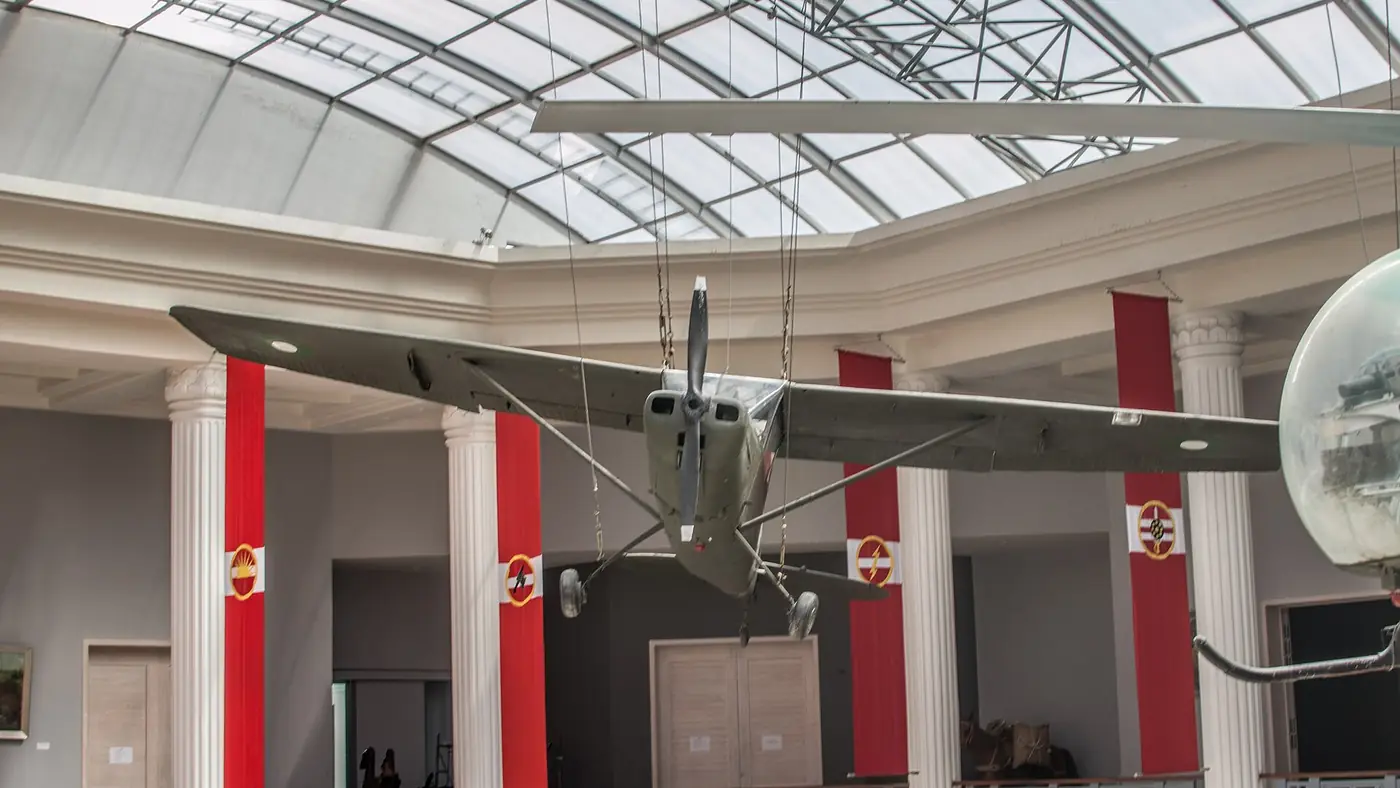
Outside the main building is where the museum's larger equipment sits: retired tanks, artillery pieces and helicopters, arranged around the grounds rather than indoors. A Sherman tank is among the older pieces on display. An L-19 spotter aircraft is mounted inside the main hall itself rather than outdoors, which is worth knowing if you are looking for it among the outdoor tanks and miss it.
Give the outdoor area at least twenty to thirty minutes on its own, particularly if you are travelling with children who will want to look closely at the tanks and guns.
A short history of the museum
The museum opened on 24 October 1961, built into a set of barracks left over from British rule, close to the army's General Headquarters. That location is part of what shapes the visit: unlike a stand-alone city museum, it sits inside a working military area, which is why the security and ID checks are firmer than at, say, the Lahore Museum or Taxila Museum.
Pakistan has a second, separate Army Museum in Lahore, a newer building that opened later and runs its own ticketing and timings. The two are not connected, and information about one does not apply to the other, so make sure any listing you read is specifically for the Rawalpindi museum before you plan around it.
Entry rules: ID, tickets and photography
Every visitor is asked to show identification at the reception before entry: a CNIC for Pakistani nationals, a passport with valid visa for foreign nationals. Bring the original document, not a photocopy or a photo of it on your phone.
Ticket prices for the museum have changed over the years and differ for Pakistani and foreign visitors, so treat any figure you read, including on this page, as out of date. Bring more cash than you expect to need and pay whatever is posted at the counter on the day.
Photography rules are stricter here than at most museums, because this is a working military facility. Visitors report that still photography is generally allowed in most galleries but that video recording is restricted, and staff will tell you where cameras are not permitted at all, particularly near anything connected to current operations. Ask at the entrance before filming anything, and follow whatever the staff on duty tell you.
Getting there and combining it with the rest of Pindi
The museum is in Rawalpindi Cantonment, close to Saddar and Christ Church, which makes it easy to combine into a cantonment-focused half day. A car or ride-hailing service is the simplest way to reach it, since it sits inside a security area rather than on a public bus route. If you are staying in Islamabad, allow thirty to forty-five minutes for the drive depending on traffic on Murree Road.
For a fuller view of what else the city offers, our places to visit in Rawalpindi guide sets the museum alongside Saddar, Raja Bazaar and the sites out on the GT Road, and our trip planning page can help you fit a Rawalpindi day into a longer itinerary around Islamabad.
Who this suits
Military history is the obvious audience, but the museum also works well for families with older children and for anyone with a free afternoon in the cantonment who wants something more structured than a bazaar walk. It is a serious, formal museum rather than an interactive one, so very young children may lose interest before you reach the later galleries.
If your interest is more general Pakistani history than military specifics, the Lok Virsa museum in Islamabad or the Taxila Museum are better first stops, and you can add the Army Museum on a second trip if military history draws you in.
A few practical points worth planning around:
- Arrive with time to spare. The GHQ security zone can mean a short queue at the gate, particularly on weekends, and being turned away for a forgotten ID card is the most common disappointment reported by visitors.
- Guides are usually available to walk you through the galleries, which adds real value in a museum this dense with detail, especially for visitors who are not already familiar with the wars it covers.
- Wear comfortable shoes. The galleries and outdoor grounds together involve a fair amount of walking, and there is limited seating inside.
- Go earlier in the day if you can, since the outdoor tanks and guns are uncovered and the cantonment gets warm by early afternoon for much of the year.
Frequently asked questions
What are the Pakistan Army Museum's opening days and timings?
It is open Wednesday to Sunday, 9 am to 4 pm, and closed on Monday and Tuesday. Confirm before you go, since museum hours in Pakistan do shift from time to time.
Do I need my CNIC to enter the Army Museum?
Yes. Pakistani nationals need their CNIC and foreign nationals need a passport with a valid visa. You will be asked for it at reception before you are allowed in.
Can I take photographs inside the museum?
Still photography is generally allowed in most galleries, but video recording is restricted in parts of the museum. Ask staff at the entrance, and follow their instructions on where cameras are not permitted.
How much does it cost to visit the Army Museum?
Ticket prices have changed several times and differ for Pakistani and foreign visitors, so bring more cash than you expect and check the price posted at the counter on the day.
How long does a visit to the Army Museum take?
Most visitors need about ninety minutes to two hours to see all twelve galleries and the outdoor tanks and guns properly. Allow closer to two hours if you are travelling with children.
Is the Army Museum easy to combine with other Rawalpindi sights?
Yes. It sits in the cantonment near Saddar and Christ Church, so it fits naturally into a cantonment-focused half day, with Ayub National Park a short drive away for the rest of the afternoon.