The Tomb of Jahangir sits across the Ravi from central Lahore, in the Shahdara Bagh complex, and is one of the least crowded Mughal monuments in the city despite being one of the most important. It is generally open daily except Monday, with a small entry fee for Pakistani visitors and a considerably higher one for foreign nationals; check the current price at the gate, since fees at Punjab's heritage sites have changed more than once in recent years.
This guide covers the tomb's history, what to look for, tickets and timings, and how to combine it with the nearby tombs of Asif Khan and Noor Jahan.
| At a glance | |
|---|---|
| Location | Shahdara Bagh, across the Ravi, north-west Lahore |
| Built | Completed around 1637, a decade after work began |
| Closed | Mondays |
| Typical hours | 9 am to 5 pm on open days |
| Nearby | Tomb of Asif Khan, Akbari Sarai, Tomb of Noor Jahan |
| Time to allow | 1.5 to 2 hours for the complex |
| From central Lahore | About 30 to 45 minutes' drive, depending on traffic at the Ravi bridges |
Who was Jahangir, and why is he buried here?
Jahangir was the fourth Mughal emperor, ruling from 1605 until his death in 1627, and the son of Akbar. He died while travelling towards Kashmir, and his body was brought back to Lahore for burial in the Dilkusha garden, which belonged to his wife, the powerful and influential empress Noor Jahan. That garden became the site of his tomb.
The tomb's history and architecture
Construction took about a decade and, by contemporary accounts, cost around ten lakh rupees. Official records credit the project to Jahangir's son and successor, Shah Jahan, though historians generally believe Noor Jahan was the driving force behind its design and building, since it stood on land she owned.
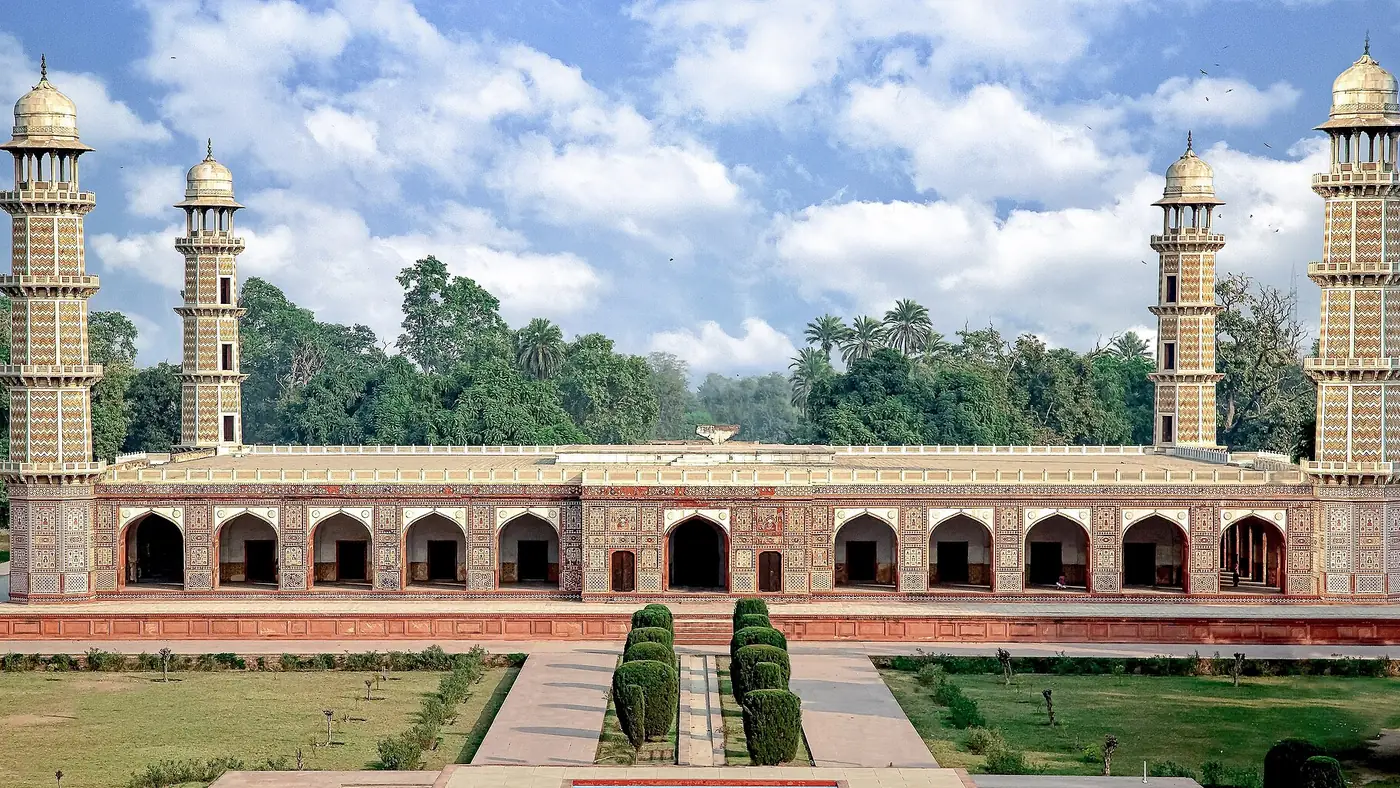
The tomb itself is a single-storey square structure, built on a raised platform, with an octagonal minaret at each of its four corners rising around 30 metres. Its walls are inlaid with marble and semi-precious stone in floral patterns, with tile mosaic work and fresco decoration inside. The most striking architectural choice is what is missing: there is no dome. Jahangir is said to have specifically asked that no dome be built over his grave, which makes the tomb's flat, minaret-framed profile unlike almost any other major Mughal mausoleum. Inside, the marble cenotaph is carved with inlay and calligraphy over the emperor's grave.
The tomb stands in a large formal garden laid out on the Mughal charbagh plan, divided into a grid of squares by water channels, in the tradition shared with Shalimar and other Mughal gardens of the period.
The Akbari Sarai and the Tomb of Asif Khan
Approaching the tomb, you pass through the Akbari Sarai, a large walled quadrangle with an imposing double-storey gateway, originally built to house travellers and the tomb's staff. During the British period it was used as a railway workshop, and it has since been restored.
On the western side of the same complex stands the Tomb of Asif Khan, Noor Jahan's brother and the father of Mumtaz Mahal, for whom the Taj Mahal was built. Asif Khan died in 1641 and his tomb, commissioned by Shah Jahan, was completed a few years later. It is worth the short walk from Jahangir's tomb, both for its own architecture and for understanding the family relationships at the heart of the complex.
The Tomb of Noor Jahan: separate, and easy to miss
The Tomb of Noor Jahan is close by but cut off from the main complex. A railway line, built through the site during the colonial period, now runs between it and the tombs of Jahangir and Asif Khan, severing what was originally a single connected garden. Because of this, many visitors to Shahdara never see it. If you want to visit, ask locally about the current route across, since it involves either a level crossing or a longer way round rather than a direct walk from the main complex.
Tickets and timings
The site is managed jointly by Punjab's Department of Archaeology and Museums and the Walled City of Lahore Authority. It is generally closed on Mondays and open the rest of the week from around 9 am to 5 pm. Entry fees are modest for Pakistani visitors and considerably higher for foreign nationals; these have been revised more than once in recent years, so bring cash and pay whatever is posted at the gate rather than relying on a figure quoted online.
How to get there
Shahdara sits on the north-western edge of Lahore, across the Ravi from the old city, roughly a 30 to 45 minute drive from central Lahore depending on traffic at the river bridges. It is easiest reached by car, rickshaw or ride-hailing app; there is no direct metro or bus route that drops you at the gate. Go in the morning, when the light is best for photographs and before the heat builds in the warmer months.
What to combine it with
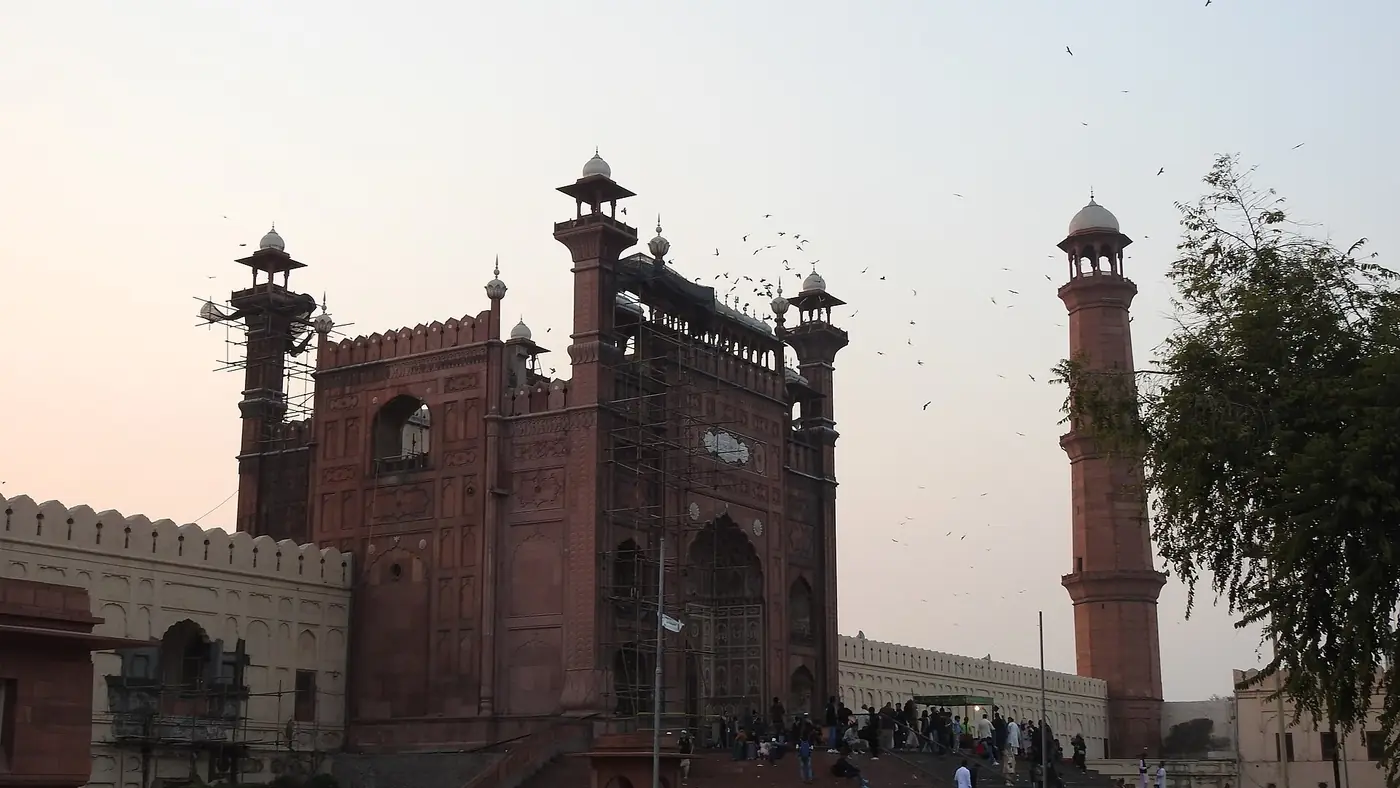
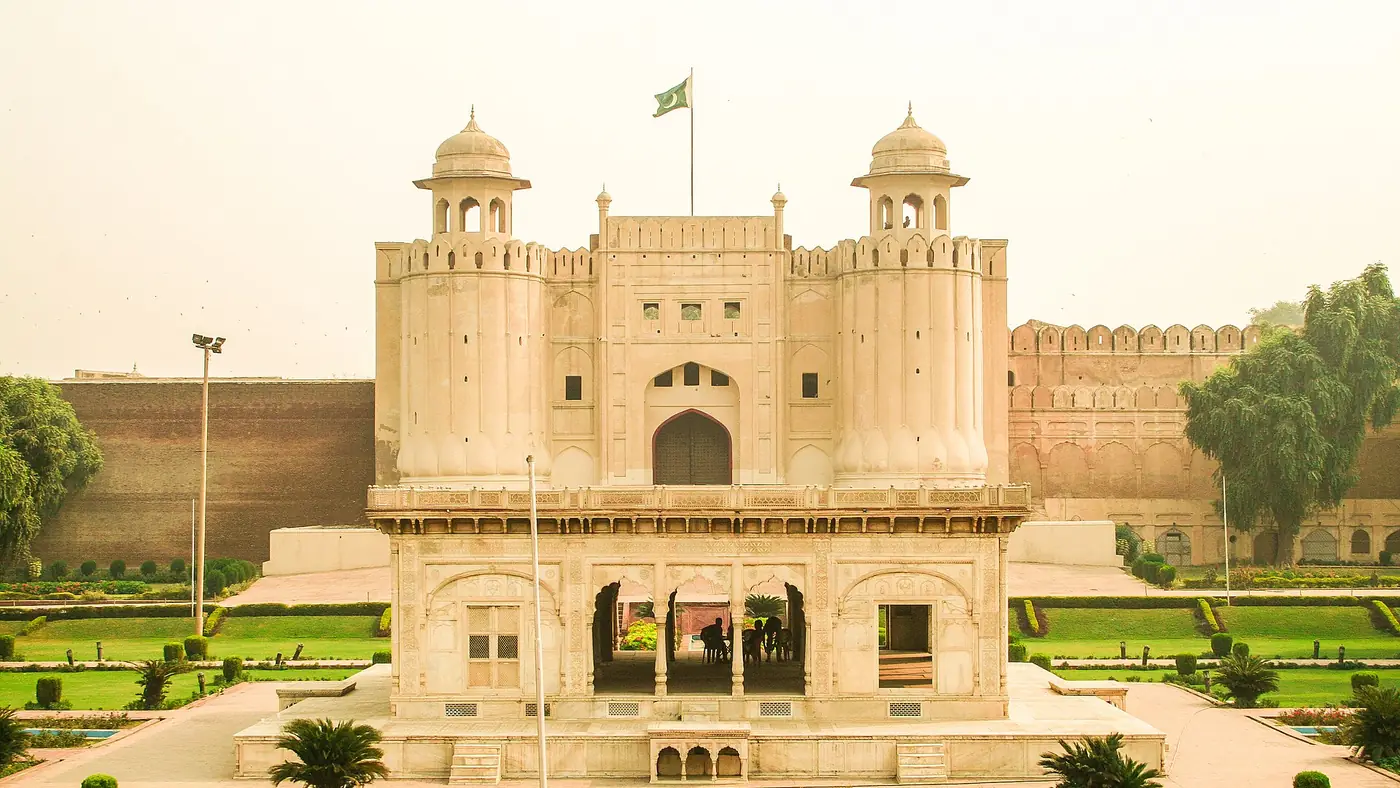
Shahdara is a half-day trip on its own, or it pairs naturally with the rest of a Lahore itinerary built around the old city. Our guide to places to visit in Lahore sets out where Jahangir's tomb fits alongside the fort, the Badshahi Mosque and the Shalimar Gardens, and our three-day Lahore itinerary shows a realistic order for fitting it in without rushing.
Is it worth the trip?
Yes, particularly if you have already seen the Lahore Fort and want a quieter, less commercial Mughal site. The absence of crowds is part of the appeal: you can walk the garden and look closely at the inlay work without being hurried. It is less rewarding if your time in Lahore is very short, since it takes a dedicated half day and sits apart from the main cluster of old-city sights across the river. For a first visit with only a day or two, the fort and the mosque should come first; add Shahdara on a second or third day.
Frequently asked questions
Is the Tomb of Jahangir open every day?
No, it is generally closed on Mondays and open the rest of the week, typically from around 9 am to 5 pm. Confirm locally if you are planning a visit around a Monday.
How much does it cost to visit the Tomb of Jahangir?
There is a modest entry fee for Pakistani visitors and a considerably higher one for foreign nationals. Fees have changed more than once in recent years, so bring cash and pay what is posted at the gate.
Why does Jahangir's tomb have no dome?
Jahangir is said to have asked that no dome be built over his grave, which is why the tomb has a flat roof framed by four tall corner minarets instead of the central dome seen on most major Mughal tombs.
How do I get from central Lahore to Jahangir's tomb?
By car, rickshaw or ride-hailing app, crossing the Ravi to Shahdara on the city's north-western edge. The drive takes roughly 30 to 45 minutes depending on traffic.
Can I visit the Tomb of Noor Jahan at the same time?
You can, but it takes extra time and a separate approach, since a railway line built through the site during the colonial period cuts it off from Jahangir's and Asif Khan's tombs. Ask locally about the current access route before you go.