
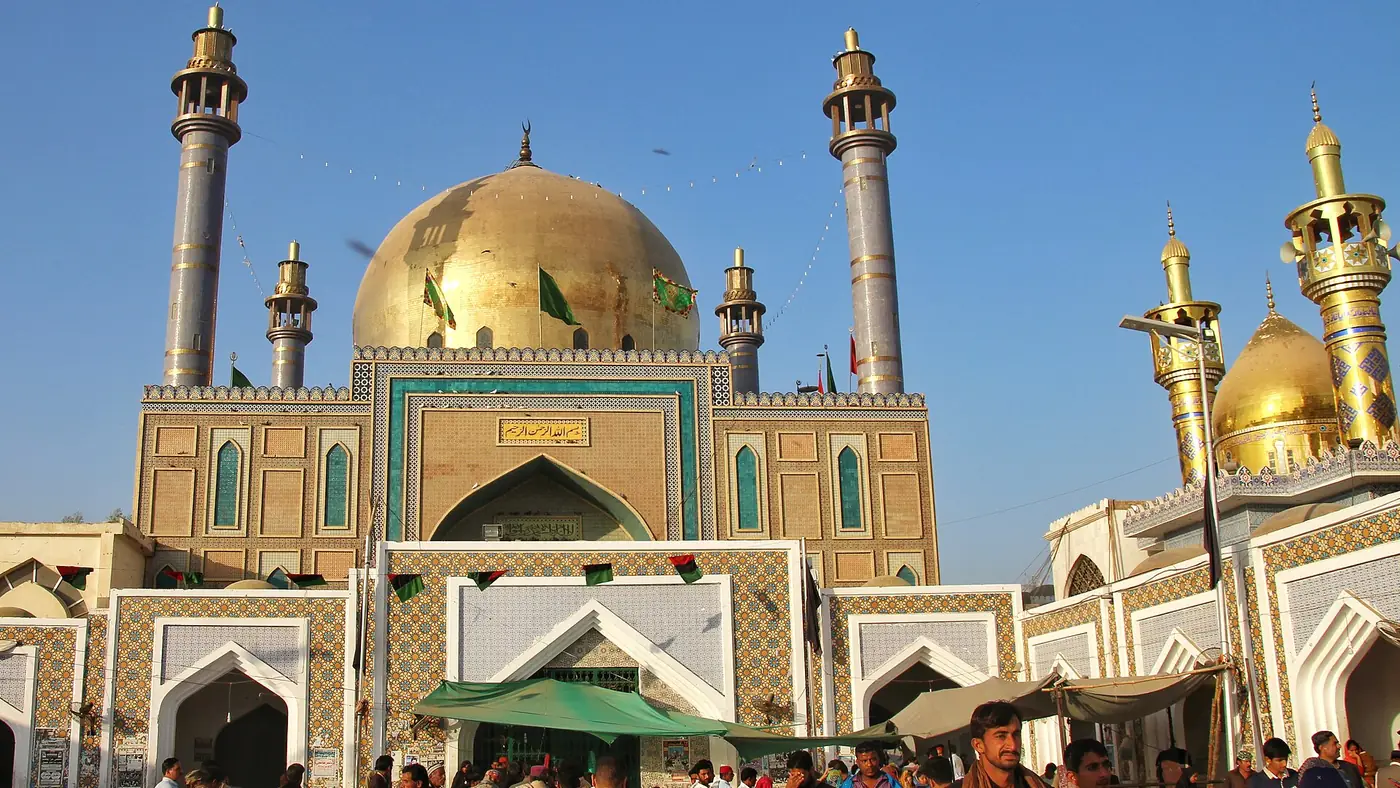

The urs of Lal Shahbaz Qalandar, marking the saint's death, is the single biggest event at the Sehwan Sharif shrine, drawing pilgrims from across Pakistan and beyond over three days. The 2026 urs falls from 9 to 11 February, with the Sindh government declaring a public holiday around it.
This guide is about the urs specifically: when it falls, what the crowds and logistics are actually like, and what to know if you're going, or would rather visit on a quieter day instead.
| At a glance | |
|---|---|
| 2026 dates | 9 to 11 February |
| Islamic calendar date | 18 Shaban, so the Gregorian date shifts earlier each year |
| Scale | Very large; past urs gatherings have been reported in the millions over the full period |
| Accommodation in Sehwan | Extremely limited; most pilgrims camp, sleep in the open, or come as day visitors |
| Best for | Pilgrims and anyone specifically wanting to see the urs atmosphere |
| Not for | Anyone wanting a calm, uncrowded shrine visit |
When the urs falls
The urs is fixed to 18 Shaban in the Islamic lunar calendar, which moves roughly 11 days earlier each Gregorian year. The main three-day gathering in 2026 runs from 9 to 11 February, and the Sindh government has separately declared public holidays around the date (7 February and 19 February in 2026) to cover related closures and movement. Because the date moves every year, don't rely on a previous year's dates; check the current year's Islamic calendar conversion or local announcements closer to the time.
How big the crowds actually get
This is one of the largest religious gatherings in Sindh. Pilgrims arrive from across Pakistan, by bus, train, and on foot in organised groups that walk for days to reach Sehwan in time. Reported attendance figures for the full urs period have run into the millions in past years, though exact crowd counts at events like this are always rough estimates rather than precise numbers. Whatever the true figure, the practical result is the same: the town of Sehwan, small outside urs season, is overwhelmed for the duration.
Roads into Sehwan get heavy, slow traffic in the days around the urs, and the approach to the shrine itself is a dense, slow-moving crowd rather than a normal queue. If you go, expect to spend far longer getting near the shrine than you would on an ordinary day.
What actually happens over the three days
Dhamaal runs through all three days rather than as a single set-piece event, alongside qawwali performances and continuous chadar poshi, devotees presenting decorated chadars and floral garlands at the tomb. The other constant through the urs is langar, free food distributed across the town by pilgrim groups, shrine trusts and individual devotees, ranging from water and sweets handed out on the roadside to full meals of biryani, roti and daal at set points near the shrine. As a visitor, you're welcome to accept langar like anyone else, though many people choose to bring their own food and water given how stretched local resources get.
Accommodation
Sehwan has very little hotel capacity even outside the urs, and during it, rooms are effectively unavailable unless arranged well in advance through a local contact. Most pilgrims either come as day visitors from Hyderabad, Jamshoro or further afield, or camp in the open around the town, as is traditional for large urs gatherings across Sindh and Punjab. If you are not prepared to do the same, plan this as a long day trip rather than an overnight stay, and build in a comfortable margin for slow-moving traffic on the way back.
Getting to Sehwan during the urs
Road traffic on the approach to Sehwan is at its heaviest during the urs, with the Jamshoro-to-Sehwan stretch of the Indus Highway, already a slower, more congested road than the motorway south of it, seeing far more vehicles than usual. Special train services are sometimes added on the Karachi–Peshawar line to help with the volume of pilgrims, which is worth checking with Pakistan Railways if you'd rather avoid the road entirely. Whichever way you travel, build in significantly more time than our general Karachi to Sehwan Sharif route guide suggests for an ordinary day.
Safety and security
Security around the shrine is significantly increased for the urs, with police and paramilitary deployment, checkpoints on the approach roads, and walk-through gates at the shrine itself; this follows the 2017 bombing at the shrine during dhamaal, which killed at least 88 people. It is also, precisely because of the scale of the crowd, an event where the usual risks of any very large, dense gathering apply: crowd crush, heat, and difficulty getting help quickly if something goes wrong.
The UK government currently advises against all but essential travel to this part of Sindh, which includes Sehwan; see our Sehwan Sharif shrine guide for the fuller safety picture. Millions of Pakistani pilgrims attend the urs each year regardless, but if you are considering it, check current local news and official advice in the days beforehand, and if you hold a foreign passport, check your own government's advice too, since travelling against it can affect your insurance.
If you'd rather see it without the urs crowds
The shrine itself, and the nightly dhamaal, run every day of the year, not just during the urs. If what draws you is the dhamaal ritual and the shrine's atmosphere rather than the scale of the urs specifically, an ordinary evening visit gives you both with a fraction of the crowd, easier travel, and a realistic chance of finding somewhere to stay nearby if you want to. See our Sehwan Sharif visitor guide for what a normal visit involves, including the daily security check and dress code.
Is the urs worth going to?
If you are a pilgrim, or specifically want to experience one of Pakistan's largest religious gatherings, yes, with the accommodation and crowd-safety points above factored into your planning. If your interest is mainly in seeing the shrine and hearing dhamaal, a normal evening visit gets you the core experience with far less difficulty, and it's the better choice for families, older visitors, or anyone uncomfortable in very large crowds.
Frequently asked questions
When is the Sehwan Sharif urs in 2026?
The main three-day gathering runs from 9 to 11 February 2026, marking 18 Shaban in the Islamic calendar.
Why does the urs date change every year?
It follows the Islamic lunar calendar, which is about 11 days shorter than the Gregorian year, so the date moves earlier each year in Gregorian terms.
Is there hotel accommodation in Sehwan during the urs?
Very little, and what exists is normally booked well ahead. Most pilgrims come as day visitors or camp in the open, which is traditional at large urs gatherings in Sindh.
Is it safe to attend the Sehwan Sharif urs?
Security is heavily increased for the urs following the 2017 attack on the shrine, but it remains a very large, dense gathering, and the UK government advises against all but essential travel to this part of Sindh. Check current advice and local news before travelling.
Can I visit the shrine outside the urs and still see dhamaal?
Yes. Dhamaal happens every evening after sunset, not only during the urs, and a normal evening visit is far less crowded and easier to plan around.