
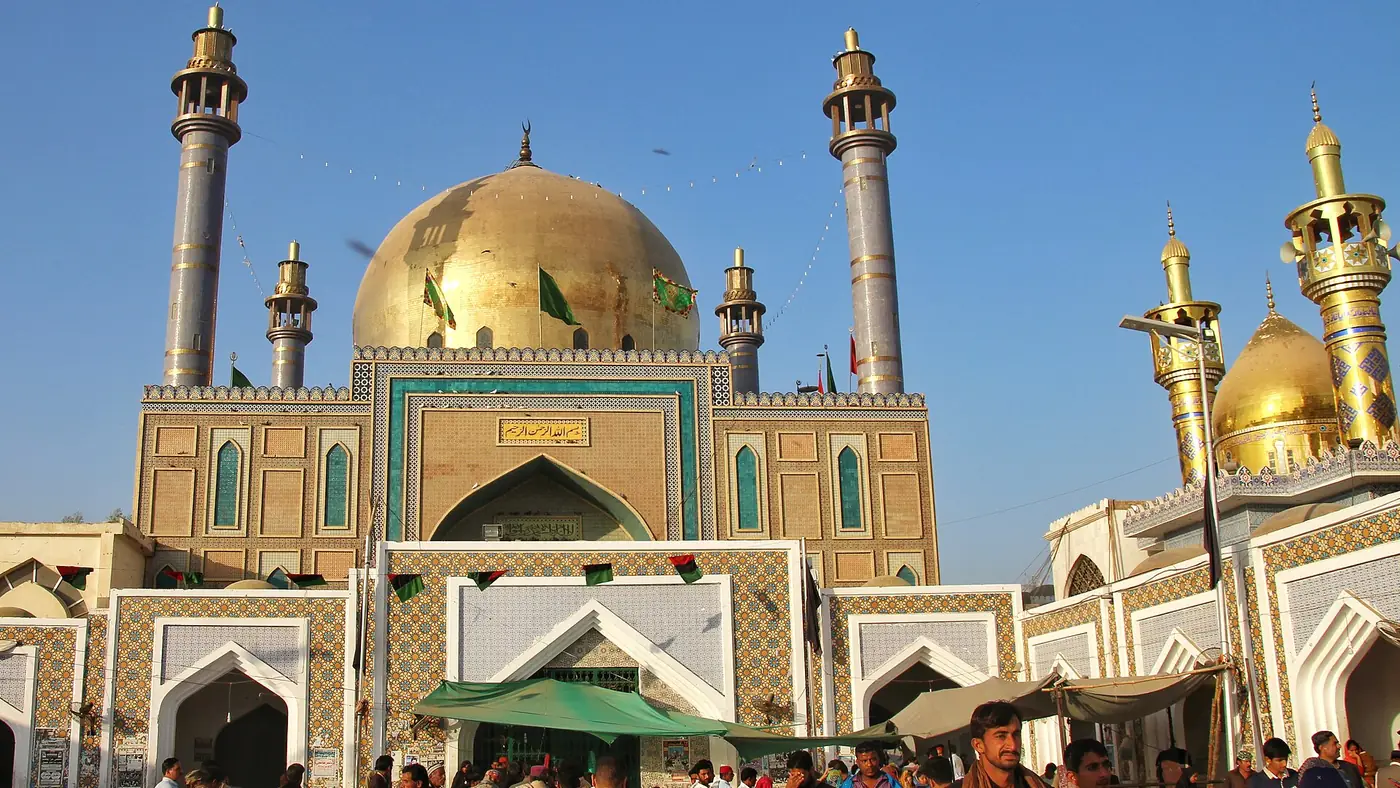

Sehwan Sharif is built around the shrine of Lal Shahbaz Qalandar, one of the most visited Sufi shrines in Pakistan, in a small town on the west bank of the Indus in Jamshoro district. Outside its huge annual urs, it is a manageable, striking place to visit: a gold-domed shrine, a nightly drumming ritual called dhamaal, and the ruins of an ancient fort on the edge of town.
This guide covers what the shrine looks like inside, what security to expect at the entrance, dress and etiquette, and the current safety picture for the area.
| At a glance | |
|---|---|
| Location | Sehwan, Jamshoro district, Sindh, on National Highway N-55 |
| Shrine built | Original tomb 1356 CE; expanded 1639; renovated after 1990s dome collapse |
| Daily ritual | Dhamaal, nightly after sunset and evening prayer |
| Entry | Security check and walk-through gate; no fee |
| Dress | Modest; headscarf for women |
| Annual urs | 18 Shaban, three days; see our separate Sehwan Sharif Urs guide |
Who Lal Shahbaz Qalandar was
Lal Shahbaz Qalandar was a 13th-century Sufi saint, born Sayyid Muhammad Usman Marwandi, whose shrine became one of the most important pilgrimage sites in Sindh. "Lal", red, refers to the colour he was known to wear, and it's why red features heavily in the shrine's decoration and in what devotees wear when they attend dhamaal. The original tomb was built in 1356 under Firuz Shah Tughlaq, expanded in 1639, and rebuilt again in the 1990s after part of the dome collapsed in 1994.
The shrine's layout
The shrine is built in a Perso-Islamic style around a gilded central dome roughly 110 feet high, with four minarets, white marble facing, glazed tile panels and mirror work inside. The main door, plated in gold, was a gift from Iran in the 1970s. Around the tomb chamber is a large courtyard, rebuilt in the 1990s specifically to hold the dhamaal, which is where most of the evening activity happens rather than inside the tomb itself.
Expect a working pilgrimage site rather than a museum: stalls selling chadars and flowers near the entrance, a steady flow of devotees, and the tomb chamber itself usually crowded, especially in the evening.
Security at the entrance
Because of the shrine's history and the scale of the crowds it draws, expect a formal security check before you reach the courtyard: a walk-through metal detector, a bag check, and police or Rangers on duty around the approach. This is routine rather than something specific to a busy day, and it moves quickly outside the urs. Follow whatever the security staff direct, and don't carry anything you'd rather not have searched.
Dhamaal and the dress code
Dhamaal is a trance-like ritual dance performed to rapid drumming, done by devotees rather than staged for visitors, and it happens every evening after sunset and evening prayer. Men and women both take part, in separate roped-off sections of the courtyard set aside for each. As a visitor you can watch from the courtyard edges without joining in.
Dress modestly: shoulders and legs covered for everyone, and women should bring a headscarf. Shoes come off before the tomb chamber, as at any shrine. A green chadar with gold or silver thread is the customary offering at the tomb, sold by nearby stalls if you want to bring one.
Kafir Qila: the fort ruins
On the edge of Sehwan, on rising ground overlooking the Indus, are the mudbrick ruins of Kafir Qila, an old fort whose surviving bastions and walls point to a much longer history of settlement here than the shrine alone. Local tradition connects the site to Alexander the Great's campaign in the region, and it has also been identified with Sindomana, capital of a king Alexander defeated nearby. There isn't much interpretation on site and no formal ticketing, so it's a short, informal stop rather than a managed heritage attraction: worth combining with a shrine visit if you have transport, less so as a dedicated trip on its own.
A town older than the shrine
Sehwan itself predates the shrine by a long way. The mudbrick ruins of Kafir Qila point to a settlement here going back to at least the period of Alexander the Great's campaigns in the region, and the town has been identified with Sindomana, capital of a local king Alexander defeated nearby. Later it was a Soomra and then a provincial centre under various Sindh dynasties before Lal Shahbaz Qalandar's arrival and death in the 13th century made it, over the following centuries, primarily known as a pilgrimage town. That longer history is easy to miss on a shrine-focused visit, which is part of why Kafir Qila is worth the short detour even though there's little formal interpretation on site.
Is Sehwan Sharif safe to visit?
Sehwan has been the target of a major attack in the past: on 16 February 2017, an ISIS-linked suicide bomber killed at least 88 people during dhamaal at the shrine, a toll that rose further as some of the injured later died. Security has been substantially increased since, with routine checks at the shrine entrance as described above, and the shrine reopened for dhamaal the evening after the attack and has continued daily since.
The UK Foreign, Commonwealth & Development Office currently advises against all but essential travel to Sindh province north of and including Nawabshah, an area that covers Sehwan and the wider Jamshoro and Dadu districts. Pakistani visitors, and pilgrims from across the country, continue to travel to Sehwan in large numbers, including for the annual urs. If you hold a foreign passport, check your own government's current advice before travelling, since going against it can affect your travel insurance; whatever your nationality, check recent local news and current police guidance before setting out, and don't treat this note as a substitute for that check.
Getting there
Sehwan sits on the Indus Highway (N-55), reached from Karachi and Hyderabad via the M-9 motorway to Jamshoro and then N-55 north. See our separate guide on getting to Sehwan Sharif from Karachi for the route, drive time and bus options.
Is it worth the visit?
For anyone interested in Sufi shrine culture, yes, and Sehwan is one of the most atmospheric examples of it in Pakistan, particularly at dhamaal in the evening. It suits travellers who are comfortable with crowds, informal security checks and a fair amount of walking, and who have checked the current safety picture rather than assuming it hasn't changed since a previous trip. It is not the place for a quick, casual stop if you are short on time or averse to noise and crowds; a daytime visit outside dhamaal is calmer if that's a concern.
Frequently asked questions
What time does dhamaal happen at Sehwan Sharif?
Every evening, after sunset and evening prayer. There's no fixed clock time since it follows the prayer schedule.
Is there security checking at the shrine entrance?
Yes. Expect a walk-through metal detector and bag check before the courtyard, staffed by police. This is routine, not specific to busy days.
Do women have a separate area at Sehwan Sharif?
Yes. Dhamaal takes place in roped-off sections of the courtyard, with separate areas for men and women.
Is Sehwan Sharif safe to visit right now?
The shrine was attacked in 2017 and security has been increased since. The UK government currently advises against all but essential travel to this part of Sindh; check current advice and local news before travelling, whatever your nationality.
What are the Kafir Qila ruins near Sehwan?
Mudbrick fort ruins on the edge of town, associated by local tradition with Alexander the Great's campaign in the region. There's no entry fee or formal visitor centre; it's a short, informal stop.