Sukkur sits on the Indus where the river narrows between rocky hills, and its landmarks cluster along that stretch of water: a barrage, three bridges, a temple on an island and a minaret climbing above the rooftops. A day is enough to visit the main sights in Sukkur and across the river in Rohri, with a second day free for Kot Diji Fort or the dolphin reserve nearby.
This is a list of what to see and roughly how to fit them together, without repeating the detail covered in our separate guides to some of these places.
| At a glance | |
|---|---|
| Where | Sukkur city and Rohri, across the Indus, Upper Sindh |
| Time needed | A full day for the main sights |
| Best months | November to March |
| Getting around | Rickshaw or a hired car with driver; some sights need a short boat trip |
| From Karachi | About 440 km by road, or a short flight |
Sukkur Barrage
The barrage across the Indus, completed in 1932 as the Lloyd Barrage, is the reason Sukkur exists as a city of this size: it feeds seven major canals that irrigate a large part of Sindh. It is still a working piece of engineering, with 66 gates spanning the river, and it is worth seeing both for its scale and for the view up and down the Indus from the bridge alongside it. Sunrise and sunset are the best times, when the light on the water is softest and the day's heat has not built up.
Lansdowne Bridge and Ayub Bridge
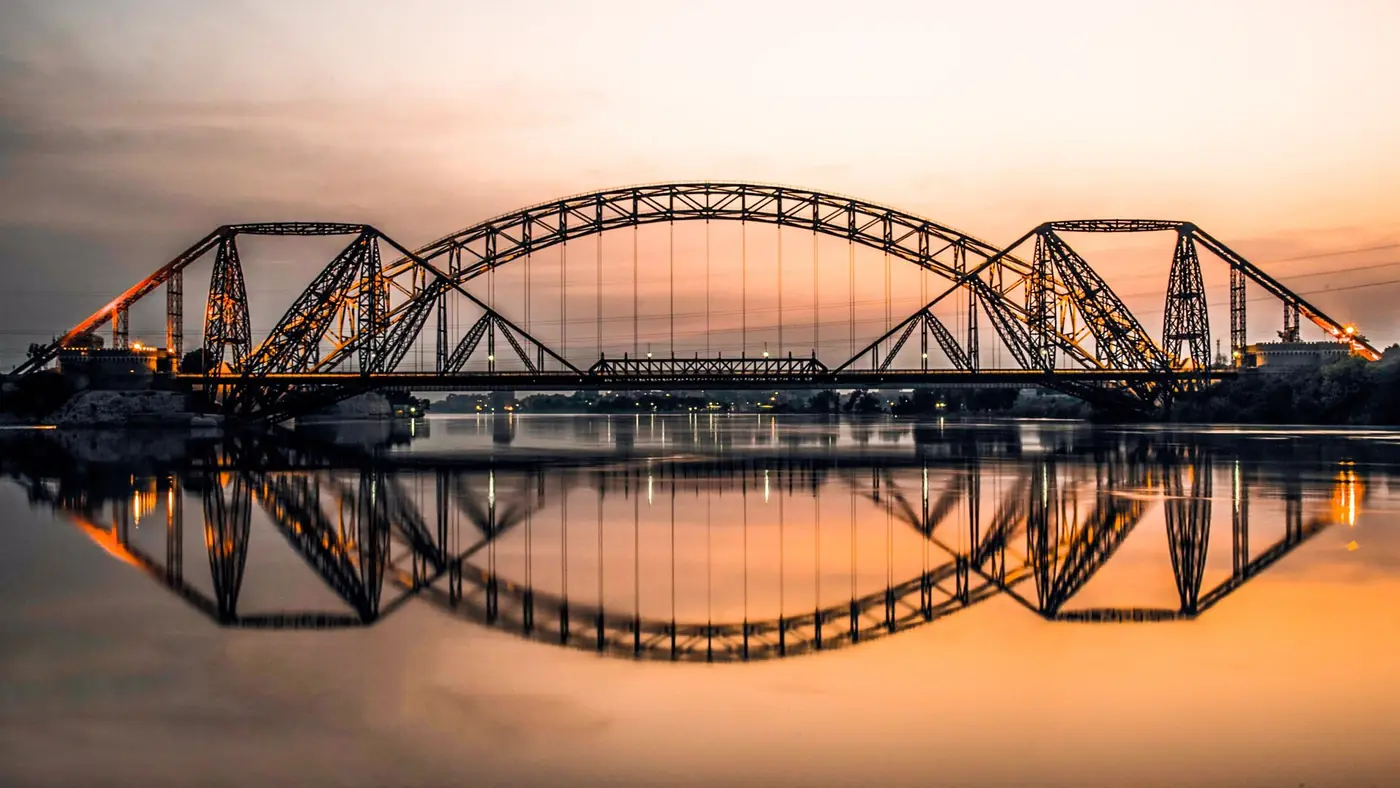
Next to the barrage stand two bridges that tell the story of how the Indus was crossed here over more than a century. The Lansdowne Bridge, opened in 1889, was a cantilever railway bridge built to carry the heaviest steam locomotives of its day, and it was the longest cantilever span in the world when it was completed. The Ayub Bridge was added alongside it in 1962 to separate road traffic from the railway. Seen together from the riverbank or from Lab-e-Mehran, the two bridges are one of the more distinctive skylines in Sindh.
Masoom Shah Minar
A tall brick minaret near the barrage, built in the early 1600s by the Mughal governor Mir Masum Shah. An internal staircase of roughly 80 steps climbs to a gallery at the top, giving a view over Sukkur, the Indus and the two bridges. It leans slightly off the vertical, which locals will point out as you climb.
Sadhu Bela
A Hindu temple complex on a small island in the Indus, reached only by boat from the Sukkur bank. It is one of the more unusual sights in Sukkur simply for its setting, ringed by water with the city on one side and Rohri's hills on the other. Visitors of any faith are generally welcome, but dress modestly and expect the boatmen or temple staff to set out the etiquette on arrival. We cover this in detail in our Sadhu Bela visiting guide.
Lab-e-Mehran
A riverside park and promenade on the Sukkur bank, developed as a public space with gardens, walking paths and views across to Sadhu Bela and the bridges. It is where Sukkur families come for an evening out, and it is a good place to end a day of sightseeing with the bridges lit up and the river cooling the air.
Sateen Jo Aastan (Seven Sisters), Rohri
Across the river in Rohri stands a walled tomb complex known locally as Sateen Jo Aastan, the "resting place of the seven sisters", built in the early 1600s as the burial ground of a Mughal-era governor of Sukkur and decorated with the same carved stonework found on Makli Hill near Thatta. The name comes from a folk legend about seven sisters rather than the tombs' actual occupants. It is a short trip across the Lansdowne or Ayub bridge and worth combining with a look at Rohri's older streets.
Kot Diji Fort
About 25 km south of Sukkur, near Khairpur, the hilltop fort built by the Talpur rulers between 1785 and 1795 is the single best day trip from Sukkur if you have a second day. It stands on a mound that was inhabited thousands of years before the fort was built, making it both a Talpur-era monument and an archaeological site. Our Kot Diji Fort guide covers the ramparts, the prehistoric site and how to get there.
The Indus River Dolphin Reserve
The stretch of the Indus between the Guddu and Sukkur barrages holds the largest population of the Indus river dolphin, an endangered species found only in this river system. Seeing one from the bank or a boat is a matter of patience and luck rather than a guaranteed sighting. Our guide to the Indus river dolphin explains where and how visitors go about it.
A one-day route
- Morning: Masoom Shah Minar, for the climb and the view while it is still cool.
- Mid-morning: Sukkur Barrage and the two bridges, on foot or by car.
- Late morning: the boat across to Sadhu Bela.
- Afternoon: cross to Rohri for Sateen Jo Aastan, or rest through the heat of the day if you are visiting between April and September.
- Evening: Lab-e-Mehran, for the river and the bridges lit up.
If you have a second day, use it for Kot Diji Fort or a trip to the dolphin reserve, both of which are better done unhurried rather than squeezed onto the end of the main sightseeing day.
Getting to Sukkur
Our Karachi to Sukkur guide compares the train, bus, road and flight options in detail. If Mohenjo-daro is also on your route, see our guide to getting from Karachi to Mohenjo-daro, since many visitors combine the two, driving or flying to Sukkur and continuing to Larkana from there. For help with the rest of the trip, start with our trip planning page.
Is Sukkur safe to visit?
Sukkur city itself is visited routinely by Pakistani travellers, and its main sights are within the built-up part of town. The wider concern is the surrounding districts: the UK Foreign Office currently advises against all but essential travel to Sindh province north of and including Nawabshah, which covers Sukkur, and parts of the riverine katcha land nearby have a history of kidnapping gangs. Stick to the city and its established sights, travel by day between towns, and check current local advice before any onward trip.
Frequently asked questions
What are the best places to visit in Sukkur?
Sukkur Barrage, the Lansdowne and Ayub bridges, Masoom Shah Minar, Sadhu Bela and Lab-e-Mehran are the core sights in the city, with Sateen Jo Aastan across the river in Rohri and Kot Diji Fort a short drive away.
How many days do you need in Sukkur?
One full day covers the main sights in Sukkur and Rohri. A second day allows an unhurried visit to Kot Diji Fort or an attempt to see the Indus river dolphins.
Is Sadhu Bela open to non-Hindu visitors?
Yes, visitors of any faith are generally welcome, though modest dress is expected and the boat crossing needs to be arranged locally. See our Sadhu Bela guide for the details.
What is the best time of year to visit Sukkur?
November to March, when daytime temperatures are comfortable for walking between sights. Summers in upper Sindh are extremely hot, and outdoor sightseeing is best done early or late in the day.
Is Kot Diji Fort a day trip from Sukkur?
Yes. It is about 25 km from Sukkur, near Khairpur, and can be visited in half a day by car, leaving time for other sights on the same trip.