The main places to visit in Mansehra are the Ashoka rock edicts, carved in the 3rd century BCE on boulders beside the Karakoram Highway at the north end of the city; the tea gardens at Shinkiari, 18 km north; the Siran valley beyond Shinkiari; and the old Shiva temple at Chitti Gatti. Most travellers see Mansehra only as the turn for Balakot and Naran, but the edicts need only a short stop, and Shinkiari and the Siran valley make a good half-day or day of their own.
Mansehra sits at about 1,088 metres, two to two and a half hours from Islamabad on the Hazara Motorway. This guide covers what is worth seeing in and around the city, how long each place needs, how it fits into the drive north, and what current travel advice says about the road beyond Mansehra.
| At a glance | |
|---|---|
| Altitude | About 1,088 m |
| From Islamabad | About 2 to 2.5 hours via the Hazara Motorway |
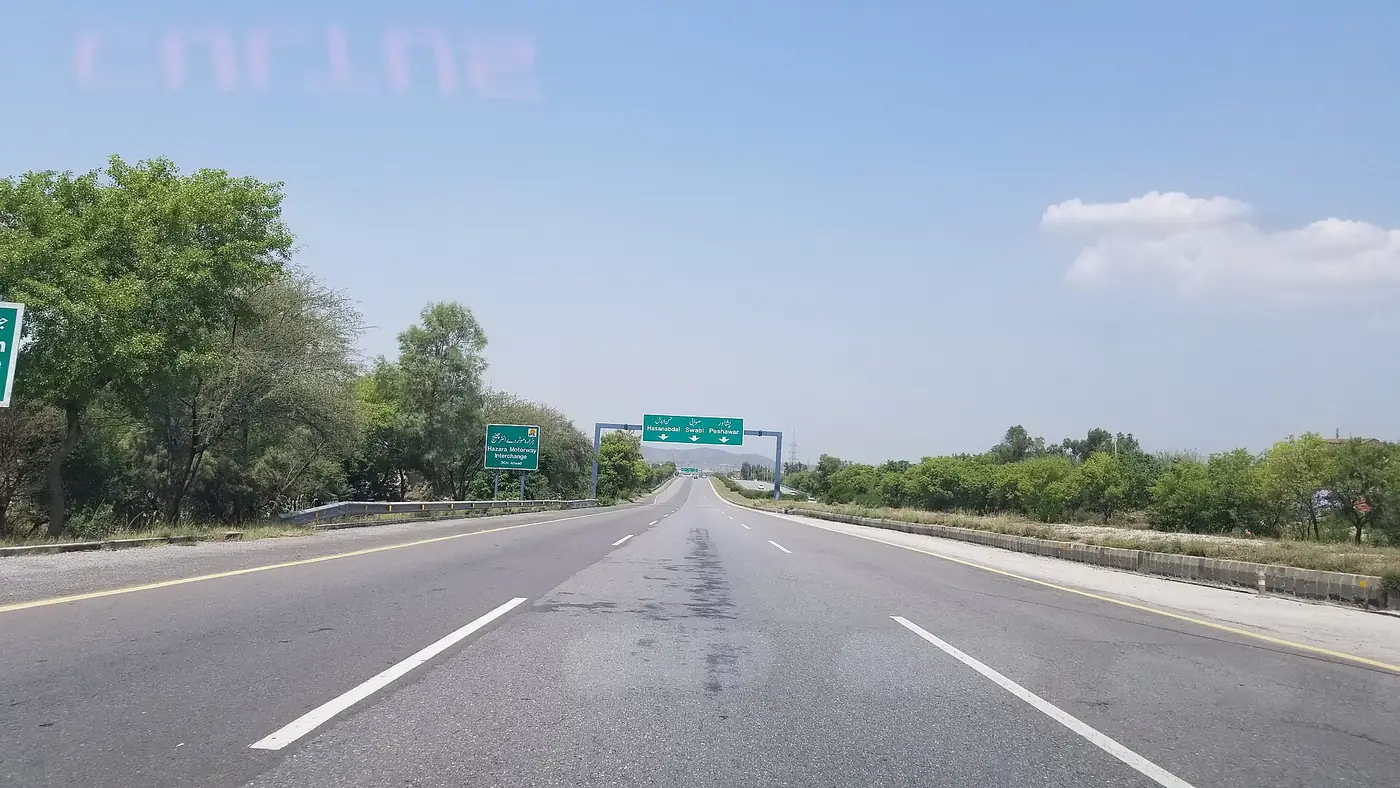
| Motorway exits | Mansehra for the city and Kaghan; Bedadi for Shinkiari |
| Ashoka rock edicts | On the Karakoram Highway at the north end of the city |
| Shinkiari | 18 km north on the Karakoram Highway |
| Siran valley (Jabori) | Roughly 20 km beyond Shinkiari |
| Chitti Gatti Shiva temple | About 15 km from the city |
| Time needed | Half an hour for the edicts; a full day to add Shinkiari and Siran |
The Ashoka rock edicts
Fourteen edicts of the Mauryan emperor Ashoka are cut into three large granite boulders at the foot of Bareri hill, beside the Karakoram Highway as it leaves the north end of the city. They date from the 3rd century BCE and are written in Kharosthi, the script of ancient Gandhara, setting out Ashoka's ideas of dharma, the moral code he promoted after turning to Buddhism.
What you actually see is modest: grey, rounded boulders under protective roofs inside a fenced enclosure, with the inscriptions faint and in places unreadable. Weather has worn them for more than two thousand years, which is why the Department of Archaeology put the canopies over them. The site has been on UNESCO's tentative list for World Heritage status since 2004.
Two of the boulders stand together and the third is a short distance away on the other side of the highway, so take care crossing. It is an easy stop on the way north: pull in, read the signboard, look at the rocks and carry on.
Time needed: 20 to 30 minutes.
Shinkiari and the tea gardens
Shinkiari is a small town 18 km north of Mansehra on the Karakoram Highway, and the place where Pakistan's first tea garden was planted. The tea is grown at the National Tea and High Value Crops Research Institute, part of the Pakistan Agricultural Research Council. It began in 1986 as a tea research station on 50 acres, became an institute in 1996, and now works on other high-value crops as well.
It is a working research station, not a tourist attraction, but groups do visit: in July 2024 the Khyber Pakhtunkhwa Culture and Tourism Authority took students and families there to see tea being grown, processed and packed, and to buy locally made tea and qahwa. If you want to walk in the gardens, ask the institute ahead of time rather than turning up at the gate.
Shinkiari is also the junction for the Siran valley, Konsh valley and Baffa, and a stop for traffic heading north.
Getting there: leave the Hazara Motorway at Bedadi, a couple of kilometres short of the town, or drive 18 km north from Mansehra on the old Karakoram Highway through Dhodial.
Time needed: an hour or two, if a visit to the gardens is arranged.
The Siran valley
The Siran valley follows the Siran river north from Shinkiari into the hills of the Pakhli region. Its main town is Jabori, roughly 20 km from Shinkiari on a narrower valley road, and the river rises near Manda Gucha under the peak of Musa ka Musalla, at about 4,060 metres.
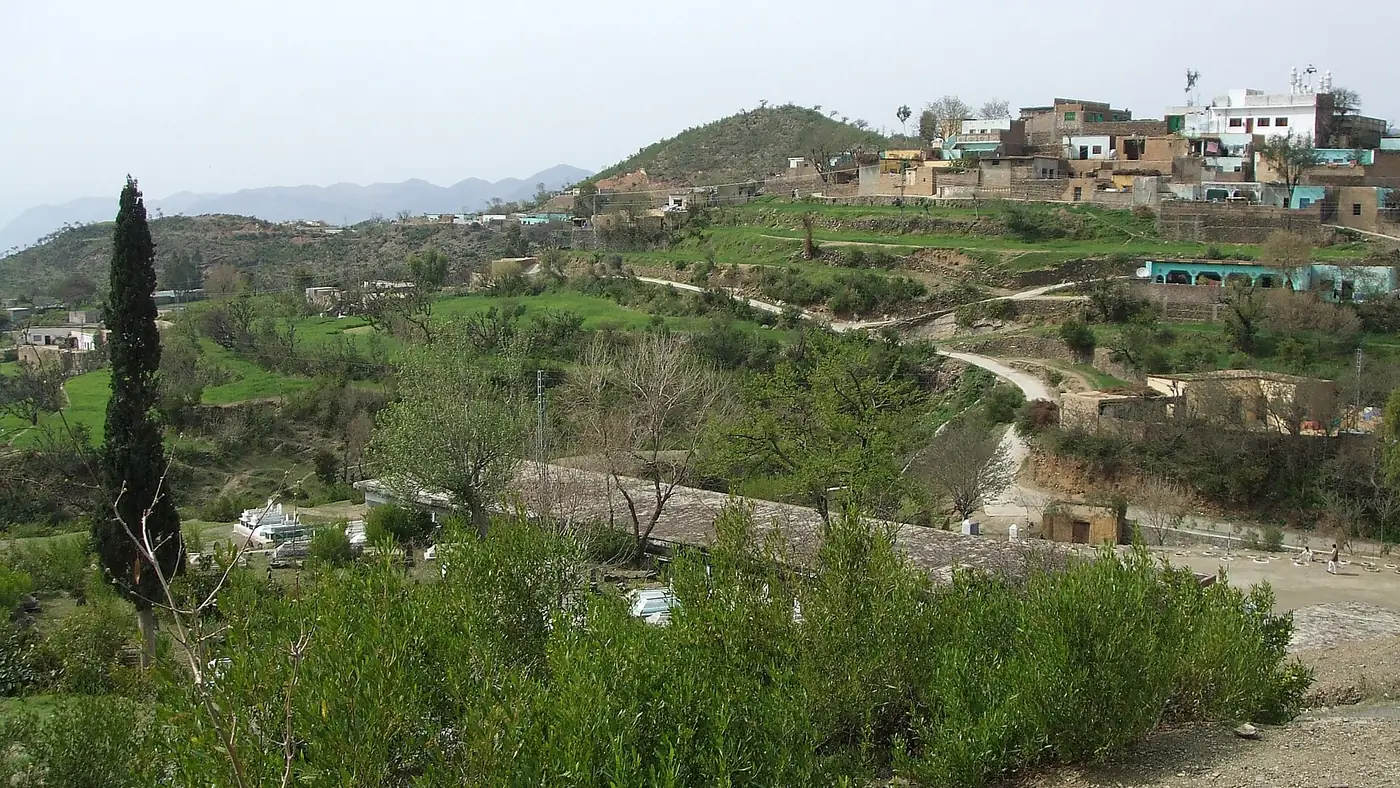
For most visitors the valley is a drive: forested slopes, farming villages and the river, with Jabori as the place to stop for tea. It sees far fewer visitors than the Kaghan valley on the other side of the ridge, and its facilities are simpler. For hikers, the Shinkiari–Manda Gucha side is the most commonly used approach to Musa ka Musalla, a serious summit day that needs a local guide.
Time needed: half a day for a drive to Jabori and back; more for a trek.
The Shiva temple at Chitti Gatti
About 15 km from Mansehra, the Shiva temple at Chitti Gatti is one of the oldest Hindu temples still standing in Pakistan. Its Shiva lingam is believed to be around 2,000 years old; the temple around it was rebuilt in the 1830s under the Raja of Jammu. After Partition it was taken over and sealed, and it stayed closed for about sixty years before Hindu worshippers were able to use it again.
Today it hosts an annual Maha Shivaratri festival that draws pilgrims from across Pakistan and abroad. It is a place of worship: go respectfully, ask the caretakers before going in or taking photographs, and avoid the festival days unless you are attending.
Time needed: an hour, plus the drive.
Dhodial: the university museum and pheasantry
Dhodial, on the old Karakoram Highway between Mansehra and Shinkiari, is home to Hazara University. The university's museum, run by its archaeology department, has archaeological, ethnological and wooden objects galleries covering the history of Hazara. Opening arrangements for outside visitors are not widely published, so contact the department before you go.
Dhodial also has a government pheasantry, a breeding centre for pheasant species. Ask locally whether it is open to visitors when you pass.
Mansehra as a stop on the way north
Most people reach Mansehra on the way somewhere else, and it is useful for that:
- Balakot, Kaghan and Naran. Leave the motorway at the Mansehra interchange and follow the signs through the town. Our guide to the Kaghan valley covers everything from Balakot upwards.
- Muzaffarabad. The road via Garhi Habibullah leaves from Mansehra, and is the usual alternative to the Murree route. See our Islamabad to Muzaffarabad guide.
- Supplies. Mansehra is the last big town before Balakot and the Kaghan valley. Fill the tank, draw cash and buy anything you need here.
The edicts are only a kilometre or so from the town centre, so they fit easily into a stop for fuel and tea on the way to Naran. Our Hazara Motorway guide explains which interchange serves where.
Is it safe to travel around Mansehra?
Mansehra city and the Kaghan road are not on the UK government's list of places to avoid, and Pakistani families pass through in large numbers every summer on the way to Naran.
North of the city is different. The UK's travel advice, updated on 22 September 2026, advises against all travel on the Karakoram Highway between Mansehra and Chilas via Battagram, Besham, Dasu and Sazin. That covers the old highway through Dhodial and Shinkiari, and on past Chattar Plain to Battagram. Pakistani visitors do travel this way, to Shinkiari, the Siran valley and beyond, but check local news and current police advice before setting out. Overseas visitors should know that their government's advice may say not to go, and that ignoring it can void travel insurance.
Is Mansehra worth a stop?
Yes, for the edicts, if you have any interest in history: they are a twenty-minute stop right on the road north, and few places in Pakistan let you stand so close to something written in the 3rd century BCE.
Yes, for a quiet day, if you want green hills without the Naran crowds. Shinkiari and the Siran valley suit people who are happy with a drive, a cup of tea and a walk, and who don't need a famous lake at the end of it.
Not as a main destination. Mansehra has no single big sight, and in summer most visitors are better served by carrying on to the Kaghan valley. If you are basing yourself in Hazara for a few days, Abbottabad has more to do; see our list of places to visit in Abbottabad, or send us your plans and we will help fit Mansehra into a longer trip.
Frequently asked questions
What is Mansehra famous for?
Mostly for the Ashoka rock edicts, carved in the 3rd century BCE, and as the gateway to Balakot, Naran and the Kaghan valley. Shinkiari, just north of the city, is known for Pakistan's first tea garden.
Where are the Ashoka rocks in Mansehra?
Beside the Karakoram Highway at the north end of the city, at the foot of Bareri hill, on the road towards Shinkiari. Two boulders stand together and the third is a short distance away across the highway.
How far is Shinkiari from Mansehra?
About 18 km north on the Karakoram Highway. From the Hazara Motorway, leave at the Bedadi interchange, just short of the town.
Can you visit the Shinkiari tea garden?
It is part of a government research institute, not a tourist site, but it does receive organised visits. Ask the institute ahead of time rather than turning up unannounced.
How far is Mansehra from Islamabad?
About two to two and a half hours by car on the M-1 and the Hazara Motorway, leaving at the Mansehra interchange.
Is the Siran valley worth visiting?
Yes, for a quiet drive through green hills to Jabori, or as the start of a trek towards Musa ka Musalla. It has far fewer facilities than the Kaghan valley, so go for the landscape rather than for hotels and restaurants.