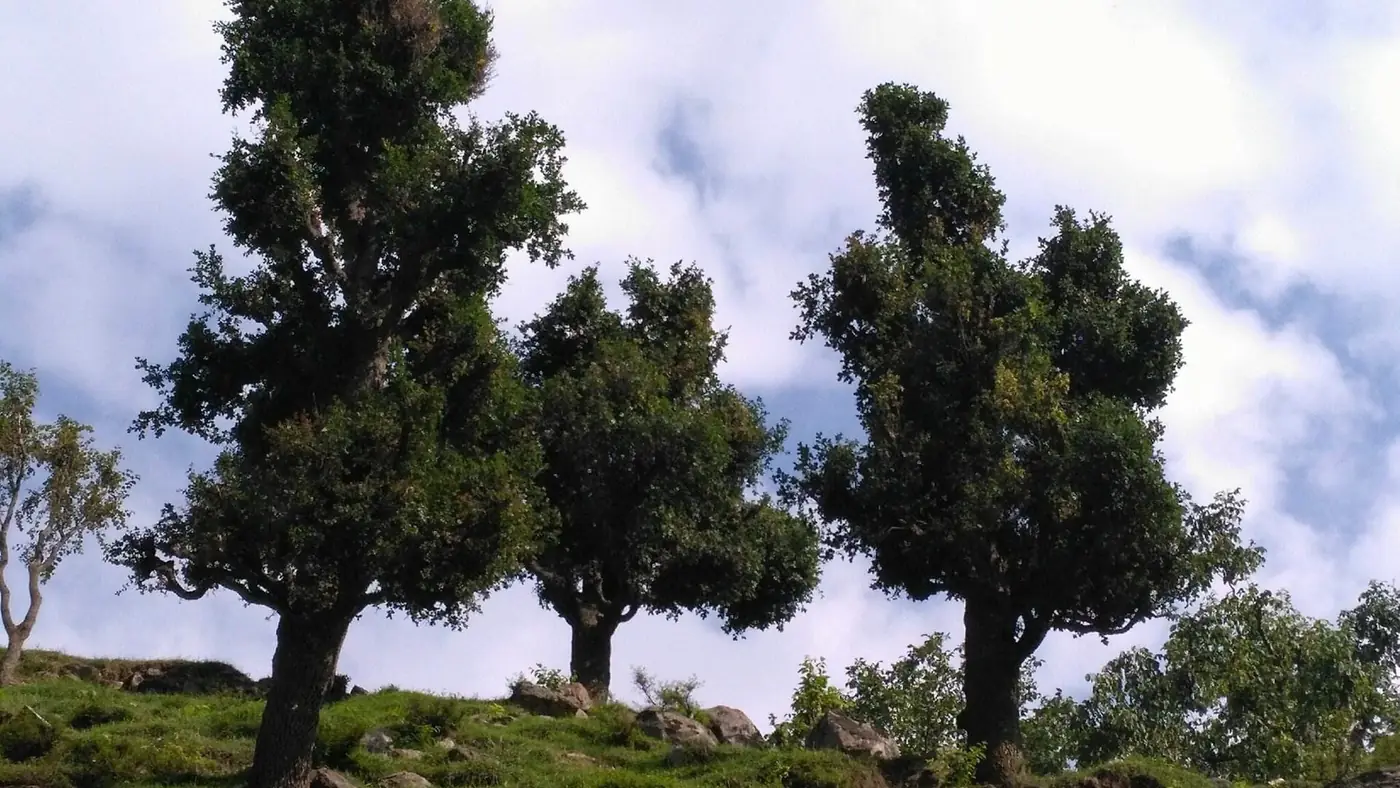
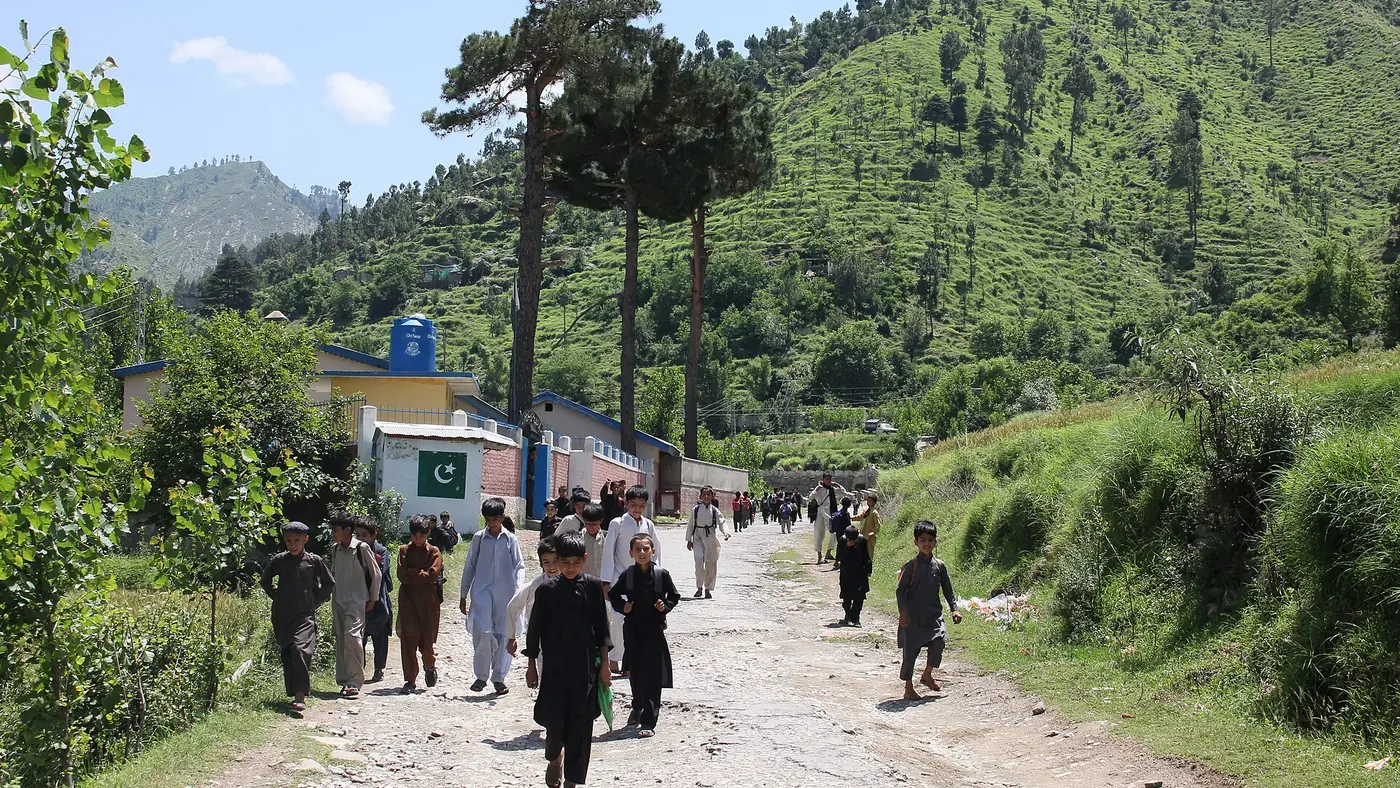
The main places to visit in Dera Ismail Khan are the ruined Hindu Shahi temples of Kafir Kot above the Indus, about 55 km north of the city; Rehman Dheri, one of the oldest town sites in South Asia; the Indus itself, along the city's eastern edge; and the four old bazaars that meet at Chowgalla, where you buy Dera's sohan halwa and, in late summer, its Dhakki dates. Go between October and March, and be aware that Dera Ismail Khan is one of the districts the UK advises against all travel to, after several attacks in 2026.
D.I. Khan is a Saraiki-speaking market city on the west bank of the Indus, where the Gomal river comes in from the west. It sees few visitors from outside the region, and there is little tourist infrastructure. This guide covers what there is to see, how to get there, and the security picture.
| At a glance | |
|---|---|
| Where | West bank of the Indus, southern Khyber Pakhtunkhwa |
| From Islamabad | About 285 km on the M-14 motorway from Hakla |
| From Multan | About 230 km, via Bhakkar and the Indus bridge |
| Flights | None; the airport has no commercial service |
| Best months | October to March |
| Known for | Sohan halwa, Dhakki dates, Kafir Kot |
| UK advice (September 2026) | Against all travel to Dera Ismail Khan |
Is Dera Ismail Khan safe to visit?
This has to come first. Dera Ismail Khan district borders the former tribal areas of South Waziristan and has seen repeated militant violence. In 2026 alone, a suicide bomber attacked a wedding in the district in January, killing at least seven people, and attacks on police in February killed several officers. The UK government advises against all travel to Dera Ismail Khan, as it does for the neighbouring districts of Tank and Lakki Marwat.
People live, work and shop in the city every day, and visitors with family there come and go. But this is not a place to visit casually as a tourist in 2026. If you do go, go with local family or hosts, keep to the city and the main roads in daylight, read the local news before each journey, and follow police instructions at checkpoints. Overseas visitors should know that their government's advice may say not to go, and that ignoring it can void travel insurance.
Kafir Kot: temples above the Indus
Kafir Kot is the most striking sight in the district: the ruins of two hill forts above the Indus, the better known of them beside the shrine at Bilot Sharif, about 55 km north of the city on the road towards Chashma. Inside the massive outer walls, built of huge rough blocks of stone, stand the remains of five temples from the time of the Hindu Shahi kings, who ruled this region until the Ghaznavid conquests of the 11th century.
The temples were built of a honeycombed stone that, according to tradition, was floated down the Indus from Khushalgarh. Much of the carved decoration has been lost, and some of the finest pieces are now in museums abroad, including the British Museum. What remains is still memorable: the shells of temples on a bare ridge, with the river spread out below.
Allow half a day for the round trip. The sites have almost no facilities, so bring water and go early. The site is close to the Chashma Barrage, just across the provincial boundary in Punjab, whose reservoir is a Ramsar-listed wetland; there is also a nuclear power plant in the area, so don't photograph installations or checkpoints.
Rehman Dheri: a town older than Mohenjo-daro
Rehman Dheri, about 22 km north of the city on the Gomal plain, is a low, rectangular mound of about 22 hectares rising a few metres above the fields. It is one of the oldest known towns in South Asia, occupied from around 3300 BC, before the great Indus cities rose, until around 1900 BC. It is on Pakistan's tentative list for World Heritage status.
From the air, and from the top of the mound, you can make out the grid of its streets and the lines of walls. On the ground you will see potsherds everywhere. Excavations found pottery with marks that seem to anticipate the Indus script, seals, beads of lapis lazuli and turquoise, and terracotta figurines. Leave everything where it lies: it is a protected site.
It is a place for people who already love archaeology. Go with someone who knows the way, and combine it with Kafir Kot on the same morning.
The Indus at Dera
The Indus is the reason the city exists, and the reason it moved: the original town was washed away by a flood in 1823, and the present city was founded in 1825. The bridge to Bhakkar, built in the early 1980s, now carries the road east into Punjab.
Picnicking on the river bank was once part of city life for Hindus and Muslims alike, but the tradition has faded, and there is little in the way of a developed riverfront. What remains is the sight of the river itself, wide and braided with sandbanks, and best at sunrise or in the evening light. Ask locally where it is safe to reach the water, and stay back from the edge when the river is high in summer.
Chowgalla and the four bazaars
The heart of the old city is Chowgalla, where four bazaars, laid out towards the four points of the compass, meet: Kalan Bazaar, Muslim Bazaar, Topanwala Bazaar and Bhatiya Bazaar. In 1940 the British built four gates at Chowgalla that could close off each bazaar from the others; they still stand, and are closed during Ashura. A few gates from the city's old mud wall also survive, including Kaneran Wala and Sakki.
These are working bazaars, full of cloth, household goods and food. Look out for local crafts: lacquered woodwork, cross-stitch embroidery, mats and waistcoats are all traditional in Dera. Go in the morning, dress conservatively, and expect to be one of very few visitors from outside the region.
What to eat and buy
- Sohan halwa. Dera is known across Pakistan for its sohan halwa, the dense, nutty sweet made with milk, sugar, ghee and dry fruit. People take boxes of it home as gifts.
- Dhakki dates. The large, soft Dhakki date, grown around Dhakki in the district, was the first fruit in Pakistan to be given Geographical Indication status. The harvest opens in August; fresh and dried dates, or chuhara, are sold from late summer.
- Mangoes. The district also grows good Langra mangoes in summer.
Sheikh Badin and further afield
Sheikh Badin, on a hill of about 1,300 metres between D.I. Khan and Lakki Marwat, was the British summer station for the district and is now a national park, with ruined colonial buildings, old tombs and wide views over the plains. It is reached from the Indus Highway near Pezu by a poor, unpaved road, and the area is on the UK advisory list. It is not somewhere to attempt without local guidance.
For the rest of the province, our guide to the best places to visit in Khyber Pakhtunkhwa covers the north, which is where most visitors go.
How to get there
- From Islamabad: the M-14 motorway runs 285 km from the Hakla interchange on the M-1 to Dera Ismail Khan. It opened in 2022 and is by far the easiest route, and it passes close to Kafir Kot, with an interchange at Kundal, near one of the two forts.
- From Peshawar: the direct Indus Highway runs through Kohat, Karak and Lakki Marwat, all districts on the UK's "all travel" list. Going round by the M-1 and the M-14 is longer but keeps you on motorways.
- From Lahore or Multan: drive west to Bhakkar and cross the Indus bridge. Multan is about 230 km away; our guide to places to visit in Multan covers the city at the other end.
The airport has no commercial flights. The M-14 is also one of the roads closed during political marches on Islamabad, as it was in late September 2026, so check the news before you set out.
Who is Dera Ismail Khan for?
At present, it suits mainly people with family or work in the city, and archaeology enthusiasts travelling with local hosts. Kafir Kot and Rehman Dheri are genuinely important sites, and the old bazaars and the sohan halwa are a real part of Pakistan that few outsiders see.
It is not a trip we would suggest for a family holiday or a first visit to Khyber Pakhtunkhwa in 2026. For ancient temples with less risk, the Salt Range temples of Katas Raj in Punjab belong to the same world as Kafir Kot. Our travel guide has advice on checkpoints and ID, and if you would like help planning a trip in the region, tell us what you have in mind.
Frequently asked questions
What is Dera Ismail Khan famous for?
Its sohan halwa, the Dhakki dates grown in the district, the Hindu Shahi temples of Kafir Kot, and the ancient town site of Rehman Dheri. It is also known for its Saraiki culture and its old four-bazaar layout at Chowgalla.
How far is Kafir Kot from Dera Ismail Khan?
The better-known site, beside Bilot Sharif, is about 55 km north of the city on the road towards Chashma. The M-14 from Islamabad passes nearby, with an interchange at Kundal.
Is Dera Ismail Khan safe for tourists?
The UK government advises against all travel to the district, and there were several militant attacks there in 2026. If you go, go with local hosts, stay in the city and on the main roads in daylight, and check the news first.
How do I get to Dera Ismail Khan from Islamabad?
By the M-14 motorway, which runs 285 km from the Hakla interchange on the M-1 to Dera Ismail Khan. There are no commercial flights.
When is the best time to visit Dera Ismail Khan?
October to March. Summers are extremely hot, although August is when the Dhakki date harvest begins.