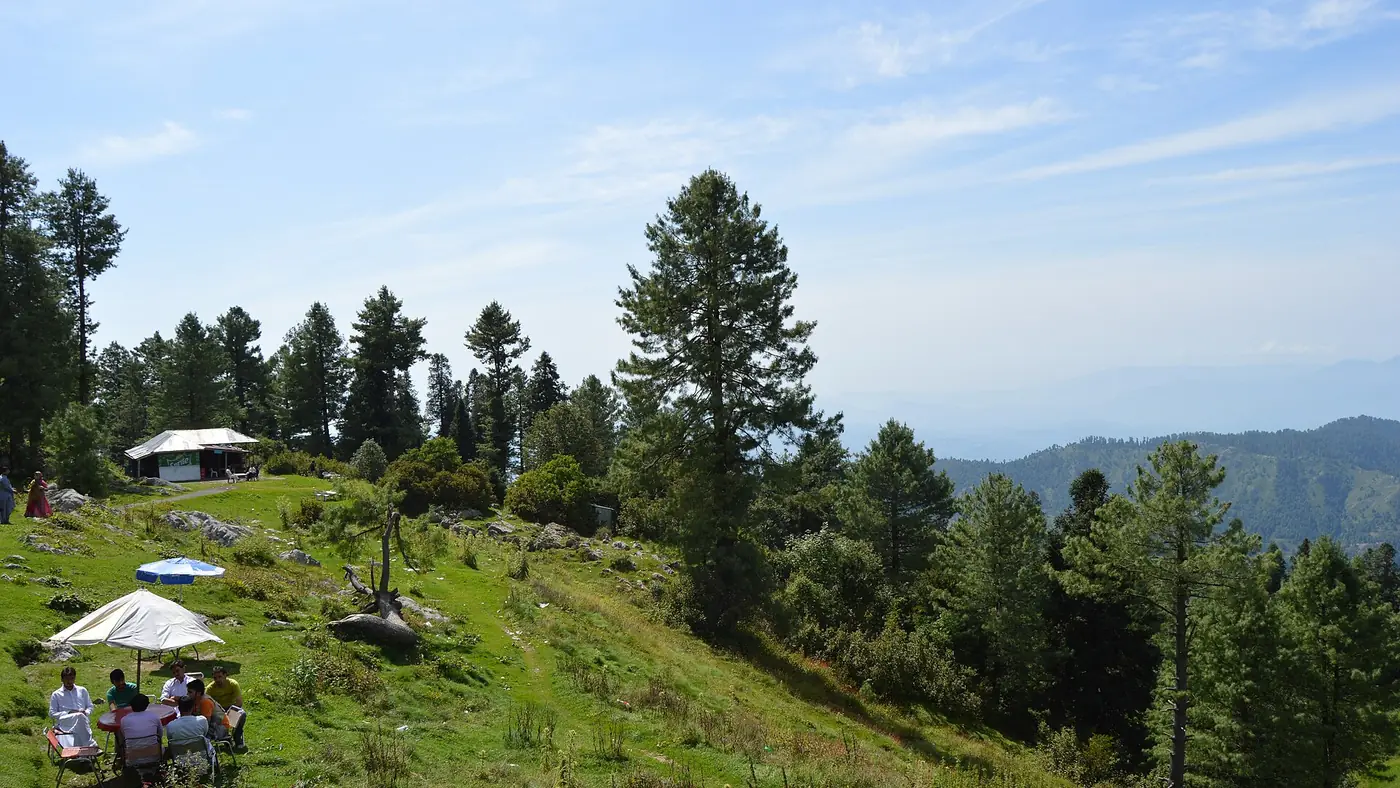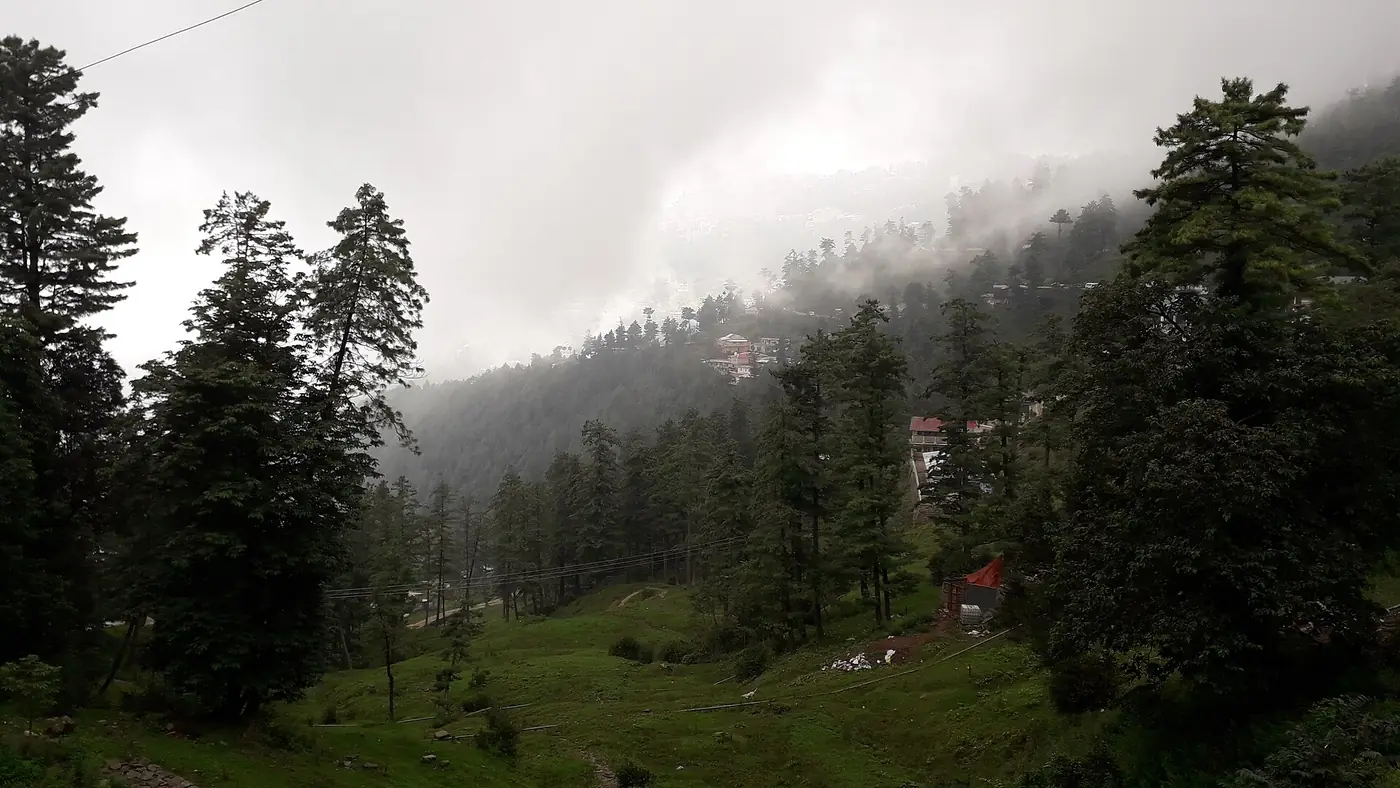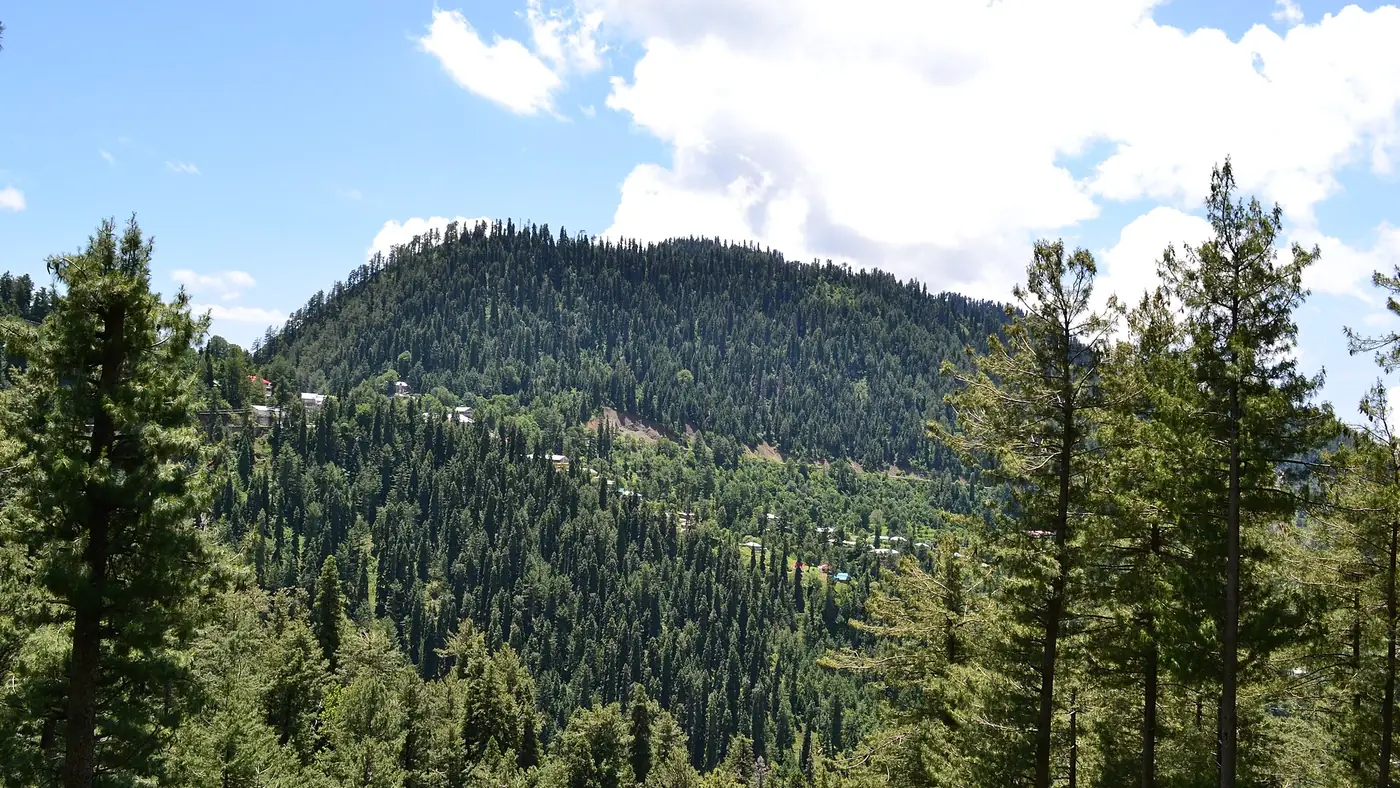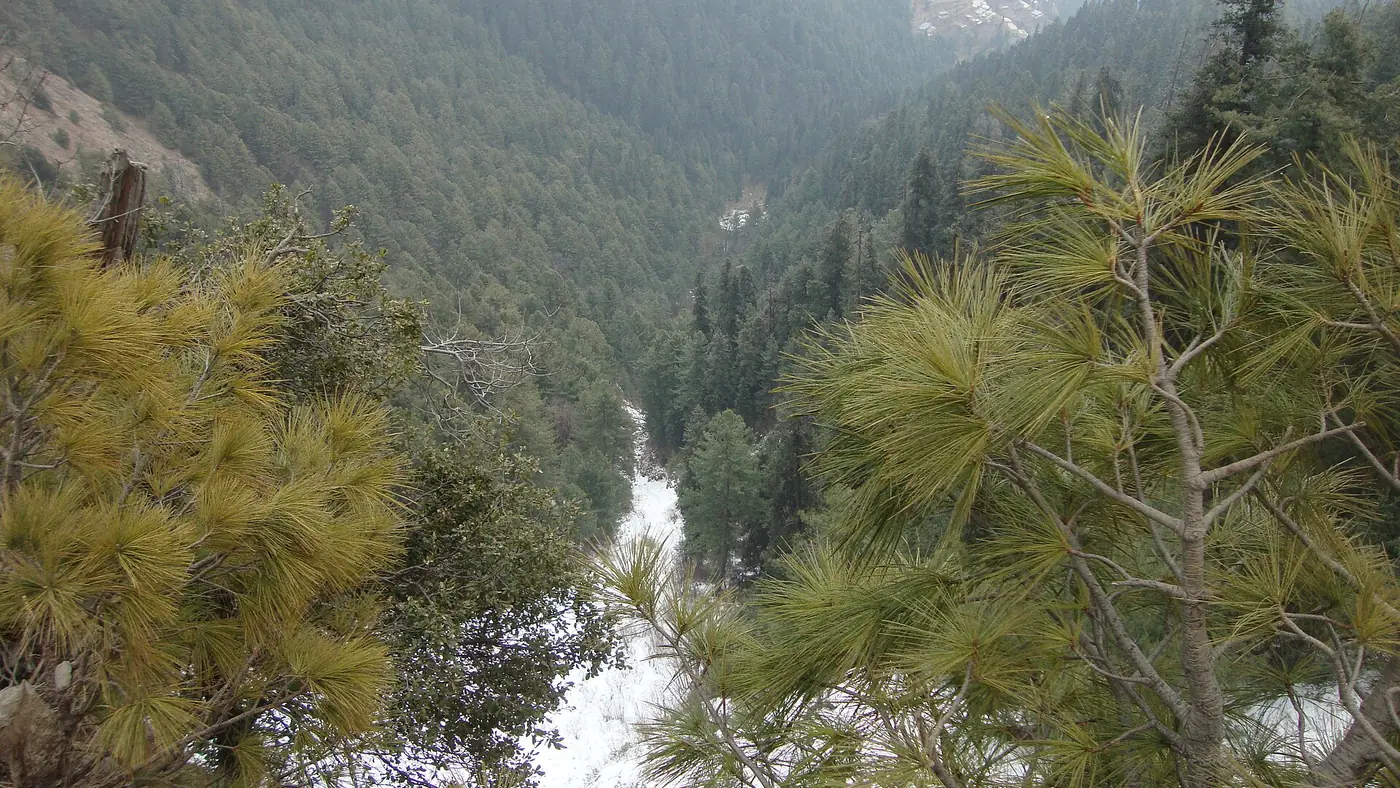
Nathia Gali weather by month follows a simple pattern: cool summers, cold snowy winters and two wet seasons. At about 2,410 metres, summer days reach the low to mid 20s °C with nights in the low to mid teens, while winter days stay in single figures and nights drop below freezing. July and August are by far the wettest months, October and November the driest, and snow falls mainly from December to February, now most often in January and February.
Published long-term records for Nathia Gali itself are hard to find, so the monthly figures below are the long-term averages for Murree, about 30 km along the same ridge and a little over 100 metres lower. Expect Nathia Gali to run about a degree cooler.
| At a glance | |
|---|---|
| Altitude | About 2,410 m |
| Warmest months | June to August: days around 22 to 25 °C |
| Coldest months | January and February: nights below freezing |
| Wettest months | July and August |
| Driest months | October and November |
| Snow | Mainly December to February; possible in November and March |
| Rain and snow in a year | Roughly 1,650 to 1,850 mm |
Nathia Gali weather month by month
These are long-term averages for Murree, rounded. Snow chances are for Nathia Gali itself, based on recent winters.
| Month | Average high | Average low | Rain (mm) | Snow in Nathia Gali |
|---|---|---|---|---|
| January | 8 °C | −3 °C | 127 | Likely |
| February | 10 °C | −3 °C | 145 | Likely, often the heaviest falls |
| March | 13 °C | 1 °C | 177 | Possible, mostly early in the month |
| April | 19 °C | 8 °C | 133 | Unusual |
| May | 22 °C | 15 °C | 92 | None |
| June | 26 °C | 17 °C | 142 | None |
| July | 23 °C | 17 °C | 418 | None |
| August | 21 °C | 16 °C | 336 | None |
| September | 21 °C | 13 °C | 162 | None |
| October | 19 °C | 9 °C | 70 | None |
| November | 15 °C | 4 °C | 33 | Occasional, light |
| December | 11 °C | 1 °C | 70 | Possible |
Two things the table does not show. First, the ridge makes its own weather: a sunny morning can turn to cloud and rain by mid-afternoon, especially from June to September. Second, some weather websites list summer highs above 30 °C for Nathia Gali. Treat those with caution: summer days in the town itself are usually in the low to mid 20s.
Winter: December to February
December is cold and mostly dry, with frosty nights and clear days. Snow can come at any point in the month, but some winters bring none at all before the New Year: in 2025–26 the first snow fell on New Year's night, about eight inches in Nathia Gali.
January is the coldest month. Daytime highs sit in single figures and the ground often stays frozen in the shade. It is one of the two most likely months for snow, and it can be heavy: on 24 January 2026 Nathia Gali, Dunga Gali, Ayubia and Changla Gali got three to four feet, and the road from Bagnotar to Barian was blocked.
February is now often the snowiest month. Heavy falls used to come mainly in late December and January, but the pattern has shifted later. February 2026 brought further falls of a foot or more, with power cuts and link roads blocked.
Our guide to Nathia Gali in winter covers snow trips, road closures and staying safe.
Spring: March and April
March is the wettest month outside the monsoon and still part of winter at this height. Snow is possible, particularly in the first half: in early March 2025 heavy snow led the authorities to stop tourists entering the Galiyat. Nights hover around freezing.
April warms up quickly, with days in the high teens. Snow in town is unusual by now, but the trails are often muddy, and cold, showery spells come and go. Pack for both.
Early summer: May and June
May is mild, fresh and the driest month of the first half of the year, with days in the low 20s and cool nights. It is the start of the comfortable season for walking.
June is the warmest month on average, with days in the mid 20s. It is still a relief from the plains, where June days are often close to 40 °C or above. Thundery showers break out on some afternoons, and the monsoon itself usually reaches the hills around the start of July.
Monsoon: July to September
July is the wettest month by a distance. Murree averages over 400 mm, more than four times as much as May. Cloud and mist sit on the ridge for hours at a time, rain falls on most days, and heavy bursts can bring landslides onto the roads. Temperatures are pleasant, around 23 °C by day, but it feels damp.
August is nearly as wet, and the risk of landslides stays high. On 24 August 2025 a landslide at Batangi closed the Galiyat road and left tourists stranded.
September is a month of change. The first half is often still wet; by the second half the monsoon usually eases, the air clears and the days are mild. In September 2025, though, the Pakistan Meteorological Department was still warning of landslides across Murree and the Galiyat, so don't count on the rain stopping on a set date.
Autumn: October and November
October is dry, clear and settled, with days in the high teens and crisp nights. It is the most reliable month for long views and dry trails.
November is the driest month of the year but noticeably colder, with nights close to freezing by the end of it. Light snow is possible: in 2023 the first snow of the season fell on 9 November. Days are short, so plan walks for the middle of the day.
For how these seasons fit a trip across the north, see our when to go page.
What to pack for each season
- May to September: a fleece or light jacket for the evenings, a rain jacket (essential from July), shoes with grip for wet paths, and sunscreen for clear mornings.
- October and November: a warm jacket, a hat for the evenings and walking shoes. Nights are cold even when days are warm.
- December to March: a proper winter coat, thermals, gloves, a woollen hat, waterproof boots with good grip, and warm socks. Hotel rooms can be cold during power cuts.
- All year: layers. The difference between a sunny morning and a cloudy afternoon on the ridge can be ten degrees in how it feels.
Checking the forecast before you go
Look at the forecast the day before and again on the morning you drive up. The Pakistan Meteorological Department issues rain and snow warnings for Murree and the Galiyat, and these matter more than a general app forecast. If it warns of heavy rain or snow, expect road problems.
In practice:
- In the monsoon, set off early, do your walking in the morning and be back in the hotel by mid-afternoon, when the rain usually starts.
- In winter, go after the snow has fallen rather than during a storm, when the roads are at their worst and tourist entry may be stopped.
Our guide to the best time to visit Nathia Gali goes further into which season suits which kind of trip.
Which months are best?
For comfortable weather and open trails, May, June, October and early November are the pick. For snow, January and February, with a spare day. For mist and green forest, the monsoon, as long as you accept rain on most days and the chance of a closed road. If you want help matching your dates to the weather, tell us when you are free and we will suggest a plan.
Frequently asked questions
What is the coldest month in Nathia Gali?
January, with average daytime highs around 8 °C and nights a few degrees below freezing. February is almost as cold and is often the snowiest month.
Does it snow in Nathia Gali in December?
Sometimes. Snow can fall in December, but some winters bring none until January; in 2025–26 the first snow came on New Year's night.
How hot is Nathia Gali in June?
Pleasantly warm by day, around 22 to 26 °C, and cool at night. June is the warmest month, but it stays far cooler than Islamabad or Lahore.
Which month has the most rain in Nathia Gali?
July, followed by August. Murree, on the same ridge, averages more than 400 mm in July, and landslides are most likely in these two months.
What is the weather like in Nathia Gali in October?
Dry, clear and mild, with days in the high teens and cold nights. It is one of the best months for walking and views.
When does snow stop in Nathia Gali?
Usually by the middle of March. Snow in town is unusual in April, though cold, wet spells still happen.