Lal Suhanra National Park is a desert, forest and wetland reserve about 35 km east of Bahawalpur, best known for its blackbuck enclosure and its winter waterbirds on Lake Patisar. It is one of the largest national parks in South Asia and a UNESCO-recognised biosphere reserve, and it makes an easy half-day or full-day trip from the city. This guide covers what's actually inside the park, how the safari and boating work, where to stay, and when to go.
| At a glance | |
|---|---|
| Where | About 35 km east of Bahawalpur |
| Size | Roughly 127,480 acres (about 658 sq km) |
| Established | 1972, expanded since |
| Zones | Desert, irrigated forest and wetland |
| Key wildlife | Blackbuck, chinkara gazelle, nilgai, migratory waterbirds |
| Best season | Winter, November to February, for birdlife and comfortable heat |
| Accommodation | A small TDCP motel inside the park; more choice in Bahawalpur |
What is Lal Suhanra National Park?
Lal Suhanra sits on the edge of the Cholistan desert, where the dried bed of the old Ghaggar-Hakra river once ran. The park was established in 1972 and later expanded, and it is now recognised by UNESCO as a Biosphere Reserve, one of the largest protected areas of its kind in the region.
What makes it distinctive is the mix of landscapes inside one boundary: roughly 100,000 acres of open desert with low sand dunes, about 21,000 acres of irrigated plantation forest, and close to 4,800 acres of wetland around Lake Patisar. Few parks in Pakistan combine desert, forest and lake habitats this closely together.
The blackbuck reserve
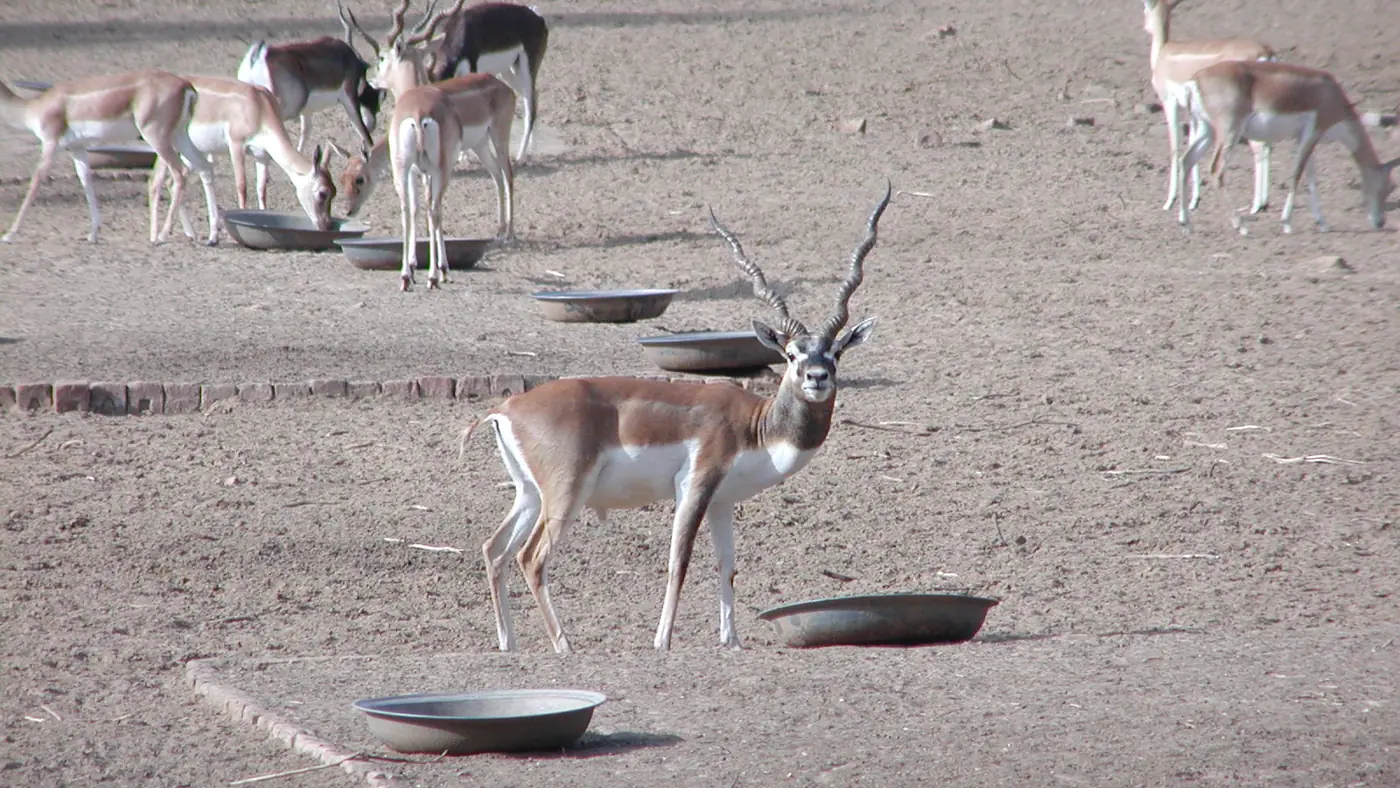
The park's best-known feature is its fenced blackbuck enclosure, set up to protect and breed this antelope after its population collapsed across the subcontinent through hunting and habitat loss. Blackbuck were reintroduced here along with chinkara gazelle and nilgai, and the enclosure now holds established herds that visitors can see at close range, usually more easily than any other large mammal in the park.
Early morning and late afternoon are the best times to see the animals active, when the desert heat has eased and they move and graze more openly.
Lake Patisar and the birdlife
Lake Patisar is the park's wetland heart, and in winter it draws large numbers of migratory ducks and coots, reported in the tens of thousands at the peak of the season. Herons, waterfowl and other wetland species are present through the cooler months, and the lake is also used for boating.
If birdwatching is your main reason to come, plan for a winter visit and bring binoculars; the lake is at its quietest and coolest in the early morning.
Safari, boating and getting around
The park is large enough that walking it isn't realistic. Most visitors get around by vehicle, moving between the blackbuck enclosure, the forest zone and the lake, with boat trips available on Lake Patisar itself when conditions and staffing allow. Exactly what's running on the day, and at what cost, varies, so ask at the park entrance or your hotel in Bahawalpur before you set off with fixed expectations.
We could not confirm a current, reliable entry fee or safari price for 2026 from official sources. Some sources describe entry as effectively free with facilities paid for separately; others do not agree. Don't rely on a number you read online, including this one: bring cash, and pay whatever is posted at the gate on the day.
Getting there
The park lies off the main road east of Bahawalpur, reached by a paved road the whole way, so any car manages the drive without difficulty. There is no public transport running directly to the park entrance, so a private car, hired taxi or a place on an organised trip is the practical option for most visitors. Once inside, getting between the desert zone, the forest plantations and Lake Patisar needs a vehicle, since the park's zones are spread over a large area and walking between them isn't realistic.
Where to stay
- Inside the park, a small motel run by the Tourism Development Corporation of Punjab (TDCP) offers a handful of rooms close to the lake. With so few rooms, book ahead and confirm current availability directly with TDCP rather than assuming a walk-in space.
- In Bahawalpur, the wider choice of hotels makes Lal Suhanra an easy half-day or full-day trip, with the comfort of the city to return to.
- Camping is possible in parts of the park with the right arrangements, but treat it the way you would camping anywhere in Cholistan: go with a group or an established operator rather than alone.
Best time to visit
November to February is the clear choice. Days are mild, the desert sun is bearable for a full day out, and Lake Patisar is at its best for birdlife. From March, daytime heat starts climbing, and by May to September Cholistan's summer temperatures, regularly well past 40°C, make a day in the open park hard going and genuinely risky for children and older visitors. For more on how the desert's seasons play out across the wider region, see our guide to the best time to visit Cholistan.
What to carry
- Water, more than you think you'll need, and snacks
- A hat, sunglasses and sunscreen
- Binoculars if birdwatching is a priority
- A warm layer for early mornings in winter
- Cash, since card payment is not something to count on here
Is Lal Suhanra worth the trip?
Yes, if you want to see desert wildlife in something close to natural surroundings without a long expedition into the open Cholistan desert itself. The blackbuck enclosure alone makes it worthwhile for most visitors, and a winter visit for the birdlife adds another reason.
It suits a half-day or full-day trip better than an overnight stay unless you can secure one of the few motel rooms. Visitors expecting a polished, ticketed safari park with fixed prices and guided drives should adjust expectations: this is a working national park with basic infrastructure, not a resort.
If you'd like Lal Suhanra built into a wider Bahawalpur and Cholistan itinerary, send us your dates and we'll help you plan the order of stops.
Frequently asked questions
How far is Lal Suhanra National Park from Bahawalpur?
About 35 km east of the city, making it a straightforward half-day or full-day trip by road.
What animals can you see at Lal Suhanra?
Blackbuck, chinkara gazelle and nilgai in the fenced reserve, plus migratory waterbirds on Lake Patisar in winter. Larger predators are present in the wider park but rarely seen.
Is there an entry fee for Lal Suhanra National Park?
We could not confirm a reliable current fee from official sources. Bring cash and expect to pay whatever is posted at the gate.
What is the best time to visit Lal Suhanra National Park?
November to February, for cooler weather and the best chance of seeing winter waterbirds on the lake. Summer heat from May to September makes a visit hard going.
Can you stay overnight inside the park?
Yes, at a small TDCP-run motel near the lake, though it has few rooms. Confirm availability with TDCP directly before relying on it, and otherwise stay in Bahawalpur and visit for the day.
Is Lal Suhanra a good day trip with children?
Yes, especially in winter. The blackbuck enclosure is an easy, low-effort way for children to see wildlife up close, though summer heat rules out a comfortable visit for much of the year.