
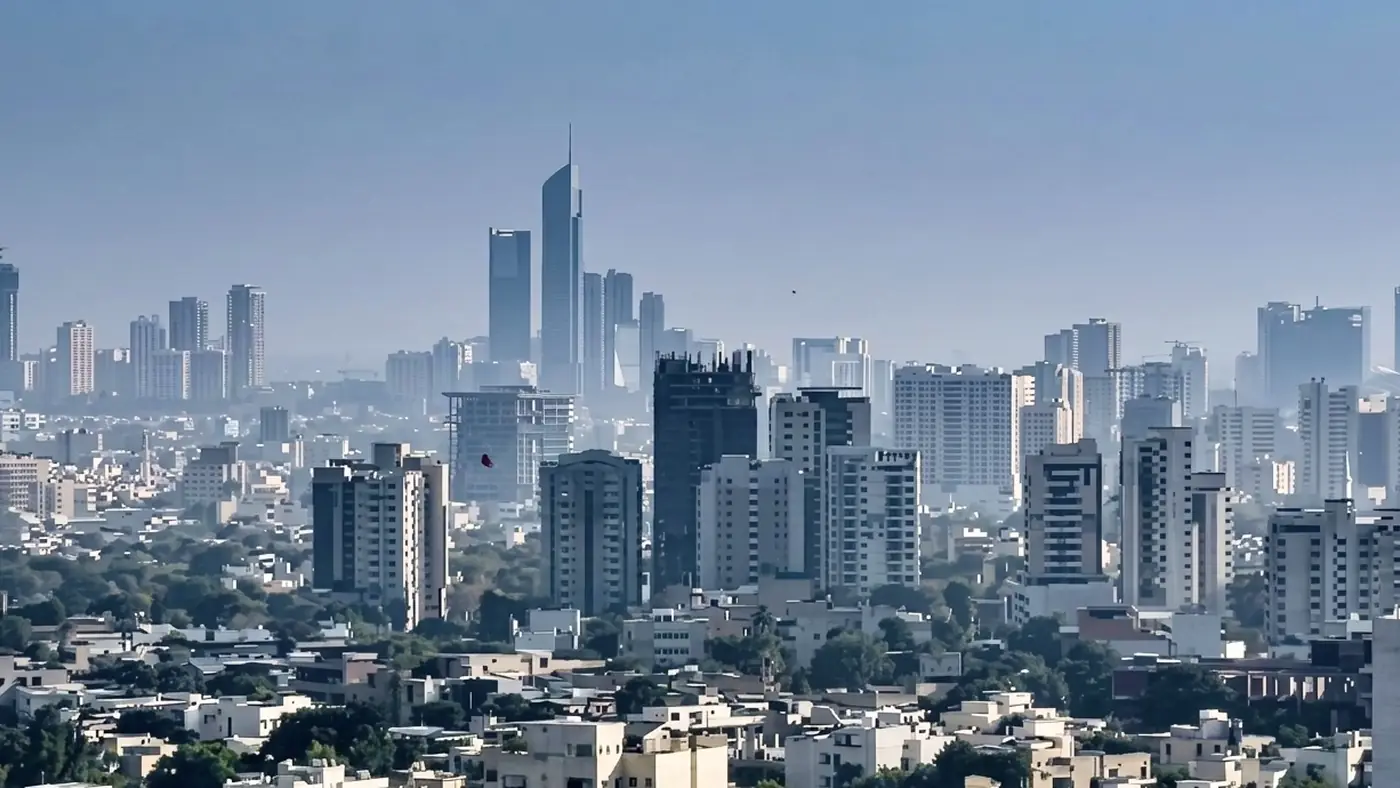

Karachi weather by month runs from a mild, dry winter in December to February, through a hot pre-monsoon build-up in April and May, into a humid monsoon from July to September, before the heat breaks again in October and November. There is no cold season worth packing for, but the difference between a January evening on the beach and a June afternoon inland is enormous.
This guide goes month by month, then covers the sea breeze, the monsoon and the heatwave risk that makes some months worth avoiding altogether.
| At a glance | |
|---|---|
| Coolest months | December to February |
| Hottest months | April, May and June |
| Monsoon | Mid-July to early September, heaviest in July and August |
| Best for sightseeing | November to February |
| Best for the beach | November to April, outside the monsoon |
| Average humidity | Around 70% year-round; highest in August |
Karachi's weather in short
Karachi sits on the Arabian Sea, and the sea keeps the city milder than most of Pakistan's plains in winter and more humid than the desert interior in summer. There is effectively no winter: even January afternoons reach the mid-20s Celsius. What changes through the year is the humidity, the wind, and how much of the day is comfortable to be outdoors.
| Month | Average high | Average low | What it feels like |
|---|---|---|---|
| January | 26°C | 12°C | Dry, breezy, the most comfortable month |
| February | 29°C | 15°C | Still mild, warming quickly |
| March | 33°C | 19°C | Warm days, the humidity starts to build |
| April | 35°C | 24°C | Hot, dry heat before the humidity sets in |
| May | 36°C | 27°C | The hottest month; little relief at night |
| June | 36°C | 29°C | Very hot and increasingly humid |
| July | 34°C | 28°C | Monsoon begins; heavy, humid heat |
| August | 33°C | 27°C | Most humid month, heaviest rain |
| September | 33°C | 26°C | Monsoon tailing off, still humid |
| October | 36°C | 23°C | Hot again but drier, the humidity breaks |
| November | 33°C | 18°C | Cooling fast, pleasant evenings |
| December | 28°C | 13°C | Mild and dry, the season begins |
Source: long-term averages for Karachi.
Winter: December to February
This is the season everyone recommends, and it earns it. Days are warm rather than hot, nights are cool enough for a light jacket, and the air is at its clearest and driest of the year. A north-easterly breeze keeps evenings comfortable, which is when Karachi is at its best: Sea View, Port Grand and the food streets are all more pleasant after dark in winter than in any other season.
This is the window for walking tours of the old city, the museums, and the beaches west of town. Expect very little rain and long stretches of clear sky.
Spring: March and April
March is still comfortable, with warm days and cool nights, but the humidity starts to climb and the sea breeze weakens as the month goes on. April is the turning point: daytime highs push into the mid-30s, and the air is often dry rather than humid, which makes the heat easier to bear than in summer but still hard work for a full day outdoors. Karachi's record high temperature, 48°C, was recorded on 22 and 23 April 2017, a reminder that a late-April heatwave is a real risk, not a rare one.
Summer: May and June
May and June are the hottest months of the year, with average highs around 36°C and nights that barely drop below 27–29°C. This is also when Karachi is most exposed to severe heatwaves. The deadliest on record struck in June 2015, when daytime temperatures held between 40°C and 45°C for several days and more than 1,200 people died across the city, most from heatstroke. Heatwaves since then have prompted health alerts and cooling centres, and they can recur with little warning.
If you are in Karachi in May or June, keep outdoor activity to the early morning or after sunset, drink far more water than feels necessary, and watch for heat-alert warnings from local authorities.
Monsoon: July to September
The south-west monsoon reaches Karachi later and more erratically than it does the rest of Pakistan, but when it arrives it brings the year's heaviest rain, mainly in July and August. Humidity is at its highest in August, often above 80%, and heavy downpours can flood low-lying roads for hours, particularly in the older parts of the city and near the coast.
Rain is not constant through these months; it comes in bursts between long humid, overcast spells. The sea is also rougher in the monsoon, and swimming bans under Section 144 are common at this time. If your trip falls in this window, build slack into any day that depends on the roads staying clear, and check the forecast the evening before you go out.
Autumn: October and November
October can be as hot as summer on paper, with highs around 36°C, but the air dries out and the worst of the humidity is gone by the month's end. November is the real transition: highs drop into the low 30s, nights turn genuinely cool, and by the end of the month Karachi feels close to its winter best. This makes late November one of the most pleasant windows of the year, without the short daylight hours that limit winter sightseeing.
Best months for the beach and for sightseeing
For the beach: November to April, avoiding the roughest of the April heat if you plan to spend the whole day in the sun. The sea is at its calmest and safest for swimming outside the monsoon months, though Karachi's beaches carry strong currents even then and none of the city beaches should be treated as safe for unsupervised swimming.
For sightseeing: November to February, for the combination of mild days, cool evenings and the lowest humidity of the year. This is when walking the old city, Frere Hall, Empress Market and the seafront all feel easy rather than tiring. Our list of places to visit in Karachi is built around exactly this season.
Avoid, if you can choose: late May through August, for the combination of extreme heat, high humidity and the chance of a serious heatwave.
What to pack by season
- Winter (Dec–Feb): light layers for the day, a jacket or shawl for the evening breeze.
- Spring (Mar–Apr): loose cotton clothing, sun protection, and plenty of water for the afternoons.
- Summer (May–Jun) and monsoon (Jul–Sep): the lightest fabrics you own, a hat, high-factor sunscreen, and an umbrella or light raincoat for the monsoon months. Carry more water than you think you need.
- Autumn (Oct–Nov): similar to spring, with a light layer for the cooler evenings by late November.
If you are planning the rest of a Pakistan trip around Karachi, our trip planning page covers how the seasons differ once you head north.
Frequently asked questions
What is the coldest month in Karachi?
January, with average highs around 26°C and lows near 12°C. Karachi has no real winter by the standards of the rest of Pakistan; it is simply the mildest, driest stretch of the year.
What is the hottest month in Karachi?
May and June are the hottest, with average highs around 36°C and warm nights that give little relief. Heatwaves are most likely from April through June.
When is the monsoon season in Karachi?
Roughly mid-July to early September, with the heaviest rain in July and August. Rain arrives in bursts rather than continuously, and can cause flooding on low-lying roads.
Is Karachi weather good for a beach holiday?
Best from November to April, when the sea is calmer and the humidity is lower. Avoid the monsoon months, when rough seas and swimming bans are common, and take the strong currents seriously at any time of year.
What should I pack for Karachi in summer?
The lightest cotton clothing you have, sun protection and far more water than usual. Plan outdoor time for early morning or evening, and watch for heat-alert warnings in May and June.