The Jahanabad Buddha is a seated Buddha carved into a sandstone cliff near Manglawar, about 9 km northeast of Mingora in the Swat valley. It is one of the largest rock-cut Buddhist images in the region, dated to the 7th or 8th century, and it survived an attempt to blow it up in 2007 before being restored in 2016.
This guide covers where the carving is, how to get there, what happened to it, and what you will actually see today.
| At a glance | |
|---|---|
| Location | Jahanabad, near Manglawar, about 9 km from Mingora |
| Date of carving | 7th–8th century CE |
| Height | About 7 metres |
| Status | Restored 2016, protected site |
| Entry fee | None reported; a caretaker is usually present |
| Best light | Late morning, when the sun is on the cliff face |
Where is the Jahanabad Buddha?
The carving sits on a rock face above the Jahanabad hamlet, a short side trip off the road through the Manglawar valley, which branches east from Mingora. It is one of several Buddhist rock reliefs scattered through Manglawar, alongside smaller carvings at Shaldara, Kalkata and Banjot, but it is by far the largest and the one most people mean when they say "the Swat Buddha."
Coming from Mingora, the drive to the village below the carving takes well under half an hour on a paved road, followed by a short walk up a stone path to the base of the cliff.
What happened to the carving
The Buddha was targeted by militants in 2007, who drilled explosive charges into the face and detonated them, badly damaging the head. The image remained disfigured for years afterwards, a well-known symbol of what the militant occupation of Swat had done to the valley's older heritage.
Restoration began under the Italian Archaeological Mission in Pakistan, working with the Khyber Pakhtunkhwa government's Directorate of Archaeology and Museums. The team used pre-2007 photographs and laser surveys to reconstruct the missing stonework, rebuilding the face with the original fragments where these could be recovered. The physical restoration was completed in October 2016, and the carving has been protected and monitored since.
What you see today
The seated figure is carved in high relief, in the contemplative pose typical of Gandharan art, with curled hair, an ushnisha on the crown of the head, long earlobes and a flared robe falling in folds over the shoulders. Scholars who documented the region's rock art, including Aurel Stein in the early 20th century, singled this carving out as the most striking of the Manglawar reliefs.
Up close, the restoration is visible if you look for it: the rebuilt sections of the face have a slightly different texture to the original stone. From a short distance the figure reads as whole again, which is the point.
Nearby, fragments of a related carving, a Bodhisattva Padmapani that had also been damaged, were recovered in 2015 and reassembled; ask locally whether it is currently viewable, since access to smaller finds in the area can change.
Practical details
There is no formal ticket booth at the site; a local caretaker is usually on hand. Bring a hat and water for the short uphill walk, and wear shoes with grip, since the path is stone rather than tarmac. Photography is normally fine, but ask before photographing any security personnel or checkpoints on the approach road.
Our Swat valley guide covers the rest of the valley if you are combining Jahanabad with other stops, and the Buddhist sites of Swat overview places it alongside Butkara, Barikot and the other Gandharan remains in the district.
Is it worth the detour?
Yes, if you have any interest in Gandharan history or in the wider story of Swat's heritage under militancy and since. It is a short, easy stop rather than a half-day trek, which makes it simple to combine with a morning in Mingora or a run out to Udegram. If your time in Swat is tight and archaeology is not the priority, this is one of the more skippable stops compared with, say, the Swat Museum, which displays finds from across the valley under one roof.
Is it safe to visit Jahanabad?
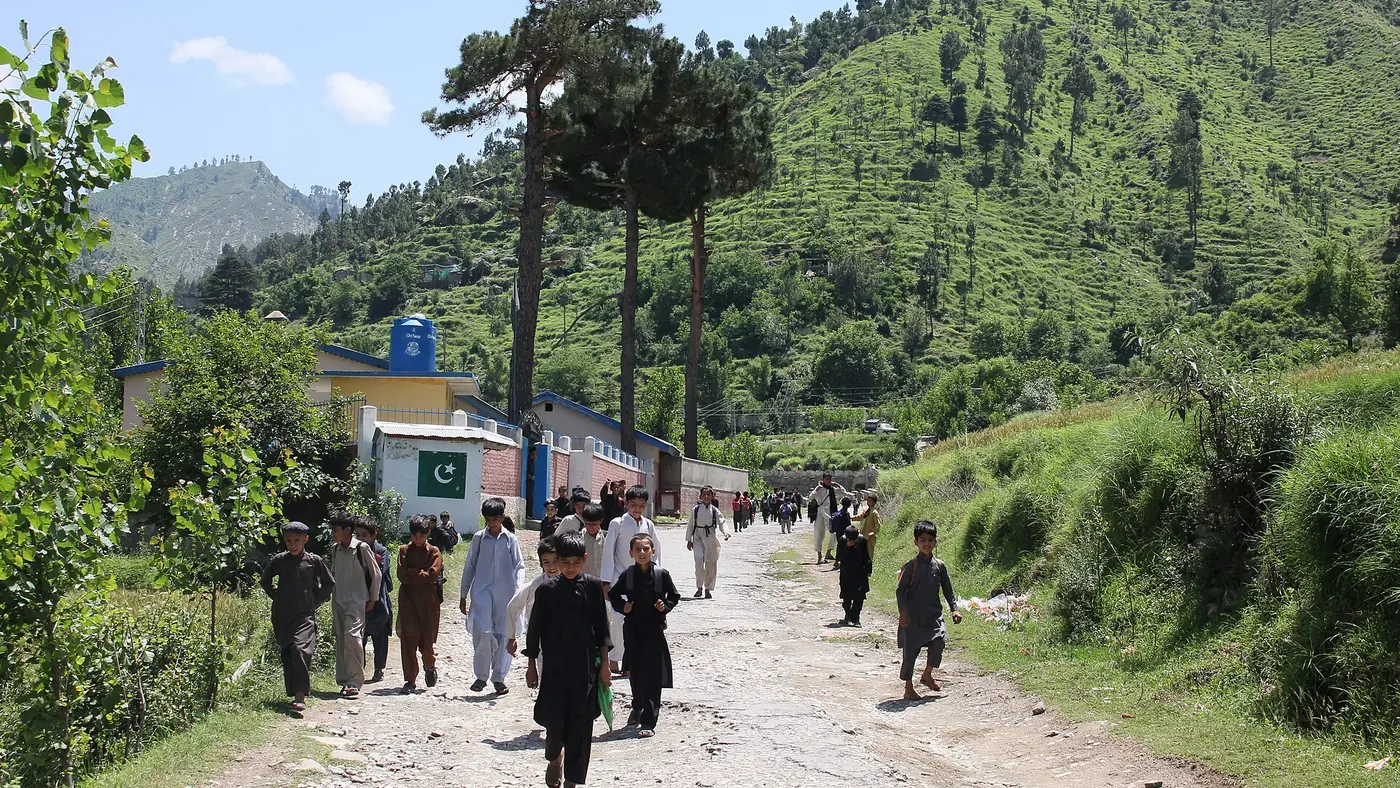
Local families and school groups visit the site routinely, and it sits close to Mingora rather than in a remote area. That said, the UK government's Pakistan travel advice (updated September 2026) currently advises against all travel to Swat district, following a suicide bombing at Kabal police station in August 2026 that killed 17 people. Pakistani visitors continue to travel through Swat in large numbers, but anyone planning a trip, and especially anyone holding a foreign passport, should check their own government's current advice and recent local news before setting out; a foreign government's advisory can also affect travel insurance cover.
Frequently asked questions
How do I get to the Jahanabad Buddha?
Drive from Mingora into the Manglawar valley; the turn to Jahanabad is well short of half an hour away on a paved road, followed by a short walk up to the carving.
Is there an entry fee for the Jahanabad Buddha?
No fee is reported at the site. A local caretaker is usually present, and a small tip is appreciated but not required.
Why was the Jahanabad Buddha damaged?
Militants drilled and detonated explosives on the carving's face in 2007, during the period of Taliban activity in Swat. It was restored using old photographs and laser scanning, with work completed in 2016.
How old is the Jahanabad Buddha?
Archaeologists date the carving to the 7th or 8th century CE, part of the same Buddhist artistic tradition found across the wider Manglawar valley.
Can I combine a visit with other Swat archaeological sites?
Yes. Udegram, with Raja Gira Castle and the Mahmud Ghaznavi Mosque, and the Swat Museum in Saidu Sharif are both within easy reach of Mingora on the same day.