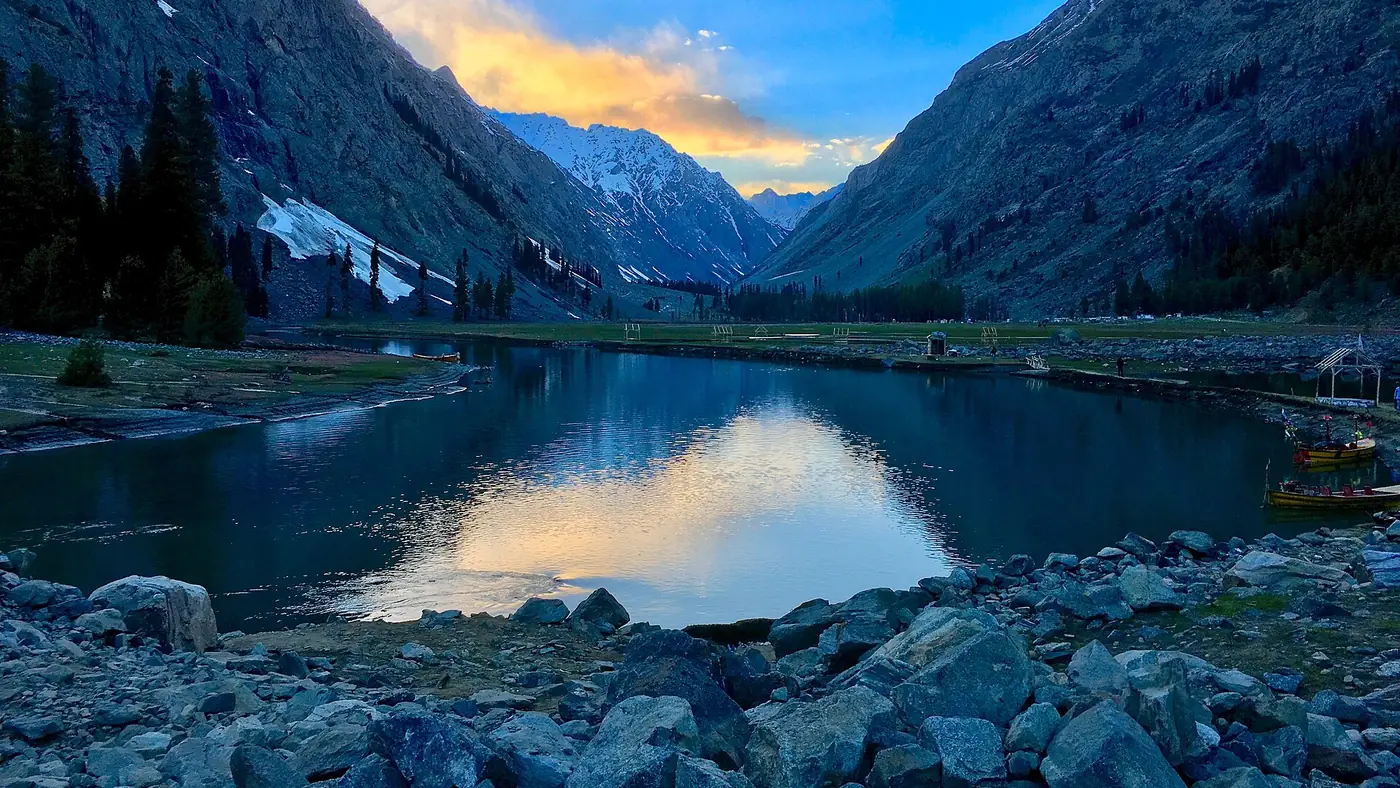
Izmis Lake lies southwest of Utror valley in upper Swat, above the tree line and surrounded by natural caves that gave the lake its name. It is the most remote of Utror's lake treks: a jeep ride to a valley called Loypanrghalay, then three to six hours on foot to reach the water. Its still surface in calm weather has earned it a reputation as a mirror lake among visitors who make the trip.
This guide covers the route from Utror, the caves, what the trek involves, and when to go.
| At a glance | |
|---|---|
| Location | Southwest of Utror valley, above the tree line |
| From Mingora | About 130 km |
| From Kalam | About 30 km |
| From Utror | About 13 km |
| Jeep leg | Utror to Loypanrghalay |
| Trek from Loypanrghalay | 3 to 6 hours on foot |
| Best months | June to September |
Where is Izmis Lake?
Izmis Lake sits above and to the southwest of Utror valley, roughly 13 km from Utror itself and about 30 km from Kalam. Utror is reached by jeep from Kalam in about an hour on a rough road; our guide to Utror valley covers that drive and the cluster of lakes reached from it, including Kundol and Spin Khwar as well as Izmis.
The route: jeep to Loypanrghalay, then on foot
The trip to Izmis has two stages:
- By jeep from Utror to Loypanrghalay, a valley that the road reaches but does not go beyond. This leg needs a high-clearance 4x4 and a driver who knows the track, which is rougher the further it climbs.
- On foot from Loypanrghalay to the lake, a walk of three to six hours depending on the route taken, the pace of your group and conditions on the day. The path passes through the Chinaitshing meadows and the area known as Kalam Banda on the way up.
Because the walking time varies so much, treat this as a trek with a wide margin rather than a fixed-length outing. Start early, and build in enough daylight for a slower-than-expected pace in either direction.
The caves and the name
Izmis means "caves" in the local Kohistani language, and the lake takes its name from the caves scattered around its shores. These have shaped the area's local culture as much as the lake itself, and they are worth a look for anyone who reaches the water with time and energy to spare. The lake itself, glacial and still in calm conditions, has become known among trekkers for its mirror-like surface.
What the trek needs
This is a serious undertaking, not a casual walk:
- Go with a local guide, arranged in Utror or through your jeep driver. The trail above Loypanrghalay is not signposted and the walking time varies too much to navigate confidently without local knowledge.
- Treat it as an overnight trip. Given the length of the walk on top of the jeep leg from Kalam, a same-day return from Kalam is a very long day. Most people who go plan to camp near the lake and walk out the next day.
- Carry all your food and water. There is nothing to buy beyond Utror.
- Pack proper boots, warm layers and rain protection. The route runs well above the tree line, where weather changes quickly and there is no shelter from wind or rain.
- Check the jeep track condition in Utror before setting out. How far the vehicle can go towards Loypanrghalay changes with the state of the road.
Camping
There is no built accommodation anywhere on this route. Anyone staying overnight brings a tent and full camping kit, and should confirm with their guide where a safe, level pitch is available near the lake or along the way. Nights at this altitude are cold even at the height of summer, so pack accordingly.
When to go
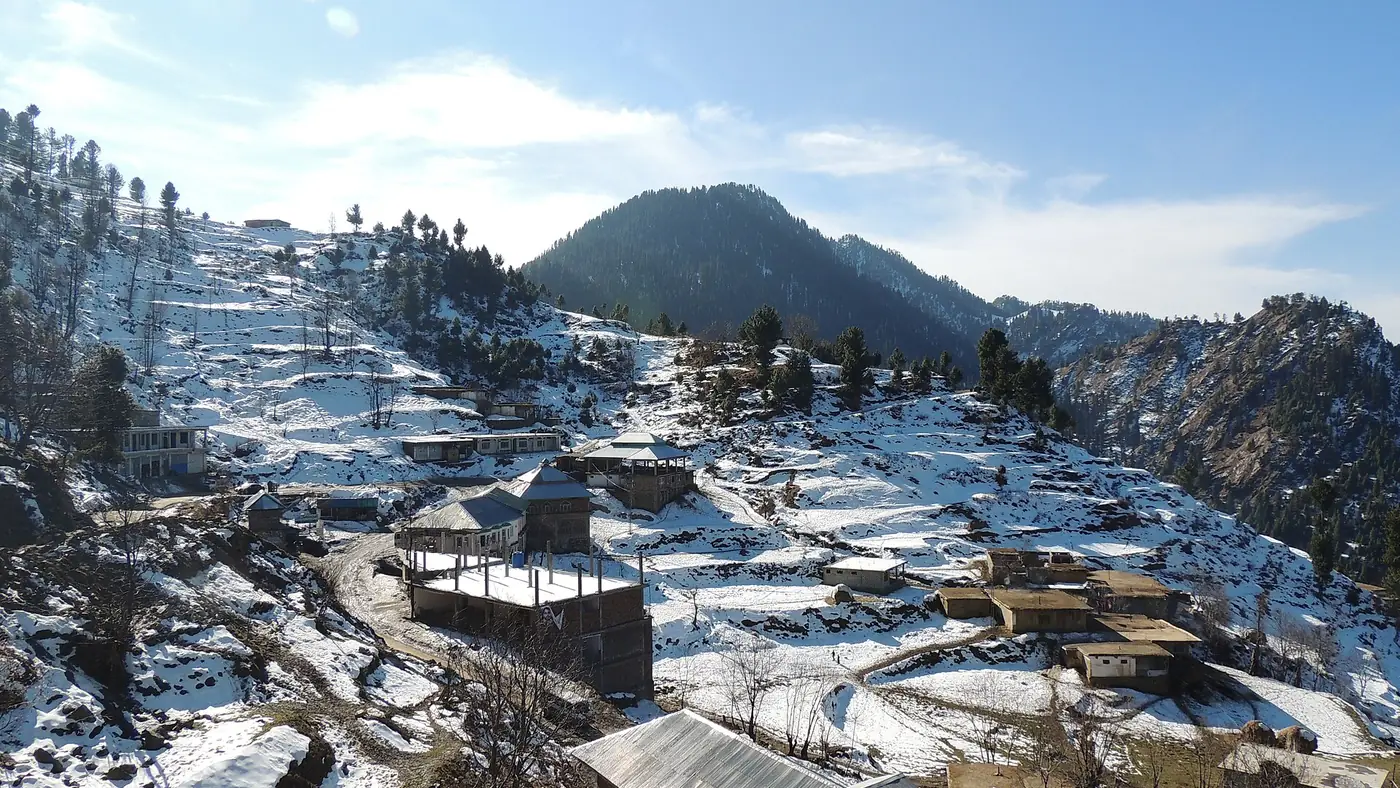
June to September is the season for Izmis, matching the rest of the Utror lake cluster. Snow covers the upper ground and the caves for the rest of the year, and the trek is not something to attempt outside these months. Our guide to Utror valley has more on the wider seasonal picture for the area.
Is it safe to visit?
Pakistani trekkers visit Utror and its surrounding lakes every summer, and Izmis draws a smaller, more committed group of walkers given its length and remoteness. The main everyday risks are the terrain above the tree line and the weather, which can turn quickly at this height with no shelter nearby. Go with a guide, watch the sky, and be ready to turn back.
On the wider security picture, Swat's situation worsened through 2026, with a suicide bombing at the Kabal police station near Mingora on 2 August that killed 17 people. Check local news and current police advice before setting out on a remote overnight trek like this one. The UK government advises against all travel to Swat, and overseas visitors should check their own government's advice, since ignoring it can affect insurance, including cover for a mountain rescue in an area this remote.
Is it worth it?
For experienced trekkers who want one of Swat's more remote lakes, and who are prepared to camp, yes. The caves and the still water make Izmis distinctive among the region's lakes, and the length of the trek keeps the numbers down.
It is not suitable for casual day visitors, families or anyone unwilling to commit to an overnight trip. If that is your group, Kundol Lake, the easiest and most visited of Utror's lakes, is a better fit. Our Swat Valley guide covers the rest of the area.
Frequently asked questions
How far is Izmis Lake from Utror?
About 13 km, reached by jeep as far as Loypanrghalay and then a walk of three to six hours on foot.
Why is it called Izmis Lake?
Izmis means "caves" in the local Kohistani language, after the natural caves that surround the lake.
Can you camp at Izmis Lake?
Yes, though there is no built accommodation. Bring a full camping kit and check with your guide about a safe pitch near the lake.
Is the Izmis Lake trek suitable for beginners?
No. It is a long, remote trek above the tree line that needs proper fitness, a local guide and overnight camping gear.
When is the best time to trek to Izmis Lake?
June to September, when the trail is clear of snow, in line with the rest of Utror valley's lake treks.