Hunza culture is shaped above all by faith: most people in the valley are Ismaili Muslims, followers of the Aga Khan, and that has driven decades of investment in schools and clinics that set Hunza apart from much of the rest of Pakistan. Add to that a language found nowhere else in the world, orchard villages built around irrigation channels centuries old, and a warmth towards visitors that people notice within a day of arriving, and you have a place whose culture is worth understanding before you go, not just admiring once you're there.
This guide covers the Ismaili faith and what it means day to day, community life and education, the valley's festivals and music, and the etiquette that makes you a welcome guest rather than just a tourist.
Who lives in Hunza, and what do they believe?
Most people in central and upper Hunza are Ismaili Muslims, a branch of Shia Islam whose spiritual leader is the Aga Khan, currently Prince Rahim Aga Khan V, who became the 50th hereditary Imam in February 2025 after the death of his father, Aga Khan IV. In May 2026 around 80,000 Ismailis gathered in Passu for his first major visit to the region as Imam, a sign of how directly the community's religious life connects to the valley itself.
Ismailis pray at a Jamat Khana rather than a mosque in the conventional sense, and the faith places a strong emphasis on education, health and community development, channelled through the Aga Khan Development Network. That network built and still runs many of the schools, clinics and small hospitals across Hunza, and it is a large part of why the valley has better literacy and healthcare outcomes than much of northern Pakistan.
Nagar, across the river from Hunza, is mostly Shia Muslim rather than Ismaili, and Gilgit city and the villages further south are more religiously mixed. Don't assume the whole region shares Hunza's particular character.
Language, community life and education
Hunza's main local language is Burushaski, a language isolate not clearly related to any other language family on earth, spoken only in this part of Gilgit-Baltistan. In Gojal, the upper part of the valley around Gulmit, Passu and Sost, Wakhi is more common, brought by families who settled from the Wakhan corridor in Afghanistan and Tajikistan generations ago. Urdu and English are also widely spoken, especially by anyone working in tourism.
Education is a visible part of daily life. Schools run by the Aga Khan network and the government sit in almost every village, and girls' education has been a priority in Hunza for longer than in most of Pakistan, going back to schools the Aga Khan network opened in the valley from the mid-20th century onward. You will see this directly: children in uniform on the roads in the morning, and women working in guesthouses, cafés and shops in a way that is less common elsewhere in the country.
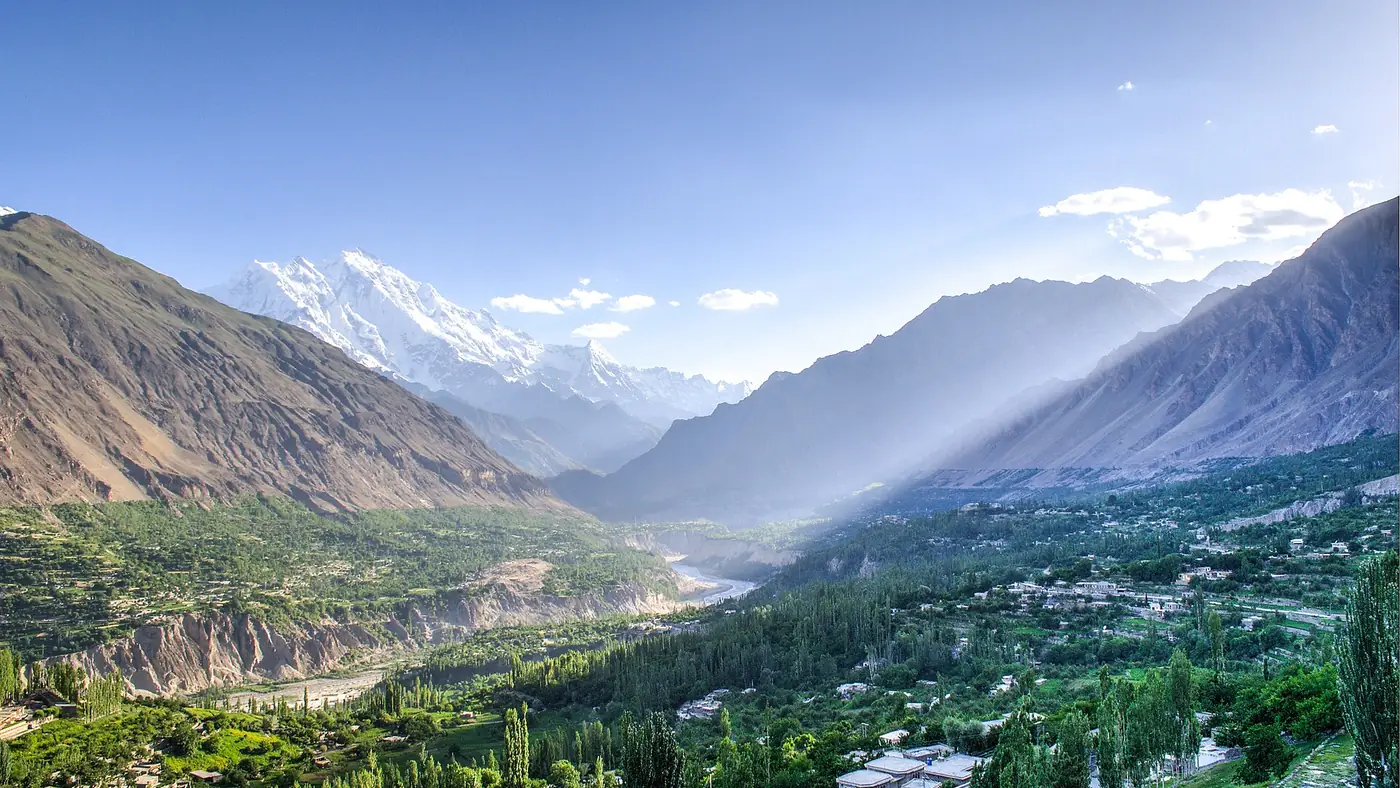
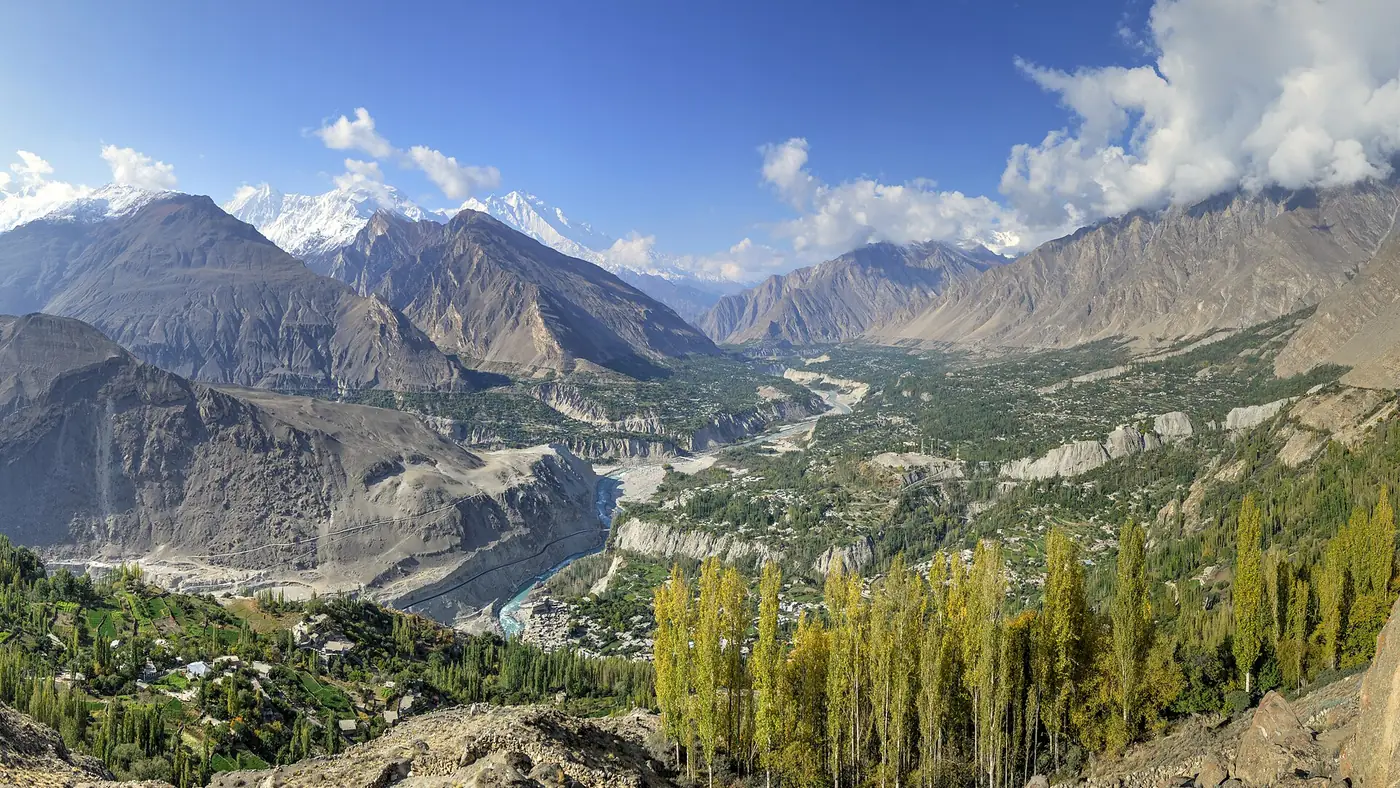
Farming still structures the year. Apricot and cherry orchards, wheat and potato terraces, and a shared network of irrigation channels that carry glacier meltwater to the fields are managed collectively, with villages taking turns to maintain and clean the channels. It is worth remembering, walking through Karimabad or Altit, that the orchards on either side of the path are someone's livelihood, not a garden laid on for visitors.
Festivals and music
Ginani, held around the summer solstice on 21 June, is Hunza and Nagar's harvest festival, traditionally lasting about ten days, with music, tug of war, polo and a ceremony in which the ruling family once blessed the wheat harvest. Much of the old ceremony has faded, but music, sport and gatherings around it continue in some villages.
Imamat Day, on 11 July, marks the anniversary of the Aga Khan's accession as Imam, and is celebrated at Jamat Khanas across Hunza and Gilgit-Baltistan with music, games and community gatherings.
Nauroz, the Persian new year on the spring equinox in March, is also widely marked in Hunza, alongside the region's other seasonal and religious calendar.
Traditional music centres on the rubab, a short-necked lute known locally as the chardha, along with drums and, in some villages, a wooden flute. Men's group dances, sometimes called chap or dumal depending on the village, are performed at weddings, polo matches and festivals, with dancers moving in a line or circle to the rhythm of the drums. If you are in Hunza for a wedding or festival by chance, watching from the edge of the gathering, rather than pushing in for photographs, is the right way to take it in.
Etiquette for visitors
Hunza is used to tourists and genuinely welcoming, which makes it easy to forget that it is also somebody's home.
- Dress modestly, for both men and women. Shoulders and knees covered is a safe standard, and it matters more around Jamat Khanas and in the older village lanes than on a hotel terrace.
- Ask before photographing people, and don't photograph women without clear permission. A friendly request is usually enough; a camera raised without asking is not.
- Keep your voice down in the old villages. Front doors in Altit, Ganish and old Karimabad open straight onto the lane, and families live there year-round.
- Don't walk into orchards or fields without an invitation, however open they look from the path.
- Greet people. A simple "Assalam-o-Alaikum" is well received, and Hunza's hospitality is genuine rather than performed for tourists, so a friendly manner is returned in kind.
- Alcohol is not part of local life in Hunza's villages; drink discreetly if at all, and never offer it to your hosts.
Our guide to Gilgit and Hunza has the practical side of a trip here: routes, forts and where to stay. Understanding the valley's culture is what turns that trip from sightseeing into something closer to a real visit.
Frequently asked questions
What religion do people in Hunza follow?
Most people in central and upper Hunza are Ismaili Muslims, followers of the Aga Khan. Nagar, across the river, is mostly Shia Muslim, and Gilgit and the villages further south are more mixed.
What language do people speak in Hunza?
Burushaski, a language unrelated to any other on earth, is the main language in central Hunza. Wakhi is more common in upper Hunza around Gulmit, Passu and Sost. Urdu and English are also widely spoken.
Who is the current Aga Khan?
Prince Rahim Aga Khan V, who became the 50th hereditary Imam of the Ismaili Muslims in February 2025, after the death of his father, Aga Khan IV.
What should visitors know about etiquette in Hunza?
Dress modestly, ask before photographing people, especially women, keep noise down in the old village lanes, and don't walk into orchards or fields uninvited. Hunza's hospitality is genuine, and a respectful manner is returned warmly.
Is Hunza different from the rest of Gilgit-Baltistan?
Yes, noticeably. Its Ismaili faith, its emphasis on education, and the visible role of women in public life set it apart from Nagar, Gilgit and much of the rest of the region, even though all share the same mountains and many of the same roads.