Harappa is the site of one of the two great cities of the Indus Valley Civilisation, on the outskirts of a small town about 24 kilometres west of Sahiwal. What is left of the Harappa ruins is mostly low brick mounds rather than standing buildings, so the site rewards visitors who read the labels and use the museum, not just those who want a dramatic photograph.
This guide covers what is actually visible on the ground, what the museum shows, and how to reach Harappa as a half-day trip from Lahore or Sahiwal.
| At a glance | |
|---|---|
| Location | Harappa town, about 24 km west of Sahiwal, Punjab |
| From Lahore | About 170 km to Sahiwal, then 30–45 minutes on to Harappa |
| Age of the city | Occupied roughly 3300–1300 BC; at its peak around 2600–1900 BC |
| What's on site | Excavated mounds, the granary area, cemetery ground, a small on-site museum |
| Best time | Cooler months, October to March; early morning to avoid the heat |
| Entry fee | A small ticket fee applies; amounts vary between sources, so carry cash |
What Harappa actually is
Harappa gave its name to the wider Indus Valley (or Harappan) Civilisation, one of the world's earliest urban cultures alongside ancient Egypt and Mesopotamia. At its height, in the Mature Harappan phase around 2600–1900 BC, the city is estimated to have covered about 150 hectares and housed tens of thousands of people, with planned streets, brick housing, granaries and a citadel mound protected by a fortified wall.
The site was known to British railway engineers in the 19th century, who used baked bricks from the ruins as ballast for the Lahore–Multan railway line, destroying an unknown amount of the ancient city before archaeologists began serious excavation in the 1920s. Formal digging by the Archaeological Survey of India started in 1921, and further seasons followed through the 1940s and later decades. Harappa is on Pakistan's tentative list for UNESCO World Heritage status.
What you actually see on site
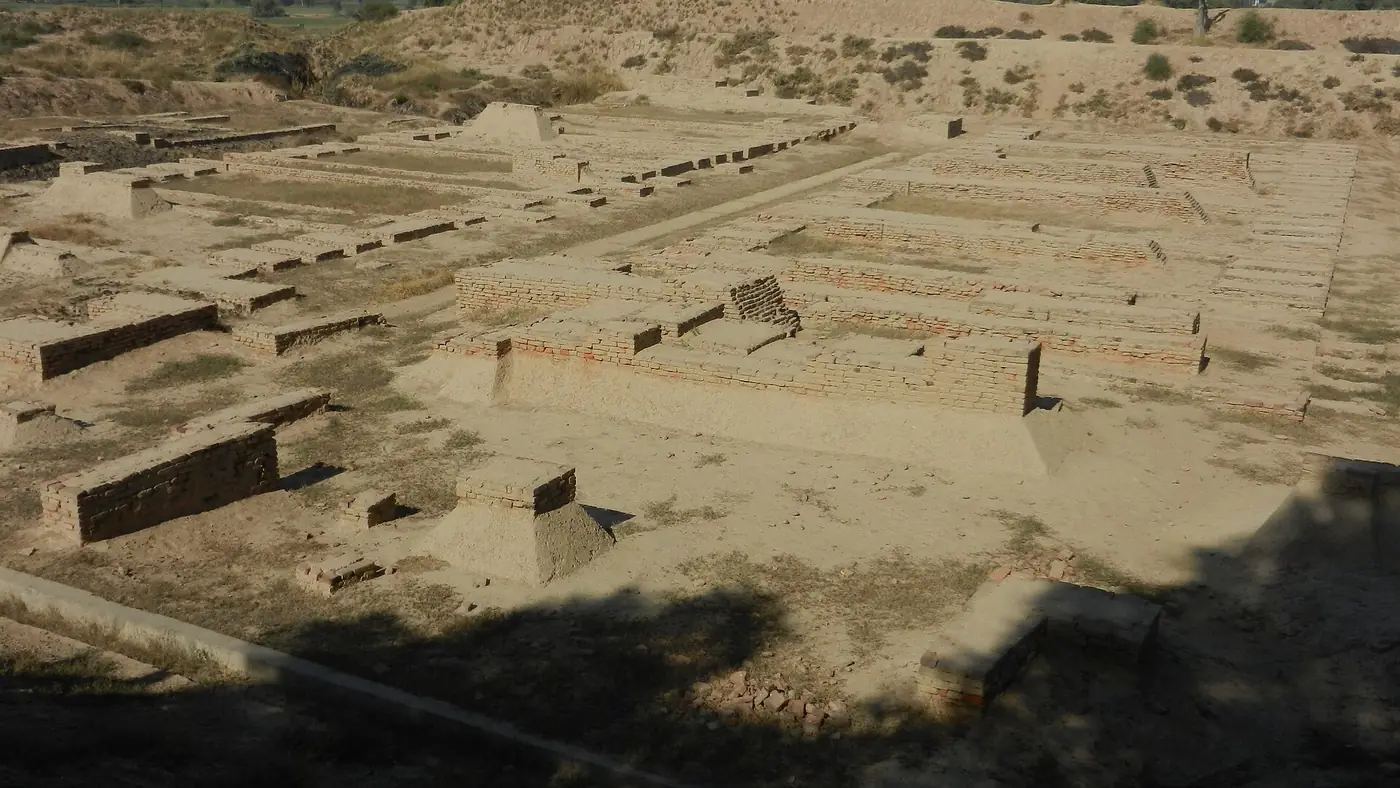
Set expectations before you go: Harappa is not Mohenjo-daro, and there is no dramatic standing citadel. The site is a series of low, eroded brick mounds spread across several fields, each fenced and labelled, with the modern town of Harappa built close around them. What you can walk to includes:
- The citadel mound, the raised area that once held the city's fortified upper town.
- The granary area, a set of brick platforms identified as grain storage, one of the most photographed spots on site.
- The cemetery grounds south of the citadel, where archaeologists found burials with pottery and ornaments.
- Workmen's quarters and platform structures, lower-lying brick foundations near the granary.
Paths connect the main mounds, and it takes most visitors one to two hours to walk the site properly, longer if you're reading every information board.
The Harappa Museum
A small site museum stands near the ruins and holds artefacts recovered from the excavations: pottery, seals with the still-undeciphered Indus script, terracotta figurines, jewellery, tools and everyday household objects. It's a modest, single-building museum rather than a major national collection, but it's what makes sense of the mounds outside — many of the objects on the boards around the site are pictured here in the original.
Give the museum thirty minutes to an hour. Photography rules inside can vary, so ask staff on arrival rather than assuming.
One thing to look for specifically: the small steatite seals carved with animals and short inscriptions in the Indus script. The script has never been deciphered, so nobody can read what these seals say, which makes them one of the genuine unsolved puzzles of ancient history rather than just old objects behind glass.
The Great Granary and the scale of the city
The structure most visitors head for first is the so-called Great Granary, a set of raised brick platforms on the citadel mound identified by early excavators as large-scale grain storage. Whether it was truly a granary or served another civic purpose is debated among archaeologists, but the scale of the brickwork gives a real sense of how organised the city's planning was.
That planning is the headline fact about Harappa: at its peak, in the Mature Harappan phase, the city is thought to have covered roughly 150 hectares and supported a population in the tens of thousands, with a grid of streets, standardised baked bricks, drainage and separate residential and citadel areas. Very few Bronze Age sites anywhere in the world show this degree of urban planning, which is why Harappa matters well beyond Pakistan's own history.
How to reach Harappa
From Lahore, the most common route is the motorway or GT Road to Sahiwal, a drive of around two to two and a half hours, followed by a local road west to Harappa. Most visitors from Lahore do this as a private car or hired taxi rather than public transport, since it makes the half-day trip far more practical.
From Sahiwal, Harappa is about 30–45 minutes by road. Sahiwal itself sits on the main Lahore–Karachi railway line, so it's reachable by train from Lahore, Multan, Karachi and other cities on that route, with a taxi or local transport for the final stretch to the site.
There is no need for an early start if you're coming only from Sahiwal, but if you're combining Harappa with somewhere else in central Punjab in the same day, leave Lahore by mid-morning at the latest. Our trip planning guide has more on building stops like this into a wider central Punjab itinerary, and the travel guide covers general road and transport advice for the province.
When to go
Central Punjab gets very hot from April to September, and the Harappa site has almost no shade, so a midday summer visit is uncomfortable and not something we'd recommend with children or older relatives. October to March is far more comfortable, and a morning visit before the heat builds is the better plan in any season.
Is it worth the trip?
For anyone interested in archaeology or Pakistan's ancient history, yes — Harappa is one of only a handful of places in the world where you can walk the ground of a genuinely Bronze Age city. For visitors expecting something visually spectacular on the scale of a fort or a mosque, temper expectations: it's a site for reading and imagining, not for a five-minute photo stop.
It suits a focused half-day out from Lahore or a stop if you're already travelling the GT Road or motorway toward Multan. It's not a full-day destination on its own, and Sahiwal town itself has limited additional sightseeing to pair it with.
Frequently asked questions
How far is Harappa from Lahore?
About 170 km to Sahiwal by motorway or GT Road, then a further 24 km, roughly 30–45 minutes, west to the Harappa site itself. Allow around three hours of driving each way with the last stretch on a local road.
What can you actually see at Harappa today?
Excavated brick mounds rather than standing buildings: the citadel area, the granary platforms, cemetery ground and workmen's quarters, plus a small on-site museum with pottery, seals, jewellery and tools recovered from the digs.
Is there an entry fee for Harappa?
Yes, a modest ticket fee applies for the site and museum, with different rates reported for Pakistani and foreign visitors. Amounts have been inconsistent across sources, so carry small cash and pay whatever is posted at the gate.
How much time do you need at Harappa?
Two to three hours covers the site and museum comfortably at a reasonable pace, including time to read the information boards.
Is Harappa the same as Mohenjo-daro?
No. Both are major Indus Valley cities, but Mohenjo-daro is in Sindh, far to the south, and has more extensive standing ruins. Harappa, in Punjab, is smaller in what remains visible above ground but gave the wider civilisation its name.