
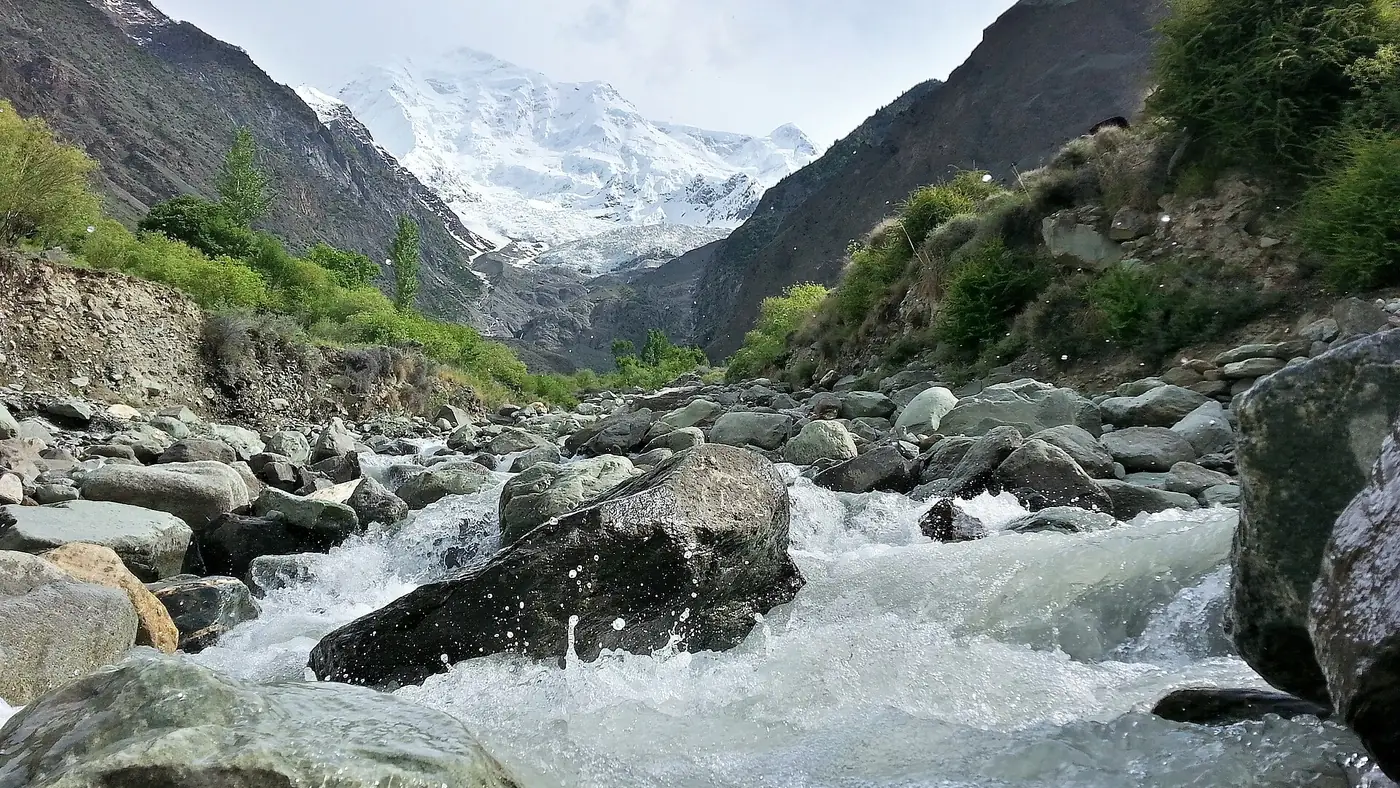
Do not drink tap water in Gilgit-Baltistan, even though it looks clear and comes straight off the glaciers. Testing by Pakistan's own water research body has repeatedly found most tap and spring water supplies in the region contaminated, mainly with bacteria rather than anything to do with glacial silt. Stick to bottled or properly treated water, which is easy to arrange.
This guide covers what the testing actually shows, why clear mountain water can still make you sick, and the simplest ways to stay safe on a trip.
What the testing has found
The Pakistan Council of Research in Water Resources (PCRWR) tested 94 water samples across all six districts of Gilgit-Baltistan and found only 22% met safe drinking standards; the rest failed, mostly because of microbial contamination, found in 68% of samples, along with turbidity and elevated iron. A separate 2024 investigation focused on Gilgit city found essentially all tested tap water unsafe, with E. coli levels reported at around 20 times the WHO limit in places, alongside other contaminants including arsenic (Dialogue Earth).
None of this means every glass of tap water will make you ill, and locals drink it every day. It does mean the risk is real and well documented enough that visitors, who lack any built-up resistance to the local strains, should not take the chance.
| At a glance | |
|---|---|
| Tap water safe to drink? | No, don't drink it untreated |
| Main risk | Bacterial contamination (E. coli and similar), not silt |
| Bottled water | Widely available in shops and hotels across the region |
| Ice in drinks | Avoid unless you know it was made from treated or bottled water |
| Brushing teeth | Bottled or filtered water is safer, though tap water is commonly used |
Why clear glacial water isn't automatically clean
Meltwater straight off a glacier is genuinely close to pure. The problem is everything the water picks up afterwards: villages, livestock, pit latrines and ageing pipe networks along the valley before it reaches a tap. Glacial silt gives the water its milky colour in some rivers, but silt itself is not the main health risk; the bacteria and protozoa that get into the supply downstream are. That is why water that looks completely clear from a spring or stream can still carry contamination, and why boiling or proper filtration matters more than appearance.
How to drink safely on a trip
- Buy bottled water. It's sold everywhere from Islamabad to the smallest shop in upper Hunza, and is the simplest option for most travellers. Check the seal is intact before drinking.
- Boil water if you're making your own tea or using a kettle at a guesthouse without bottled water on hand; a rolling boil for a minute is enough at these altitudes.
- Carry a filter or purification tablets if you're trekking or staying somewhere remote where bottled water may not be reliably available, such as high campsites or smaller villages off the main road.
- Avoid ice in drinks unless you're confident it was made from bottled or treated water, since ice is an easy way for contaminated water to end up in something you drink.
- Use bottled or filtered water to brush your teeth, especially in the first few days, when your gut is least used to anything local.
- Wash fruit and vegetables with bottled or boiled water where you can, particularly anything eaten raw.
If you do get an upset stomach
Mild traveller's diarrhoea is common and usually passes in a day or two with rest, plain food and plenty of fluids, ideally an oral rehydration solution rather than just water. Symptoms that last more than a few days, a high fever, blood in the stool, or significant dehydration need medical attention; our medical facilities guide has more on finding care in the region. Carry a basic rehydration and anti-diarrhoeal kit with you, since pharmacies are not on every corner outside the main towns.
Frequently asked questions
Can I drink tap water anywhere in Gilgit-Baltistan?
No. Testing across all six districts found most samples contaminated, mainly with bacteria. Stick to bottled or properly treated water throughout the region.
Is the water unsafe because of glacial silt?
Not primarily. Silt affects clarity, not safety on its own. The main risk is bacterial and other contamination that gets into the supply from villages and ageing pipes downstream of the glaciers.
Is bottled water easy to find in Hunza and Skardu?
Yes. Bottled water is sold in shops, hotels and restaurants throughout the main towns and along the Karakoram Highway. It's harder to guarantee in very small or remote villages, so carry a filter or tablets if you're heading off the main circuit.
Do hotels provide safe drinking water?
Most hotels catering to tourists provide bottled water or a filtered supply in rooms or at reception; ask when you check in if it isn't obvious.
Is it safe to drink water from streams while trekking?
Not without treating it first. Even clear-looking stream water can carry contamination from upstream grazing or settlements, so filter, boil or use purification tablets before drinking.
.jpg)