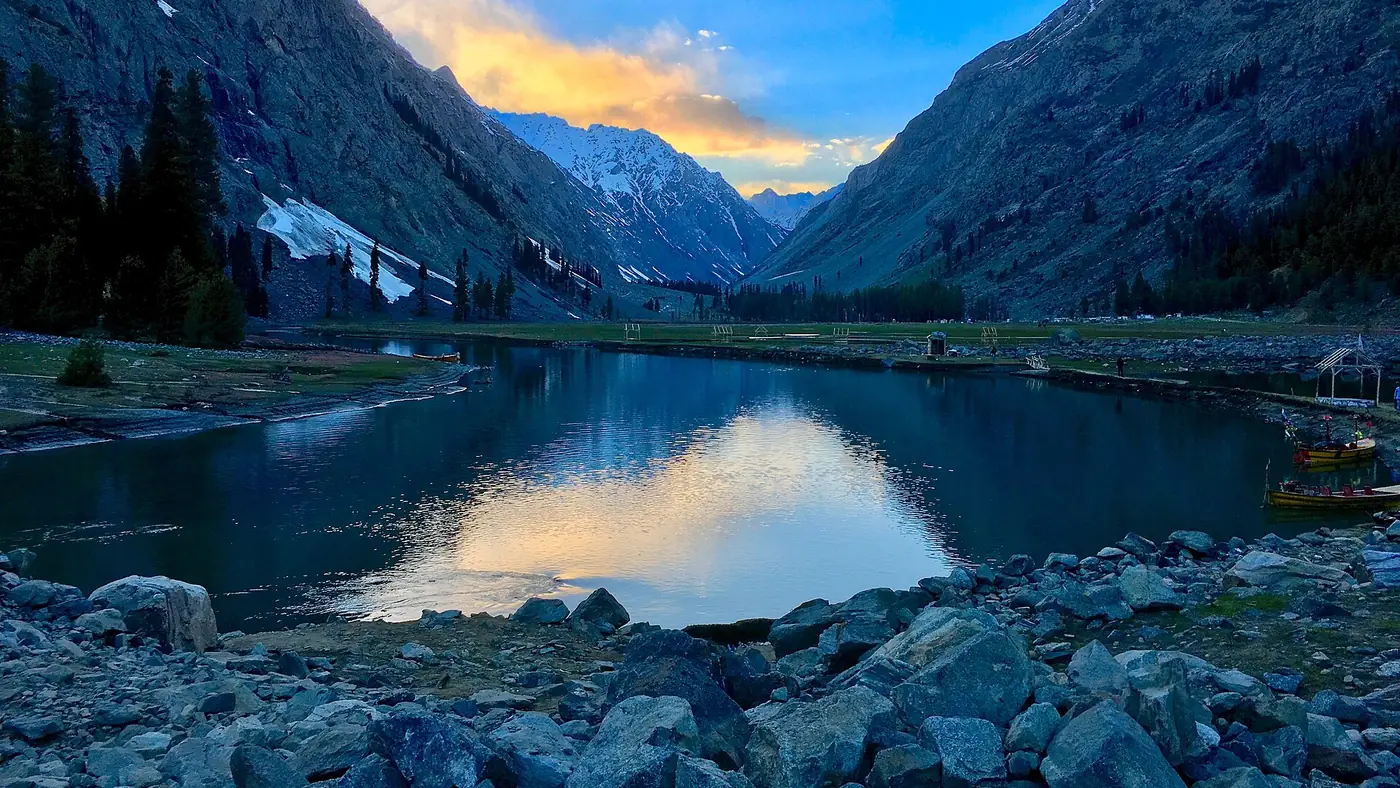
Daral Lake is a glacial lake at about 3,500 metres above Bahrain in Swat, reached on foot from the town in three to four hours over open, largely bare mountainside. Many trekkers combine it with nearby Saidgai Lake, at a similar altitude, walking between the two rather than visiting either alone. Both are summer-only, and both are proper mountain treks rather than short walks.
This guide covers the route out of Bahrain, the link to Saidgai, how long to allow, overnight options and the fitness the trek needs.
| At a glance | |
|---|---|
| Daral Lake altitude | About 3,505 m |
| Saidgai Lake altitude | About 3,500 m |
| From Bahrain to Daral | 3 to 4 hours on foot, direct |
| Between Daral and Saidgai | 2 to 3 hours on foot |
| Best months | June to August |
| Terrain | Bare mountainside, steep in stretches, no shade |
| Stay | No lodges; camp or use the shepherds' shelter at Daral |
Where do the lakes lie?
Daral Lake sits in the western upper reaches of Bahrain, in the foothills of Spinsar mountain, to the northeast of Saidgai Lake. Saidgai itself lies close to the boundary between Swat and Upper Dir districts, above the Ushirai valley. Our guide to Bahrain covers the town as a base; this guide is about the trek into the mountains above it.
The route from Bahrain
The direct trail to Daral Lake climbs out of Bahrain over bare, open mountainside, with little tree cover once you clear the town. Trekkers commonly cover it in three to four hours, though pace varies a great deal with fitness and the weather on the day.
A second approach goes over the Gabin Jabba hilltop, on a jeepable road as far as the top, and then continues on foot for a longer four to five hours to the lake. This route sees more foot traffic and is the one most local guides use for an overnight trip, since the jeep leg cuts the walking day short at the start.
Walking on to Saidgai Lake
Many people combine the two lakes rather than choosing one. From Daral, the walk on to Saidgai takes a further two to three hours over similar open terrain, with Saidgai's roughly kilometre-long basin opening out below the last ridge.
Doing both lakes in a single day from Bahrain and back is a very long day, realistically ten hours or more of walking on top of the drive in. Most groups who want to see both plan an overnight stay near one of the lakes and return the following day.
Fitness level and what to carry
This is not a walk to attempt without preparation. There is no shade for most of the route, the ground is loose and steep in stretches, and you are working above 3,000 metres for hours at a time.
- Go with a local guide from Bahrain, who knows the current state of the trail and the weather pattern for the day.
- Fit adults comfortable with a full day's hillwalking will manage it. It is not suitable for young children or anyone unused to sustained climbing.
- Carry all your water and food. There is nothing to buy on the mountain.
- Pack proper boots, sun protection and a warm layer. The weather changes quickly at this height, even in summer.
- Start at first light. A late start on a route this long risks coming down after dark.
Overnight options
There are no lodges at either lake. A small mosque built by nomads near Daral offers shelter for trekkers who stop there, and it is the closest thing to a shelter on the route. Most people who stay overnight bring their own tent, and hiring one through a guide in Bahrain is usually possible in season, though availability is not something to count on without asking ahead.
When to go
- June to August is the season when the trails are clear and the weather most settled. Daytime temperatures near Saidgai run around 5 to 10°C even in summer, so this is still a cold-weather trek by lowland standards.
- May and September can work in a good year, but expect more snow on the upper ground and a harder trail.
- October to May, both lakes are snow-covered and the route is not one to attempt.
Is it safe to go?
The Gabin Jabba approach passes through Matta tehsil, where residents reported armed men in the surrounding mountains in July 2026, alongside similar reports from neighbouring Charbagh. Ask in Bahrain about the current situation on that route before you set out, and be ready to change plans if the picture has worsened.
More broadly, Swat's security position weakened through 2026: on 2 August a suicide bomber attacked the Kabal police station near Mingora during a peace rally, killing 17 people. Pakistani trekkers continue to visit Bahrain and the trails above it, but check local news and police advice before you go, and carry your CNIC. The UK government advises against all travel to Swat, which can affect travel insurance for overseas visitors, including cover for a mountain rescue.
Is it worth it?
For trekkers who want a genuine high-altitude walk rather than a jeep track and a short stroll, yes. Daral and Saidgai are quieter than the lakes around Kalam and reward a proper day, or two, of effort.
If your group is not up to several hours of steep, shadeless walking, this is not the trip. Mahodand Lake, reached by jeep from Kalam, or the shorter Kundol Lake trek from Utror give an easier taste of Swat's high lakes. Our Swat Valley guide covers the wider area.
Frequently asked questions
How long is the trek to Daral Lake from Bahrain?
About three to four hours on foot by the direct route, or four to five hours via the Gabin Jabba hilltop, which is jeepable part of the way.
Can you visit both Daral and Saidgai lakes in one trip?
Yes, and most trekkers do. Allow a further two to three hours to walk between them, and plan on an overnight stay rather than trying both from Bahrain in a single day.
Is the Daral Lake trek suitable for beginners?
Not really. It is a long, steep, shadeless walk above 3,000 metres, better suited to fit hillwalkers than to first-time trekkers or families with young children.
Is there anywhere to sleep at Daral Lake?
Only a small shepherds' mosque and whatever tent you bring or arrange through a guide in Bahrain. There are no hotels or lodges on the route.
When is the best time to trek to Daral Lake?
June to August, when the trails are clear of snow and the weather is most settled, though it remains a cold-weather trek even then.