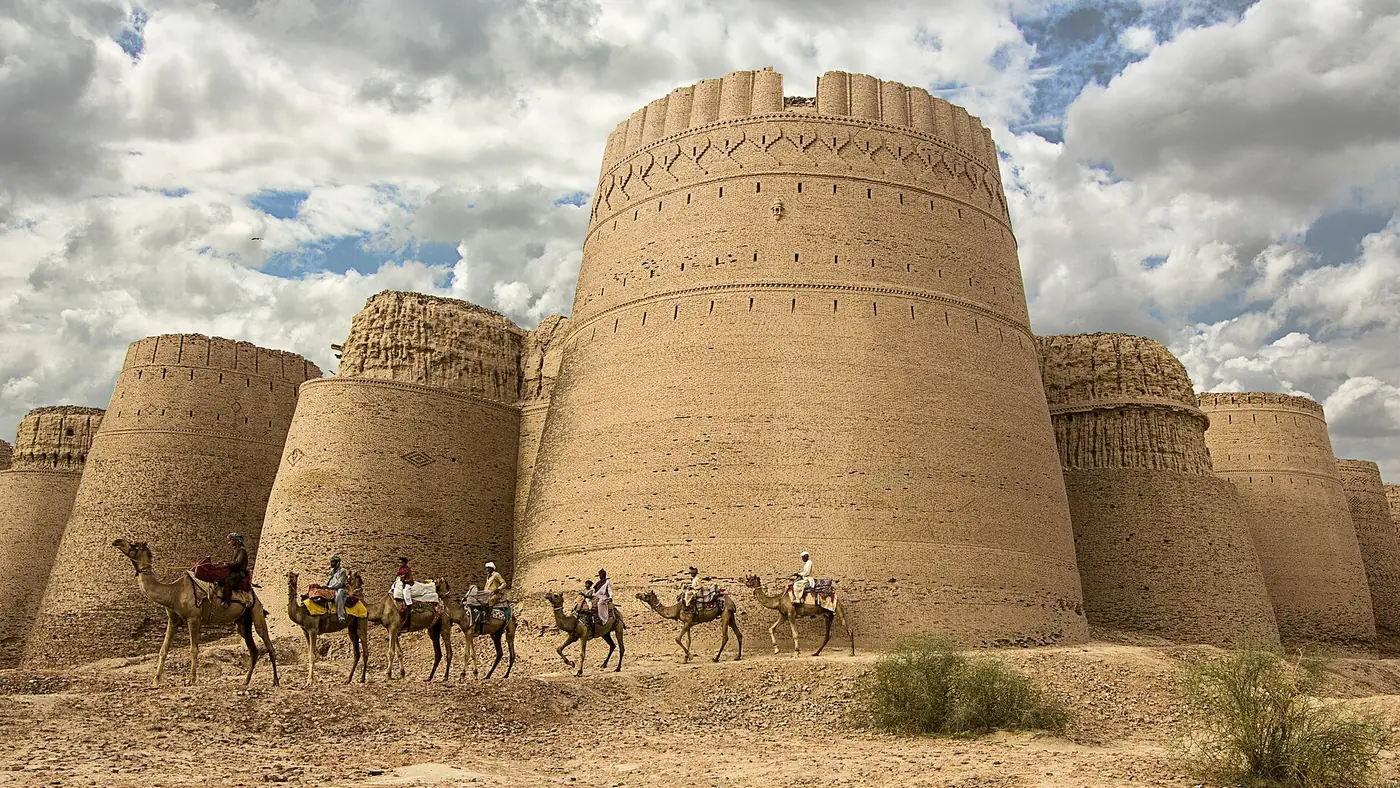
A Cholistan desert safari usually means a jeep trip out from Bahawalpur into the dunes around Derawar Fort, often combined with a camel ride and, on longer trips, a night camping under the stars. It can be done as a single day out or stretched into a multi-day trip with local operators. This guide explains what actually happens on a safari, what to expect it to cost, and how to choose an operator you can trust with a genuinely remote drive.
| At a glance | |
|---|---|
| Where | Cholistan desert, south of Bahawalpur, based around Derawar Fort |
| Typical format | Day safari, or overnight camping trip of 1 to 3 nights |
| Getting around | 4x4 jeep for the dunes, camel rides as an add-on |
| Best season | November to February; avoid the summer months entirely |
| Cost | Varies widely by group size, vehicle and duration; get a written quote before you go |
| Who to book with | An established Bahawalpur-based operator with proper vehicles and local knowledge |
What a desert safari actually involves
Most safaris start in Bahawalpur, drive out through Ahmadpur East and Dera Nawab Sahib on paved road, and then head into the open desert once the tarmac ends, usually somewhere around Derawar Fort or further out toward smaller forts and settlements. From that point a normal car can't manage the soft sand, which is why the jeep is the core of the experience rather than just transport.
A typical day safari includes some or all of the following:
- The drive out, on paved road as far as Derawar, with fuel and water stops in Ahmadpur East or Dera Nawab Sahib.
- Dune driving, once you leave the tarmac, usually with an experienced local driver who knows the terrain.
- A camel ride, offered by most operators as a slower, quieter way to see the dunes.
- A stop at a fort or settlement, often Derawar itself, sometimes one of the smaller forts further into the desert.
- Tea or a meal with a local family or camp, on trips that build this in.
- The return drive, timed to be back on paved road before dark.
Multi-day trips add overnight camping in the desert, usually in tents with basic bedding, an evening campfire, and sometimes music or dancing arranged by the camp. Our guide to the Cholistan Jeep Rally covers the much larger, organised motorsport event held every February, which is a different kind of trip from an ordinary safari and worth knowing apart from it.
Jeep safari or camel ride: which to choose
- Jeep safari covers more ground and reaches further into the desert, including forts and dune formations you can't walk or ride a camel to comfortably. It's the better choice if your time is limited.
- Camel ride is slower and shorter, usually offered as a loop near a camp or fort rather than a way to cover distance. It suits families with young children, older visitors, or anyone who wants a calmer, quieter experience of the dunes rather than a bumpy jeep ride.
Most operators offer both together: a jeep to get you out to a good spot, then a camel ride once you're there.
What it costs
Prices for Cholistan safaris vary a great deal depending on group size, the vehicle used, whether the trip is a single day or includes camping, and which operator you book with. We could not verify a reliable, current price range from official sources, and quoted prices online for similar desert trips elsewhere in Pakistan vary widely enough that printing a single figure here would be misleading.
What we can say: get a written quote before you travel that spells out exactly what's included, ask whether fuel, the camel ride, meals and camping gear are part of the price or extra, and be wary of a quote that seems far cheaper than everything else you've been offered, since it usually means an older vehicle, an inexperienced driver, or corners cut on water and safety.
Choosing an operator
This is a genuinely remote drive through soft sand with patchy mobile signal, so the operator matters more than on most day trips in Pakistan.
- Ask how long they've operated in Cholistan specifically, not just Pakistan tourism generally. Local knowledge of the dunes and the safe routes is not something a general tour company necessarily has.
- Check the vehicle. A 4x4 in good mechanical condition, with a driver experienced in dune driving, is not optional here; an ordinary car or an inexperienced driver in soft sand is how people get stuck or stranded.
- Confirm what's carried for emergencies: extra water, a means of communication beyond mobile signal, and a clear plan if a vehicle breaks down away from the road.
- Ask what happens with camping equipment on overnight trips: whether tents, bedding and cold-weather gear are provided or need to be brought, especially since desert nights are genuinely cold even in the warmer months.
- Get recommendations locally, through your hotel in Bahawalpur, rather than booking the first result you find online.
Best time for a safari
November to February is by far the best window, with mild days and manageable cold nights for camping. Avoid the summer months, May to September, entirely: Cholistan's heat in that period is dangerous rather than merely uncomfortable, and a breakdown far from the road becomes a real emergency rather than an inconvenience. Our guide to the best time to visit Cholistan covers the seasonal pattern in more detail, including the brief green window after the summer monsoon.
What to pack
- Water, well beyond what you think you'll need
- A hat, sunglasses and sunscreen
- A scarf or buff for dust and wind
- Warm layers for the evening and night, even in the cooler months
- Cash, since card payment is not realistic in the desert
- A charged power bank and a torch, given patchy signal and no street lighting
Is a Cholistan safari worth it?
Yes, for anyone who wants to see genuine open desert rather than just a fort from the road. Dune driving and a night under a clear desert sky are experiences with no real equivalent elsewhere in Pakistan. It suits travellers with a reasonable tolerance for basic camping conditions and a full day of heat and dust; it suits less well anyone expecting a polished, resort-style desert experience, or travelling with very young children on an overnight trip.
If you'd like help arranging a Cholistan safari as part of a wider Bahawalpur trip, tell us your dates and group size and we'll help you plan it.
Frequently asked questions
How much does a Cholistan desert safari cost?
It varies widely by group size, vehicle and duration, and we couldn't confirm a reliable current price range. Get a written quote that spells out exactly what's included before you book.
Do I need a 4x4 for a Cholistan safari?
Yes, once you leave the paved road near Derawar. An ordinary car cannot manage the soft sand, which is why safaris use jeeps with experienced local drivers.
Is camping in the Cholistan desert safe?
With an established operator and proper cold-weather gear, yes. Don't camp alone or with an unfamiliar operator; the desert is remote, with patchy mobile signal and cold nights even outside the height of winter.
When is the best time for a Cholistan desert safari?
November to February, when daytime heat is manageable and nights are cold but not extreme. Avoid the summer months, when temperatures make desert travel genuinely dangerous.
Can children do a Cholistan desert safari?
A day safari with a camel ride suits families well. Overnight camping is better suited to older children and adults, given the cold nights and basic facilities.
Where do most Cholistan safaris start from?
Bahawalpur, driving out through Ahmadpur East and Dera Nawab Sahib to the desert around Derawar Fort, where the paved road ends and the dune driving begins.