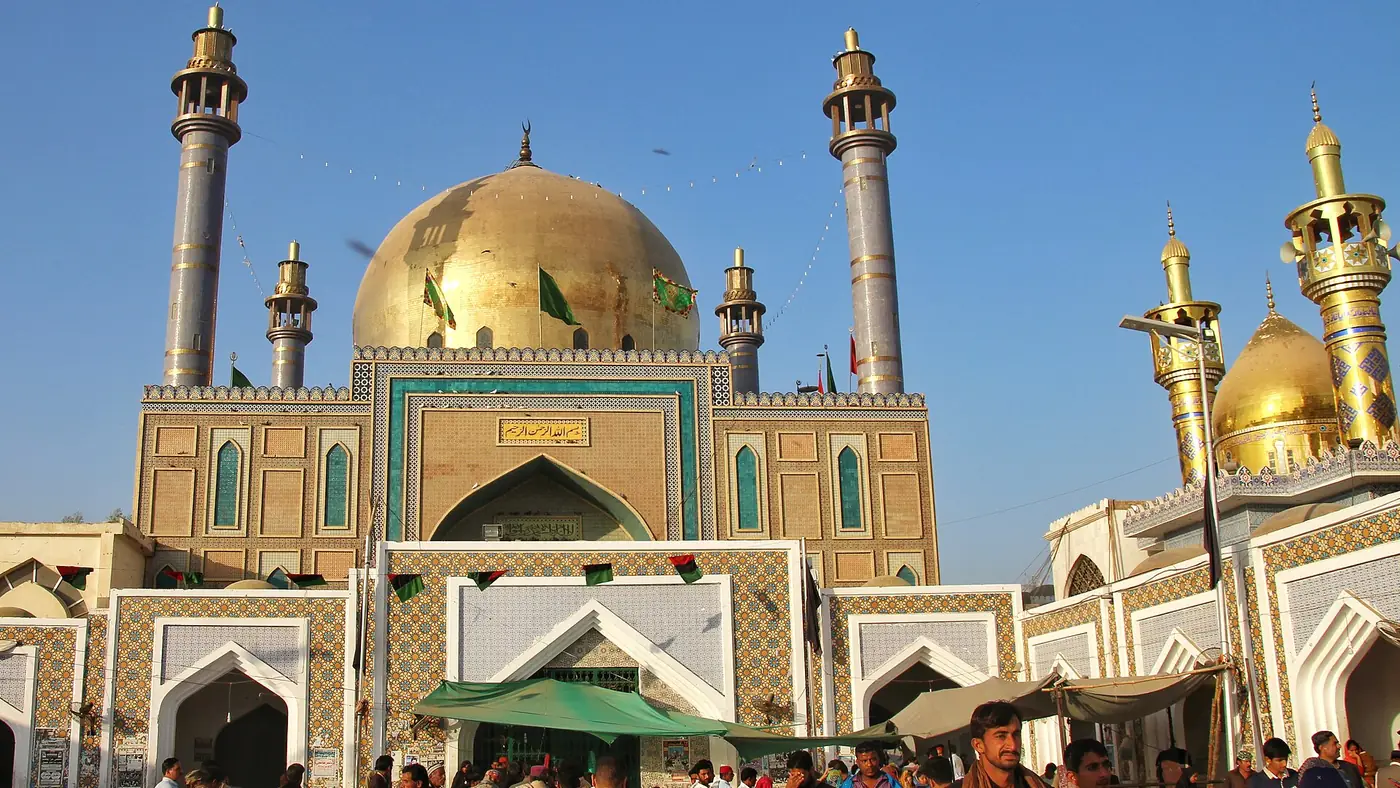
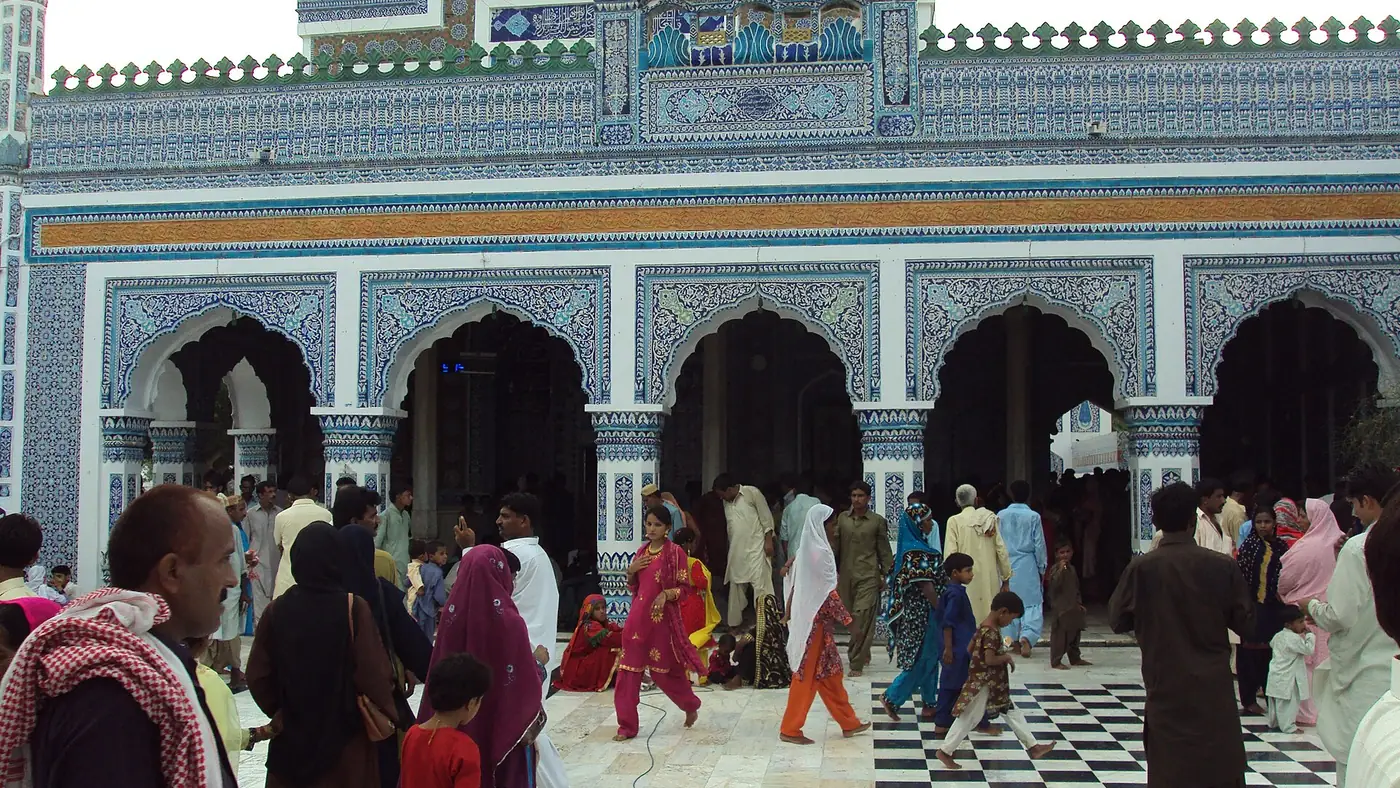
Bhit Shah is the small Sindh town built around the shrine of Shah Abdul Latif Bhittai, the 18th-century Sufi poet whose verse is still sung there every evening. It sits in Matiari district, about 45 to 50 kilometres from Hyderabad on a straightforward road, which makes it an easy half-day trip.
This guide covers the shrine itself, when the evening singing happens, the cultural centre next to it, and what to expect if you're visiting outside the annual urs.
| At a glance | |
|---|---|
| Location | Bhit Shah, Matiari district, Sindh |
| From Hyderabad | About 45 to 50 km, under an hour by road |
| Built | Completed 1792 |
| Daily singing | Shah Jo Raag, nightly after evening prayers |
| Annual urs | 13th of Safar (Islamic calendar), around 500,000 visitors |
| Dress | Modest, covered shoulders and legs; headscarf for women |
Who Shah Abdul Latif Bhittai was
Shah Abdul Latif Bhittai (1689–1752) is generally regarded as the greatest poet of the Sindhi language. His collected verse, the Shah Jo Risalo, is built around a set of musical modes called surs, many of them drawing on Sindhi folk stories, and it remains central to Sindhi culture well beyond Bhit Shah itself. The town takes his name; "bhit" refers to the sand dune the shrine and settlement were built on.
The shrine
The shrine complex was completed in 1792, combining a mosque and a mausoleum around a large courtyard ringed with domed arcades. Its most distinctive feature is the tilework: blue-and-white floral Sindhi tiles cover much of the interior and exterior, in a style specific to this part of Sindh rather than imported from elsewhere.
Visitors are free to walk the courtyard and approach the tomb chamber. As at any working shrine, keep voices down near the grave itself and follow the lead of the people around you rather than photographing pilgrims up close without asking.
Shah Jo Raag: the evening singing
The shrine's best-known daily event is the Shah Jo Raag, sung after evening prayers by faqirs, traditionally dressed in black, who sit in a semicircle before the tomb and sing Shah Abdul Latif's poetry to a tamboura. This practice is said to go back to the poet's own lifetime, when he sang with his followers, and it continues nightly rather than only on special occasions. Thursday evenings tend to draw a larger local crowd, as they do at many Sindhi and Punjabi shrines.
If the reason for your visit is to hear the raag rather than just see the shrine, plan to arrive in the early evening and stay past sunset; there is no fixed clock time published for it, since it follows the prayer schedule.
The Shah Jo Risalo
Shah Abdul Latif Bhittai's collected verse, the Shah Jo Risalo, is organised into musical chapters called surs, each built around a specific melody and often woven through the voice of a folk heroine, drawing on Sindhi legends such as Sassui-Punhun and Sohni-Mehar to carry its spiritual themes. It's this structure, poetry written to be sung rather than only read, that connects directly to what happens at the shrine every evening: the faqirs performing Shah Jo Raag are working through the same surs, in the tradition the poet himself is said to have started. Knowing this before you go makes the nightly singing easier to place, even without following the Sindhi lyrics.
The Bhit Shah cultural centre
Next to the shrine is a small complex built around the poet's legacy rather than the tomb itself: the Shah Abdul Latif Library, established in 1991 with several thousand books in Sindhi, Urdu and English, and the Bhit Shah Museum, which displays material related to his poetry and its performance. Neither takes long to see, but they're worth the extra half hour if you want context for what you've just heard at the shrine.
Etiquette for visitors
- Dress modestly. Shoulders and legs covered for everyone, and women should carry a headscarf even if you don't wear one day to day; it is expected inside the shrine itself.
- Remove shoes before entering the tomb chamber, as at any shrine.
- A chadar (a cloth sheet, often green with gold or silver thread) is the standard offering at the tomb, sold by stalls near the entrance if you want to bring one.
- Photography of the shrine's architecture is generally fine; photographing individual pilgrims up close is not, unless you ask first.
- Fridays and Thursday evenings are busier than the rest of the week, which is worth knowing if you want a quieter visit.
The annual urs
Bhit Shah's urs, marking the poet's death, falls on the 13th of Safar in the Islamic calendar and draws roughly half a million visitors over three days. Because the Islamic calendar is lunar, the Gregorian date shifts by around 11 days each year, so check the current year's date rather than assuming it matches a previous visit. Accommodation in the town itself is very limited even outside the urs, and effectively unavailable during it, so day-trippers from Hyderabad are the norm rather than the exception.
Getting there from Hyderabad
The road from Hyderabad to Bhit Shah runs through Matiari, is paved and generally in reasonable condition, and takes under an hour without stops. A hired car or taxi from Hyderabad is the simplest way to do it as a half-day out; there is no dedicated tourist transport, but local vans and buses running along the Hyderabad–Matiari road also pass close to the town, and a rickshaw or local taxi from Matiari town covers the last short stretch.
Bhit Shah is also a reasonable stop if you are travelling further north towards Sehwan Sharif, which sits roughly 125 kilometres beyond it; the two shrine towns are often mentioned together, but visiting both properly, including an evening at each, is really a two-day trip rather than one.
Is it worth the detour?
For anyone interested in Sindhi culture or Sufi shrines specifically, yes, and the evening raag is the reason to go rather than the tomb's architecture alone, striking as that is. If your schedule only allows a single old-city stop in this part of Sindh and you're not particularly drawn to the music side of it, Hyderabad's own sights or Sehwan Sharif, further north, may suit better. Bhit Shah rewards an evening visit specifically; arriving at midday and leaving before the singing starts misses most of what makes it distinctive.
Frequently asked questions
How far is Bhit Shah from Hyderabad?
About 45 to 50 kilometres, under an hour by road via Matiari.
What time does the Shah Jo Raag singing happen at Bhit Shah?
Nightly, after evening prayers. There is no fixed clock time since it follows the prayer schedule, so arrive in the early evening and expect to stay past sunset.
Is there a dress code at Bhit Shah shrine?
Yes. Shoulders and legs covered for all visitors, and women should carry a headscarf to wear inside the shrine.
Can I stay overnight in Bhit Shah?
Accommodation in the town is very limited, so most visitors do it as a day trip from Hyderabad rather than staying over, especially around the annual urs when rooms are effectively unavailable.
When is the Bhit Shah urs?
On the 13th of Safar in the Islamic calendar, which shifts by about 11 days earlier each Gregorian year. Check the specific date for the year you're travelling.