
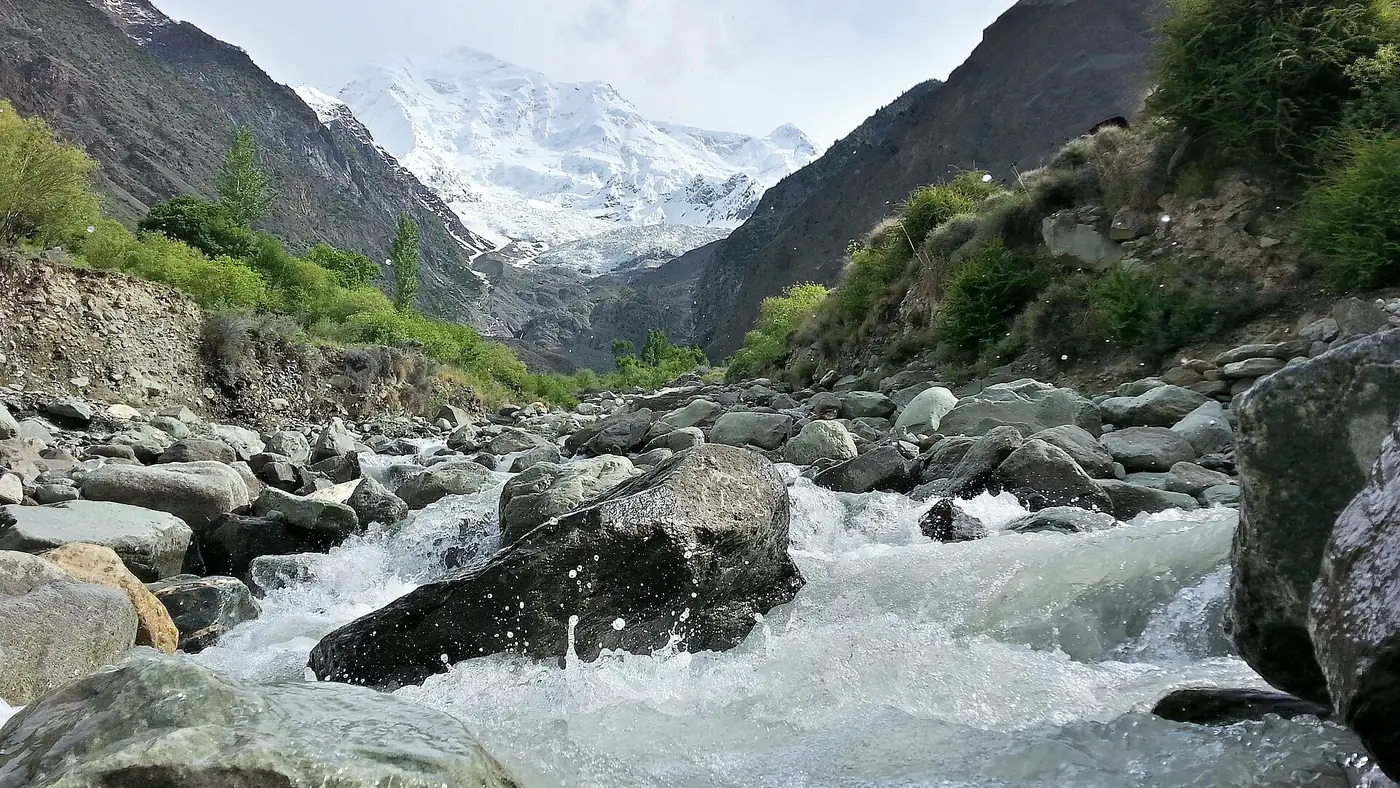
The best side to sit on a Gilgit or Skardu flight is the right-hand side when flying north from Islamabad and the left-hand side when flying back, because that is the side Nanga Parbat passes on. On the Airbus used to Skardu that means seat F going up and seat A coming down. There is one catch on the Skardu route: K2 and the rest of the Karakoram appear on the other side, so the choice depends on which mountain you care about most.
This guide gives the side for each route and direction, a timed log of what appears where on the Skardu flight, how to pick a row, and why none of it works on a cloudy day.
Quick reference
| Route | Nanga Parbat | K2 and the Karakoram |
|---|---|---|
| Islamabad to Skardu | Right (F seats) | Left (A seats) |
| Skardu to Islamabad | Left (A seats) | Right (F seats) |
| Islamabad to Gilgit | Right | Not on this route |
| Gilgit to Islamabad | Left | Not on this route |
Weather now in Skardu 2,226 m
Live weather loads here.
When it snows: Winter sets in during December, with snow possible in the town; Deosai is closed until June. More on the seasons
Forecast from MET Norway (CC BY 4.0), updated every 30 minutes. Mountain weather changes fast: check again before you set off.
Islamabad to Skardu
Flying north from Islamabad to Skardu, Nanga Parbat appears on the right-hand side of the aircraft. On the return leg from Skardu to Islamabad the route is flown in reverse, so the mountain comes up on the left-hand side. The route is flown with Airbus A320 jets, six seats across, so the window seats are A on the left and F on the right.
A flight report published by a tour operator, from a clear morning in April 2025, shows how the flight unfolds. The times are after a 10:10 am take-off.
| Minutes after take-off | What appears | Side |
|---|---|---|
| About 9 to 10 | Tarbela Dam and the Indus | Left (A) |
| About 10 | Tirich Mir, the highest peak of the Hindu Kush, in the distance | Left (A) |
| About 26 to 27 | Nanga Parbat, close to the aircraft | Right (F) |
| About 28 | Rakaposhi, beyond the Hunza valley | Left (A) |
| About 33 | Baintha Brakk and the Latok group, above the Biafo glacier | Left (A) |
| About 34 to 35 | K2 and Broad Peak, partly hidden | Left (A) |
| On the approach | Satpara Lake | Right (F) |
| About 42 | Landing at Skardu |
Two things follow from that log. First, Nanga Parbat is the one mountain the flight passes really close to, and it is on the right, which is why most guides recommend the right. Second, the left side has more to look at over the whole flight, but at a greater distance, and K2 in particular is often hidden by cloud and appears only briefly near the end.
Our advice: if this is your first flight, take the right side for Nanga Parbat. If you are flying both ways, sit on the right going up and the right again coming back, and you will have seen both sets of mountains.
Islamabad to Gilgit
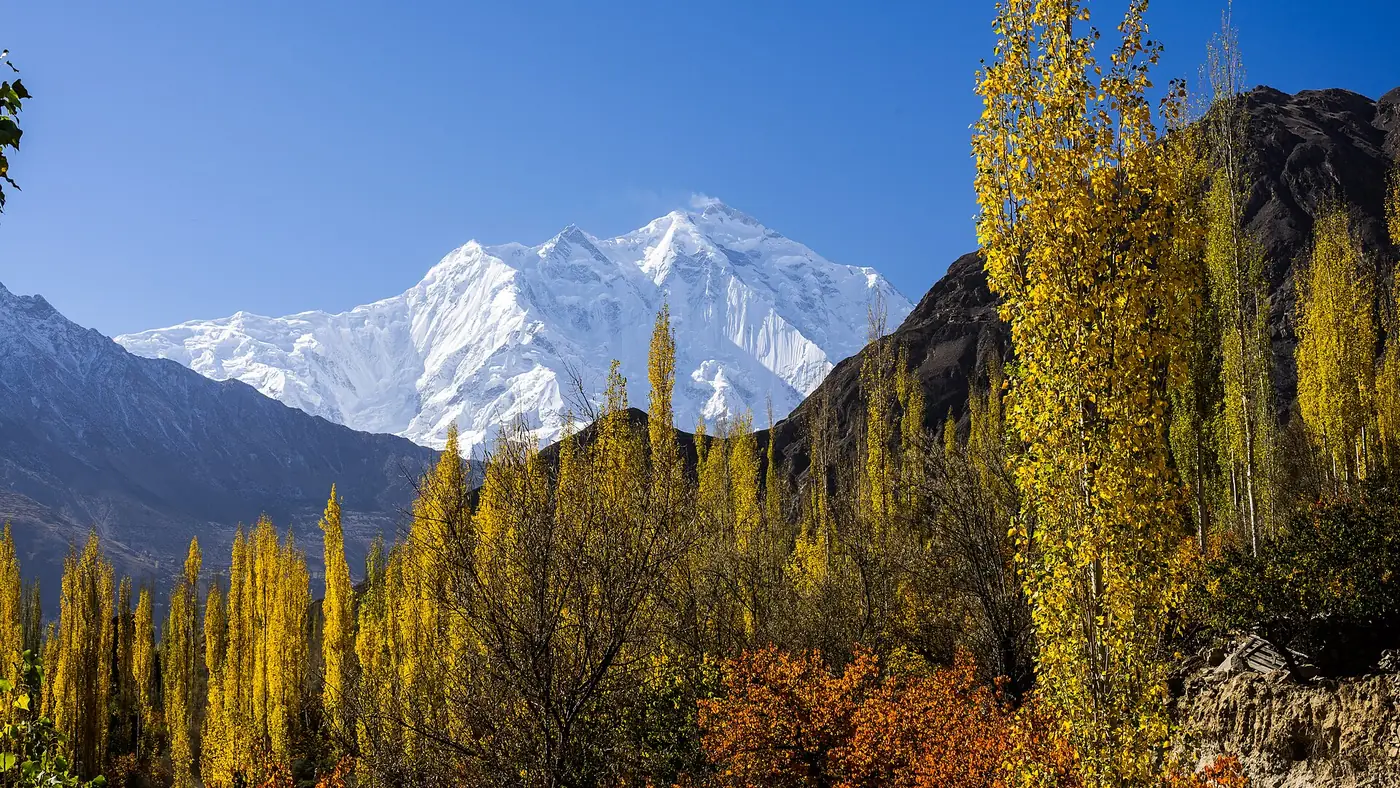
The Gilgit route runs further west, up the line of the Kaghan valley and past Nanga Parbat before dropping into the Gilgit valley. Nanga Parbat lies to the east of that track, so on the outbound Islamabad to Gilgit leg it is on the right-hand side. Flying from Gilgit back to Islamabad, passengers on the left-hand side get the mountain, and accounts of the flight also mention Babusar Top, Lulusar Lake and Saif-ul-Malook passing below, in roughly the reverse order of a road trip up the valley.
Gilgit's airport sits in terrain too tight for a jet. Its runway is 5,400 feet long and is not aligned with the valley, so the route is flown with ATR 42 turboprops, which seat about 48 and have two seats on each side of the aisle. Two details of the aircraft help photographers. The ATR's wing is mounted on top of the fuselage, so it never blocks the view downwards, and the aircraft cruises lower than a jet, so the mountains feel closer. The propellers are level with a few rows towards the front of the cabin, so a seat further back has the cleaner view.
Choosing a row, not just a side
- On the A320 to Skardu, avoid the rows over the wing, roughly the middle third of the cabin. Rows near the front or the back give a clear view down and to the side.
- On the ATR to Gilgit, avoid the forward rows level with the propellers.
- Pick the seat when you book if the airline's website lets you, and check it again at online check-in. If neither works, ask at the airport counter; seats on the mountain side go first on a clear morning.
- Clean the window with a tissue before take-off and hold the phone close to the glass to cut reflections.

Why this only works some of the time
Weather is the real deciding factor, not seat choice. Both routes are flown visually through mountain terrain, so flights are frequently delayed or cancelled when cloud sits over the valleys, and a clear day can turn hazy by the time you board. If a Gilgit flight cannot land, the aircraft normally returns to Islamabad instead of diverting elsewhere.
Choosing the right side is worth doing, but it is not a guarantee of a view. Our guide to Gilgit and Skardu flight cancellations covers what to do if the weather does not cooperate.
Tips for getting the view
- Morning flights generally have better visibility, since cloud tends to build over the mountains as the day warms.
- Keep your phone ready from about twenty minutes after take-off. On the Skardu flight Nanga Parbat comes a little under half an hour in and is gone in a minute or two.
- Do not fixate only on Nanga Parbat. Both routes pass a wide sweep of Himalayan and Karakoram peaks, and on a clear day there is something to see from either side.
- Flights from Lahore or Karachi to Skardu approach by a different track for part of the way. We could not find a reliable account of the views on those routes, so the table above applies to Islamabad flights only.
Is the flight worth it over the road?
For the view alone, yes, if the weather holds. The Skardu flight is 45 minutes to an hour in the air, against two days by road, and it shows more of the high peaks than the drive does. The trade-off is reliability. If your dates are fixed and you cannot afford a delay, build a spare day into your plan either way.
If you drive instead, note that the UK government advises against all travel on the Karakoram Highway between Mansehra and Chilas; the Babusar Pass route avoids that stretch in summer, and foreign-passport holders should check their own government's advice, because it can affect insurance. Our guides to the Islamabad to Skardu flight and the Islamabad to Gilgit flight cover the flights themselves, and our pages on Skardu and Gilgit and Hunza cover what to do when you land.
Frequently asked questions
Which side should I sit on flying Islamabad to Skardu?
The right side, seat F, for Nanga Parbat. The left side, seat A, is better for K2, Rakaposhi and the Karakoram, which are more distant and more often in cloud.
Which side should I sit on flying Skardu to Islamabad?
The left side, seat A, for Nanga Parbat. It is the same view as the outbound flight, in reverse.
Which side should I sit on flying Islamabad to Gilgit?
The right side outbound to Gilgit and the left side on the return flight to Islamabad.
Can you see K2 from the Skardu flight?
Sometimes. It appears on the left side shortly before landing at Skardu, but it is far away and often hidden by cloud.
What aircraft flies to Gilgit and Skardu?
Skardu is served by Airbus A320 jets. Gilgit's short runway means it is served by ATR 42 turboprops.
Is the mountain view guaranteed?
No. Both flights depend on clear weather, so cloud regularly blocks the view and can cause delays or cancellations whichever seat you choose.


