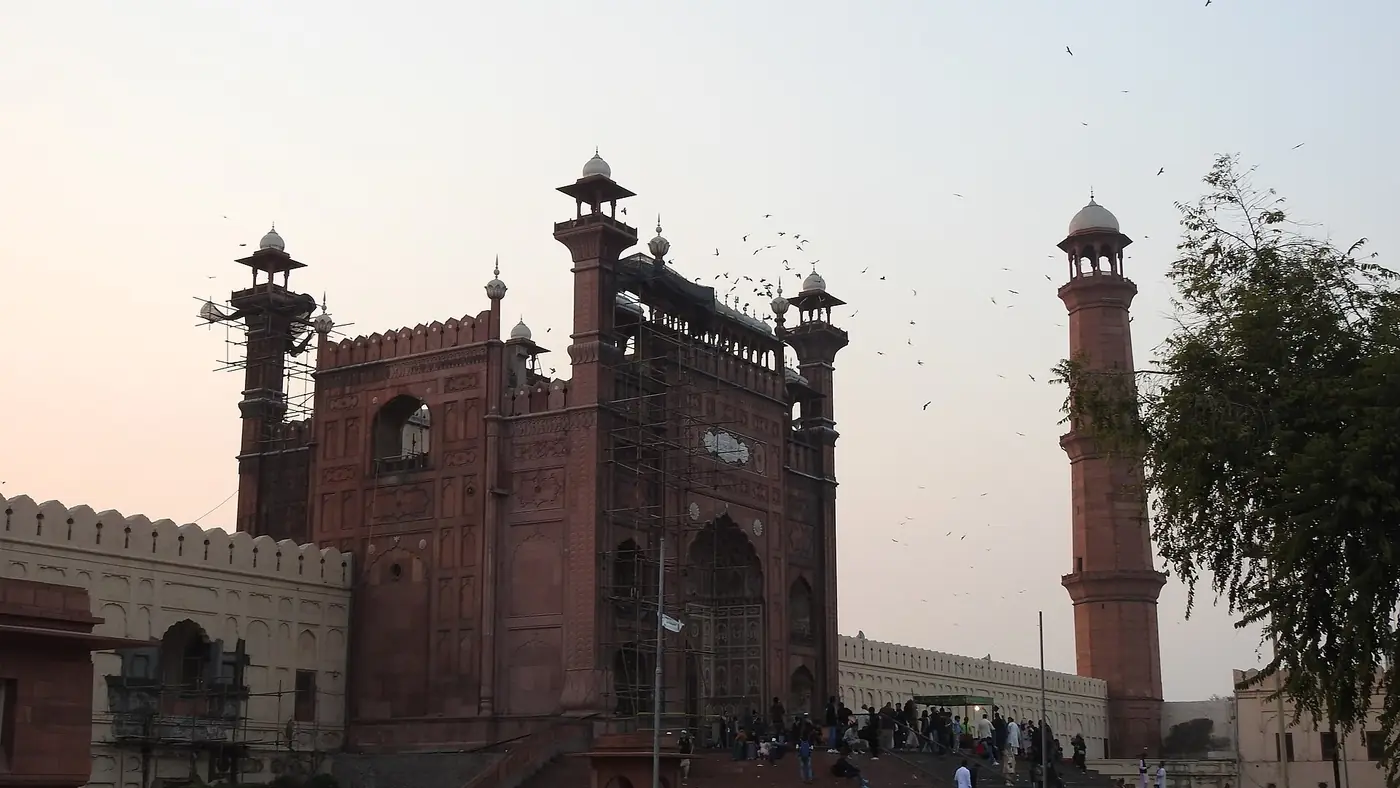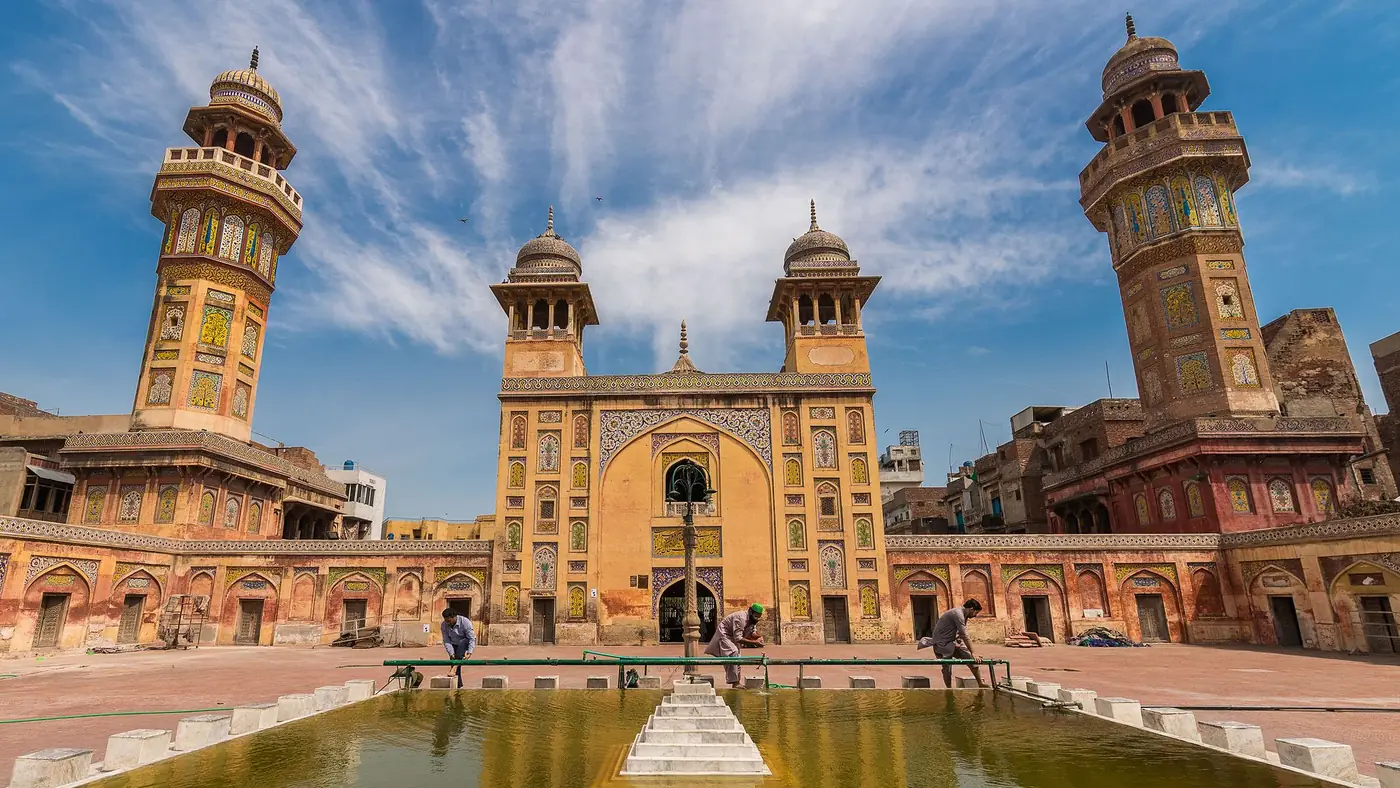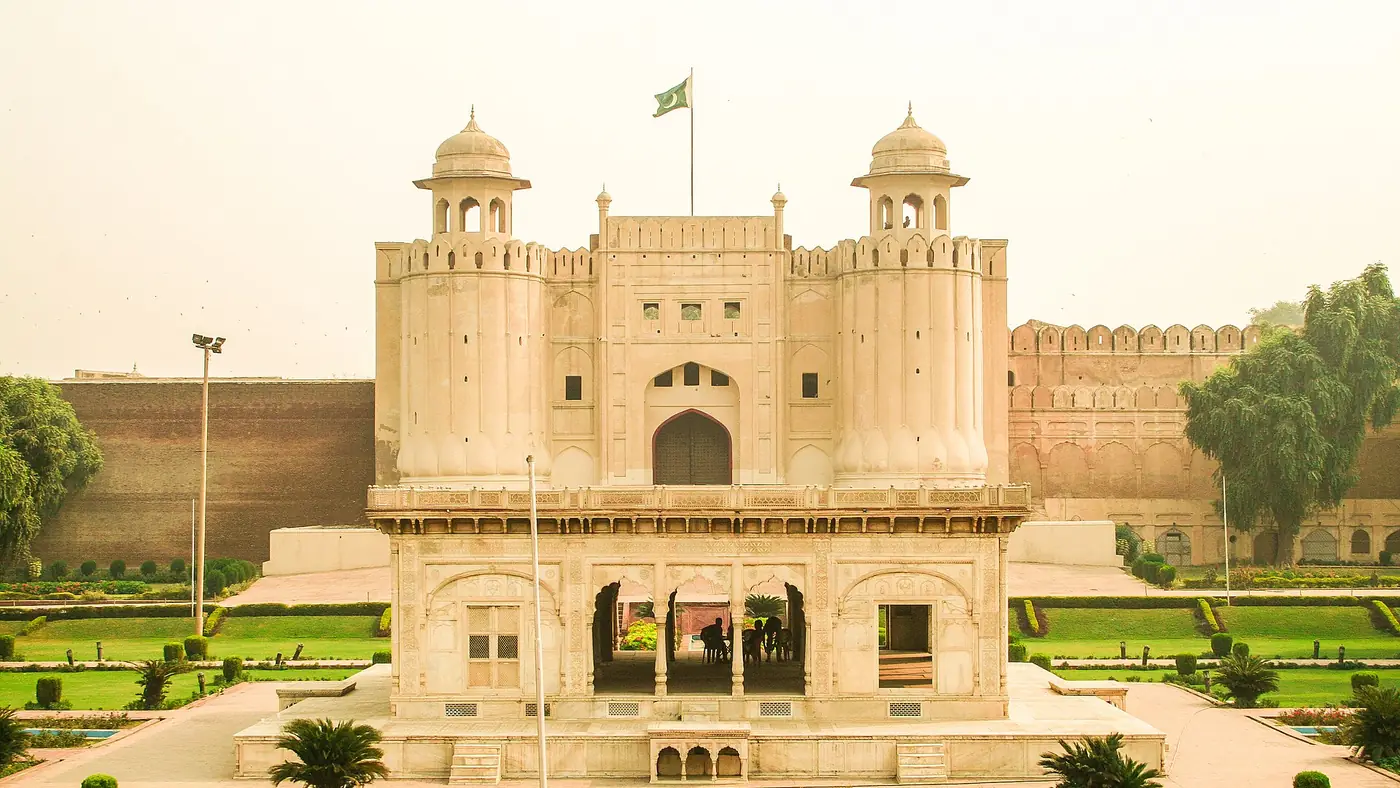
The Walled City of Lahore originally had 13 gates, built up under the Mughals to control who and what moved in and out after dark. Six survive today in something like their old form — Delhi, Bhati, Lohari, Kashmiri, Roshnai and Shairanwala — while the other seven were demolished, burned or simply crumbled away over the last two centuries, leaving only their names attached to the neighbourhoods around them.
This guide goes through all 13 gates, what each name meant, which ones you can still walk through, and a route that links the survivors in a single morning.
| At a glance | |
|---|---|
| Original number of gates | 13, plus a smaller opening, Mori |
| Still standing | 6: Delhi, Bhati, Lohari, Kashmiri, Roshnai, Shairanwala |
| Lost or demolished | 7: Akbari, Masti, Mochi, Mori, Shah Alam, Taxali, Yakki |
| Built under | Mainly Akbar's reign (1556–1605), with later rebuilding |
| Largely torn down by | The British, after 1849, for security |
| Best walk | Delhi Gate to Lohari Gate via Bhati Gate, about 2 to 3 hours |
Why Lahore had 13 gates
The Mughal walled city was ringed by a wall with 13 named gates and a smaller drainage opening, Mori, through which the city was entered, left and, at night, sealed off entirely for security. Most of the gates visible before the colonial period date to rebuilding under Akbar in the late 16th century, though the layout of the old city is older still.
After the British took Lahore in 1849, they demolished the walls and all the gates except one, Roshnai Gate, to remove any defensive value the old fortifications still held. What remains of the "wall" today is mostly a ring road and a strip of garden. Some gates were later rebuilt, in varying degrees of faithfulness to the original; others were never replaced.
The gates, one by one
| Gate | Status today | What the name means or comes from |
|---|---|---|
| Delhi Gate | Standing | Faced east, towards Delhi, the old Mughal capital |
| Bhati Gate | Standing | The Bhatti Rajput clan who lived near it |
| Lohari Gate | Standing, rebuilt | The city's blacksmiths (lohar) |
| Kashmiri Gate | Standing | Faced the road north towards Kashmir |
| Roshnai Gate | Standing, original | "Gate of light"; lit for worshippers walking to the Badshahi Mosque |
| Shairanwala Gate | Standing, rebuilt | Caged tigers (sher) kept here under Ranjit Singh's Sikh rule |
| Akbari Gate | Lost | Named for Akbar; stood near the Akbari Mandi market |
| Masti Gate | Lost | Said to be named for a royal servant, Masti Baloch |
| Mochi Gate | Lost | Traditionally linked to a soldier, Moti Ram; the name survives in Mochi Bagh |
| Mori Gate | Lost | A small drainage opening rather than a full gate; "mori" means a hole |
| Shah Alam Gate | Lost, burned 1947 | Aurangzeb's son, Shah Alam |
| Taxali Gate | Lost | A royal mint, taxali, once stood nearby |
| Yakki Gate | Lost | Pir Zakki, a guard remembered for defending the city |
The six gates still standing
Delhi Gate, on the east side, is the busiest and the natural starting point for a walk into the old city; it opens onto the restored first stretch of the Royal Trail towards the Wazir Khan Mosque. Bhati Gate, on the west, is a lively food and market area in its own right and the gate nearest Data Darbar. Lohari Gate, to the south-west, was rebuilt by the British as a plainer structure than the original and now sits amid a dense food and metalwork market. Kashmiri Gate, on the north side, opens onto Kashmiri Bazaar, a cloth and household goods market that runs most of the way to the fort.
Roshnai Gate, between the Lahore Fort and the Badshahi Mosque, is the one gate that was never demolished, and it is generally reckoned the most authentic of the six in its original form. Shairanwala Gate, on the north side near the fort, was rebuilt and renamed after Ranjit Singh kept caged tigers there in the Sikh era; it was originally called Khizri Gate.
The seven gates that are gone
The other seven survive only as place names. Akbari Gate, near the Akbari Mandi cloth and dry-fruit market, fell into disrepair and was never properly rebuilt after British-era renovation. Masti Gate and Mochi Gate, both near the fort side of the old city, were demolished with no structure remaining, though Mochi Gate's name lives on in Mochi Bagh, long used for large public gatherings. Mori Gate was always the smallest, a drainage opening rather than a proper gateway, and has left the least trace. Shah Alam Gate burned down in the communal riots before independence in 1947, and the busy Shah Alam Market nearby still carries its name. Taxali Gate, named for a former royal mint, is now known mainly for its breakfast food stalls rather than any surviving structure. Yakki Gate, on the east side, has also vanished entirely from the streetscape.
Are any of the lost gates being rebuilt?
In 2025 the Punjab government approved plans, led by the walled city's heritage authorities, to rebuild several of the lost gates, including Akbari, Yakki, Mochi and Shah Alam, as part of a wider multi-billion-rupee restoration of the old city's rampart, gates and public spaces. The work covers original-design research for each gate and a new circular rampart walk, but no fixed completion date has been announced, so treat any of the lost gates as still absent until you see otherwise on the ground.
A walking route linking the surviving gates
You cannot walk the old city walls themselves, since almost nothing of them remains, but you can link most of the surviving gates in a single loop of two to three hours:
- Start at Delhi Gate and walk the restored Royal Trail west towards the Wazir Khan Mosque and Kashmiri Bazaar.
- Detour north to Kashmiri Gate at the top of the bazaar, then double back.
- Continue past the fort to Roshnai Gate and Shairanwala Gate, both close together near the Lahore Fort and Badshahi Mosque.
- Cross south-west through the bazaars to Bhati Gate, allowing time for food along the way.
- Finish at Lohari Gate, a short walk further south, where the metalwork and food shops make a natural place to stop.
This route follows working bazaars rather than a marked trail, so a good offline map or a local guide helps once you are past Kashmiri Gate. Our Walled City of Lahore guide covers the Royal Trail itself, the Shahi Hammam and the Wazir Khan Mosque in more detail, and pairs well with this gate-by-gate route.
Frequently asked questions
How many gates does the Walled City of Lahore have today?
Six of the original 13 gates still stand in some form: Delhi, Bhati, Lohari, Kashmiri, Roshnai and Shairanwala. The other seven were demolished or destroyed and survive only as place names.
Which is the oldest gate of Lahore?
Lohari Gate is usually described as the oldest of the 13, named after the city's blacksmiths, though the structure standing today is a British-era rebuild rather than the original.
Which Lahore gate has never been demolished?
Roshnai Gate, between the Lahore Fort and the Badshahi Mosque, is the only one of the 13 that the British left standing in 1849 and that has never been rebuilt from scratch.
Why did the British demolish Lahore's gates?
After annexing Punjab in 1849, the British tore down the walls and all but one gate to strip the old city of any defensive value it still held, as part of securing the wider garrison city they were building around it.
Can you still see all 13 gates of Lahore?
No. Only six stand today. The other seven — Akbari, Masti, Mochi, Mori, Shah Alam, Taxali and Yakki — are gone, though their names remain attached to the markets and neighbourhoods around where they stood.