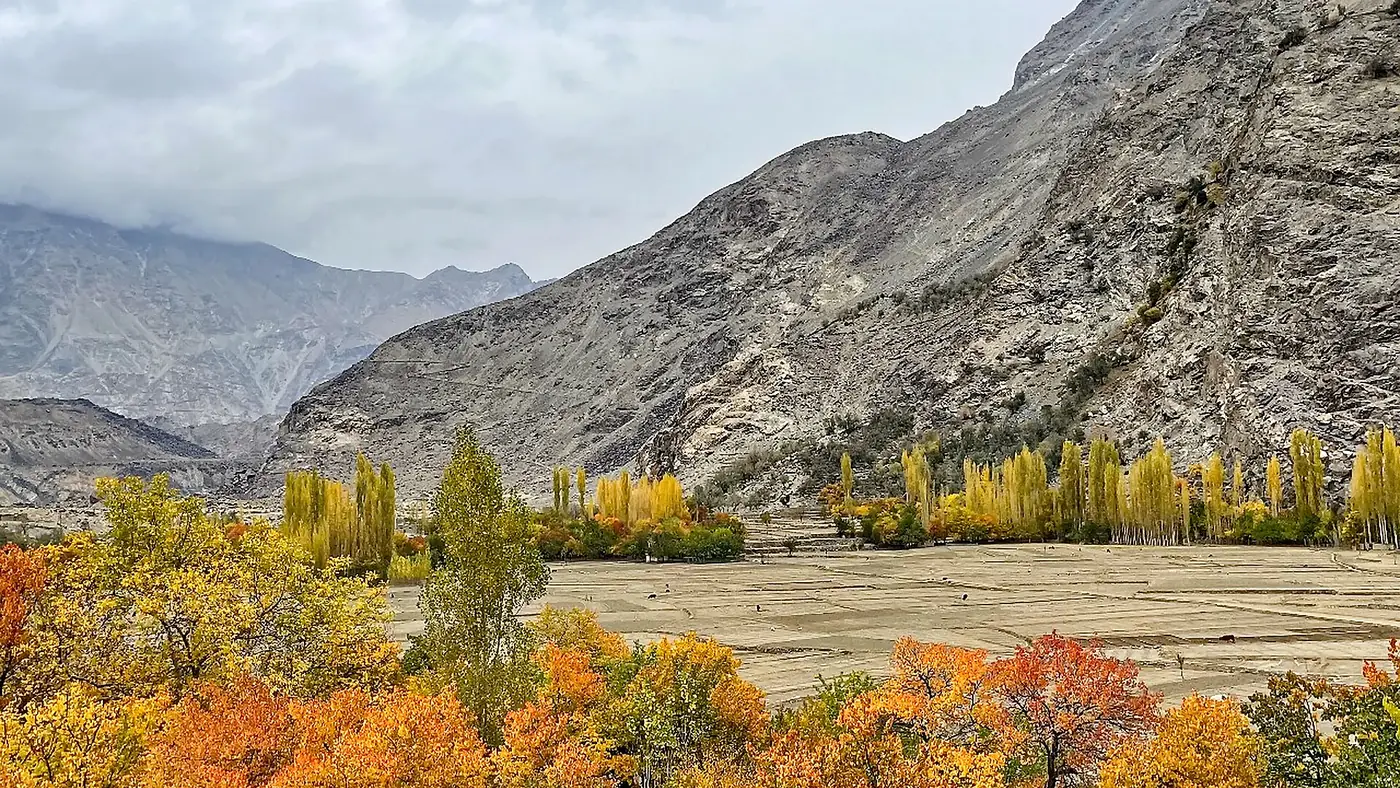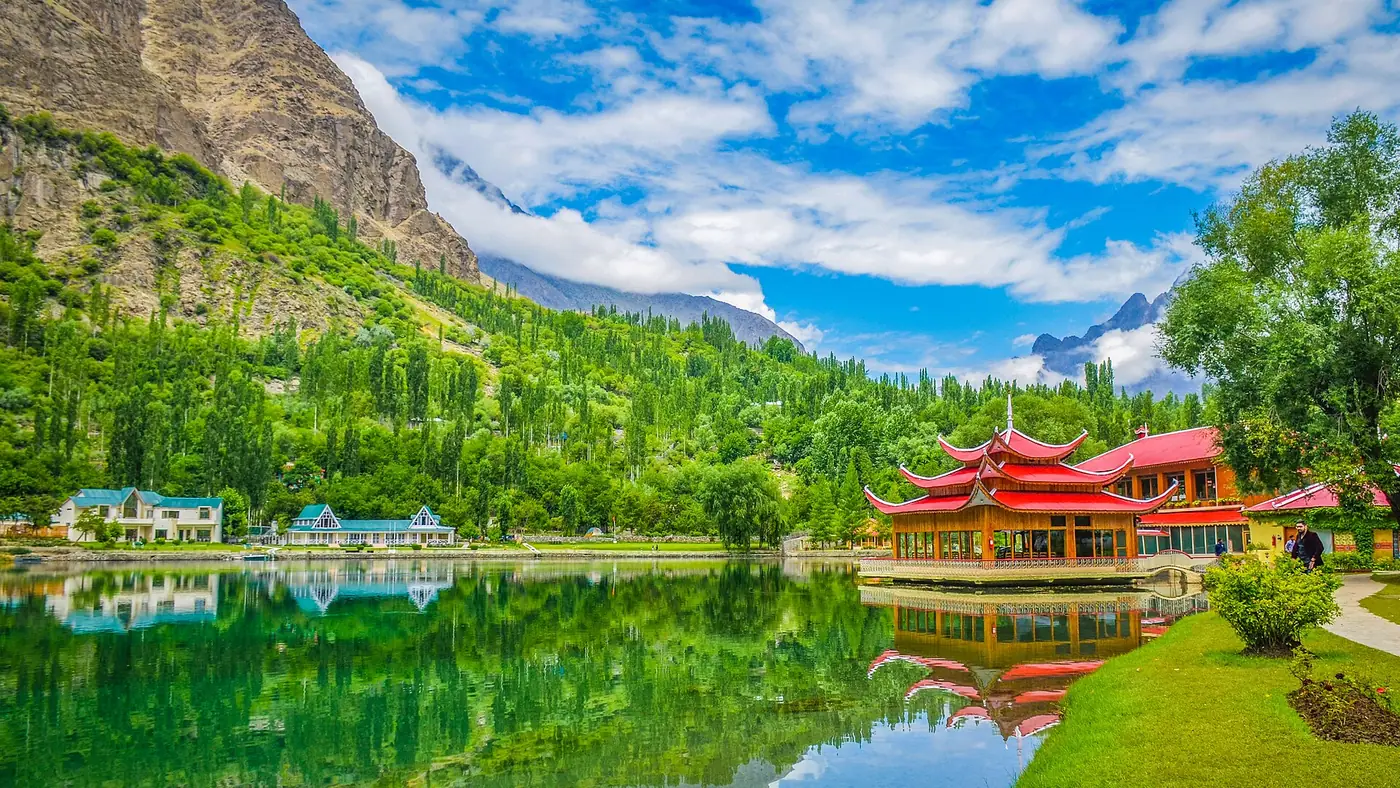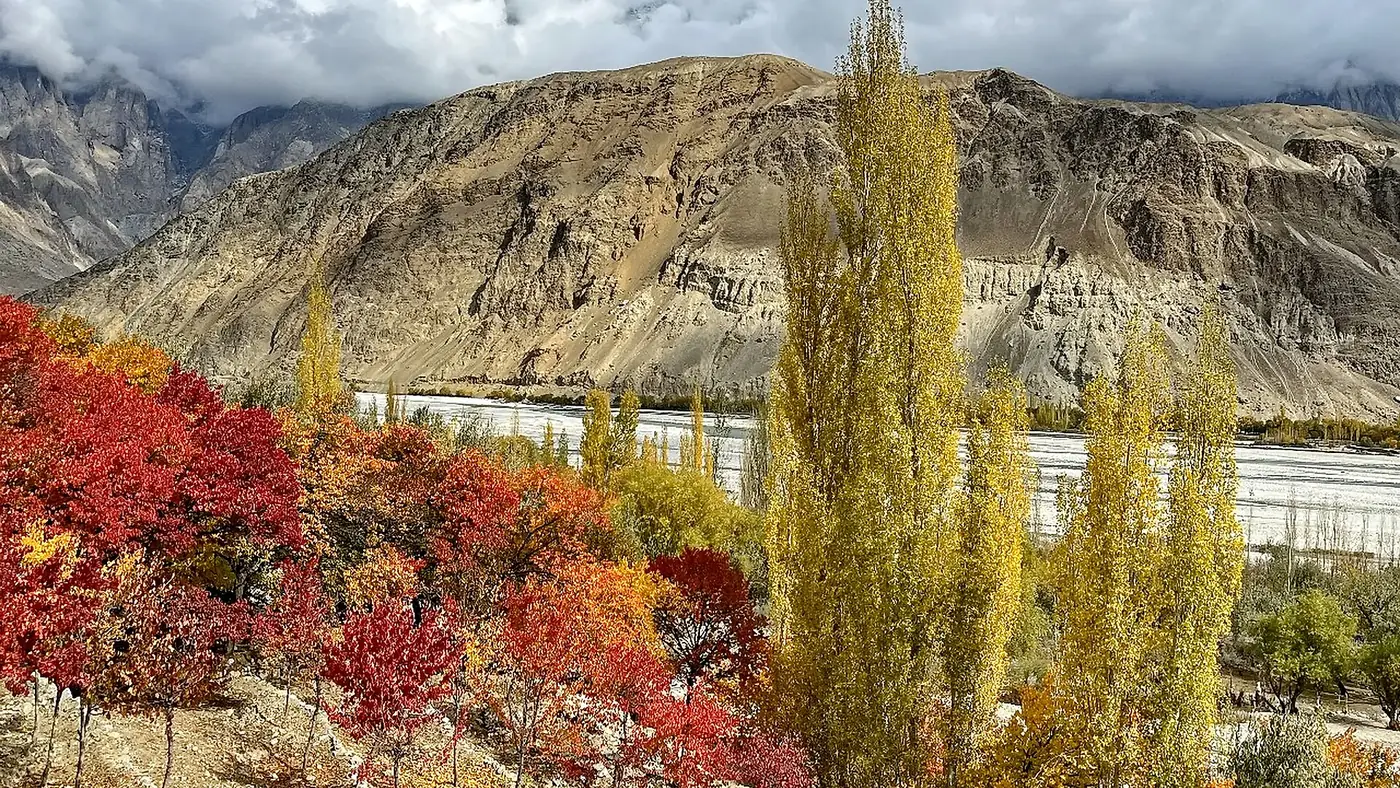
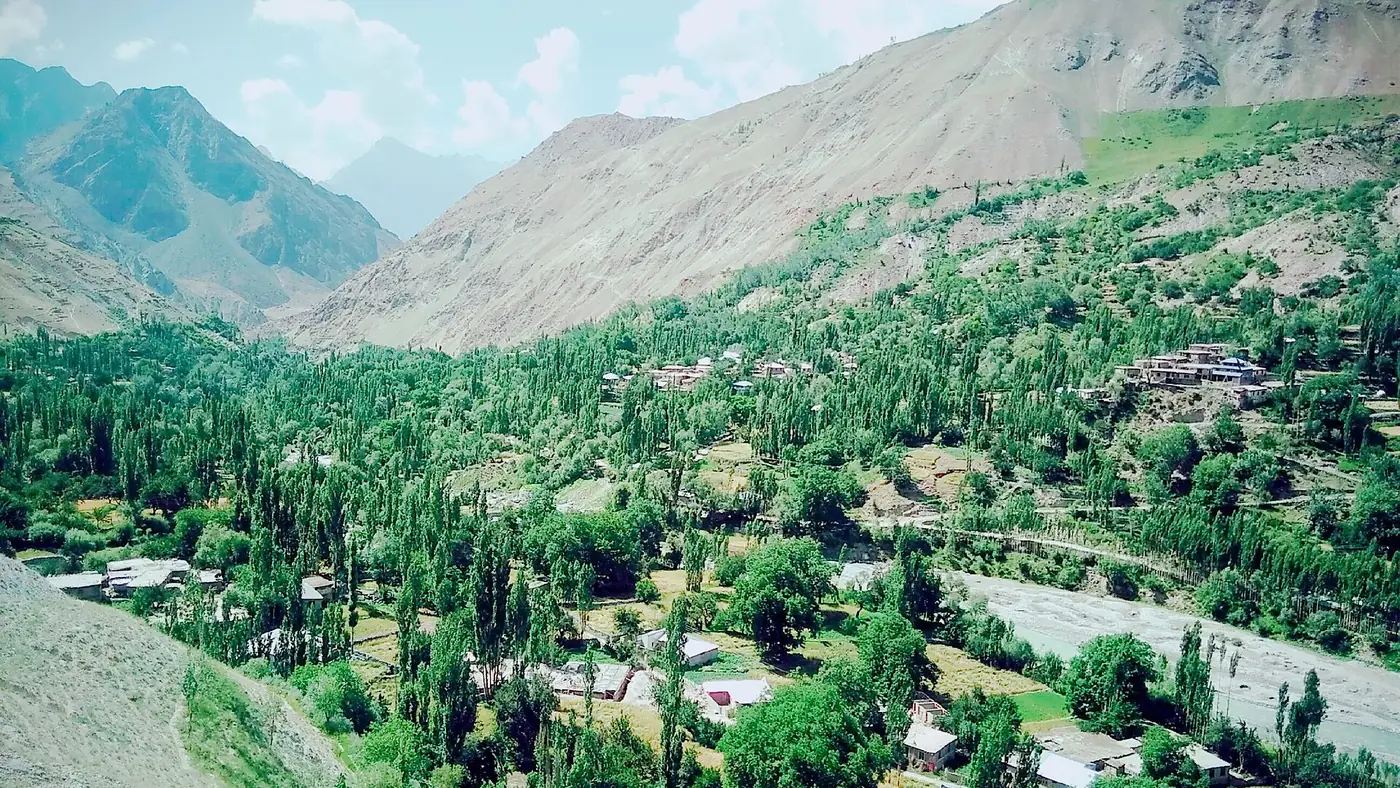
Stak Valley, also written Stak Nala, is the largest side valley of Roundu, on the right bank of the Indus between Skardu and Gilgit. It is a working farming valley rather than a tourist stop, and that is its appeal: strung-out stone villages, terraced fields and glacier-fed streams below the Haramosh range, with almost none of the traffic that Hunza or Skardu see in summer.
This guide covers where Stak is, its villages, how to get in, and the summer trekking link over to Tormik valley.
| At a glance | |
|---|---|
| Where | Roundu, Skardu district, on the right bank of the Indus between Skardu and Gilgit |
| Access | Turn off the Skardu-Gilgit road at Roundu, then a jeep track up the Stak river |
| Best time | June to September |
| What's there | A string of stone villages, terraced fields, glaciers below Haramosh |
| Trekking link | Stak La pass (about 4,600 m) to Tormik valley, July to mid-September only |
| Facilities | Basic; no hotels, carry what you need |
Where is Stak Valley?
The Stak river drains south off the Haramosh massif and joins the Indus in Roundu, the district carved out of Skardu in 2019 that covers the stretch of the Indus gorge between Skardu and Gilgit. The valley runs roughly 30 km up from the Indus, with the Stak river splitting it into two lines of villages on either bank.
Haramosh Peak, at 7,397 metres, sits at the head of the valley, and its glaciers, including the Kutia Lungma, feed the river. This is genuinely remote country: Askore and Thowar lie to the east, and Ganji valley is across the Indus to the south.
The villages
Stak is a collection of small settlements rather than one village. On one side the string runs from Rgialmokaza down to Skangbudas; on the other, from Khirzang to Tookla, the last and highest village. Tookla was badly hit by a flood in 1999, which destroyed much of Gongma Tookla and partly destroyed Gamba Tookla, and the valley still carries signs of that event in its older terraces and channels.
Life here is farming and herding, much as it is across Roundu and Baltistan. There is no tourist infrastructure to speak of: no hotels, no restaurants, and only basic shops. A visit is about the landscape and the villages themselves, not a checklist of sights.
How to get there
Stak Valley sits along the Skardu-Gilgit road, so the turn-off is straightforward to find even though the valley beyond it is not. From Skardu, follow the Skardu-Gilgit road down the Indus through Roundu; the Stak turn-off climbs away from the river on a jeep track that follows the Stak river up towards the villages. A 4x4 is the sensible choice once you leave the main road, and the track can be rough, particularly after rain or snowmelt.
There is no fixed drive time worth quoting with confidence, since it depends on where you start and the state of the jeep track that year. Treat it as a half-day trip from Skardu each way, and ask locally in Roundu about the current condition before pushing on.
The Stak La link to Tormik
Stak's other claim to interest is the trekking route over its head to Tormik, the valley on the far side of the ridge. The Stak La pass sits at around 4,600 metres and is a genuine mountain crossing, not a walking track: the western side is corniced, and parties cross it roped, with an ice axe.
This is only realistic in summer, from July to mid-September, when the pass is clear of the worst snow. It is a multi-day trek best arranged with an experienced local guide or trekking company rather than attempted independently, and it is a serious undertaking rather than a day walk. For most visitors, Stak is a valley to see from its lower villages; the pass is for trekkers already planning a Karakoram trekking season.
Is it worth the trip?
Stak suits travellers who have already seen Skardu, Shigar and the Kachura lakes and want a quieter side valley with no crowds and no entry fee. It does not suit anyone short on time, looking for hotels, or wanting a well-signed sightseeing route. If you want structured side trips from Skardu instead, our trip planning guide covers the more established options around Skardu and Deosai.
Go with a local driver who knows the current state of the track, carry food and water, and don't plan Stak as the only stop of the day. Combine it, if you can, with a night in Roundu or a wider Skardu-Gilgit road trip rather than a rushed there-and-back.
Frequently asked questions
Where exactly is Stak Valley?
It is in Roundu, Skardu district, on the right bank of the Indus roughly midway between Skardu and Gilgit, reached by a turn-off from the Skardu-Gilgit road.
Are there hotels in Stak Valley?
No. There is no tourist accommodation in the valley, so it is a day trip from Skardu or Roundu, or a stay arranged directly with a village family if you are trekking through.
Can I drive to Stak Valley in a normal car?
No. The main Skardu-Gilgit road is paved, but the track up the Stak valley itself needs a 4x4, and conditions vary through the season.
What is the Stak La trek?
A high mountain crossing at around 4,600 metres linking Stak Valley to Tormik valley on the other side of the ridge, open only from around July to mid-September and requiring proper trekking equipment and experience.
When is the best time to visit Stak Valley?
June to September, when the jeep track is clear of snow and the villages and fields are at their greenest.