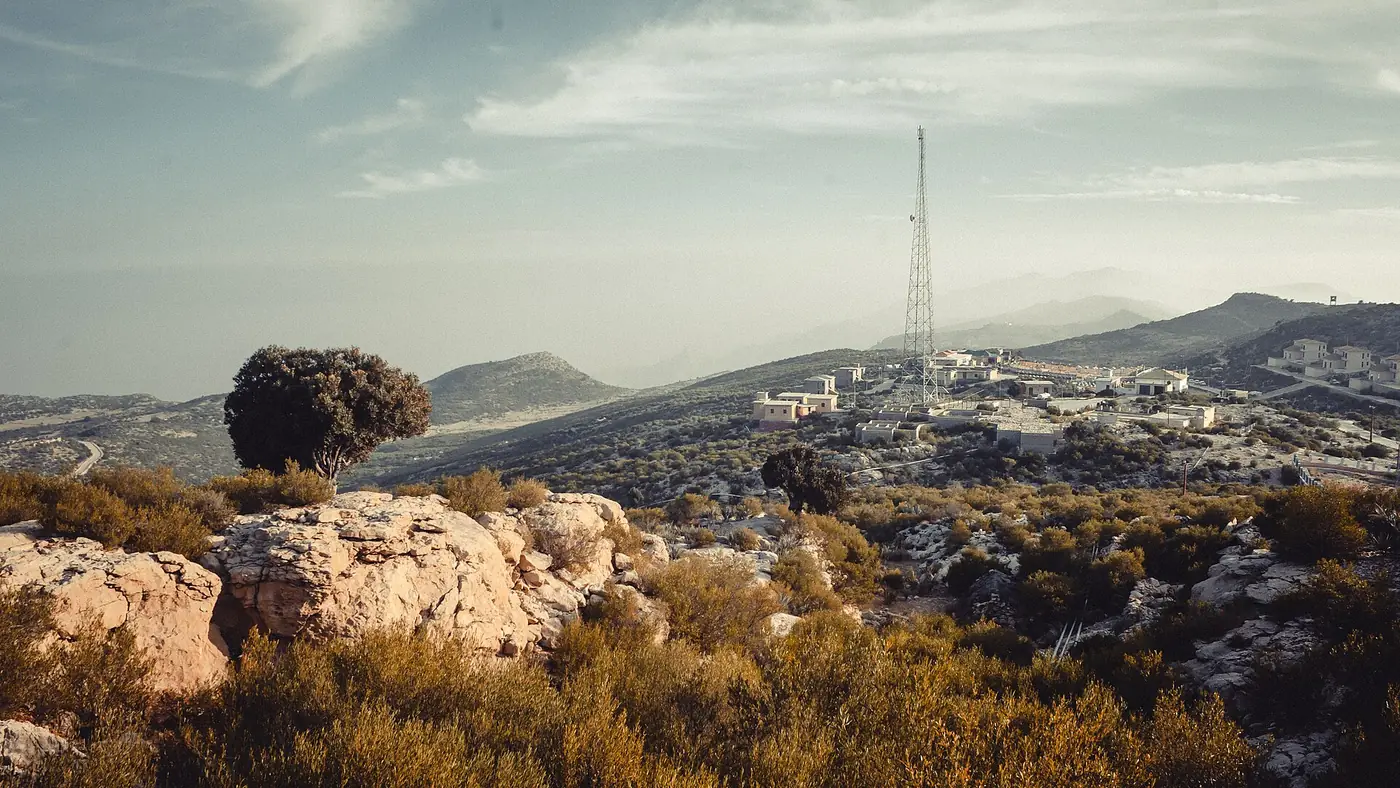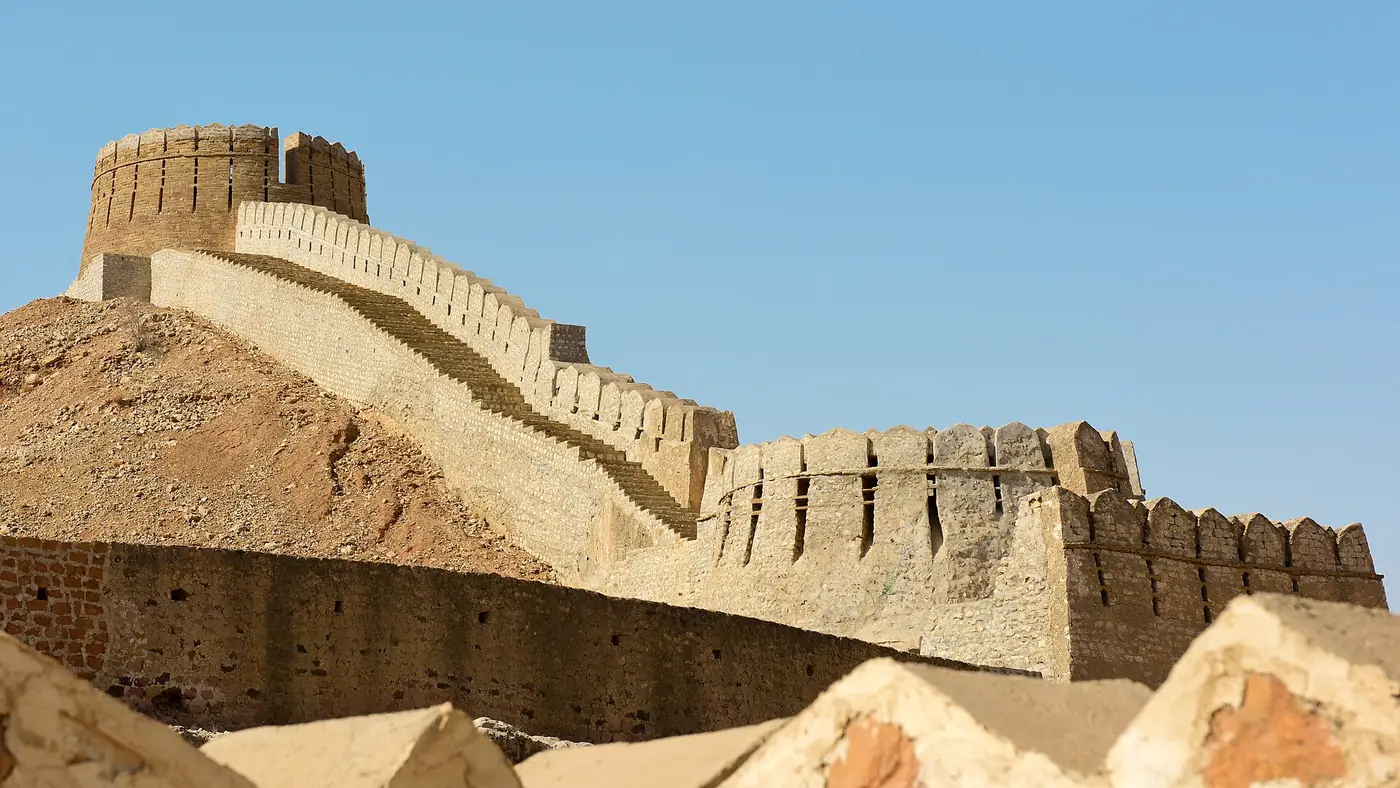
Ranikot Fort is a ring of stone walls in the Kirthar hills of Jamshoro district, roughly 31 km around, which makes it one of the largest fortifications anywhere and has earned it the name the Great Wall of Sindh. It is reached by a rough side road off the Indus Highway near the town of Sann, and inside the outer walls sit two smaller forts, Miri and Shergarh, along with the main entrance, Sann Gate.
This guide covers the scale of the walls, what is inside them, how to get there from Sann, and when to visit.
| At a glance | |
|---|---|
| Location | Kirthar hills, Jamshoro district, near Sann |
| Wall circumference | About 31 km |
| Main entrance | Sann Gate, on the eastern side |
| Forts inside | Miri Fort (about 3 km from Sann Gate) and Shergarh Fort |
| From Karachi to Sann | Roughly 150–170 km on the Indus Highway |
| From Sann to Sann Gate | About 21 km of rough side road |
| Best months | November to February |
How big is Ranikot Fort, really?
The outer wall runs for about 31 km, following the contours of the Kirthar hills rather than a straight or regular shape, which is why it reads on a map more like a fortified mountain range than a conventional fort. The walls are built of dressed sandstone reinforced with round bastions, and in places stand around 9 metres high.
Nobody is fully certain when the earliest walls went up, and estimates in different sources range from an early medieval origin to a purpose-built fortress of the Talpur era. What is better documented is that the structure was substantially rebuilt and reinforced under the Talpur rulers of Sindh in the early 19th century, at considerable expense, as a defensive stronghold. Ranikot was put forward for UNESCO World Heritage status in 1993, and restoration work carried out in the 2000s was widely criticised at the time for poor conservation practice; further restoration was suspended not long after.
Inside the walls: Sann Gate, Miri Fort and Shergarh Fort
Almost every visit starts at Sann Gate, the well-preserved eastern entrance and the point where the side road from Sann meets the fort. Steps here let you climb onto the wall itself for a view along its line into the hills.
From the gate, a track of about 3 km leads to Miri Fort, a smaller, self-contained fortification inside the outer wall that is generally described as having served as a residence for the Mir ruling family, with its own gate and defences distinct from the main perimeter. It is the most visited part of the site beyond the gate itself, since it is close enough to reach without a long walk in the heat.
Shergarh Fort, a separate inner fort elsewhere within the walled area, and a third, smaller structure at Mohan Kot, complete the layered defensive plan: an outer wall enclosing the whole valley, with independent strongholds inside it that could hold out even if the outer wall were breached.
Much of the fort is now in a ruined or semi-ruined state, and the sheer scale of it means most visitors see a fraction of the full 31 km circuit; a day visit realistically covers Sann Gate, the walk to Miri Fort, and the views from the walls near the entrance.
Getting there from Sann
Sann sits on the Indus Highway (N-55) in Jamshoro district, roughly 150 to 170 km from Karachi, a drive of around two and a half to three hours depending on traffic and the state of the road at the time. From Sann, a side road turns off toward the hills and runs about 21 km to Sann Gate. It is a rough, partly unmade road, slow going even though the distance is short, and best driven in a vehicle with reasonable ground clearance; allow 30 to 45 minutes or more for this stretch alone.
There is no public transport onto the fort road itself. Sann is served by trains on the Kotri–Larkana line and by road transport on the Indus Highway, but from there you need your own vehicle, a hired car, or a place on an organised tour to reach the gate.
Ranikot sits on or close to the edge of Kirthar National Park, and the approach passes through the same dry hill country the park protects. There is no ticket booth commonly reported at the fort itself, but conditions and any entry arrangements can change, so it is worth checking current advice locally in Sann before you set off, and carrying cash in case a fee applies.
When to visit
November to February is the best window. Daytime temperatures in the hills are comfortable for walking and climbing on the walls, and the low winter light is good for photographs of the sandstone walls and bastions.
March and October work as shoulder months, warmer than winter but still manageable if you visit early or late in the day.
May to September should be avoided. Temperatures in this part of Sindh regularly pass 40°C and can go well beyond it, there is almost no shade anywhere on the walls or the approach, and heat exhaustion is a real risk on a site with no facilities and long walks between points of interest.
Whatever the month, go in the morning. Arrive as early as you reasonably can, cover Sann Gate and Miri Fort before midday, and leave the rest of the day for the drive back or, if you're touring further into the Kirthar hills, for Gorakh Hill or the national park itself.
What to bring and what to expect
Ranikot has essentially no visitor infrastructure. There are no shops, no shaded rest areas and no reliable water source at the site, so come prepared:
- Plenty of drinking water, more than you think you need
- Sun protection: a hat, sunscreen and sunglasses
- Sturdy shoes for uneven stone and loose ground around the walls
- Cash, in case any entry or parking fee is charged locally
- Snacks or a packed lunch, since there is nowhere to buy food at the fort
Mobile signal is unreliable once you leave the Indus Highway, so let someone know your plan and expected return time before you turn off at Sann.
Is it worth the trip?
For anyone interested in Sindh's history or in seeing something genuinely unusual, yes. Very few places let you walk along fortification walls running for kilometres through open hill country with almost nobody else around, and the contrast between the scale of the walls and the emptiness of the site now is part of what makes it memorable.
It is not a trip for anyone short on time or expecting facilities. There is a real drive to get there, a rough final stretch, no shade, and little beyond the walls and the forts themselves once you arrive. If that doesn't suit your group, Sehwan Sharif and its shrine, on the same route from Karachi, is an easier and more built-up stop.
Frequently asked questions
How do I get to Ranikot Fort from Karachi?
Drive the Indus Highway (N-55) to Sann, about 150 to 170 km and two and a half to three hours, then take the rough side road for about 21 km to Sann Gate, the fort's main entrance. There is no public transport for the final stretch.
How long is the wall at Ranikot Fort?
About 31 km, following the line of the Kirthar hills. That scale is why Ranikot is often called the Great Wall of Sindh and described as one of the world's largest forts.
What is inside Ranikot Fort?
Two smaller fortified areas, Miri Fort and Shergarh Fort, along with a third smaller structure at Mohan Kot, sit inside the outer wall. Miri Fort, about 3 km from Sann Gate, is the part most visitors reach on a day trip.
Is there an entry fee for Ranikot Fort?
No fee is commonly reported at the site itself, but arrangements can change and the fort lies close to Kirthar National Park. Check current advice locally in Sann and carry cash in case one applies.
When is the best time to visit Ranikot Fort?
November to February, when temperatures are comfortable for walking. Avoid May to September, when temperatures in this part of Sindh regularly exceed 40°C and there is almost no shade on site.