
Power cuts are a normal part of a trip to Gilgit-Baltistan, not an occasional inconvenience. The region generates its own electricity, mostly from small hydropower stations on local streams, and is not connected to Pakistan's national grid. Supply regularly falls short of demand, especially in winter and during the summer tourist peak, so plan on the lights, wifi and charging sockets going off for stretches of most days.
This guide explains why the outages happen, what to expect season by season, how hotels cope, and how to keep your phone and camera charged regardless.
Why Gilgit-Baltistan has so many power cuts
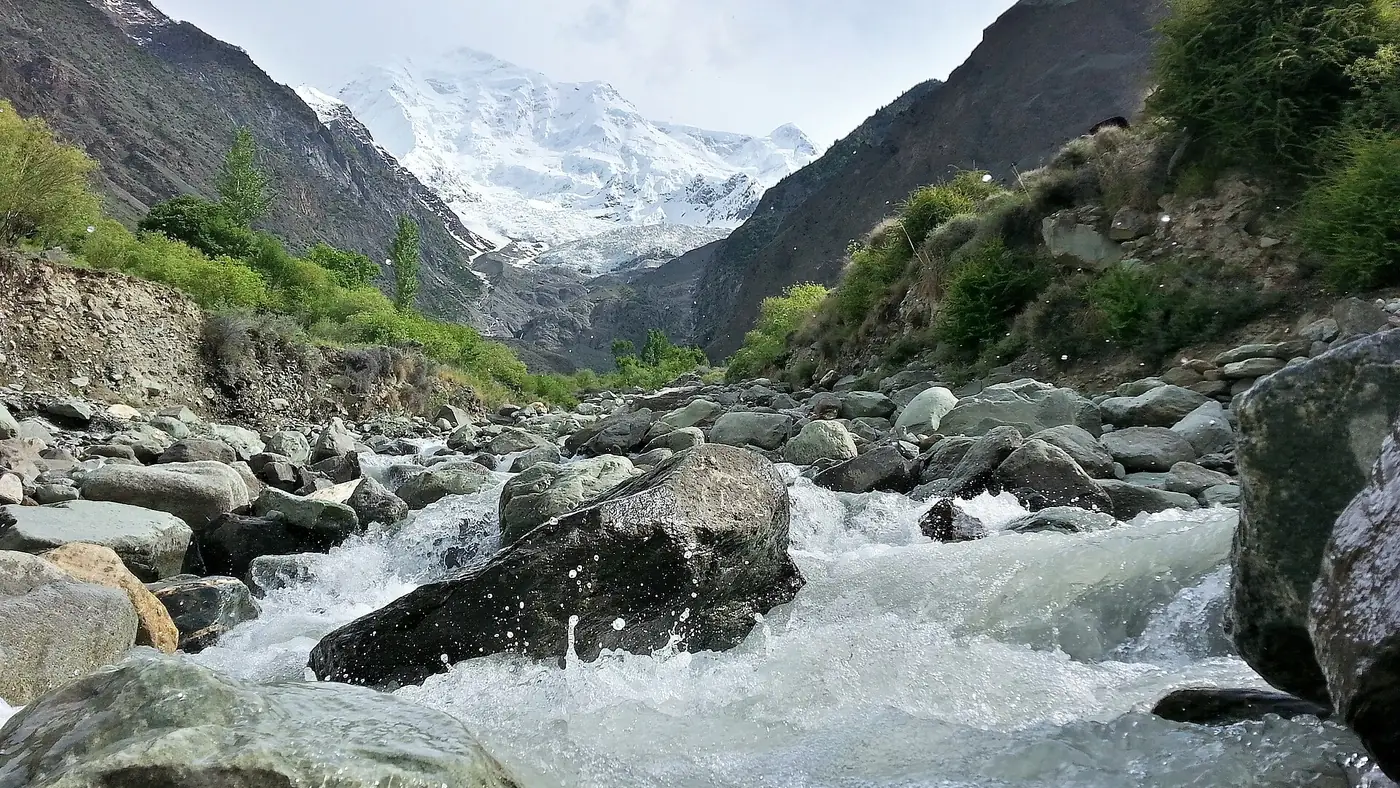
Most of the region's electricity comes from small, run-of-river hydropower stations that depend on the flow in local streams. That flow is not constant: it is strongest in summer as glaciers and snowmelt feed the rivers, and drops sharply in winter as the same streams partly freeze, cutting generation just as heating and lighting demand rises. Because Gilgit-Baltistan is not linked to the national grid, there is no way to import power from elsewhere in Pakistan to cover the gap.
On top of that seasonal mismatch, tourism itself now adds real strain. Skardu's domestic visitor numbers have grown enormously over the past decade, and hotels, restaurants and guesthouses all draw far more power in the summer season than the local grid was built for. Reporting on the 2026 season (Dawn) described daily outages during peak season stretching across much of the day in some towns, while other reporting (The Friday Times, 2025) put typical outages at roughly six to eight hours a day in summer and considerably longer in winter. The exact hours vary by year, town and even street, so treat any figure, including these, as a guide to the scale of the problem rather than a fixed schedule.
The Gilgit-Baltistan government has ongoing projects aimed at easing this, including new hydropower stations such as the Naltar Phase-III project and a 100 MW solar programme announced in 2026, plus a proposed regional grid to share power between towns. None of these change what you should expect on a trip planned for the near future.
| At a glance | |
|---|---|
| Grid connection | Local hydropower only; not linked to Pakistan's national grid |
| Worst season | Winter, when streams that feed hydro stations partly freeze |
| Also affected by | The summer tourist peak, when demand spikes in Skardu and Hunza |
| Hotel backup | Generators (diesel) and, increasingly, solar panels at higher-end places |
| What to carry | A power bank, a torch or headlamp, and a universal adaptor if needed |
What to expect, town by town
- Skardu and Gilgit city see the most reported outages, simply because they have the largest population and hotel base drawing on limited local capacity. A widely reported multi-day outage hit Skardu in September 2026 after a fault at a powerhouse, on top of the routine daily cuts.
- Hunza (Karimabad, Aliabad, Gulmit, Passu) has a similar pattern, with power more reliable in better-established hotels that have invested in solar or a generator.
- Smaller valleys and villages (Shigar, Khaplu, Naltar, Astore) tend to have shorter, less predictable supply, and fewer places with backup power, so pack accordingly if you are staying off the main circuit.
How hotels and guesthouses cope
Most mid-range and upmarket hotels in Skardu, Hunza and Gilgit run a diesel generator during outages, at least in the evening, to keep lights, wifi routers and a few sockets working. Some now supplement this with solar panels, particularly newer or higher-end properties. Budget guesthouses are less likely to have either, and may simply go dark until the grid comes back.
It is reasonable to ask, when booking or checking in, whether the hotel has generator or solar backup and for how many hours a day it typically runs. Staff usually know the local pattern well, even when they can't predict the exact schedule.
Keeping your devices charged
- Bring a fully charged power bank, ideally 10,000mAh or more, and top it up whenever the power is on rather than waiting until it is empty.
- Charge everything overnight if the hotel has power then, since outages are often worse during the day when generators may not run continuously.
- Pack a torch or headlamp. Even hotels with generators may only run them for lighting and wifi, not every room socket, and mountain towns can be genuinely dark at night.
- A small solar charger is worth it for longer treks or stays in smaller valleys with less reliable backup.
- Save offline maps and entertainment in advance, since wifi drops along with the power. Our travel guide covers connectivity more broadly, including mobile signal.
Is this a reason to avoid Gilgit-Baltistan?
No. Power cuts are an accepted, well-managed part of daily life there, and most hotels that serve tourists have found a workaround, even if an imperfect one. The inconvenience is real but manageable: a power bank, a torch and low expectations for round-the-clock wifi are enough to get through most trips without disruption to the things that matter, like heating in cold weather and hot water for a shower.
Frequently asked questions
How many hours of power cuts should I expect in Gilgit-Baltistan?
It varies by season, town and year, and reported figures differ. Expect noticeably less reliable power in winter than summer, and build in a power bank and torch regardless of what schedule you're told locally.
Do hotels in Hunza and Skardu have generators?
Most mid-range and upmarket hotels do, at least for a few hours each evening. It's worth asking directly when booking, since budget guesthouses often don't have backup power at all.
Is Gilgit-Baltistan connected to Pakistan's national grid?
No. The region relies on its own hydropower stations, which is a major reason supply cannot easily be topped up when local generation falls short.
What should I pack in case of a power cut?
A charged power bank, a torch or headlamp, and any device chargers you might need overnight when power is more likely to be on. Save offline maps in advance since wifi goes down with the power.
Is winter worse than summer for power cuts?
Generally yes. Streams that feed the region's hydropower stations partly freeze in winter, cutting generation just as heating demand rises, though summer tourist season also puts real strain on supply in busy towns.
.jpg)