Mohenjo-daro is the ruined Bronze Age city of the Indus Valley Civilisation, built around 2500 BCE, about 28 km south of Larkana in upper Sindh and a UNESCO World Heritage Site since 1980. A visit has two halves: the citadel mound, with the Great Bath, the so-called granary and a much later Buddhist stupa on top, and the lower town to the east, with its brick streets, drains and wells. Allow two to three hours for the ruins and another hour for the museum. Go between November and February and start when the gates open, because this is one of the hottest places on earth in summer.
This guide explains what you are looking at, suggests a route through the site, and covers guides, the heat and the practicalities. Tickets and opening hours are covered in detail in our guide to Mohenjo-daro ticket prices and timings.
| At a glance | |
|---|---|
| Where | Larkana district, Sindh, about 28 km south of Larkana |
| From Karachi | About 510 km |
| Built | Around 2500 BCE; abandoned by around 1700 BCE |
| UNESCO listing | 1980 |
| Time needed | 2 to 3 hours for the ruins, plus an hour for the museum |
| Hours (Sindh antiquities) | Summer 8 am to 7 pm; winter 9 am to 6 pm |
| Best months | November to February |
| Best time of day | Opening time, or the last two hours before closing |
| Foreign government advice | The UK advises against all but essential travel to this part of Sindh |
What was Mohenjo-daro?
At its height Mohenjo-daro was one of the largest cities in the ancient world, home to perhaps 40,000 people, laid out on a grid of streets with covered drains, brick houses and hundreds of wells. It belonged to the Indus Valley Civilisation, which spread across what is now Pakistan and north-west India, traded as far as Mesopotamia, and wrote in a script that nobody has yet deciphered. The city was abandoned around 1700 BCE, for reasons still debated.
The ruins were identified in the early 1920s, when the archaeologist R. D. Banerji recognised the site's age while investigating the Buddhist stupa on top of the mound, and large-scale digs followed under Sir John Marshall. Only a fraction of the city has been excavated. The rest lies under the surrounding mounds, and new excavation has been banned since 1965, because the exposed structures were being damaged by the weather.
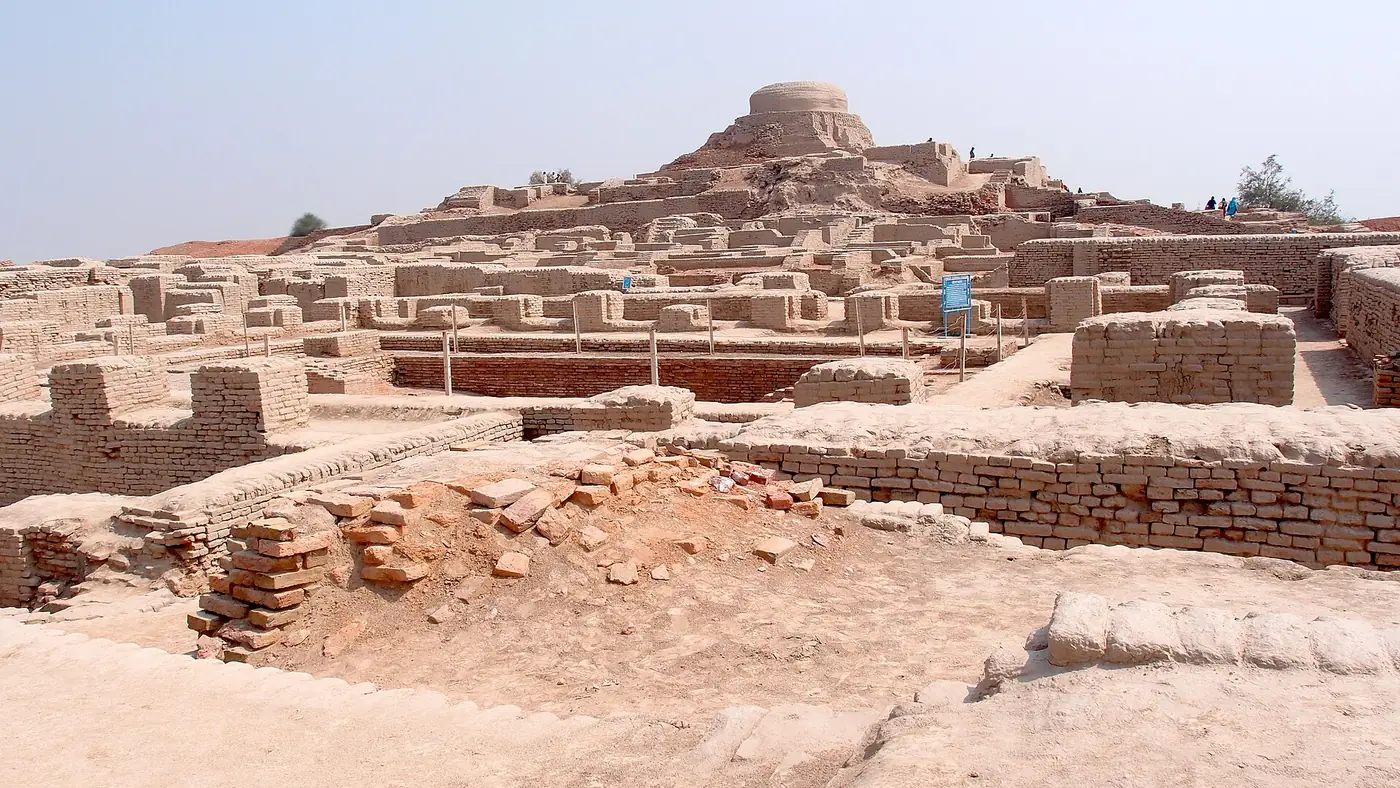
What you walk through is mostly the brick skeleton of the city: walls, floors, drains, wells and stairways, with the upper storeys long gone. It takes a little imagination, which is exactly why a guide or some reading beforehand pays off.
The citadel mound
The western part of the site is a raised mound, about 12 metres above the plain, which archaeologists call the citadel. Its buildings are larger and more public than those in the lower town.
- The Great Bath. The best-known structure at Mohenjo-daro: a rectangular pool about 12 metres long, 7 metres wide and 2.4 metres deep, with steps down at each end. It was built of finely fitted brick and sealed with bitumen to hold water, and it is surrounded by a corridor and rooms. It is usually thought to have had a ritual use.
- The "granary". To the west of the Bath, a massive brick foundation divided into blocks with air channels between them. It was long called the granary; some archaeologists now think it was a great hall or warehouse. Either way, it was one of the largest buildings in the city.
- The Buddhist stupa. On the highest point of the mound stands a stupa and monastery from around the 2nd century CE, built on the ruins more than two thousand years after the city was abandoned. It is the landmark you see from everywhere on the site, and the best viewpoint over the lower town.
- The pillared hall. In the southern part of the citadel, a large hall whose floor was divided by rows of brick pillar bases, often called the assembly hall.
- The monks' cells around the stupa courtyard, part of the Buddhist monastery.
The lower town
East of the citadel lies the lower town, where most people lived. It covers about a kilometre by 800 metres, and the excavated parts are named after the archaeologists who dug them: the DK area, the HR area, the VS area and others.
Things to look for:
- Straight streets crossing at right angles, with narrower lanes between house blocks.
- Covered drains running along the streets, with brick-lined inspection holes, and drains running from houses into them.
- Wells, some rising like brick chimneys where the ground around them has been excavated away. The city had more than 700.
- Houses built around courtyards, with bathing platforms, stairways to vanished upper floors and blank walls facing the main streets.
The DK area has the clearest main street and some of the best-preserved houses, and makes a good focus if your time is short.
A route through the site
The site is pedestrian-only, with marked paths. This route takes two to three hours at a steady pace:
- Arrive at opening time and buy your ticket at the entrance.
- Walk up onto the citadel mound while it is still cool. Start with the Great Bath.
- The granary immediately to the west of the Bath.
- The stupa and monks' cells on the highest point, for the view east over the lower town.
- The pillared hall in the southern part of the citadel.
- Down into the lower town, heading for the DK area and its main street, drains and wells.
- The HR and VS areas if you still have the energy and the heat allows.
- The museum near the entrance, as the day warms up.
Rules on the site
The walls are fragile. Salt rising from the groundwater eats into the brick, and the 2022 monsoon rains and floods damaged parts of the site. Conservation staff will call out if they see anyone climbing on walls or walking along them.
- Stay on the marked paths.
- Don't climb on walls, wells or the stupa.
- Don't pick up bricks or pottery fragments. Every piece removed damages the site and the record archaeologists rely on.
- Keep children off the walls, however tempting the brick "steps" look.
The museum and guides
The museum
The site museum is small and, by most accounts, modest, but it is worth an hour. It displays seals carved with animals and the Indus script, pottery, tools, jewellery, weights and household objects from the excavations, and among its curiosities is a vehicle used by Sir John Marshall. The two most famous finds are not here: the Priest-King is in the National Museum in Karachi and the bronze Dancing Girl in the National Museum in New Delhi. Ask at the ticket counter whether your ticket covers the museum.
Guides
Guides can usually be hired at the entrance. A good one turns a field of brick walls into a city, points out details you would walk past, and keeps you on the paths that are open. Agree the fee and the length of the tour before you start, and ask whether they know the lower town well, not only the citadel.
If you prefer to go alone, read up beforehand. The Sindh antiquities department's Mohenjo-daro page describes the main areas and is worth reading before you go.
Heat: plan the visit around it
Mohenjo-daro is in one of the hottest places on earth. In May 2024 the temperature there passed 52 °C, and its record is 53.5 °C. The ruins are open brick and earth with almost no shade.
- Go between November and February. Days are warm and pleasant; nights can be cold. March and October are manageable if you start early.
- From April to September, go at opening time and be finished by mid-morning, or arrive for the last two hours before closing. Midday visits in summer are dangerous, particularly for children and older people.
- Carry water, more than you think you need, and a hat, sunscreen and sunglasses.
- Wear shoes with grip. Brick paths are uneven, and there are steps and slopes on the citadel.
- Rest in the museum or in shade when you need to, and watch everyone in the group for headache, dizziness or nausea.
Getting there and staying
Mohenjo-daro is about 510 km from Karachi, and the nearest city is Larkana, about 28 km away, where most visitors stay. There is also a small rest house at the site itself. PIA lists Moenjodaro airport, next to the site, among its domestic destinations, but flights are infrequent and schedules change. In early 2026 the Sindh Tourism Development Corporation ran a two-day Mohenjo-daro Train Safari from Karachi, with the train, hotel, meals and a guided tour of the site and museum for Rs 25,000 per person; keep an eye out for repeats.
Is it safe to visit Mohenjo-daro?
Pakistani visitors, school groups and families travel to Mohenjo-daro regularly, and the site itself is guarded. The concern is the wider region. Parts of the Larkana and Sukkur divisions suffer from gangs based in the riverine katcha areas, who kidnap people for ransom, sometimes from highways and link roads and often after luring them with fake offers made by phone or online.
Travel by day, keep to the main highways, don't stop for strangers, and don't arrange to meet anyone you only know from a phone call or social media. For overseas visitors, the UK's Foreign Office travel advice for Pakistan advises against all but essential travel to Sindh north of and including Nawabshah, which covers Larkana. That can affect travel insurance, and foreign visitors in this area are often given a police escort.
Is Mohenjo-daro worth it?
For anyone interested in history, yes: it is the most important archaeological site in Pakistan and one of the great cities of the ancient world, and standing in the Great Bath with the stupa above you is something very few people ever do. It suits curious adults, older children and students best, and it is at its finest on a clear winter morning.
It is less rewarding for small children, for anyone who can't walk a few kilometres on uneven ground, or in the summer heat, when a visit becomes an endurance test. If you are travelling from Karachi or Lahore, allow at least two days so the site isn't squeezed between long drives; our list of the best places to visit in Pakistan suggests what else fits a winter trip. For help building upper Sindh into a longer trip, start with our trip planning page.
Frequently asked questions
Where is Mohenjo-daro?
In Larkana district, Sindh, about 28 km south of Larkana and about 510 km from Karachi. The ruins lie west of the Indus.
How long does it take to see Mohenjo-daro?
Two to three hours covers the citadel, the Great Bath, the stupa and the main part of the lower town. Add an hour for the museum.
What is the Great Bath at Mohenjo-daro?
A brick pool about 12 metres long, 7 metres wide and 2.4 metres deep on the citadel mound, sealed with bitumen and reached by steps. It is thought to have had a ritual purpose.
Is the Buddhist stupa at Mohenjo-daro part of the ancient city?
No. The stupa was built around the 2nd century CE on top of the ruins, more than two thousand years after the Indus city was abandoned.
What is the best time to visit Mohenjo-daro?
November to February, arriving at opening time. From April to September the heat is extreme, so only visit early in the morning or in the last hours before closing.
Are there guides at Mohenjo-daro?
Yes, guides can usually be hired at the entrance. Agree the fee and the length of the tour before you start.