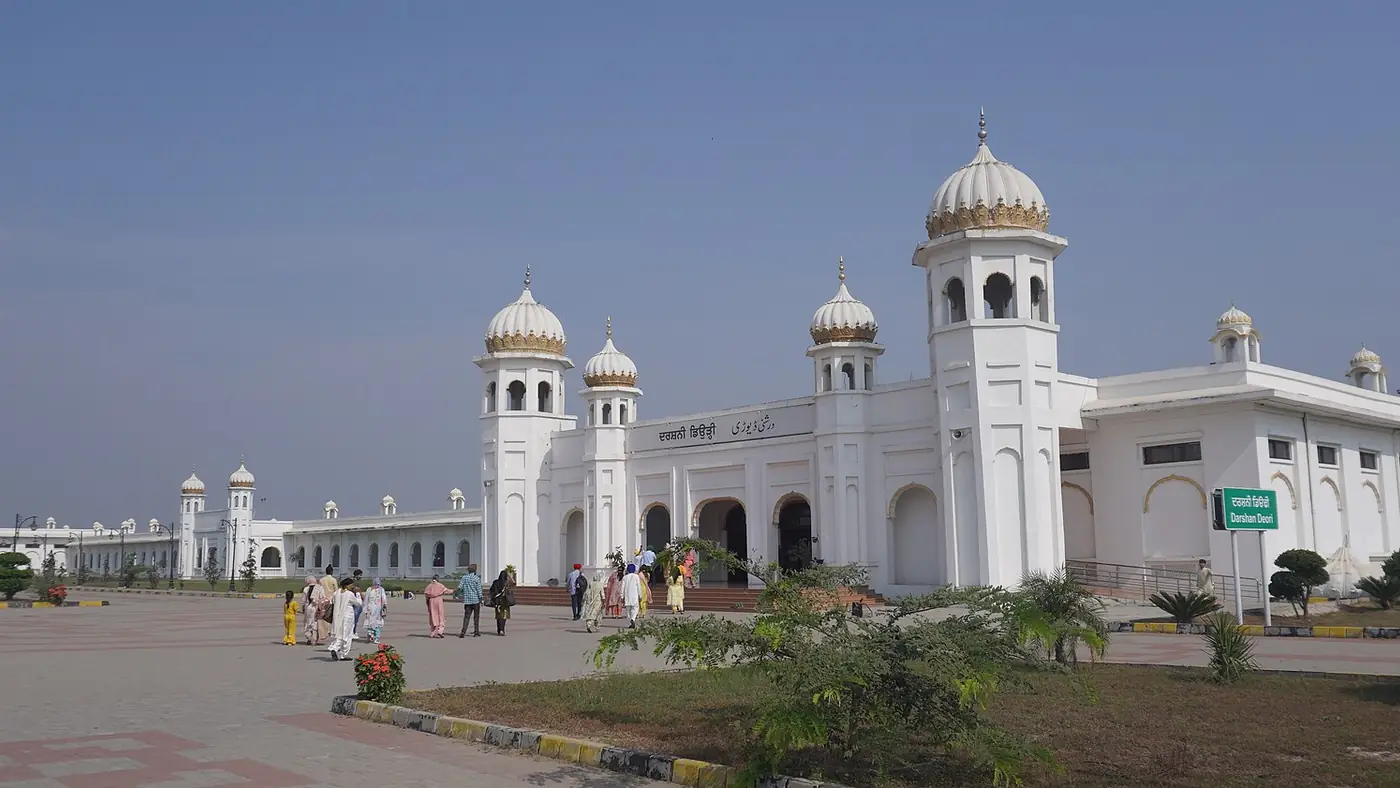
Gurdwara Darbar Sahib Kartarpur, in Narowal district near the border with India, marks the place where Guru Nanak, the founder of Sikhism, spent his final years and died. For Pakistani visitors, unlike the Indian pilgrims who cross the Kartarpur Corridor under a special bilateral arrangement, access is straightforward: a CNIC, a short registration process, and no visa or special permit needed.
This guide covers how local visitors get in, what the visit involves, and what to know before you go.
| At a glance | |
|---|---|
| Location | Kartarpur, Narowal district, about 4.5 km from the India border |
| From Lahore | About 120 km via the Lahore–Sialkot Motorway, exiting toward Narowal |
| Documents for Pakistanis | CNIC only; no visa or permit needed |
| Hours | Entry generally 9am to around 3:30–4pm; site closes by 6pm |
| Entry fee | A modest fee applies for Pakistani visitors; treat any figure as approximate |
| Dress | Modest clothing; head covering expected inside the gurdwara |
What Kartarpur is and why it matters
Guru Nanak founded the town of Kartarpur on the bank of the Ravi River after years of travelling, and he lived, farmed and taught here until his death around 1539. It's considered one of the most significant sites in Sikhism, on a level with Nankana Sahib, his birthplace elsewhere in Punjab. The current gurdwara building and the surrounding white-domed complex were developed and expanded over the 20th and 21st centuries, most recently as part of the Kartarpur Corridor project that opened a dedicated crossing point for Indian pilgrims in 2019.
That corridor is what most news coverage of Kartarpur is about, but it's easy to forget it doesn't apply to Pakistani citizens at all — for local visitors, this is simply a gurdwara you can visit like any other heritage or religious site in Punjab, without the visa arrangements and permit system that govern Indian arrivals.
The site's location, right on the Ravi River close to the international border, is itself part of why it stayed relatively little-visited for decades after Partition, cut off in practical terms from the millions of Sikhs in India for whom it's one of the most sacred places in their faith. The 2019 corridor changed that for Indian pilgrims specifically, and the renewed international attention has also meant a steady programme of restoration and expansion of the complex on the Pakistani side, which is now considerably larger and better maintained than it was even a decade ago.
How Pakistani visitors get in
Unlike Indian pilgrims, who need advance online registration through a bilateral system, Pakistani citizens need only their CNIC. On arrival you register at the entrance, and you'll usually be given a visitor's card to wear for the duration of your visit. There's no need to apply in advance or book a slot the way Indian pilgrims must.
An entry fee applies for local visitors, though reported amounts have varied between sources, so carry more cash than you expect to need and pay whatever is currently posted at the gate rather than relying on a fixed figure quoted online.
Timings and how long to allow
Entry generally runs from around 9am, and the site is best reached before early afternoon — arriving after roughly 3:30 to 4pm risks being turned away, even though the complex itself stays open until around 6pm. Realistically, allow at least two hours inside the gurdwara complex and its grounds, plus time to walk around the wider site, so a mid-morning arrival gives you the most comfortable visit without rushing.
What to expect inside
The complex includes the main gurdwara building, with its white domes visible from some distance across the flat Punjab countryside, along with a langar hall serving free communal food to all visitors regardless of faith, and open courtyards and viewing areas. Security is tight given the site's position close to the border — expect several checkpoints on the approach road, with vehicle and ID checks, which is normal and not something to be concerned about, just something to allow time for.
Photography inside parts of the complex may require permission, so ask staff before taking pictures rather than assuming it's allowed everywhere, particularly inside the prayer hall itself.
Because the gurdwara sits so close to a border that carries a heavy security presence on both sides, treat instructions from staff and army personnel at the checkpoints as routine rather than as a sign anything is wrong. Have your CNIC ready at each stage, avoid arguing over the process, and build the checkpoints into your overall time estimate for the day rather than treating them as an afterthought.
Langar and etiquette
Langar, the free communal meal served at every gurdwara, is available at Kartarpur and typically includes simple vegetarian food such as lentils, vegetable curry, rice and tea. Eating it is open to everyone, and it's a genuine part of the Sikh tradition of hospitality rather than a tourist add-on — take a seat with other visitors rather than expecting separate treatment.
As at any gurdwara, cover your head before entering the main prayer hall, dress modestly, and remove your shoes where indicated. Alcohol, smoking and tobacco are not permitted anywhere on the grounds.
Planning the trip from Lahore
Kartarpur is close enough to Lahore for a comfortable day trip: about 120 km via the Lahore–Sialkot Motorway, exiting toward Narowal, generally a drive of under two hours in normal traffic. Leaving Lahore by mid-morning gives you time to register, visit and eat langar before the early-afternoon entry cutoff, with the drive back before evening. Our trip planning guide has more on building a day like this into a wider Punjab itinerary.
Is it worth visiting?
For Pakistani visitors of any faith, yes — Kartarpur is a genuinely significant historical and religious site, the access process is simple, and the langar and open courtyards make it a welcoming place to spend a few hours even without a religious connection to Sikhism. It's a meaningful stop for anyone interested in Punjab's shared history before Partition, not only for Sikh visitors.
Frequently asked questions
Do Pakistani visitors need a visa to visit Kartarpur?
No. The visa and permit system applies to Indian pilgrims crossing the dedicated Kartarpur Corridor. Pakistani citizens need only their CNIC to register and enter.
What is the entry fee for Pakistani visitors at Kartarpur?
A modest fee applies, though reported amounts have varied between sources. Carry cash and expect to pay whatever is currently posted at the entrance.
How far is Kartarpur from Lahore?
About 120 km, roughly a two-hour drive via the Lahore–Sialkot Motorway, exiting toward Narowal.
Can non-Sikh visitors eat langar at Kartarpur?
Yes. Langar is offered to all visitors regardless of faith, as part of standard Sikh practice at every gurdwara.
What should visitors wear to Kartarpur Gurdwara?
Modest clothing, with a head covering required to enter the main prayer hall. Shoes should be removed where indicated at the entrance.
Can Kartarpur be combined with other stops in a day trip from Lahore?
Yes, though given the entry-time cutoff in the early afternoon and the drive there and back, most visitors treat Kartarpur as the main focus of the day rather than one stop among several, particularly if they also want time to eat langar and walk the grounds without rushing.