
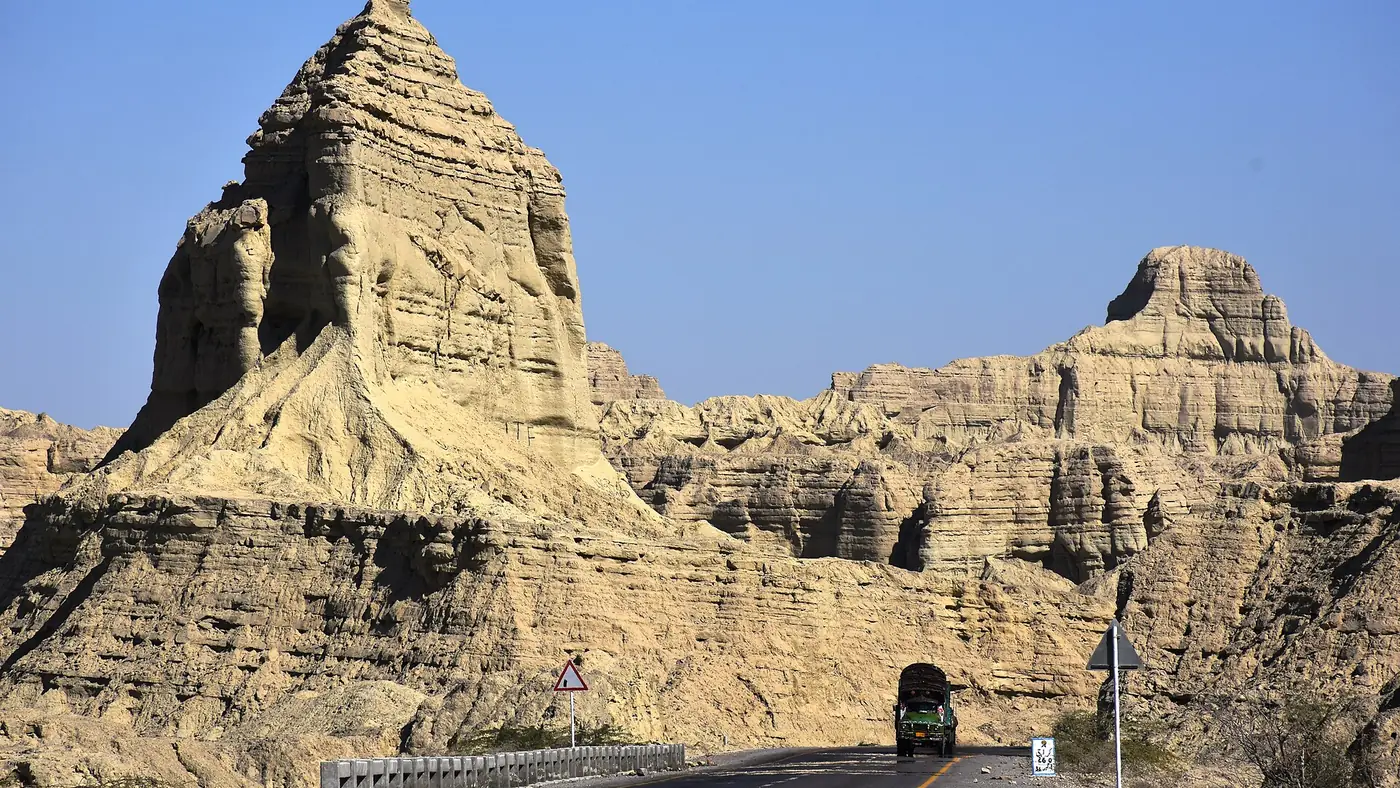

Balochistan is Pakistan's largest province by area and its most complicated to answer simply on safety. Parts of it, including the coastal route to Gwadar and the hill station of Ziarat, see regular Pakistani visitors and organised trips. Other parts, including large stretches of the interior and the border districts, carry an active insurgency and are subject to travel restrictions, night curfews and, for foreign nationals, official advice against travel altogether.
This guide sets out the current picture as plainly as we can, what routes people actually use, and how to check conditions for yourself before you leave.
The short answer
For Pakistani travellers, some parts of Balochistan are visited regularly and treated as manageable with normal precautions: the Makran Coastal Highway to Hingol National Park and Gwadar, and Ziarat and Quetta for those travelling by air or in daylight on the main highway. For foreign nationals, most governments advise against all travel to the whole province. For everyone, large parts of the interior and the border areas with Afghanistan and Iran carry a real and current security risk, and conditions change quickly. There is no single yes-or-no answer; you have to check the specific route and the specific week.
What the official advisories say
As of September 2026, the UK government's Pakistan travel advice advises against all travel to the whole of Balochistan province. Other Western governments, including the United States, carry similarly worded advisories against travel to Balochistan because of terrorism and kidnapping risk. These advisories apply broadly across the province rather than singling out individual towns, which makes them a blunt instrument for planning a specific trip, but they are a real signal: security forces and insurgent groups are both active in parts of Balochistan, and attacks on security forces, infrastructure and transport have continued through 2026.
If you hold a foreign passport, check your own government's current advice before travelling, and be aware that travelling against that advice can affect your travel insurance.
What is actually happening on the ground
Balochistan's security situation is uneven rather than uniform. In 2026, violence has been concentrated in specific districts and has, at times, spread into areas that had previously been calmer, including Pashtun-majority districts in the province's north. Attacks have targeted security forces, railway lines and highways rather than tourist sites as such, but travellers on the main roads have been caught up in some incidents, including a bombing that hit a train near Quetta in May 2026.
Because of this, the provincial government has imposed night-time travel restrictions on several major highways (covered in our guide to the Balochistan night travel ban), and security checkpoints with CNIC and vehicle checks are routine on roads in and out of Quetta and along the coastal highway.
Routes Pakistani travellers actually use
- The Makran Coastal Highway (N-10), from Karachi through Hingol National Park to Gwadar, is the route most domestic travellers use to see the Balochistan coast, including Kund Malir and other beaches covered in our guide to the best beaches in Balochistan. It is subject to a night travel restriction with set daytime departure windows.
- Quetta and Ziarat, usually reached by air into Quetta rather than overland, are visited for the hill scenery and Quaid-e-Azam Residency. Daytime travel on the Quetta–Ziarat road is routine; overland travel from Sindh or Punjab into Quetta on the RCD Highway (N-25) is also used but is subject to the same night ban and checkpoint system.
- The interior, including districts further from these two corridors, sees far fewer travellers and needs more local knowledge and current advice before any visit; our guide to Moola Chotok near Khuzdar is one example of a trip that depends on checking conditions locally rather than following a fixed plan.
How to check before you go
- Check current news for the specific district and route in the days before you travel, not weeks ahead. Local Pakistani press (Dawn, Quetta-based outlets) covers incidents and closures faster than international sources.
- Talk to a local operator or driver who works the route regularly. They will know about closures, checkpoints and any recent incidents that haven't made national news.
- Travel by day and respect the highway night travel restrictions, which exist because most recorded attacks on travellers have happened after dark.
- Register your route with family or a tour operator, and agree points where you will check in, since mobile signal drops out on some stretches of highway and in the interior.
- Keep CNIC and vehicle documents on hand, since checkpoints are frequent on the main routes and checks are routine rather than exceptional.
If your plans change
Because conditions on Balochistan's roads can shift quickly, particularly around specific incidents, build some flexibility into any trip: a spare day, a route that doesn't depend on a single road being open, and a way to get current information once you're travelling, since mobile signal is inconsistent on the coastal highway and unreliable in much of the interior. If a highway is closed or a checkpoint advises against continuing, treat that as decisive rather than something to argue past. Tour operators and hotels along the coast and in Quetta are generally well placed to advise on same-day conditions, and it's worth calling ahead rather than assuming a route is open because it was open last month.
Who this suits
Pakistani travellers with some flexibility, willing to check conditions close to the date and travel in daylight on the established coastal or Quetta corridors, can visit parts of Balochistan reasonably. Families or first-time visitors to the province, or anyone travelling on a fixed schedule that can't absorb a delay or a change of route, are better served starting with the coastal highway or a flight into Quetta rather than an independent trip into the interior. Foreign nationals should weigh their own government's advisory carefully, since it applies to the whole province and can affect insurance cover.
Frequently asked questions
Is it safe for Pakistanis to travel to Balochistan?
Parts of the province, particularly the Makran Coastal Highway and Quetta–Ziarat, see regular Pakistani visitors who take normal precautions: travelling by day, checking current conditions and using established routes. Other areas carry higher and more active risk, so check the specific district and route before you go.
Do foreign governments advise against travel to Balochistan?
Yes. As of September 2026, the UK and several other governments advise against all travel to the whole of Balochistan province. Check your own government's current advice, since it can also affect your travel insurance.
Which parts of Balochistan do tourists actually visit?
Mostly the Makran Coastal Highway to Hingol National Park and Gwadar, and Quetta and Ziarat, usually reached by air. These routes have organised travel and checkpoints rather than being unrestricted.
Has there been recent violence in Balochistan?
Yes. Attacks on security forces, transport and infrastructure have continued through 2026, including a bombing on a train near Quetta in May 2026, and violence has spread into some previously calmer districts. Check current news before travelling.
What is the safest way to travel within Balochistan?
Travel by day rather than at night, since night travel is restricted on major highways for security reasons, use established routes and operators, keep your documents on hand for checkpoints, and check conditions close to your travel date rather than relying on older information.