The famous food of Lahore runs on a handful of dishes that locals eat according to time of day as much as taste: halwa puri for breakfast, nihari and paye through the morning, fried fish and chargha through the day, and karahi and BBQ once evening comes. Knowing what each dish actually is, and roughly when Lahoris eat it, gets a first-time visitor much further than a generic list of "must-try" restaurants.
| At a glance | |
|---|---|
| Breakfast | Halwa puri, nihari, paye |
| All-day snacks | Fried fish, chargha, samosas and pakoras |
| Evening | Karahi, BBQ, biryani |
| Sweet | Kulfi, jalebi, sohan halwa |
| Drink | Lassi, sugarcane juice in season |
| Where | Fort Road, Lakshmi Chowk, Gawalmandi and Old Anarkali |
Nihari
Nihari is a slow-cooked beef or mutton stew, simmered for hours, sometimes overnight, until the meat is soft enough to fall apart, finished with a layer of marrow fat and a sharp mix of spices. It is eaten with naan, traditionally as an early-morning dish rather than dinner, though many restaurants now serve it through the day. Good nihari is judged on how well the meat has broken down and how balanced the spice mix is, not on heat alone.
Paye
Paye, or siri paye, is a rich soup made from slow-simmered trotters, sometimes including the head, cooked until the broth turns thick and slightly gelatinous. Like nihari, it is traditionally a breakfast dish, eaten with naan, and shops that specialise in it tend to sell out by mid-morning once the day's batch runs low.
Halwa puri
Halwa puri is Lahore's classic weekend breakfast: sweet semolina halwa, spiced chickpeas (chana) and puffed, fried puri bread, usually served together on one plate. It is widely available across the city from early morning, and Sunday mornings are when it is most central to Lahori life, with queues outside the better-known spots.
Chargha
Chargha is a whole chicken marinated in spices, steamed and then deep-fried, giving a crisp exterior over tender, well-seasoned meat. It is sold both at dedicated chargha restaurants and by weight at some food streets, usually shared between two or more people rather than ordered individually.
Fried fish
Fried fish, often river fish like rahu, coated in a spiced gram-flour batter and deep-fried, is a Lahore street-food staple, particularly associated with the monsoon months when it is traditionally thought to suit the weather. It is sold by weight at dedicated fish stalls, most concentrated around a few well-known lanes in the old city and inner Lahore.
Karahi and BBQ
Evening food in Lahore runs on karahi, chicken or mutton cooked to order in a wok-like pan with tomatoes, ginger, garlic and green chillies, and BBQ, meaning grilled seekh kebab, tikka and boti. Both are shared dishes, typically ordered alongside naan or roti, and are the backbone of the menu at most of the sit-down restaurants along Fort Road and the other food streets.
Biryani and pulao
Rice dishes are a constant across the city: biryani, layered with spiced meat and cooked rice, and pulao, milder and less spiced, both served everywhere from street stalls to formal restaurants. They are as much an everyday lunch as a special-occasion dish.
Samosas, pakoras and monsoon snacks
Fried snacks are a constant across Lahore, but they become especially popular whenever it rains: samosas (spiced potato or mince parcels) and pakoras (vegetable fritters in gram-flour batter) are sold from stalls and home kitchens alike, and are as much a monsoon-season ritual, eaten hot with tea, as a year-round snack. Sold cheaply and everywhere, they are an easy way to try Lahori street food without committing to a full meal.
Lassi
Lassi, a chilled, whisked yoghurt drink, is Lahore's answer to the heat and to a heavy meal. It ranges from a plain, lightly sweetened glass to a thicker version topped with cream (malai), and is drunk alongside breakfast as often as on its own in the afternoon.
Sweets: jalebi, kulfi and sohan halwa
Jalebi, a coiled, syrup-soaked fried batter, is often eaten alongside halwa puri rather than as a separate dessert. Kulfi, a dense, slow-frozen milk dessert, and sohan halwa, a dense, ghee-rich sweet associated more broadly with Punjab, round out the city's dessert options, both widely available from sweet shops across Lahore.
Where to find it
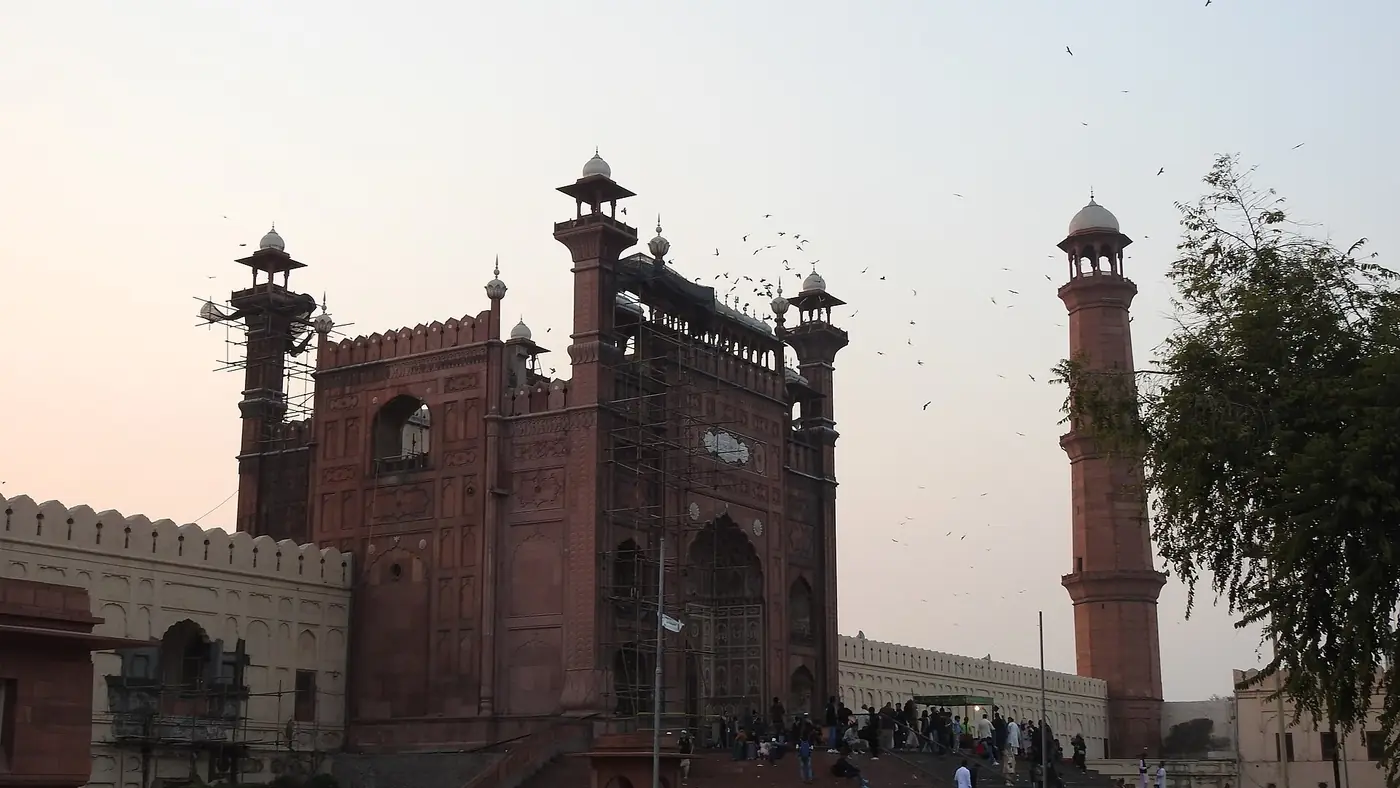
Lahore's food streets are organised around exactly this range of dishes, each with its own character. Fort Road Food Street, beside Badshahi Mosque, leans toward sit-down karahi and BBQ with rooftop views; Lakshmi Chowk is known for late-night karahi and old-fashioned Lahori cooking at plain prices; Gawalmandi is the historic original food street, now smaller than it once was; and Old Anarkali is the liveliest and cheapest for street snacks and juice. Our best food streets in Lahore guide compares them in more detail, and our Fort Road Food Street guide covers that street specifically, including what to order and when to go.
Eating like a local
Most of these dishes are shared rather than ordered per person: a karahi or a chargha typically comes as one dish for the table, with naan or roti ordered separately and refilled as needed. Eating with your right hand rather than cutlery is common and entirely acceptable, though cutlery is always available if you prefer it. At breakfast spots serving nihari, paye or halwa puri, it is normal to eat quickly and move on rather than linger, since these are working breakfast stalls rather than sit-down cafés; the sit-down restaurants on the food streets are a better choice if you want to eat at a slower pace.
A practical order of eating
If you only have a day or two, a workable rhythm is: halwa puri or nihari for breakfast, a light lunch, fried fish or chargha as an afternoon snack if you are still hungry, and karahi or BBQ for dinner, finishing with kulfi or a glass of lassi. Pace yourself; portions at nihari and karahi restaurants are generous and meant for sharing, not for one person alone.
Frequently asked questions
What is Lahore's most famous dish?
Nihari is usually considered Lahore's signature dish, though paye, halwa puri and karahi are just as central to how the city actually eats through the day.
Is Lahori food very spicy?
Much of it is well-spiced rather than simply hot, though chilli levels vary by restaurant. You can generally ask for a milder version if you are unsure.
When is the best time to eat nihari or paye?
Traditionally breakfast or mid-morning, since both are slow-cooked overnight and shops sell out once the day's batch runs low.
Is street food in Lahore safe for visitors?
Choose stalls with high turnover and food cooked fresh in front of you, and drink bottled or filtered water. This applies as much to any city as it does specifically to Lahore.
What should a vegetarian visitor try in Lahore?
Halwa puri with chana, along with paneer and vegetable dishes available at most sit-down restaurants, and lassi. Much of Lahore's most famous street food is meat-based, so vegetarian options are narrower but not absent.
What is the best food street to try several dishes at once?
Fort Road Food Street and Lakshmi Chowk both offer a wide spread of dishes in one evening; Fort Road adds the view of Badshahi Mosque, while Lakshmi Chowk is generally cheaper and more local.