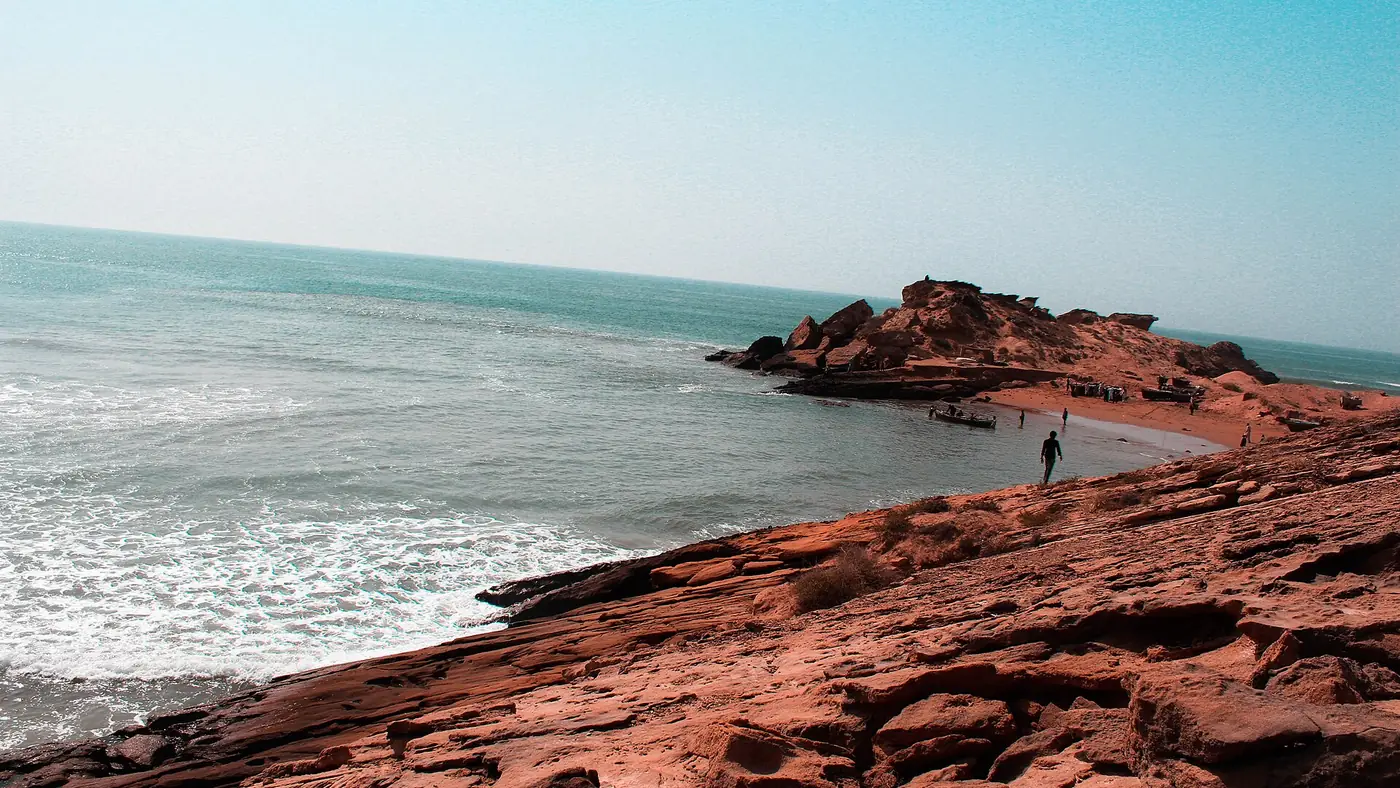
The best time to visit Kund Malir is October to February, when the Arabian Sea is at its calmest, the heat is manageable and the coast road is at its most pleasant to drive. From around May to September the south-west monsoon sends a heavy swell onto this coast, daytime heat is severe, and swimming becomes genuinely dangerous rather than just uncomfortable.
This guide goes month by month through sea conditions, heat, the monsoon restrictions worth knowing about, and when winter weekends bring the crowds, so you can pick a date that suits what you actually want from the trip.
| At a glance | |
|---|---|
| Best months overall | October to February |
| Calmest sea | Roughly October to May, outside the monsoon swell |
| Roughest sea | Around June to August |
| Coolest, most comfortable | December and January |
| Hottest | May, June and July |
| Busiest weekends | November to February, plus New Year |
| Quietest | Weekdays, and most of the monsoon season |
Kund Malir has no weather station of its own; the temperatures below are a reasonable guide, drawn from the nearest comparable coastal towns of Ormara and Pasni, which sit on the same stretch of Makran coast.
Month by month
October to February: the main season
This is when almost everyone visits, and for good reason. The swell that builds through the monsoon has dropped by October, and the sea stays comparatively calm through to around February or March. Daytime temperatures on this stretch of coast run roughly 20 to 26°C in the coolest months, December and January, warming gradually as the season goes on. Nights can feel genuinely cool, even cold in a tent, which is part of why camping works so well in this window.
- October and November: the transition out of monsoon. The sea is settling, days are warm rather than hot, and the beach is markedly quieter than the peak winter weekends.
- December and January: the most comfortable months to be outdoors all day, and correspondingly the busiest, especially around New Year.
- February: still calm and comfortable, with the heat beginning to build again by the end of the month.
March and April: still workable, warming up
March is usually still a reasonable time to go, with the sea generally settled and the heat not yet severe. April brings a sharp change: temperatures climb quickly, and this is also when the Hinglaj Mata yatra takes place, drawing large numbers of pilgrims onto the roads around Aghor, about 30 km from the beach. If your dates fall near the yatra, expect heavier traffic on the coastal highway even if the beach itself is not your reason for going.
May to September: the season to avoid for swimming
This is the period to plan around rather than plan for. From roughly May onward, the south-west monsoon builds, and by June it is in full effect, bringing a heavy, unpredictable swell to the whole Makran coast that lasts into September. Winds pick up noticeably through these months too, kicking up dust along the beach and making an open tent or hut far less comfortable.
Heat is the other factor. May, June and July are the warmest months on this coast, with average conditions in the high twenties Celsius and considerably hotter than that in direct sun, and there is very little shade anywhere at Kund Malir beyond the rented huts. Karachi's own commissioner typically bans sea bathing on the city's beaches for parts of this period, a sign of how the same stretch of Arabian Sea behaves further down the coast; the ban began as early as 23 May in 2026.
None of this rules out a visit in these months entirely; the beach is still there, and the drive is still the drive. But treat any trip in this window as a beach to look at and sit beside, not one to swim at, and be realistic about how much of the day you can spend outside the shade.
September: the tail end of monsoon
By September the worst of the swell is usually easing, but conditions can still be rough and unpredictable as the monsoon retreats. Heat is still significant. This is a reasonable month to watch conditions closely rather than commit to a date far in advance, and to treat October as the safer bet if your plans are flexible.
Sea state: why it matters more than the calendar
The swimming risk at Kund Malir tracks the monsoon closely, and it is worth understanding rather than just following a date range. Makran coast swells run heaviest from around June through September, driven by the same monsoon system that brings rain to the rest of Pakistan, even though this stretch of desert coast sees very little of that rain itself. Outside those months, the sea is generally calmer, though never something to treat casually; rip currents are possible even on an apparently calm winter day. Our guide to Kund Malir beach covers how to judge the water on the day, whatever month you go.
When the crowds show up
Kund Malir is quiet for most of the year and busy on a predictable set of dates:
- Winter weekends, November through February, when day trips from Karachi peak.
- New Year and the surrounding holidays, when tour groups run special trips and huts fill early.
- Long weekends and public holidays that fall in the cool months.
- Around the Hinglaj yatra in April, when the beach itself is quiet but the roads nearby are busy with pilgrim traffic.
If you want the beach closer to empty, go on a weekday in the main season, or pick a weekend just outside the peak, in October, November or March. Summer is naturally quiet too, though for reasons that make it a harder trip rather than a more pleasant one.
Matching the month to your trip
For swimming and a comfortable beach day, aim for December or January, when the sea is calmest and the heat is at its lowest. For a quieter version of the same trip, go in October, November or March, accepting a slightly rougher or hotter edge in exchange for fewer people. For photography and the night sky, the cool, clear winter months work best, since haze and heat both fall away and camping is genuinely pleasant. If your dates only work in summer, go, but plan it as a short, early morning and late afternoon visit around the worst of the heat, skip swimming altogether, and keep to the shade in between.
Whatever month you choose, check the news for the coastal highway and the current sea conditions in the days before you leave; our guide to safety at Kund Malir covers what else is worth checking before setting out. For help fitting Kund Malir into a wider trip along the coast, our trip planning page is the place to start.
Frequently asked questions
What is the best month to visit Kund Malir?
December and January are the most comfortable, combining calm seas with cooler daytime temperatures. October, November, February and March are also good and somewhat quieter.
When should you avoid Kund Malir?
Avoid swimming there from roughly May to September, when the monsoon swell makes the sea dangerous and the heat is severe. The beach can still be visited in these months, but treat it as a viewpoint rather than a swimming trip.
Is Kund Malir crowded in winter?
Weekends from November to February, and the New Year period especially, draw the biggest crowds from Karachi. Weekdays in the same months are much quieter, with the same calm sea and comfortable weather.
Can you swim at Kund Malir in summer?
Not safely. The monsoon swell from around May to September makes the sea rough and unpredictable, and there are no lifeguards. Stick to the sand and shade in these months.
Does the Hinglaj yatra affect a trip to Kund Malir?
The yatra itself takes place about 30 km away, but the roads around Aghor get busy with pilgrim traffic in the days around it each April. Expect heavier traffic on the coastal highway if your dates overlap.
Is spring or autumn better for visiting Kund Malir?
Autumn, specifically October and November, is generally the better of the two: the sea has settled after the monsoon and the heat has started to ease. Spring, especially April, is already warming up fast and can coincide with yatra traffic.
Is Balochistan safe for overseas visitors?
Pakistani travellers do visit, but as of September 2026 the UK government advises against all travel to Balochistan. If you hold a foreign passport, check your own government's advice before you go, because travelling against it can void your insurance. Everyone should check local news and current police advice before setting out.